_Composers – Borodin

Rimsky-Korsakov / Scheherazade – As Good As It Gets

More of the Music of Rimsky-Korsakov
rimskscheh_6212_1610_1389793105

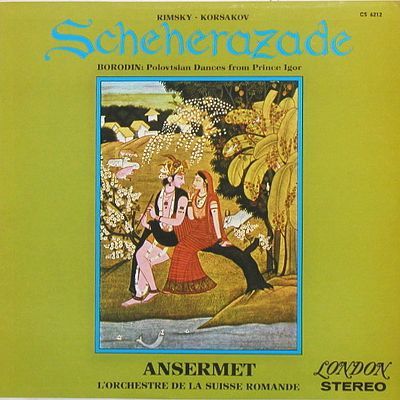
  • Outstanding Double Plus (A++) sound throughout this vintage London pressing of Ansermet and the Suisse Romande’s superb performance of this dazzlingly symphonic suite
  • It’s also fairly quiet at Mint Minus Minus, a grade that even our most well-cared-for vintage classical titles have trouble playing at
  • This copy will go head to head with the hottest Reiner pressing and is guaranteed to blow the doors off of it
  • The top end is natural and sweet – this is the way the solo violin in the left channel is supposed to sound
  • Extraordinary Demo Disc sound – the brass displays weight and power throughout the powerful first movement like nothing you’ve ever heard in your life, outside of a live performance of course
  • Finding the best sounding pressings of this exceptional recording was a breakthrough for us – here was sound we had never experienced for the work, and let me tell you, that was a thrill we will not soon forget
  • These are the stampers that always win our shootouts, and when you play this copy, you will know why – the sound is big, rich and clear like no other Scheherazade you’ve heard
  • We’ve come up with a simple listening test to help our audiophile brethren judge pressings of Scheherazade, especially those woeful iterations of the music on Heavy Vinyl. We hope you will find time to avail yourself of the lessons we’ve learned
  • There are about 80 orchestral recordings that are personal favorites, and this one deserves a place right at the top of that list

We did a monster shootout for this music in 2014, one we had been planning for more than two years. On hand were quite a few copies of the Reiner on RCA; the Ansermet on London (CS 6212, his second stereo recording, from 1961, not the earlier and noticeably poorer sounding recording from in 1959); the Ormandy on Columbia, and a few others we felt had potential.

The only recordings that held up all the way through — the fourth movement being THE Ball Breaker of all time, for both the engineers and musicians — were those by Reiner and Ansermet. This was disappointing considering how much time and money we spent finding, cleaning and playing those ten or so other pressings.

Here it is many years later and we’re capitalizing on what we learned from the first big go around, which is simply this: the Ansermet recording on Decca/London can not only hold its own with the Reiner on RCA, but beat it in virtually every area. The presentation and the sound itself are both more relaxed and natural, even when compared to the best RCA pressings.

The emotional content of the first three movements (all of side one) under Ansermet’s direction are clearly superior. The roller-coaster excitement Reiner and the CSO bring to the fourth movement cannot be faulted, or equaled. In every other way, Ansermet’s performance is the one for me. We did a monster shootout for this music in 2014, one we had been planning for more than two years. On hand were quite a few copies of the Reiner on RCA; the Ansermet on London (CS 6212, his second stereo recording, from 1961, not the earlier and noticeably poorer sounding recording from in 1959); the Ormandy on Columbia, and a few others we felt had potential. (more…)

What We Think We Know about Scheherazade

More of the music of Rimsky-Korsakov (1844-1908)

Our Favorite Performance of Scheherazade – Ansermet with the Suisse Romande

This post was written in 2014 or so. It’s the story of the breakthrough pressing we discovered that year.

I attended the Dec. 2013 performance of the work at the Disney Hall. Pictured is Mr de Burgos conducting. It was a thrill like no other. (Well, maybe The Planets.)

“Guest conductor Rafael Frühbeck de Burgos’s attention to detail delivers the razzle dazzle and also discovers renewed radiance in ‘Scheherazade.'”

We did a monster shootout for this music in 2014, one we had been planning for more than two years. On hand were quite a few copies of the Reiner on RCA; the Ansermet on London (CS 6212, his second stereo recording, from 1961, not the earlier and noticeably poorer sounding recording from in 1959); the Ormandy on Columbia, and a few others we felt had shown potential.

The only recordings that held up all the way through — the fourth movement being THE Ball Breaker of all time, for both the engineers and musicians — were those by Reiner and Ansermet. This was disappointing considering how much time and money we spent finding, cleaning and playing those ten or so other pressings.

Here it is a year later and we’re capitalizing on what we learned from the first big go around, which is simply this: the Ansermet recording on Decca/London can not only hold its own with the Reiner on RCA, but beat it in virtually any area. The presentation and the sound itself are both more relaxed and natural, even when compared to the best RCA pressings.

The emotional content of the first three movements (all of side one) under Ansermet’s direction are clearly superior. The roller coaster excitement Reiner and the CSO bring to the fourth movement cannot be faulted, or equaled. In every other way Ansermet’s performance is the one for me.

Both Sides

Superb! Big brass, so full-bodied and dynamic, yet clear and not thick or overly tubey. Lots of space as is usually the case with Ansermet’s recordings from this era.

Both sides here are BIG, with the space and depth of the wonderful Victoria Hall that the L’Orchestre De La Suisse Romande perform in. As a rule, the classic ’50s and ’60s recordings of Ansermet and the Suisse Romande are as big and rich as any you’ve heard. On the finest pressings (known around these parts as Hot Stampers) they seem to be the ideal blend of clarity and richness, with depth and spaciousness that will put to shame 98% of the classical recordings ever made.

The solo violin is present and so real you will have a hard time believing it.

This copy is huge in every dimension, just as all the best ones always are, with maximum amounts of height, width, and depth. The transparency is also superb — you really hear into this one in the way that only the best Golden Age recordings allow.

(more…)

Azimuth, VTA, Anti-Skate and Tracking Weight – We Got to Live Together

More Record Playback Advice

With a shout out to my man Sly!

The commentary was written in 2005.

One of the reasons this record is sounding so good today (1/12/05) is that I spent last weekend adjusting my Triplanar tonearm. The sound was bothering me somewhat, so I decided to start experimenting again with the azimuth adjustment.

I changed the azimuth in the smallest increments I could manage, which on this turntable are exceedingly small increments, until at some point the following changes became evident:

  1. The bass started to go deeper,
  2. The dynamics improved, and
  3. The tonal balance became fuller and richer.

In essence the cartridge was becoming perfectly vertical to the record.

I don’t think this can be done any other way than by ear, although I don’t know that for a fact.

Azimuth, VTA, anti-skate and tracking weight all work in combination to create the sound you hear. They are like trying to juggle four balls at the same time. They all interact with each other in mysterious ways.

This is one of the reasons why I think everyone needs to know how to set up their own front end. Nobody you could ever pay is going to put the time and effort into getting it just right. I have at least 30 or 40 and probably closer to 50 hours of set up time in this arm. [It is in the many hundreds by now.]

This is, of course, over a period of two years. But as I have played around and experimented in different ways with the setup, I have managed to tailor the sound to my taste while maintaining what I consider to be the highest levels of accuracy.

Robert Brook has some advice for those who would like to learn more about analog setup, and you can find it here.

(more…)

Gounod / Borodin / The World of Ballet, Vol. 2

More Orchestral Music Conducted by Ernest Ansermet

Reviews and Commentaries for Guonod / Faust Ballet Music

Side one contains one of the most famous and sought-after pieces of music in the entire Living Stereo catalog, the wonderful Faust Ballet Music that takes up side one of LSC 2449. (The Carmen that makes up side two of the original Shaded Dog has never impressed us sonically. There are so many better recordings of the piece, the Ansermet recording on London being one of the best.) 

The hall is HUGE — so spacious and three-dimensional it’s almost shocking, especially if you’ve been playing the kind of dry, multi-miked modern recordings that the ’70s ushered in for the major labels such as London and RCA. (EMI is super spacious but much of that space is weird, coming from out of phase back channels folded in to the stereo mix. And often so mid-hall and distant. Sorry, just not our sound.)

Or maybe you own a batch of dense Londons from the ’70s. How many Solti records are not ridiculously thick and opaque? One out of ten? If that. We’re very wary of records recorded in the ’70s; we’ve been burned too many times.

And to tell you the truth we are not all that thrilled with most of what passes for good sound on Mehta’s London output either. If you have a high-resolution system these recordings, like those on Classic Heavy Vinyl we discuss below, leave a lot to be desired. (The Planets is a favorite whipping boy around here as you may know.)

Opacity is a real dealbreaker for us. Most of the classical records we play from later eras simply do not have the transparency that’s essential to us suspending our disbelief. (more…)

Borodin / Symphony No. 2 / Tchaikovsky / Francesca Da Rimini / Varviso

Hot Stamper Classical and Orchestral Imports on Decca & London

More Classical ‘Sleeper” Recordings We’ve Discovered with Demo Disc Sound

This London Whiteback pressing (CS 6578) has SHOCKINGLY GOOD sound; in many ways it deserves to be called a Demo Disc. It has at least one quality that one virtually never hears on an audiophile reissue: a smooth, natural top end. This record only sounds correct and “real” at louder volumes, in the same way that a live orchestra often sounds a bit lifeless in the quiet passages, only to get exciting, big and powerful when the score calls for it. For this to happen on record you need real dynamics and tonal neutrality.

We have not heard many audiophile reissues pull these things off either, just two of the reasons we no longer carry them.

And you can find all the other reasons on the site easily enough. We can’t stop talking about how disappointing Heavy Vinyl sounds to us now.

We graded both sides AT LEAST A++, a bit vague we admit; we just don’t have enough copies to know if the sound could get much better.

We played a good many vintage classical LPs that day and this was clearly one of the best sounding, so we feel this grade should be accurate, perhaps even conservative.

Credit for the sound must go to the Decca engineers, of course, but also to the hall that the L’Orchestre de la Suisse Romande played in, where so many of the great Ansermet recordings were made. This recording is from 1968. Ansermet died in 1969. One imagines that he was perhaps not able to conduct at this stage of his life and turned his wonderful orchestra and hall over to Varviso, a man better known for conducting operas at the time.

Side One – Borodin

At Least A++, with the kind of Golden Age sound that has rarely if ever been realized in the modern era. Big, wide and deep, with smooth, rich orchestral sound, these are the kind of records that let you forget the sound and just enjoy the music. The performance is taken a brisk pace, rarely a bad thing.

More reviews and commentaries for recordings of the Second Symphony.

Side Two – Tchaicovsky

At Least A++, and a lovely work that has never made it to the site in Hot Stamper form before, hint hint.

Rich, with deep bass, big stage, huge space and so 3-D, this is what we love about vintage recordings. And a great performance as well.

Borodin – Symphonies 2 & 3 / Ansermet

More of the music of Alexander Borodin (1833-1887)

More Classical and Orchestral Recordings

  • Excellent Double Plus (A++) sound or BETTER on both sides of this UK London STS pressing, with the Second Symphony having the better sonic grades (and better music)
  • It’s also fairly quiet at Mint Minus Minus, a grade that most of our classical records cannot match, with side one even a bit better
  • It’s simply bigger, more transparent, less distorted, more three-dimensional and more REAL than most of what we played
  • The right reissues can sound quite good, as is the case here – the best early pressings are better, but plenty of early pressings just sound like old records, which simply means that having a clean original is no guarantee of anything in this crazy record world

This Super Hot Stamper pressing has outstanding DEMO QUALITY sound on remarkably quiet vinyl no less. We’ve long considered the album one of the greatest of all the Decca / London recordings.

Big, rich and dynamic, this is the sound of LIVE MUSIC, and it can be yours, to enjoy for years to come — if you’ve got the stereo to play it and the time to listen to it.

The powerful lower strings and brass are gorgeous. Ansermet and the Suisse Romande get that sound better than any performers I know. You will see my raves on record after record of theirs produced during this era. No doubt the world renowned Victoria Hall they recorded in is key. One can assume Decca engineers use similar techniques for their recordings regardless of the artists involved. The only real variable should be the hall.

Ansermet’s recordings with the Suisse Romande exhibit a richness in the lower registers that is unique in my experience. His Pictures At Exhibition has phenomenally powerful brass, the best I’ve ever heard. The same is true for his Night On Bald Mountain. Neither performance does much for me — they’re both too slow — but the sound is out of this world. Like it is here.

(more…)

Festival of Russian Music – Reviewed in 2008

Living Stereo Orchestral Titles Available Now

200+ Reviews of Living Stereo Records

Excellent sound, more mid-hall than some other RCAs. This is the Victrola version of the Shaded Dog of Festival.

Some of these pieces are amazing in Reiner’s hands, Marche Slave, for example.

Russlan and Ludmilla is also superb here.

The sound is dynamic and powerful with very little distortion or noticeable compression.

Reiner is excellent on music like this.

It should go without saying that this pressing kills the awful Classic Records pressing.

(more…)

The Sound You Might Expect from Decca in 1967

More of the Music of Modest Mussorgsky

Released as Romantic Russia by Decca in 1967, this London can also be found with a different cover and a different catalog number, CS 6503.

DEMO QUALITY SOUND on side one — in some ways. Don’t go looking for the Tubey Magic of an earlier era. What you get instead is super-low distortion, full-bandwidth sound with deep powerful bass and more transparency than most later Londons.

Solti is clearly the man for this music! He’s on fire with this fiery material. THIS is the way you want to hear Russian orchestral showpieces — played with verve and dynamically ALIVE. (more…)

TAS List Thoughts about Festival – Harry, This One Is Out of Polarity, Man!

Hot Stamper Pressings of Living Stereo Titles Available Now

Harry Pearson put this on his list of the best Classic Records RCAs. It may be. I don’t recall ever playing one.

If you can reverse your absolute phase, this original pressings of this record actually sound fairly decent. Do you think Harry knew to do that, or even how to do it? I have my doubts.

He’s gone now so the point is moot, but I maintain it’s the rare reviewer who grasps these kinds of issues with anything approaching the depth and understanding that are required in order to be informative and accurate.


This is an older classical/orchestral review

Most of the older reviews you see are for records that did not go through the shootout process, the revolutionary approach to finding better sounding pressings we started developing in the early 2000s and have since turned into a veritable science.

We found the records you see in these older listings by cleaning and playing a pressing or two of the album, which we then described and priced based on how good the sound and surfaces were. (For out Hot Stamper listings, the Sonic Grades and Vinyl Playgrades are listed separately.)

(more…)

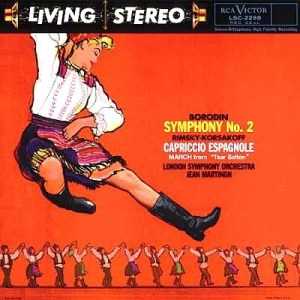
Borodin / Symphony No. 2 – Martinon

Hot Stamper Pressings of Living Stereo Titles Available Now

This RCA Living Stereo LP has AMAZING SOUND. It’s everything a Living Stereo record should be — warm and rich with lots of depth and silky highs.

The lower strings on this record are hands down some of the best I’ve ever heard. They’re wonderfully rich and textured.

Out of all the Decca-recorded RCAs I’ve had the pleasure (or misfortune as the case may be!) of listening to, this is definitely one of the top dogs.

If this record were quiet it would easily fetch $300; unfortunately that ain’t the case. The only reason we’re offering this copy for sale is because the sound — and the music — are OUT OF THIS WORLD!

(more…)