*Live and Learn

Here we discuss the records we think we got, uh, wrong.

It’s not really a problem for us though. We feel no need to cover up our mistakes. Recognizing and correcting previous errors is how we’ve managed to learn so much about records that no one else seems to know.

Gaining knowledge — in any field, not just record collecting or music reproduction — is always slow, incremental and riddled with errors and bad judgments.

A common misperception among those visiting the site is that we think we know it all. Nothing could be further from the truth. We learn something new about records with practically every shootout.

By playing the records grouped here, under rigorously controlled conditions, on top quality equipment, we found out just how much better or worse they are than are we thought.

Mona Bone Jakon – Live and Learn

Hot Stamper Pressings of the Music of Cat Stevens Available Now

Scroll down to check out our two updates, one from 2024 and one from 2025.

Live and learn? It never ends!


When we said Mona Bone Jakon was not the sonic equal of Teaser and the Firecat or Tea for the Tillerman, boy, we was wrong and then some. Read all about it in this White Hot Stamper copy review from many years ago.

It’s been about a year since we last found Hot Stampers of this album, and having made a number of improvements to the stereo over that time, I’m here to report that this album got a WHOLE LOT BETTER, better than I ever imagined it could get. Mona Bone Jakon now ranks as a DEMO DISC of the highest order, every bit the equal of Teaser and Tea.

To think that all three of these records came out in one fifteen-month period is astonishing. The only other artists to have produced music of this caliber in so short a time would have to be The Beatles, and it took four of them to do it.

Which is not what we used to think, as evidenced by this paragraph from a previous Hot Stamper listing.

This album is one of Cat’s top four titles both musically and sonically. Tea and Teaser are obviously in a league of their own, but this album and Catch Bull At Four are close behind. The music is WONDERFUL — the best tracks (including I Wish I Wish and I Think I See The Light) rank right up there with anything from his catalog. Sonically it’s not an epic recording on the scale of Tea or Teaser, but with Paul Samwell-Smith at the helm, you can be sure it’s an excellent sounding album — on the right pressing.

That last line is dead wrong. It IS an epic recording on the scale of Tea and Teaser. This copy proves it! Now that we know just how good this record can sound, I hope you will allow me to borrow some commentary from another classic Cat Stevens album listing, to wit:

(more…)

How Do the Early Pressings of this Mozart Piano Concerto Album Sound?

Hot Stamper Pressings of the Music of Mozart Available Now

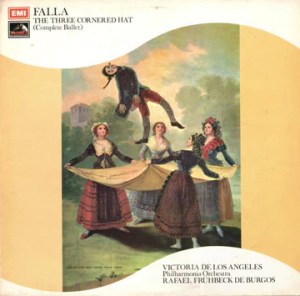
About fifteen years ago (2010) we played an original pressing of this title that we really liked. It’s the one with the rare cover you see pictured, and might have actually been the first one we had ever found in audiophile playing condition. We had a devil of a time finding more copies, but we were convinced that the early pressings were clearly the best.

More recently we were able to acquire quite a variety of different pressings for an upcoming shootout and were fortunate to be able to include one of the stereo originals for the first time in many years.

We started out with high hopes, but once the early pressing began to play, our hopes were dashed fairly quickly.

Our notes for the original pressing read:

  • Overly rich and weighty
  • Dynamics/life are gone.
  • Side two has one of the most boomy sounding pianos I’ve ever heard.

In other words, it just sounded like an old record, and not a very good one at that. The world is full of them.

Only an old school audio system can hide the faults of a pressing such as this one. The world is full of those too, even though they might comprise all the latest and most expensive components.

Were we wrong years ago? Hard to say. That copy from many years ago is gone.

Three things we always keep in mind when a pressing doesn’t sound the way we remember it did, or think it should:

(more…)

Where on The TAS Super Disc List Is This Amazing Recording?

Hot Stamper Pressings of Recordings by Decca Available Now

This commentary is from about 2008 or thereabouts. At the time we wrote:

The fact that entries such as Reiner’s Pines of Rome make the cut, and an amazing recording such as this doesn’t, should tell you everything you need to know concerning the value of such an incomplete list.


UPDATE 2024

Woops, we sure got that wrong. We happen to love the Reiner Pines of Rome now.


Be that as it may, this pressing of Ansermets’ recording of Iberia has truly Demo Disc quality sound.

Records simply do not get any more spacious, open, transparent, rich and sweet.

No need to update any of that. It’s all still true. What a recording!

(more…)

Khachaturian – Spartacus & Gayneh

Hot Stamper Pressings of Orchestral Spectaculars Available Now

UPDATE 2024

This is a very old review. The last time we sat down to play a number of copies of this recording, we were underwhelmed by all of them There may be some great sounding pressings out there, but we did not have any on hand and don’t want to commit the resources that would be needed to find them.

Our favorite recording that we stock, for both sound and performance, is the Mercury with Dorati from 1961.

It is guaranteed to give your system a real workout, especially if you can play it something approaching live levels in order to get the tympani and bass drum sounding right.


Our Old Review

This is a Decca In The Box British Import LP featuring Spartacus on side one and Gayaneh on side two with the Vienna Phil.

Side Two is the BEST EVER! Just play the Sabre Dance! This famous TAS List LP has a very good side one as well, 90 to 95% the best. This is a record that deserves its Super Disc ranking. It IS a Super Disc! 

(more…)

We Were Wrong about the Reissues of Christmas with Chet Atkins

Hot Stamper Pressings of the Music of Chet Atkins Available Now

In 2006 we wrote our review for an orange label RCA reissue of the album.

Recently we did a shootout for the album and only one side of one of the later orange label pressings earned a Super Hot (2+) grade.

Our system was noticeably darker and clearly far less revealing than the one we have now, and those two qualities did most of the heavy lifting needed to compensate for the shortcomings of the reissue reviewed below.

What I couldn’t hear on my system back in those days (and even as late as 2006) no doubt explains most of these kinds of errors. That’s why we are constantly harping on the idea that audiophiles would do well to get good sound before they spend a fortune on vinyl.

Higher quality playback is what makes it possible to recognize and acquire better sounding records.

(more…)

Charlie Mingus Asks the Question of the Day for Audiophiles – Compared to What?

Hot Stamper Pressings of the Music of Charles Mingus Available Now

We used to think the early Limelight pressing shown here was so amazing sounding that finding better sound for this recording would simply be impossible, but the original Mercury showed us just how wrong we were – the right Mercury pressing takes the recording to another level, one we never imagined it could reach. (In our experience records do that from time to time. We’ve written about some of the ones we’ve played here.)

Here is a small excerpt from our most recent commentary for the album:

The best copies recreate a live studio space the size of which you will not believe (assuming your room can do a good job of recreating their room). (Here are some of the other recordings we’ve auditioned with exceptional amounts of size and space.

The sound is tonally correct, Tubey Magical and above all natural. The timbre of each and every instrument is right and it doesn’t take a pair of golden ears to hear it — so high-resolution too.

If you love ’50s and ’60s large group jazz you cannot go wrong here. Mingus was a genius and the original music on this record is just one more album supporting the undeniability of that fact.

More evidence, if any were needed, that the three most important words in the world of audio are compared to what?

(more…)

Belafonte at Carnegie Hall – I Have a Theory

Hot Stamper Pressings of the Music of Harry Belafonte Available Now

We’ve long known that some copies of the album are mastered with the polarity reversed. This is one of those copies.

But the crazy news we have today is that this copy of the album sound just fine without reversing the polarity of the system, better than any other copy we played.

True, it sounds a bit better with the polarity reversed, but it is still our Shootout Winner even with the wrong polarity.

I would never have believed that to be the case in the past, but my theory is that the new studio we built has reduced distortions and problems to such a degree that polarity issues are less of a problem now than they might have been in the past.

As I say, it’s just a theory, and as time goes on we will revisit this idea with other recordings that we know to have polarity issues, and we’ll be sure to let you know what we find.

The best sounding versions we played are cut super clean. The brass and strings have dead-on correct textures and timbres.

As good as some pressings are, the best pressings are clearly a step up in class. The differences are easy to hear:

  • The brass has more weight and body and richness.
  • Same with the strings.
  • The voice gets fuller and sweeter and less sibilant, while still maintaining every nuance of detail.
  • The presence is startling; Belafonte is absolutely in the room with you.

(more…)

DCC + RTI = Audio Enervation

Hot Stamper Pressings of the Music of Bonnie Raitt Available Now

This commentary was the first one I wrote criticizing the sound of DCC vinyl, probably around 2008 or so. There would be many to follow.

A well-known Joni Mitchell album we played the year before didn’t exactly set us on a different path, but it did have the effect of kicking us up into a higher gear, and Bonnie’s album was one of the early fruits of that change.

During our shootout for Bonnie’s first Capitol album, we found that the DCC pressing was lacking in so many ways that I felt compelled to spell out for our customers what its shortcomings were.

I had enthusiastically recommended the album in 1996 when it came out, but our first big shootout had shown me how wrong that judgment would turn out to be. Our complete commentary from 2008 is reproduced below.


The no-longer-surprising thing about our Hot Stamper pressings of Nick Of Time is how completely they MURDER the DCC LP. Folks, it’s really no contest.

Yes, the DCC is tonally balanced and can sound very good, but it can’t compete with the best original pressings. It’s missing too much of the presence, intimacy, immediacy and transparency that we’ve discovered on the better original pressings. 

As is the case with practically every record pressed on Heavy Vinyl over the last twenty years, there is a suffocating loss of ambience throughout, a pronounced sterility to the sound.

Modern remastered records just do not BREATHE like the real thing.

Good EQ or Bad EQ, they all suffer to one degree or another from a bad case of audio enervation. Where is the life of the music? You can try turning up the volume on these remastered LPs all you want; they simply refuse to come to life.

We play albums like this VERY LOUD. I’ve seen Bonnie Raitt live a number of times and although I can’t begin to get her to play as loud in my listening room as she did on stage, I can try. To do less is to do her a disservice.

The DCC Approach

The DCC, like a lot of modern remastered titles we”ve played, is too damn smooth.

(more…)

I Was Wrong about a Half-Speed Mastered Record – Not for the First Time, But I Hope for the Last

dixiedregsdd

Hot Stamper Pressings of Jazz Rock Fusion Albums Available Now

A classic case of live and learn.

I’d always preferred the famously rare Half-Speed to the domestic copies I had auditioned back in the day, the day being the 80s and 90s. That’s all changed now of course.

Now, with changes to the stereo and better cleaning techniques and all the rest, that Half-Speed’s weaknesses are hard to ignore.

Where is the rock ’em, sock ’em bottom end that the best originals have?

Gone without a trace.

Yes, the smeary, veiled quality of the typical original pressing is gone too, which is why I used to like the DD Labs version better. It’s simply another case of a reasonably good Half-Speed beating a bad domestic pressing, and in turn being beaten (soundly) by The Real Thing, the kind of record we like to call a Hot Stamper.

(more…)

Classic Records Had an Epiphany in 2007 – UHQRs Actually DO Sound Good

More Records Perfectly Suited to the Stone Age Stereos of the Past

Don’t believe your ears!

Listen to Mike Hobson. After all, he’s the expert, right?

This commentary was written in 2007 and we admit it may be a bit long in the tooth for the brave new world of Heavy Vinyl we currently find ourselves in. Classic Records has been gone for a while now and when that blessed day came we were finally able to say good riddance to their bad records.


Mike Hobson thinks he knows why his pressings often don’t sound good and/or are noisy. We’ll let him explain it. If you want the whole story (which goes on for days) you can find it on the Classic Records website, assuming it’s still active. While you’re there, remember the sound.

One day, while out for a run, I had an epiphany and rushed home to dig out a JVC pressing from the 1980’s pressed for Herb Belkin’s Mobile Fidelity. The Mobile Fidelity UHQR pressings were always revered as sounding better than the standard weight pressings from JVC [citation needed, big time] – but why I thought? To find out, I cut a UHQR pressing in half and guess what I found? First, it weighed 195 grams and IT WAS A FLAT PROFILE! I cut a 120g JVC pressing in half and found that it had the conventional profile that, with small variations, seems to be a record industry standard and is convex in it’s [sic] profile – NOT FLAT.

So, that is why the UHQR JVC pressings sounded better than their standard profile pressings and further confirmation of why our Flat Profile pressings sound better than 180g conversional pressings! [italics added]

This is a classic (no pun intended) case of begging the question, asserting the very thing that Mr. Hobson is trying to prove.

There was no need to saw up a record. Mofi actually explained in the booklet for every UHQR how its shape differed from a conventional disc.

(more…)