indianapolis

Is It Hard for You to Imagine Similar Stampers Sounding So Different?

Hot Stamper Pressings of Living Stereo Recordings Available Now

Subtitle: it’s also hard to imagine that space and time are two aspects of the same reality, spacetime, but that’s why we employ rigorous scientific methods to test our theories and — in some cases — prove ourselves wrong.

We here at Better Records like testing records. We want to know if the predictions we make about the titles we play are accurate, which is simply to say, do they match the data derived from our blinded shootouts?

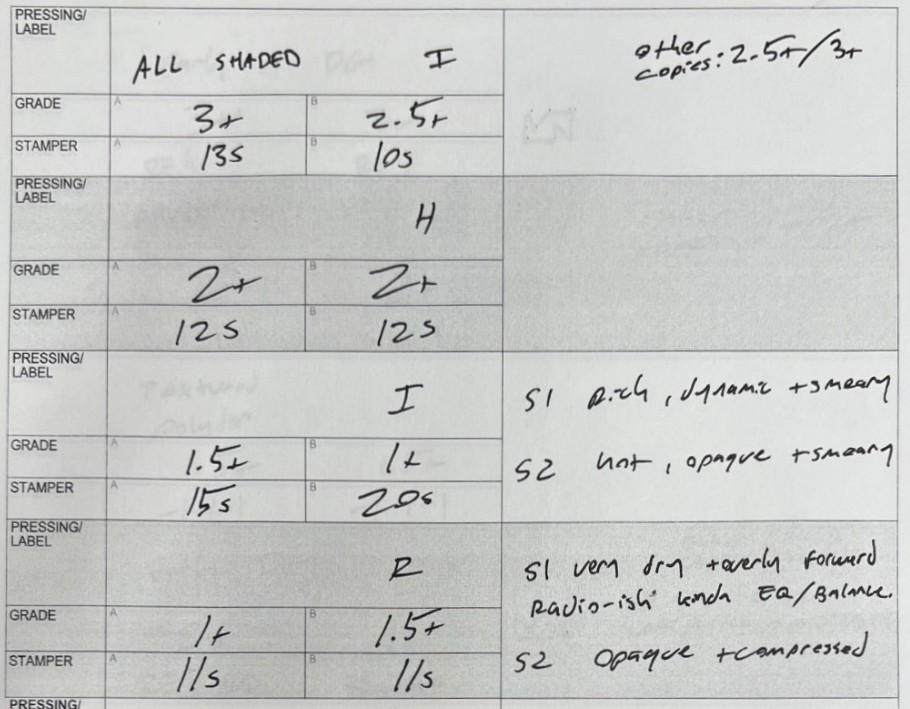
In the case of the stampers for this mystery title, it turns out that whatever intuitions we may have had going in would have been no help at all. Who could possibly predict that, for sound quality on side one, 13s would substantially beat 12s, 12s would beat 15s, and that 15s would beat 11s.

(more…)

Bach / Suite No. 2 / Janigro

Hot Stamper Pressings Featuring the Violin Available Now

Our 2007 listing for this album presented it this way:

A 1S/1S Indianapolis pressing with A1 metal mothers from 1960 with sweet sound.

Perfectly fitting for these Baroque pieces recorded in Italy.


UPDATE 2022

In 2007 we rarely had the number of copies we would have needed to carry out a serious shootout, which meant that records such as this one would be auditioned and, if they sounded good to us, sold on the basis of having good sound.

We judged records like this one on their absolute sound as opposed to the Hot Stamper shootout approach we use today, which gives us the record’s relative sound.

1S doesn’t mean much to us now, and even back then we knew better than to put too much stock in it.

Starting all the way back in the 80s we had been in the business of selling Living Stereo and other vintage Golden Age pressings.

We knew from playing scores of them that often the best sounding pressings had stampers between 10s and 20s. This was true for LSC 1817, 2446 and no doubt many others that I can no longer remember.


UPDATE 2025

The comments about later stampers — 10s to 20s — being the best are definitely not true.

Early stampers most of the time do better than later stampers.

And the right early stampers for LSC 2446 are much better than even the best of the later ones.

(more…)

3s Can Have Amazingly Good Sound, or 3s Can Have Mediocre Sound

Hot Stamper Pressings of Living Stereo Recordings Available Now

But how can you tell which 3s copies sound amazing and which 3s copies don’t?

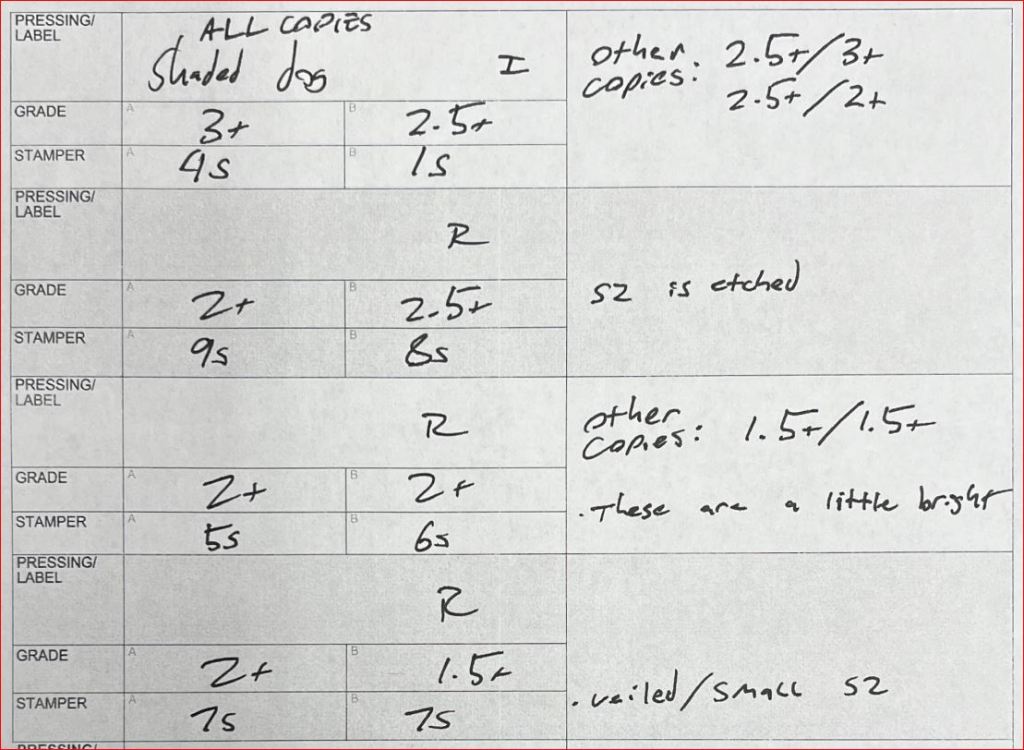
Below you will see the stamper sheet for a shootout we did not long ago.

A lot of our stamper sheets look like this one, close to half I would guess.

As you can see, the stampers and the sound are all over the map. This is not the least bit unusual in our experience. It’s simply the nature of records — they tend to come off the press with very different sound depending on factors that no one seems to understand very well, not even us!

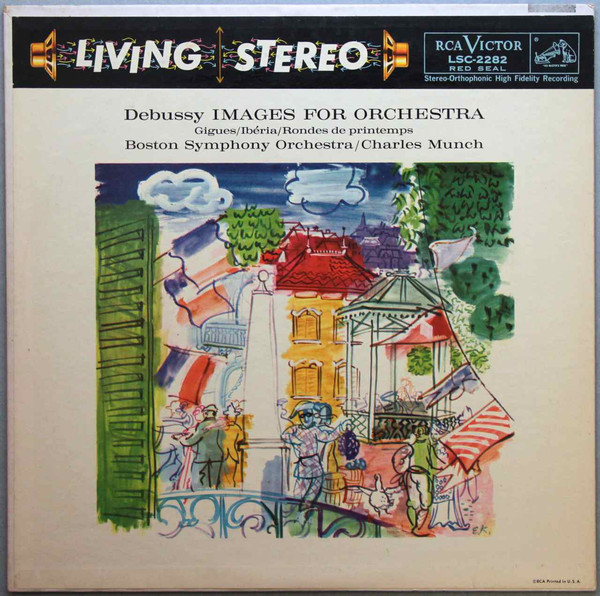
Note that the album you see pictured is not the record we did the shootout for.

(more…)

Another Knockout for Indianapolis, and It Was Rarely Even Close

Hot Stamper Pressings of Living Stereo Recordings Available Now

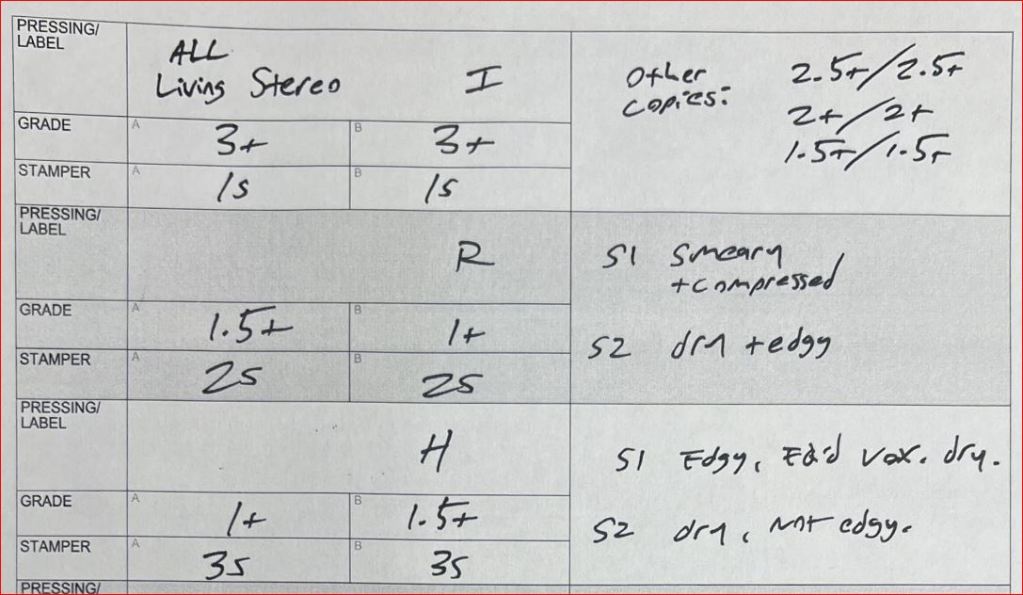
Below you will see the complete stamper sheet for a shootout we did in 2024.

Note that the album you see pictured is not the record we did the shootout for.

For RCA classical and orchestral recordings, many collectors think that the earliest pressings on the Shaded Dog label, in stereo, pressed in Indianapolis, tend to be the best sounding. 

More often than not, a rule of thumb like that one turns out to be right, which is how it got to be a rule of thumb in the first place. In this shootout, it turned out to be as right as rain.

The best pressingss with 1s stampers beat the 2s which beat the3s. Indianapolis was once again the pressing plant that produced the best sounding copies.

In fact, in this case the differences were even starker than we would have imagined going in. No copy not pressed in Indianapolis was even saleable, since a record that does not earn a grade of at least 1.5+ on both sides can qualify as a Hot Stamper pressing.

Fortunately, even though we were buying them randomly, we managed to luck out to some degree by finding many more 1s pressings than later-numbered ones.

Key Takeaways

  • 1s/1s is by far the best stamper for this mystery title, as collector wisdom would have predicted.
  • Indianapolis produced the best sounding pressings in this shootout, again, as predicted.
  • At some point collector wisdom fails us, as the Shootout Winning stampers (3+) and the good, not great stampers (1.5+) turned out to be the same stampers. This means that:
  • 1s is no guarantee of top quality sound. It follows that:
  • 1s might be the hot ticket, the 3/3 winner, but the odds, four to one, are against it. Again, it follows that:
  • As is almost always the case, the 1s pressing is most likely to be one of a bunch of potentially hot tickets.

(more…)

Seems as Though the Shaded Dogs Pressed in Indianapolis Actually Do Sound Better

Hot Stamper Pressings of Living Stereo Recordings Available Now

As painful as it may be for us to admit it, sometimes the conventional wisdom turns out to be right!

For RCA classical and orchestral recordings, collectors have long held that the earliest pressings on the Shaded Dog label, in stereo, pressed in Indianapolis, tend to be the best sounding. That qualifier “tend” may not be necessary — plenty of audiophiles think they simply are better sounding, no question about it.

Maybe. If we tallied all the copies we’ve played and created a very large spreadsheet using the data, perhaps we could give you a better answer than “maybe,” but we’ve definitely never tallied them up and have no plans to do so. It sounds like a lot of work.

We are not revealing what record had these stampers and earned these grades for the simple reason that we rarely if ever give out the specific information that identifies the best sounding pressing of any album.

As I’m sure you can understand, we want you to buy the copy with the Hottest Stampers from us, not find one on your own! We’re happy to be somwhat helpful, but naturally we find it necessary to draw the line somewhere, and giving out “the shootout winning stampers” are where we choose to draw it.

You can be sure, based on our most recent shootout for this mystery RCA title, that in future we will focus our efforts on the Indianapolis pressings and avoid the Richmond pressings unless they are cheap and minty.

When the conventional wisdom turns out to be correct, in other words, when it comports with reality, at least for the seven copies of this album that we played, we are happy to temporarily put aside our skepticism and learn from what this title is trying to tell us.

Why? Because the experimental evidence supports it.

The reality is that most of the time we are not able to predict which stampers will win a shootout before we actually sit down to play all our copies.

(more…)

Why Do the Later Stampers of this Shaded Dog Sound So Much Better than the Earlier Ones?

Hot Stamper Pressings of Living Stereo Recordings Available Now

For RCA classical and orchestral recordings, the earliest pressings on the Shaded Dog label, in stereo, tend to be the best sounding, right? 

Maybe. It’s an open question, at least it is for us when we consider how many exceptions to the rule we’ve run into over the 30+ years we’ve been buying and selling them.

If we tallied all the copies we’ve played and created a very large spreadsheet using the data, perhaps we could give you a better answer than “we don’t know,” but we’ve definitely never tallied them up and have no plans to do so. It sounds to me like a lot of work.

However, in our experience, and contrary to the conventional wisdom, sometimes the higher-numbered pressings are better sounding than the lower-numbered pressings. This is true of the stampers for the Shaded Dog pressings below.

Keep in mind that the stamper numbers you see belong to a different album.
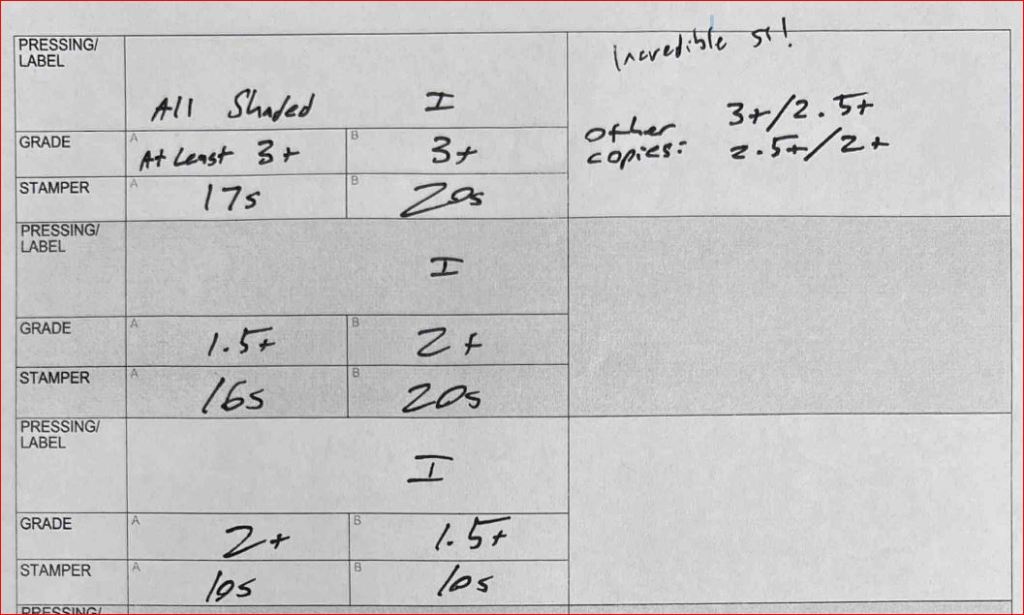
The questions that audiophiles who collect shaded dog pressings should be asking themselves right about now are:

  • Why is 17s/20s consistently better sounding than any copy with any other stampers?
  • Why is the 16s pressing worse sounding than even the worst 17s pressing when they are both Indianapolis pressings only one digit apart?
  • Why does the 20s side two potentially win the shootout with a 3+ grade, but more often only earn a grade of 2.5+ or 2+?
  • And the hardest to stomach of them all are those second-rate 10s stampers. How on earth can they come in last in a shootout against all the copies with higher numbers?

It turns out that the old rule of thumb that the lower-numbered stampers will sound better than the higher-numbered ones is not nearly as reliable as some folks would like it to be.

If it were more reliable, we could all just buy the lowest-numbered stamper copies we could find and know that we had the best available pressing. Then, if we were lucky enough to encounter an even lower-numbered stamper copy, we could buy that one and know that we now had an even better sounding pressing, all without having to play the old “best” one against the new “best” one.

It’s so convenient and logical this way, why would anyone want to bother with a different illogical, inconvenient and obviously counterintuitive method when the other one has so much going for it?

There is only one problem with the idea of collecting the earliest shaded dog pressings in order to secure the best sounding pressings — the fact that the evidence to support such an approach is so spotty. Yes, early stampers win lots of shootouts. No, early stampers do not win all the shootouts, or even a majority of them, judging by a rough calculation using the data from the many hundreds of stamper sheets we’ve created over the years.

Predictions Are Futile

The unfortunate reality we run into is that most of the time we are not able to predict which stampers will win a shootout before we actually sit down to play all our copies.

Although it’s true that there are many pressings in which one set of stampers always wins, the odds are that any particular pressing with those stampers will do well but won’t win, and it sometimes happen that some pressings with those stampers won’t do well at all.

This is why we have to do shootouts, and why you have to do them too, if finding the highest quality pressings is important to you.

Fortunately for readers of this blog, our methods are explained in detail, free of charge.

We’ve also written quite a few commentaries to help audiophiles improve the way they think about records.

I implore everyone who wants to make progress in this hobby to learn from the mistakes we’ve made. There are 146 “we were wrong” listings on the site as of this writing, and we learned something from every damn one of them, painful and costly as those experiences may have been.

(more…)