Month: November 2024

Gabor Szabo – 1969

More Jazz Recordings Featuring the Guitar

Reviews and Commentaries for Gabor Szabo


  • Here is a seriously good sounding copy with Double Plus (A++) grades on both sides
  • Tubey Magical, smooth, sweet and spacious, with a huge three-dimensional soundfield as well as transparency that really allows you to hear into the music
  • Superb choice of material, with a heavy emphasis on Beatles tunes – “Dear Prudence,” “I’ve Just Seen A Face,” “In My Life,” and “You Won’t See Me” all make an appearance here
  • Skye pressings are notorious for the quality of their vinyl, or lack thereof, which explains why so few of Szabo titles from this era have ever made it to the site
  • The DCC CD mastered by Steve Hoffman is excellent for those who insist on quieter backgrounds
  • “Szabo acknowledges that worthwhile popular music didn’t die with George Gershwin… [he] deserves credit for bringing a jazz perspective to songs that so many other improvisers were ignoring.”

The four Beatles tunes are the highlight of the album: “Dear Prudence,” “I’ve Just Seen A Face,” “In My Life,” and “You Won’t See Me,” as well as two folkie tracks by Joni Mitchell: “Both Sides Now” and “Michael From Mountains.”

A heartfelt ballad is handled with quiet and warm intimacy: Buffy Saint-Marie’s “Until It’s Time For You To Go.”

Uptempo pop classics like Bobby Hyland’s “Sealed With A Kiss,” The Classics IV’s “Stormy” and The Left Banke’s “Walk Away Renee” round out the best of the rest.

(more…)

Listening in Depth to Led Zeppelin IV

Hot Stamper Pressings of the Music of Led Zeppelin Available Now

Presenting another entry in our extensive listening in depth series with advice on what to listen for as you critically evaluate your copy of Zep’s mighty fourth album.

Here are some albums currently on our site with similar track by track breakdowns.

We always have a great time doing Zep IV shootouts. It’s one of those all-too-rare cases where amazing music and amazing sonics coexist on the same slab of vinyl. You just need to find the right slab, a proposition that turns out to be much harder than it sounds.

You probably know by now just how tough it is to find audiophile quality sonics on this album. Far too many copies just leave us cold, but the best pressings, whether British or domestic, are so good, and so much fun at the loud volumes we employ, that it ends up being worth all the time, trouble and expense it takes to wade through the vinyl dreck to find them.

But the best copies are so good, and so much fun, that it was definitely worth the trouble. Because the best copies ROCK, and it is a positive THRILL to hear this record rock the way it was meant to. If you have big speakers and the power to drive them, your neighbors are going to be very upset with you.

This link will take you to the Hot Stamper pressings of our hardest rockin’ albums currently available on the site.

Here are some of the other titles that have earned a place on our none rocks harder list.

Side One

Black Dog

The key to both of the first two tracks is to find a copy with a solid bottom end. Next look for an extended top end, easily heard on all the splashing cymbals.

Now listen for a tonally correct Robert Plant. The copies with lots of top will typically have him sounding too bright.

The copies with little in the way of high frequency extension will have him sounding veiled and dull.

One out of ten copies (with potentially good stampers) will get all three right: the top, the bottom and his voice. When you hear it you know it immediately, but you sure do have to go through a lot of copies before you have much of a chance of hearing it!

Rock and Roll

“[Rock and Roll] was a little tough to record because with the hi-hat being so open and [Bonham] hitting it that hard it was difficult to control. But I managed somehow or another.” Andy Johns

“The better copies prove once and for all that these are some of most up-front, lively and above all real sounding rock cymbals ever put on tape.” Tom Port
(more…)

The Pareto Effect in Audio – The 80/20 Rule Is Real

Please Consider Taking Some of Our Audio Advice

Even thought this commentary was written close to twenty years ago, we proudly stand behind every word.

Ambrosia’s first album does exactly what a good Test Disc should do. It shows you what your system is doing wrong, or poorly, and once you’ve fixed it, or made it better, it shows you that it actually is better, maybe even right, or at least more right than it was before.

We audiophiles need records like this. They make us better listeners, and they force us to become better audio tweakers. Because the amount of tweaking you do with your setup, components, room, electricity and the like is the only thing that can take you to the highest levels of audio.

The unfortunate reality audiophiles must eventually come to grips with in their journey to higher quality sound is that you cannot simply buy equipment that will get you there.

You can only teach yourself, painstakingly, over the course of many, many years, how to tweak and tune your equipment — regardless of its cost or purported quality — in order to reach the highest levels of audio fidelity.

And learning how to tweak and tune your equipment has other, fundamentally more important benefits in addition to its original purpose.

It helps you become a better listener. To notice aspects of the sound — the nuances and subtleties — you’ve been missing in your favorite recordings.

Breaking It Down

At most 20% of the sound of your stereo is what you bought.

At least 80% is what you’ve done with it.

Based on my experience I would put the number closer to 90%.

This is known as the Pareto Principle

The Pareto Principle, also known as the 80/20 Rule, The Law of the Vital Few and The Principle of Factor Sparsity, illustrates that 80% of effects arise from 20% of the causes – or in laymen’s terms – 20% of your actions/activities will account for 80% of your results/outcomes.

(more…)

Don’t Waste Your Money on this RCA from 1960

Hot Stamper Pressings of the Music of Modest Mussorgsky Available Now

Never liked the performance. The sound can be quite good on the best pressings, but too many copies are congested in the loudest passages.

We recently found a pressing that was quite a bit better than the other Reiner pressings we had on hand, which simply means that good pressings exist, but they are very hard to find.

However, without a good cleaning, this record is very unlikely to sound right on high quality modern equipment.

There are quite a number of other vintage classical releases that we’ve run into over the years with similar shortcomings.

For fans of vintage Living Stereo pressings, here are some to avoid.

Some audiophiles may be impressed by the average Shaded Dog pressing, but I can assure you that we here at Better Records are decidedly not of that persuasion.

Something in the range of five to ten per cent of the major label Golden Age recordings we play will eventually make it to the site. The vast majority just don’t sound all that good to us. (Many have second- and third-rate performances and those get tossed without ever making it to a shootout.)

It may be on the TAS super disc list, but that doesn’t mean the sound is up to our standards.

We much prefer Muti’s performance from 1979 for EMI.

(more…)

These Are the Stampers to Avoid on The Doors’ Debut

Hot Stamper Pressings of the Music of The Doors Available Now

In our experience, the Gold Label stereo originals with 1B/1B stampers are terrible sounding.

With 1B stampers it’s bad enough to go into our hall of shame for vintage pressings.

(Bad sounding audiophile records, being so plentiful, especially these days, have their own hall of shame.)

No surprise there; it’s just another bad sounding original pressing that ended up doing poorly in one of our shootouts.

We’ve auditioned countless pressings like this one in the 37 years we’ve been in business — buying, cleaning and playing them by the thousands. This is how we find the best sounding vinyl pressings ever made.

Not the ones that should sound the best. The ones that actually do sound the best.

If you’re an audiophile looking for top quality sound on vintage vinyl, we’d be happy to send you the Hot Stamper pressing guaranteed to beat anything and everything you’ve heard, especially if you have any pressing marketed as suitable for an audiophile. Those, with very few exceptions, are the worst.

(more…)

Letter of the Week – “Hot Stampers… are very very helpful as reference test records.”

Hot Stampers and Audio Progress Go Hand in Hand
One of our good customers had this to say about some Hot Stampers he purchased a while ago:

Hey Tom, 

These last few days have showed me that your “Hot Stampers” are not only a marvellous medium to enjoy music in a far superior way, but also are very very helpful as reference test records.

A short time ago I received my new speakers, many steps higher in performance than my previous ones. At the same time I made heavy changes to my turntable. I installed a better tonearm and cartridge and also tried a new plinth.

The result, as you can guess, was the need to realign the system from the bottom up. An annoying undertaking if it were not for all the “Hot Stampers” I’ve had the chance to get hold of. Knowing where the journey should go made it much easier to apply all the tricks I usually make use of.

And as you’ve pointed out several times, the upgraded setup made it possible to hear my “Hot Stampers” sound better than ever before.

Klaus M.

Klaus,

Hot Stampers are ideal for getting your system tweaked and tuned to perfection. We’ve been known to use some ourselves for that very purpose.

For the longest time our favorite test discs have been these three:

  1. Bob and Ray Throw a Stereo Spectacular,
  2. Tea for the Tillerman, and
  3. Led Zeppelin II.

(I was the only guy on the listening panel using Bob and Ray, by the way. I have played that record easily 500 or more times. Our listening guys are much younger than I am and prefer numbers two and three. Naturally, those work fine too.)

We cannot emphasize enough that, as much as love rock and jazz records for testing, classical and orchestral recordings are much more difficult to reproduce, and represent the ultimate tests for any system. If you don’t know what live orchestral music should sound like, and you don’t have any amazingly good vintage classical records, in many ways you are flying blind. There is a great deal more to be said on this subject, most of which has been said in reviews and commentaries for individual records — see here and here and a whole lot more here — and I hope to write more in time about the value of orchestral music in helping audiophiles improve the quality of their playback.

(more…)

Talking Heads – True Stories

More Talking Heads

  • With two solid Double Plus (A++) sides or close to them, this copy is guaranteed to handily beat any True Stories you’ve heard – exceptionally quiet vinyl too
  • Here’s the Midrange Magic (particularly on side one) that’s surely missing from whatever 180g reissue has been made from the tapes (or, to be clear, a modern digital master copied from who-knows-what-tapes)
  • “…True Stories is not without its charms… ‘Dream Operator’ is one of the most affecting tunes Talking Heads ever recorded; the closing-credits theme ‘City of Dreams’ is similarly touching.”

(more…)

Touch – A Great Test for Tweeters

More of the Music of John Klemmer

Mobile Fidelity, maker of some of the worst sounding records in the history of the medium, is the KING on this title. We know of no better pressing than the right version of the MoFi. (There are three different stampers for the MoFi, and only one of them ever wins shootouts.)

Klemmer says pure emotion is what inspired the album’s creation. Whatever he tapped into to find the source of that inspiration he really hit pay dirt with Touch. It’s the heaviest smooth jazz ever recorded. Musically and sonically, this is the pinnacle of Klemmer’s smooth jazz body of work. I know of none better. (If you want to hear him play more straight-ahead jazz try Straight from the Heart on Nautilus Direct to Disc.)

High Frequency Testing

MoFi was famous for demonstrating on an actual scope that the standard domestic ABC pressing had nothing above about 8 or 10 thousand cycles up top, which is why they all sound insufferably dull and dead. Some MoFi copies have no real top end either, which is the reason to we do these shootouts — to find the copies that are actually mastered and pressed right, not just the ones that should have been.

There’s plenty of information above 15K I would guess on this record — all those delicate percussion instruments ring so sweetly, the highs have to be extending way up there. (This album would probably make a good test to see how well your tweeters work, as well as for turntable setup. The right tracking weight and VTA are crucial to getting all the harmonics of a record like this right.) (more…)

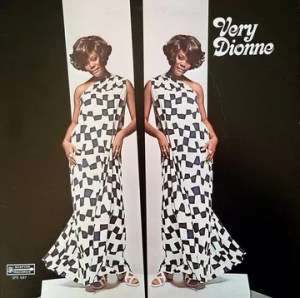
Dionne Warwick / Very Dionne

More Pop and Jazz Vocal Recordings

More Recordings Engineered by Phil Ramone

  • You’ll find solid Double Plus (A++) sound or close to it throughout this vintage Scepter pressing (one of only a handful of copies to hit the site in years)
  • This side one is superb – the bass is tight and punchy, the strings have lots of texture, and the background vocals are clean and clear, and side two is not far behind in all those areas
  • The midrange is full of that old analog Tubey Magic (particularly on side one), courtesy of Larry Levine and Phil Ramone, the kind that has completely disappeared from the modern record (even the modern reissue of a vintage record)
  • Note that the first track on side one simply does not sound good for some reason – we’re not sure what happened there but a screwup in the studio is our guess
  • “The album’s wide variety of styles summed up much of what made Warwick’s back catalog so universally appealing. In addition to a handful of new Burt Bacharach and Hal David sides, the platter boasts tasteful reworkings of pop music staples. One unmitigated zenith is ‘I Got Love’ from the Ossie Davis Broadway production Purlie. Once again, Warwick — under [Marty] Paich’s direction — equals if not surpasses Melba Moore’s stage presentation.”

Folks, don’t expect to see records like this coming to the site too often. We can’t find them anymore in this kind of clean condition, so if you like the lovely Ms Warwick, consider taking this one home and giving her (the record, not Dionne) a spin on your table.

Notice how the limiter on Dionne’s microphone is working overtime. She is practically shouting into it but it never seems to get much louder. Still the energy and the passion come through clearly. That’s the sign of a well-recorded vocal track.

(more…)

David Bowie – Scary Monsters

More David Bowie

More Art Rock Records

  • A Scary Monsters like you’ve never heard, with INCREDIBLE Shootout Winning Triple Plus (A+++) sound or close to it throughout this original UK import pressing
  • Here are just a few of the things we had to say about this killer copy in our notes: “round and rich”…”jumping out of the speakers”…”big and weighty”…”great size and energy”…”breathy vox”
  • This copy was simply bigger and fuller than practically all others we played, with plenty of funky energy and three-dimensional studio space
  • Exceptionally present, real and resolving, this pressing is guaranteed to murder any remastering undertaken by anyone, past, present and future
  • 5 stars: “Reworking glam rock themes with avant-garde synth flourishes, and reversing the process as well, Bowie creates dense but accessible music throughout Scary Monsters.”
  • If you’re a Bowie fan, this title from 1980 is surely a Must Own

This original RCA pressing has the kind of Tubey Magical Midrange that modern records can barely BEGIN to reproduce. Folks, that sound is gone and it sure isn’t showing signs of coming back. If you love hearing INTO a recording, actually being able to “see” the performers, and feeling as if you are sitting in the studio with the band, this is the record for you. It’s what vintage all analog recordings are known for — this sound.

If you exclusively play modern repressings of vintage recordings, I can say without fear of contradiction that you have never heard this kind of sound on vinyl. Old records have it — not often, and certainly not always — but maybe one out of a hundred new records do, and those are some pretty long odds. (more…)