Month: October 2022

Dire Straits Gets the Mobile Fidelity Treatment (Just Updated)

Reviews and Commentaries for Dire Straits’ Debut

More of the Music of Dire Straits

Geoff Edgers watched me and my lovely assistant, Sunshine, do a lengthy shootout for Dire Straits first album, but licensing problems prevented the Washington Post from using the footage. You can still see Sunshine in the video, and the yellow Phonogram label you see at one point is attached to one of the Dire Straits pressings we played that day.

Toward the end of the shootout for the first side, we put on the Mobile Fidelity pressing, and, interrupted from time to time by the sound of howling and gnashing of teeth, I pointed out for Geoff’s edification everything that was wrong with their pressing.

This took some time.

I will be writing more about their dismal effort one of these days, but for now let me leave you with this thought.

When you read the comments section for the article, it seems that quite a number of those discussing my lifelong interest in the world of audio and records go out of their way to state the obvious: that folks my age cannot hear high frequencies.

This is true, and I have never denied it. Case in point: After playing the MoFi pressing of Dire Straits, Sunshine, sitting at the turntable, asked what all that weirdly high-pitched, swirling, shusshing sound was. It wasn’t on the Phonogram pressings she had played. Only the MoFi.

I looked at her and asked “What shusshing sound?”

Sunshine had clearly heard it, Geoff may have, I don’t remember, but I had no idea there was anything untoward happening way up in that area of the frequency range. [1]

In my defense, not that I need one, I had no trouble telling how bad that Mobile Fidelity pressing was, or which of the five Dire Straits pressings sounded the best, or what each of them were doing, good, bad and otherwise.

What I was noting and explaining about the sound of these identical-looking UK pressings, their strengths and weaknesses, was clear enough for everyone in the room to hear over the course of the hour or so we spent doing it.

My goal was to walk Geoff through the steps of the shootout, and as far as I could tell he was with me all the way.

Those commenting about high frequency hearing loss are engaging in the fallacy of “begging the question,” assuming what they are trying to prove instead of proving it, which I suppose is the kind of thing you can expect to read in the comments left by those with a great deal of regard for their own opinions but little for the evidence required to support them. More here.


Robert Brook has a blog which he calls

A GUIDE FOR THE DEDICATED ANALOG AUDIOPHILE

Below you will find his review of a record I too know a fair bit about, the first Dire Straits album on Mobile Fidelity. I hope to write my review of the Mobile Fidelity pressing soon.

Ugh! Mobile Fidelity’s Remaster of DIRE STRAITS

As of 2015, this label may have entered a new and even more disgraceful era, but considering how bad their records have been from the very start — something that should be obvious to any audiophile with a high quality playback system, the kind of system that should have no difficulty exposing the manifold shortcomings of their remastered pressings — how much lower can they possibly fall?

Only time will tell.


[1.] Did Mobile Fidelity’s engineers hear this high-frequency hash? Will any audiophile come forward to expose this problem? The answers to both questions are very likely to be no.
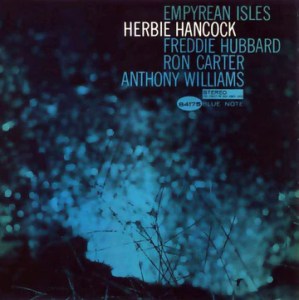
Herbie Hancock – Empyrean Isles

More Herbie Hancock

More Jazz Recordings Featuring the Piano

  • With excellent Double Plus (A++) grades throughout, this vintage Blue Note stereo pressing will be very hard to beat
  • Once again Rudy Van Gelder delivers the sound that audiophiles and jazz fans alike thrill to
  • These sides are lively, dynamic and full-bodied, and there’s real weight to the piano, always critically important to the piano recordings we play
  • 5 stars: “Working with cornetist Freddie Hubbard, bassist Ron Carter, and drummer Tony Williams — a trio just as young and adventurous as he was — Hancock pushes at the borders of hard bop, finding a brilliantly evocative balance between traditional bop, soul-injected grooves, and experimental, post-modal jazz.”
  • If you’re a fan of the music of Herbie Hancock, this title from 1964 is surely one of his best, and one of his best sounding
  • The complete list of titles from 1964 that we’ve reviewed to date can be found here.

(more…)

When You Hear Sound Like This, You Know It’s Right

More of the music of Franz Schubert (1797-1828)

Reviews and Commentaries for the Music of Franz Schubert

What I hear on this pressing is sound that is absolutely free from any top end boost, much the way live music is. There’s plenty of tape hiss and air; the highs aren’t rolled off, they’re just not boosted the way they normally are in a recording.

A few years back I had a chance to see a piano trio play locally; they even performed a piece by Schubert. The one thing I noticed immediately during their performance was how smooth and natural the top end was. I was no more than ten feet from the performers in a fairly reverberant room, and yet the sound I heard was the opposite of what passes in some circles for Hi-Fidelity.

This is the OPPOSITE of those echo-drenched recordings that some audiophiles seem to like, with microphones placed twenty feet away from the performers so that they are awash in “ambience.” If you know anything about us, you know that this is not our sound.

I have never heard live music sound like that and that should settle the question. It does in my mind anyway. The Chesky label (just to choose one awful audiophile label to pick on) is a joke.

How anyone buys into that phony sound is beyond me, but any audio show will prove to you that there is no shortage of audiophiles who love the Chesky “sound,” and probably never will be. (more…)

Saint-Saens / Piano Concerto No. 2 – Real Living Stereo Magic

More of the music of Camille Saint-Saens (1835-1921)

More Classical and Orchestral Recordings

  • This superb TAS List Piano Concerto recording finally arrives on the site with outstanding Double Plus (A++) sound and vinyl that’s about as quiet and scratch-free as we can find it
  • With huge amounts of hall space, weight and energy, this is DEMO DISC QUALITY SOUND by any standard
  • Some old record collectors (like me) say classical recording quality ain’t what it used to be – here’s all the proof anyone with two working ears and top quality audiophile equipment needs to make the case
  • If you love this famous piano concerto as much as we do, this is surely a classic from 1958 that belongs in your collection.
  • The complete list of titles from 1958 that we’ve reviewed to date can be found here.

Harry Pearson put this recording on his TAS List of Super Disc LPs, and with good reason — the sound is wonderfully relaxed and natural. This Shaded Dog pressing is exceptionally lively and dynamic. The sound is BIG and BOLD, enough to fill up your listening room and then some. The piano is clean and clear, and the strings are rich and textured.

The great Artur Rubinstein’s performance of these wonderful works is superb.

Our Shaded Dog pressing here offers plenty of Living Stereo Magic. This wonderful record boasts a natural orchestral perspective and superb string tone. It also presents the listener with a correctly-sized piano, which is fairly unusual for Rubinstein’s recordings. (more…)

Rachmaninoff / Piano Concerto No. 3 – Years Ago We Liked a Mono Pressing

Hot Stamper Mercury Pressings Available Now

CBFR-1/CBFR-2. This Mono pressing sounds SUPERB, much smoother and more natural than I remember the Stereo pressings sounding. What’s interesting about these Monos is they’re not mastered by Robert Fine. They are mastered by someone with the initials J.J., who apparently does all the Mono mastering. The reason Mercury Monos can sound as good as they do is because they have their own separate microphone feed and their own separate Mono tape recorder dedicated all to themselves. (London did the same thing and that’s why so many London Monos are amazing sounding.)

I don’t think you can find a better sounding Rachmaninoff 3rd on Mercury than this one. 

[UPDATE: Of course we no longer agree with that.  The best stereo copies are in an entirely different league. The mono can be good, but it cannot be great in the way the stereo pressings can be.] (more…)

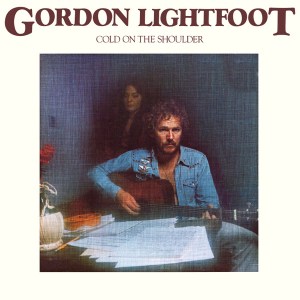
Gordon Lightfoot – Cold On The Shoulder

More Gordon Lightfoot

More Singer-Songwriter Albums

  • With seriously good Double Plus (A++) grades on both sides, this early Reprise pressing is doing just about everything right – exceptionally quiet vinyl too
  • The vocals are wonderfully breathy, smooth and sweet here – this recording is the very definition of Midrange Magic, thanks to the engineering of Lee Herschberg
  • “The strings and/or steel guitars are genteelly laid over the strumming of Lightfoot’s 12-string guitar; the rhythm section churns lightly underneath while the singer pours his winter-brandy voice through original songs depicting an ever lonely, ever rambling rustic.” – Rolling Stone
  • If you’re a fan of Gordon’s, this 1975 release is one that surely belongs in your collection

(more…)

Rachmaninoff / Piano Concerto No. 2 on Domestic STS – Would It Still Hold Up?

Reviews and Commentaries for the Music of Sergei Rachmaninoff
This is a twenty year old review of a pressing we have not played in many years, so please take what we say with a very large grain of salt.

Beating that in mind, if you see one for cheap in your local record store, give it a good look and, for the five bucks they will probably be asking, take a chance to see if the record actually does have the sound we heard all those years ago.

Folks, what we are offering here is THE SLEEPER Hot Stamper pressing of all time. Side one earned an amazingly good grade of A++ with side two every bit as good. The buyer of this album is going to be SHOCKED when he sees what pressing it is. 

For those of you who cherish pressings for their best sound and performances — as opposed to the typical audiophile collector who prefers the “right” original labels on his records, of course produced only in the “right” countries — this is the record for you.

Hold it up for your (right-thinking or otherwise) audiophile friends to witness before you put it on your table and BLOW THEIR MINDS.

How did this kind of sound get produced so cheaply, so late in the game? From what tape, by what engineer? It is a mystery to me, one that is very unlikely to be explained to anyone’s satisfaction.

Side One

A++ Super Hot Stamper sound — rich strings, clear horns, a piano that is full-bodied and natural, with a solid low end (the kind you rarely hear on record but is always so strikingly obvious in the presence of the real instrument).

A bit of compression holds it back from A+++. What a record!

Side Two

A++, not quite as rich as side one but lively, transparent, present, with zero smear (always a problem with piano recordings — you want to hear those hammers striking the strings clearly). 

(more…)

This Buck Dance Had Highs Like No Other

Hot Stamper Pressings of Living Stereo Recordings Available Now

[This review was probably written in 2010 or thereabouts.]

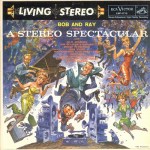
It’s been nearly two years but the waiting is over — we’ve found another copy of the famous Bob and Ray on Living Stereo with DEMONSTRATION QUALITY SOUND! Without a doubt this is the best sound I have ever heard for side one of this album. The sound here is so amazing I’m willing to go out on a limb and make the following recklessly bold statement. Buck Dance on this pressing has the most extended, natural and harmonically correct high frequencies I have ever heard from my speakers (or anyone else’s for that matter). 

And the crazy thing about it is, when played against an actual original pressing of Music for Bang, Baa-room and Harp, this copy, which one would assume is made from a dub, SOUNDS FAR BETTER.

Now of course we don’t have ten copies (or even two copies) of LSP 1866 which would allow us to find one with an even better Buck Dance than the one heard here on Bob and Ray, which means we cannot be definitive in any way about the disparity in sound between the two albums.

We can only judge the records we have in hand, not the ones we might have heard years ago or — even worse — speculate about the sound of records we have not actually played, recently or otherwise.

So we will stick to the facts, and the facts of this side one are that it is ABSOLUTELY AMAZING sounding.

But not perfect. We had three Bob and Rays and one of them was a bit more transparent. One of the them had more deep bass. (That first crack of thunder on side one is an obvious test for bottom end; it can really rattle the room on the right copy.)

So let’s be fair and say that overall this copy earns a grade of A++, having two shortcomings, but that Buck Dance earns a grade of A+++, having NO shortcomings!

(more…)

Coppelia and Sylvia / London Vs. Decca – Updated 2025

Hot Stamper Pressings of Music Conducted by Ernest Ansermet Available Now

Once again, the right Decca reissue blows the doors off the original London we played. This has lately become a pattern, but keep in mind it’s a pattern that’s reliable less than half the time, if memory is any guide. Many of the Decca reissues we’ve played over the last few years have failed badly in a head to head with their earlier-mastered and -pressed counterparts.

But the ones that beat all comers are the ones that stick in our minds and show up on our site.


UPDATE 2025

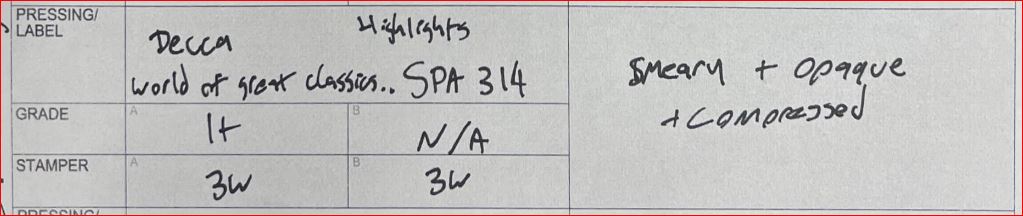
A copy of one of the SPA reissues we used to like shown above made it to our latest shootout and did not do nearly as well as a copy did years ago.

We don’t have those copies anymore and cannot say whether they actually did sound as good as we thought they did.

Our advice would be to assume that this is not the best way to buy this album. But neither is the original, as you will read below.


Clearly a case of confirmation bias, but at least we know something about our own biases, and that puts us well ahead of the audiophile pack.

Record collectors and record collecting audiophiles will tell you it shouldn’t happen, but fools like us, who refuse to accept the prognostications of those supposedly “in the know,” have done the work and come up with the experimental data that’s proven them wrong again and again.

Sort of. We had one, and only one, pressing of the original London (CS 6185), and boy was it a mess — crude as crude can be.

It sounded like an “old London record,” not the Decca engineered and mastered vintage collectible we know it to be.

We’ve played them by the hundreds, so we know that sound fairly well by now.

Are there copies that sound better? Surely there are, but how are you going to find them? Are you going to shell out the going rate of $25-50 on ebay for one (or more) clean copies, only to find that it/they sound every bit as bad as the one we auditioned? The question answers itself.

If, however, you are one of the lucky few who has a nice London or Decca original of this recording, please let us send you this copy so that you can do the shootout for yourself. You may be shocked at how good this music can sound on the right pressing. And if your copy sounds better than ours we will be very shocked indeed. [This offer was only good while we had the record, and it is long gone at this point. We still remember the sound though!]

Production and Engineering

James Walker was the producer, Roy Wallace the engineer for these sessions from April of 1959 in Geneva’s glorious Victoria Hall. It’s yet another remarkable disc from the Golden Age of Vacuum Tube Recording.

The hall the Suisse Romande recorded in was possibly the best recording venue of its day, possibly of all time. More amazing sounding recordings were made there than in any other hall we know of. There is a solidity and richness to the sound beyond all others, yet clarity and transparency are not sacrificed in the least.

It’s as wide, deep and three-dimensional as any, which is of course all to the good, but what makes the sound of these recordings so special is the weight and power of the brass, combined with unerring timbral accuracy of the instruments in every section of the orchestra.

(more…)

Past Masters – Digital Remastering at its Worst

Hot Stamper Pressings of The Beatles Available Now

A hall of shame pressing and another album reviewed and found to be better suited to the stone age stereos of the past.

The late-’80s import pressings of this album are bright (the tambourine on Hey Jude will tear your head off, just to cite one example) and aggressive and very digital sounding.

Unfortunately, if you want better sounding versions of these songs, you’re gonna have to buy lots of pressings of the band’s albums and singles and EPs in order to find good sounding versions of them, which is exactly what I did back in the ’80s. It took me years to do it.

In the ’90s, when I was actually selling this awful record (because my system was just too dark and unrevealing to show me how awful it was), I wrote:

These are all the songs that aren’t on the original 13 British albums, so for those of you with the MoFi Beatles box, these 2 LPs give you all the tracks you don’t have.  

This was written so long ago that we actually refer to the MoFi Beatles Box as something an audiophile would own (!)

To be clear, in this day and age, no serious audiophile who loves The Beatles should have the MoFi Box Set or Past Masters in his collection.

(more…)