Month: October 2022

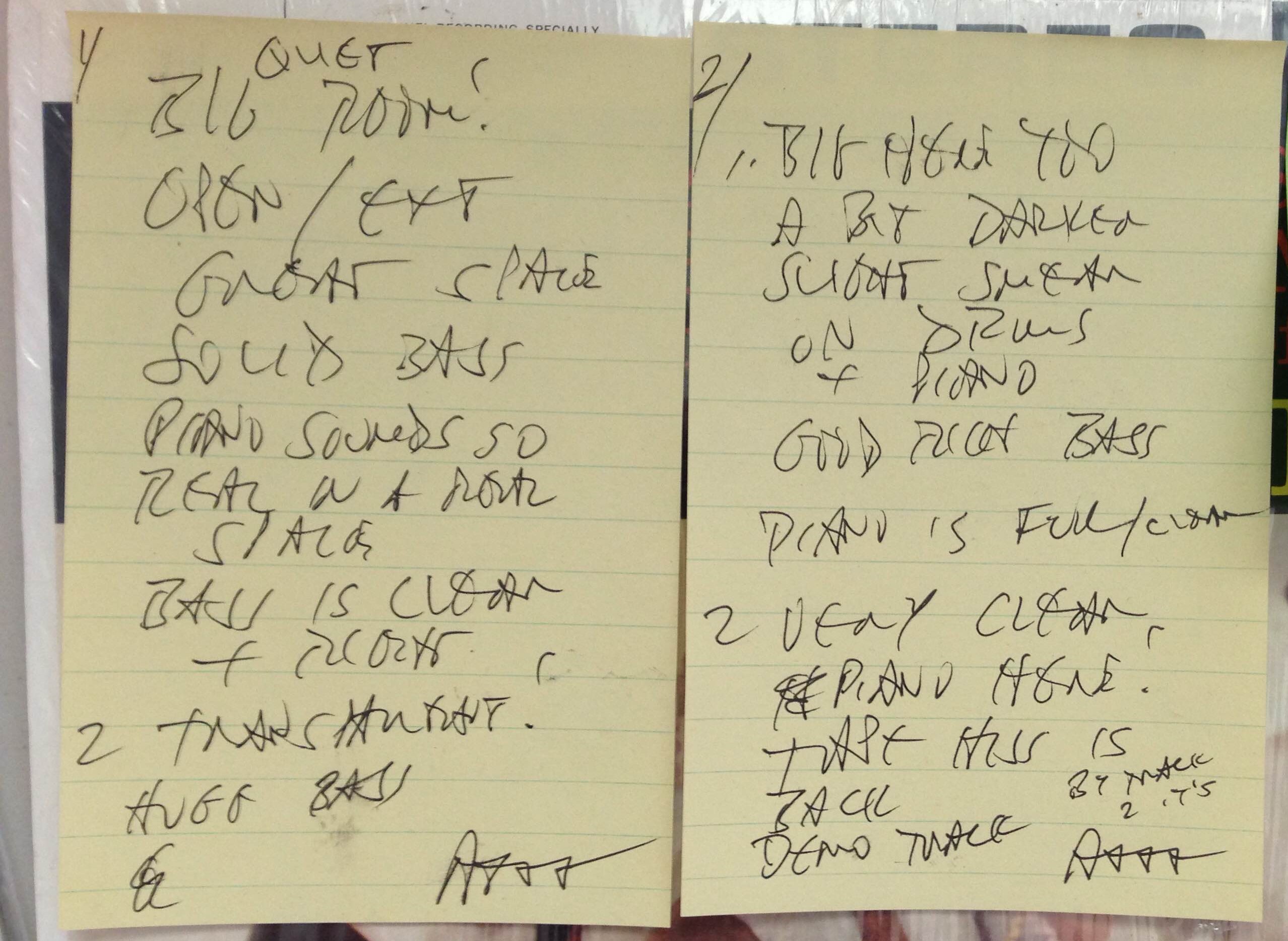
Joe Walsh – So What

More Joe Walsh

More of The Eagles
  • You’ll find outstanding Double Plus (A++) sound on both sides of this classic from Joe Walsh
  • Forget whatever dead-as-a-doornail Heavy Vinyl record they’re making these days – if you want to hear the Tubey Magic, size and energy of this wonderful album, a vintage pressing like this one is the only way to go
  • Includes a couple of classics, notably “Welcome to the Club” and a remake of “Turn to Stone”
  • You’ll hear most of the Eagles playing on this one, produced and engineered by the redoubtable Bill Szymczyk
  • “So What sees Walsh in top form as a guitarist. Most of the nine tracks feature solos of unquestionable quality in his usual rock style.”

We were impressed with how rich and punchy this copy sounded after hearing dozens of dry, thin, lifeless pressings over the years. Once we had heard that at least one copy sound good we proceeded to gather up every LP we could get our hands on and make this shootout happen.

Unfortunately, most of what we ended up playing had the kind of mediocre sound we had been suffering through for decades. The best copies had real energy, surprising dynamics, and lots of that ’70s Tubey Magic we love so much and never tire of talking about. (It’s also a sound that you will have a very hard time finding on most Heavy Vinyl pressings being made these days, as you doubtless know.)

The best pressings have (relatively; this is still Joe Walsh album we’re talking about) rich, warm guitars and vocals, supported by tight, punchy bass. Most copies were far less energetic and dynamic than this one. Excellent transparency as well.

All in all, this is pretty much as good as it gets for Joe Walsh in 1974. The very next year he would become an Eagle and help those boys knock it out of the park with Hotel California, their indisputable Magnum Opus.
(more…)

Love – Revisited

Hot Stamper Pressings of Psych Rock Albums Available Now

This is a very old review. The sound of this “greatest hits” compilation, on even the best copies, is unlikely to be good enough to qualify for Hot Stamper status these days.

We will never really know of course, as we no longer buy these pressings or take the time to clean and play them.

Love is a shockingly well-recorded band, one that deserves to be heard on top quality vintage pressings.

Our review from way back when:

This album was made from dub tapes and has some of that dubby sound (smeary, veiled, lacking in space), but in its defense we can say that it was very well mastered from those copy tapes and for the casual fan of the band is worth picking up if the price is right.

We had a chance to shootout a handful of copies recently and didn’t hear any others that could compete with this Elektra Original Pressing. We are HUGE fans of Love and this copy will show you why.

(more…)

Hot Stamper Note Taking – Here Is What You Need to Know

Basic Concepts and Realities Explained 
Finding Hot Stampers is all about doing shootouts for as many different pressings of the same title as you can lay your hands on, the more the merrier.

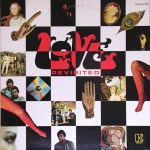
The kind of notes we take can be seen below. 4×6 Post-its work great for this purpose, using one per side.

We go through thousands of them every year.

Without specific notes on your records about exactly what you heard as you played them, you cannot possibly keep track of which pressings have the qualities you were listening for, and to what degree.

Extensive notes like the ones you see below are a must.

Other reviews with post-its can be found here.

We also make every effort to be very specific about the shortcomings of the audiophile pressings we review, which is why we started to reproduce our notes for their reviews when they are available.


(more…)

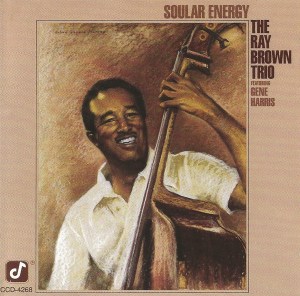
The Ray Brown Trio – Soular Energy

This Concord Jazz LP has excellent sound.

There is also a Half-Speed mastered audiophile version of this record cut by Stan Ricker himself.

Now hold on: Half-Speed mastering by its very nature causes a dramatic loss of bass definition, not to mention the fact that much of the deep bass usually goes completely missing. This is a record built around the sound of Ray Brown’s double bass. Do you really want the lowest octave of bass to disappear and the bass above it to turn to mud on a record that features a bass player as its leader? It’s crazy, right?

I’ve never heard the Half-Speed and don’t plan to track one down in order to audition it, but I guarantee you that this “full-speed” mastered version will blow the doors off any version mastered by Stan Ricker.

There is plenty of commentary on the website about his incompetent mastering and I recommend you take a moment to read some of it before you buy any Half-Speed mastered record. (We of course do not offer such records, with the exception of John Klemmer’s Touch, which is a Half-Speed mastered record that actually does sound good, superb in fact.)

(more…)

MoFi Misses The Mark by a M I L E with Kind Of Blue

Hot Stamper Pressings of Miles’s Albums Available Now
One of our good customers, Robert Brook, writes a blog which he calls

A GUIDE FOR THE DEDICATED ANALOG AUDIOPHILE

Below is a link to the review he wrote recently for one of our favorite records, Kind of Blue. (To be clear, we love the album, just not the MoFi pressing of it.)

MoFi Misses The Mark by a M I L E w/ Kind Of Blue

One of our other good customers had this to say about the Mobile Fidelity pressing:

Last night I listened to my 2015 Mobile Fidelity 45 RPM pressing.

I couldn’t get through the first cut.

Closed, muffled and flat as a pancake. No life or energy whatsoever.

I agreed and added my two cents:

My notes for their pressing read:

  • Thick, dark, flat.
  • Lacks air, space, presence.
  • Not a bad sound but it’s not right.

Later I added:

Having listened to the record more extensively, I see now I was being much too kind.

A longer review will be coming soon I hope. I think I may know why some audiophiles like the sound of this record, and will be exploring that notion in a future commentary.

The last line about the MoFi not having “a bad sound but it’s not right” reminded me of of the mistakes I made in my original review of Santana’s first album on MoFi: we owe you an apology

Kind of Blue is an album we admit to being obsessed with — just look at the number of commentaries we’ve written about it.

(more…)

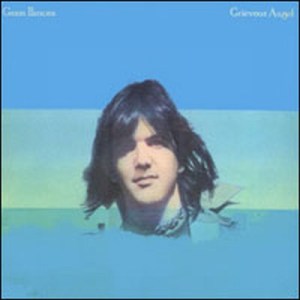
Gram Parsons – Grievous Angel

More Gram Parsons

More Country and Country Rock

  • With outstanding Double Plus (A++) grades throughout, this vintage Reprise pressing of Parson’s country rock classic is doing just about everything right
  • The sound here is rich, full and Tubey Magical with plenty of presence and none of the harshness that plagues most copies
  • It’s tough (and getting tougher) to find clean early pressings of this album, which is why only a handful of copies have hit the site in the last few years
  • 5 stars: “… one would be hard pressed to name an artist who made an album this strong only a few weeks before their death — or at any time of their life, for that matter.”

It’s tough to find clean early pressings of this album, let alone copies that have excellent sound and quiet surfaces on both sides. We just had our first big shootout for this album in a number of years and found a lot to like about this pressing. The sound here is big, rich and open with excellent clarity and transparency. Gram’s voice sounds just right here, as does Emmylou Harris’s. Most copies have some grit and edge that really hurts the uptempo numbers, but this copy remains smooth and sweet enough to work throughout.

The music on this record is some of the finest Parsons ever laid to wax. There never was a true “solo” Gram Parsons record and Grievous Angel is full of wonderful collaborations, especially with Emmylou Harris, whose nuanced vocal performance perfectly compliments Parsons on nearly every song. Though The Gilded Palace of Sin and Sweetheart of the Rodeo may be Parsons’ most influential LPs, he never made another record quite as personal and effortlessly understated as Grievous Angel.

(more…)

What exactly are Hot Stamper pressings?

More Straight Answers to Your Hot Stamper Questions
The easiest and shortest version of the answer would go something like:

Hot Stampers are exceptional pressings that have gone through a shootout and judged to have sound superior to other copies of the album under review.

My good friend Robert Pincus coined the term more thirty years ago. We were both fans of the second Blood, Sweat and Tears album, a record that normally does not sound very good, and when he would find a great sounding copy of an album like B,S&T, he would sell it to me as a Hot Stamper. It was a favorite album and I wanted to hear it sound its best.

Even back then we knew there were a lot of different stampers for that record — it sold millions of copies and was Number One on the charts for 8 weeks in 1969 — but there was one set of stampers we had discovered that seemed to be head and shoulders better than all the others. Side one was 1AA and side two was IAJ. Nothing we played could beat a copy of the record with those stampers.

More Than Just the Right Stampers

After we’d found more and more 1AA/ IAJ copies — check out the picture of more than 40 laid out on the floor — it became obvious that some copies with the right stampers sounded better than other copies with those same stampers.

We realized that a Hot Stamper not only had to have the right numbers in the dead wax, but it had to have been pressed properly on good vinyl.

All of which meant that you actually had to play each copy of the record in order to know how good it sounded.

There were no shortcuts. There were no rules of thumb. Every copy was unique and there was no way around that painfully inconvenient fact.

(more…)

Dire Straits Gets the Mobile Fidelity Treatment (Just Updated)

More of the Music of Dire Straits

Geoff Edgers watched me and my lovely assistant, Sunshine, do a lengthy shootout for Dire Straits first album, but licensing problems prevented the Washington Post from using the footage. You can still see Sunshine in the video, and the yellow Phonogram label you see at one point is attached to one of the Dire Straits pressings we played that day.

Toward the end of the shootout for the first side, we put on the Mobile Fidelity pressing, and, interrupted from time to time by the sound of howling and gnashing of teeth, I pointed out for Geoff’s edification everything that was wrong with their pressing.

This took some time.

I will be writing more about their dismal effort one of these days, but for now let me leave you with this thought.

When you read the comments section for the article, it seems that quite a number of those discussing my lifelong interest in the world of audio and records go out of their way to state the obvious: that folks my age cannot hear high frequencies.

This is true, and I have never denied it. Case in point: After playing the MoFi pressing of Dire Straits, Sunshine, sitting at the turntable, asked what all that weirdly high-pitched, swirling, shusshing sound was. It wasn’t on the Phonogram pressings she had played. Only the MoFi.

I looked at her and asked “What shusshing sound?”

Sunshine had clearly heard it, Geoff may have, I don’t remember, but I had no idea there was anything untoward happening way up in that area of the frequency range. [1]

In my defense, not that I need one, I had no trouble telling how bad that Mobile Fidelity pressing was, or which of the five Dire Straits pressings sounded the best, or what each of them were doing, good, bad and otherwise.

What I was noting and explaining about the sound of these identical-looking UK pressings, their strengths and weaknesses, was clear enough for everyone in the room to hear over the course of the hour or so we spent doing it.

My goal was to walk Geoff through the steps of the shootout, and as far as I could tell he was with me all the way.

Those commenting about high frequency hearing loss are engaging in the fallacy of “begging the question,” assuming what they are trying to prove instead of proving it, which I suppose is the kind of thing you can expect to read in the comments left by those with a great deal of regard for their own opinions but little for the evidence required to support them. More here.


Robert Brook has a blog which he calls

A GUIDE FOR THE DEDICATED ANALOG AUDIOPHILE

Below you will find his review of a record I too know a fair bit about, the first Dire Straits album on Mobile Fidelity. I hope to write my review of the Mobile Fidelity pressing soon.

Ugh! Mobile Fidelity’s Remaster of DIRE STRAITS

As of 2015, this label may have entered a new and even more disgraceful era, but considering how bad their records have been from the very start — something that should be obvious to any audiophile with a high quality playback system, the kind of system that should have no difficulty exposing the manifold shortcomings of their remastered pressings — how much lower can they possibly fall?

Only time will tell.


[1.] Did Mobile Fidelity’s engineers hear this high-frequency hash? Will any audiophile come forward to expose this problem? The answers to both questions are very likely to be no.

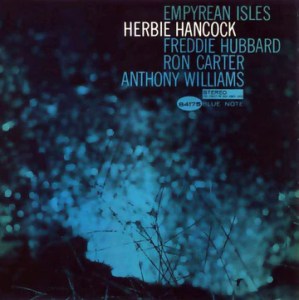
Herbie Hancock – Empyrean Isles

More Herbie Hancock

More Jazz Recordings Featuring the Piano

  • With excellent Double Plus (A++) grades throughout, this vintage Blue Note stereo pressing will be very hard to beat
  • Once again Rudy Van Gelder delivers the sound that audiophiles and jazz fans alike thrill to
  • These sides are lively, dynamic and full-bodied, and there’s real weight to the piano, always critically important to the piano recordings we play
  • 5 stars: “Working with cornetist Freddie Hubbard, bassist Ron Carter, and drummer Tony Williams — a trio just as young and adventurous as he was — Hancock pushes at the borders of hard bop, finding a brilliantly evocative balance between traditional bop, soul-injected grooves, and experimental, post-modal jazz.”
  • If you’re a fan of the music of Herbie Hancock, this title from 1964 is surely one of his best, and one of his best sounding
  • The complete list of titles from 1964 that we’ve reviewed to date can be found here.

(more…)

When You Hear Sound Like This, You Know It’s Right

More of the music of Franz Schubert (1797-1828)

Reviews and Commentaries for the Music of Franz Schubert

What I hear on this pressing is sound that is absolutely free from any top end boost, much the way live music is. There’s plenty of tape hiss and air; the highs aren’t rolled off, they’re just not boosted the way they normally are in a recording.

A few years back I had a chance to see a piano trio play locally; they even performed a piece by Schubert. The one thing I noticed immediately during their performance was how smooth and natural the top end was. I was no more than ten feet from the performers in a fairly reverberant room, and yet the sound I heard was the opposite of what passes in some circles for Hi-Fidelity.

This is the OPPOSITE of those echo-drenched recordings that some audiophiles seem to like, with microphones placed twenty feet away from the performers so that they are awash in “ambience.” If you know anything about us, you know that this is not our sound.

I have never heard live music sound like that and that should settle the question. It does in my mind anyway. The Chesky label (just to choose one awful audiophile label to pick on) is a joke.

How anyone buys into that phony sound is beyond me, but any audio show will prove to you that there is no shortage of audiophiles who love the Chesky “sound,” and probably never will be. (more…)