Month: March 2022

Are Hot Stampers a Good Investment?

Record Collecting for Audiophiles from A to Z

Hot Stampers sound better than other records — at least that seems to be the opinion of plenty of folks who’ve tried them — but do they have actual “collector” value?

Not really. On the surface they look just like any other pressing, so their market value as authentic and sometimes pricey Hot Stampers cannot be established or verified in any meaningful way.

The value of a Hot Stamper pressing is almost purely subjective: they exist only to provide listening pleasure to their owner. Yes, a Pink Label Island pressing of In the Court of the Crimson King is worth big bucks, but is it worth the $850 we charged recently if you were to try and resell it? Probably not.  

I understand why a record collector would be confused by this notion of subjective and limited value. Collecting records is often more about buying, selling and owning various kinds of records more than anything else.

For many it’s not primarily about playing or even listening to music. (I’ve actually met record collectors who didn’t even own a turntable!)

Some people see records as an investment. We do not. We think audiophile-oriented music lovers should pursue good sounding records for the purpose of playing them and enjoying them, understanding that the better their records sound, the more enjoyable they will be.

Collecting records primarily to build a record collection that can be sold at a profit in the future should be the last thing on anyone’s mind.

Get Good Sound, Then Good Records

It’s easy to be a collector; you just collect stuff. To get your stereo and room to sound good, and know the difference when they finally do, that is very very hard. I’ve been at it for forty-five years and I still work at it and try to learn new things every day. I know there’s a long way to go. Until you get your stereo, room and ears working, collecting good sounding records is all but impossible. You will very likely waste a fortune on “collector records:” the kind with Collector Value and very little else.

Collectible records are the opposite of the records we offer. All of the value of our Hot Stamper pressings is tied up in their music and sound, which is where we think it should be.

General Information

Many of the basic questions concerning Hot Stampers, including our grading system, 2-packs, coupons, the mailing list, as well as more general ordering and payment information, can be found in our original frequently asked questions section.

We think sitting down to listen to a Hot Stamper pressing is the best way to appreciate its superior sound, in the same way that hearing a vintage LP played on a top Hi-Fidelity system is the best way to appreciate the superiority of analog.

Short of getting you to try one of our records — 100% guaranteed, no questions asked — we hope the above comments will spur you to action.

And if the record doesn’t stand up to our claims for it in your opinion, send it back and we will return all your money.

(more…)

Sibelius / Symphony No. 2 – Reviewed in 2013 and Again More Recently

More of the Music of Jean Sibelius (1865-1957)

Back in 2013 we liked the performance and the sound of this recording on Living Stereo, but recently we played a couple of copies they did not impress us much.

Our system was very different in 2013, and, of course, the copies of the record we have now are not the same as the ones we played all those years ago.

We currently prefer the performance by Barbarolli on Readers Digest.

The Mackerras reissued on London or RCA Victrola may be good too. We have not played either of them in quite a while, so take this recommendation for what it is, an old memory that may be faulty.

(more…)

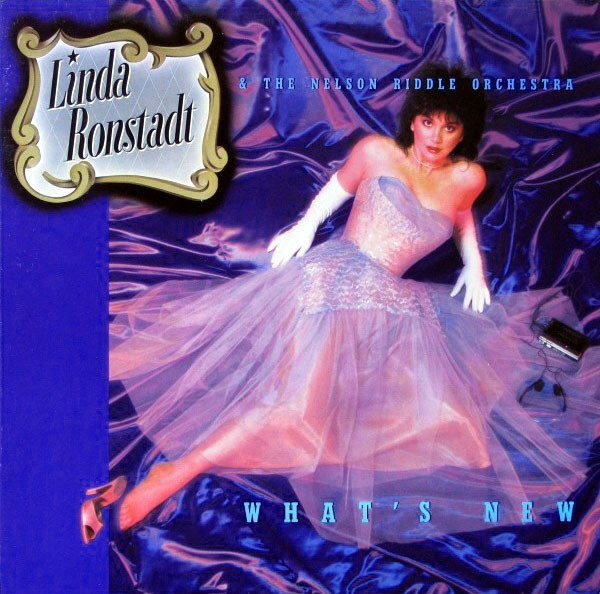
String Tone and Texture Are Key to the Best Pressings of What’s New

Hot Stamper Pressings of the Music of Linda Ronstadt Available Now

We’ve criticized the engineer George Massenburg in the past, but with this copy we almost want to take it all back.

What he gets right on this recording is the sound of an orchestra, augmented with various jazz musicians (Ray Brown, Tommy Tedesco, Plas Johnson, Bob Cooper), all performing live in a huge studio.

The sound stretches far to Linda’s left, far to her right, as well as back far behind her in a huge semi-circle. She is of course singing in a vocal booth, with her vocal placed front and center in the soundstage.

What to Listen for

That’s easy on this album: the strings. When the strings are big and rich, not shrill and thin, that’s a good thing. Rosiny texture means you have a copy with less smear and higher resolution. Harmonics up top means that the top end of your copy is extending properly.

Bottom line: If the strings are bad on this album probably everything else is too.

Here are some records that are good for testing string tone and texture.

Having said that, this is an album of standards sung by a woman with a very recognizable voice. If Linda doesn’t sound right, what’s the point of the record? To hear Nelson Riddle’s well-recorded strings?

The best copies have Linda sounding rich and breathy. Few managed to pull off that particular trick as well as we would have liked. We took major points off for those copies that had her sounding too thin or forced in her upper range.

(more…)

Lionel Richie – Can’t Slow Down

More Lionel Richie

More Soul, Blues, and Rhythm and Blues

  • An outstanding copy of Richie’s second solo studio album, with very ANALOG sound from start to finish
  • Rich, smooth and natural, the sound here is guaranteed to please – recall that the 12″ of All Night Long was on the TAS List back in the day (and yes, I used to sell it!)
  • 4 1/2 stars: “In 1999, Q magazine included Can’t Slow Down on its list of the best Motown records of all time and stated, “Production values are high, his songwriting craft is at its peak and at least one track – the global smash ‘All Night Long’ – is an anthem to good times that makes the heart sing and feet twitch.””

This vintage Motown pressing has the kind of Tubey Magical Midrange that modern records barely BEGIN to reproduce. Folks, that sound is gone and it sure isn’t showing signs of coming back. (more…)

Eddie Offord Is One of Our Favorite Engineers

Eddie Offord Engineered Albums with Hot Stampers

Eddie Offord Engineered Albums We’ve Reviewed

More of Our Favorite Engineers

Eddie Offord is one of our favorite recording and mixing engineers. Click on the links below to find our in-stock Eddie Offord engineered or produced albums, along with plenty of our famous commentaries.  

Many can be found in our Rock and Pop Top 100 List of Best Sounding Albums with the Best Music (limited to titles that we can actually find sufficient copies of with which to do our Hot Stamper shootouts).

(more…)

Behind the Scenes of One of My Favorite Recordings – Citizen Kane

More of the Music of Bernard Herrmann in Stock

An orchestral dreadnought such as this requires mastering and pressing of the highest quality. The music by its very nature taxes the limits of LP playback itself, with deep bass notes; incredible dynamics from every area of the stage; masses of strings playing at the top of their registers with abandon; huge drums; powerful brass effects — every sound an orchestra can produce is found on this record, and then some.

Kenneth Wilkinson was the engineer for these sessions in glorious Kingsway Hall.

It’s yet another remarkable disc from the Golden Age of Recording, in this case extending all the way into the ’70s.

You will hear plenty of sounds that defy description, that’s for sure. Some of the time I could not even imagine what exotic instrument could possibly be making the sound I was hearing. The remarkable document pictured below will show you some of them.

(more…)

King Floyd / Self-Titled – Another Surprisingly Well Recorded Album Discovered

More King Floyd

More Soul, Blues, and Rhythm and Blues

  • King Floyd’s sophomore release finally arrives on the site with Shootout Winning Triple Plus (A+++) sound on both sides
  • We were shocked at how well recorded this album is – the first track is a bit rough, but after that you feel like you are right in the studio with these guys
  • With its presence, clarity, and timbral accuracy, this pressing is guaranteed to be one of the best sounding groove-laden soul records you’ve heard in a very long time
  • We guarantee there is dramatically more space, richness, presence, and performance energy on this copy than others you’ve heard, and that’s especially true if you made the mistake of buying whatever Heavy Vinyl pressing is currently on the marke

(more…)

Goodbye Yellow Brick Road – What to Listen For

More Elton John

More Reviews and Commentaries for Goodbye Yellow Brick Road

The richness, sweetness and freedom from artificiality is most obvious where you often hear it on a Pop Rock Big Production like GYBR: in the loudest, densest, most climactic choruses.

We set the playback volume so that the loudest parts of the record are as huge and powerful as they can possibly become without crossing the line into distortion or congestion.

On some records, Dark Side of the Moon comes instantly to mind, the guitar solos on Money are the loudest thing on the record.

On Breakfast in America the sax toward the end of The Logical Song is bigger and louder than anything on the record, louder even than Roger Hodgson’s near-hysterical multi-tracked screaming “Who I am” about three quarters of the way through the track. Those, however, are clearly exceptions to the rule. Most of the time it’s the final chorus of a pop song that gets bigger and louder than what has come before.

A pop song is usually designed to build momentum as it works its way through the verses and choruses, past the bridge, coming back around to make one final push, releasing all its energy in the final chorus, the climax of the song. On a good recording — one with real dynamics — that part of the song should be very loud and very powerful.

Testing the Climaxes

The climax of the biggest, most dynamic songs are almost always the toughest tests for a pop record, and it’s the main reason we play our records loud. The copies that hold up through the final choruses of their album’s largest scaled productions are the ones that provide the biggest thrills and the most emotionally powerful musical experiences one can have sitting in front of two speakers. Our Top 100 is full of records that reward that kind of intense listening at loud levels.

We live for that sound here at Better Records. It’s precisely what the best vintage analog pressings do so brilliantly. In fact they do it so much better than any other medium that there is really no comparison, and certainly no substitute. If you’re on this site you probably already know that.

Two to Listen For

Number one: Too many instruments and voices jammed into too little space in the upper midrange. When the tonality is shifted-up, even slightly, or there is too much compression, there will be too many elements — voices, guitars, drums — vying for space in the upper part of the midrange, causing congestion and a loss of clarity.

(more…)

Bud & Travis …In Concert

More Folk Revival Music

This original Liberty Black and Rainbow Label LP has exceptionally quiet vinyl and very good sound.

About fifteen years ago, I played side one and thoroughly enjoyed it. These guys are very entertaining, especially their between song banter.

What was surprising was how dynamic the vocals are on this recording. You would never hear a studio recording with these kinds of dynamics, I can tell you that.

Why does this 1960 recording of live folk music sound so good?

Well, Liberty was a label that tended to produce very good sounding records. We’ve played scores of them, and we did some shootouts for the ones that had music that could justify our high prices the cost of all the time and effort required to find the best sounding copies.

But the most obvious reason this record has such good sound is that Ted Keep recorded it.

You don’t have to, but if you want this kind of sound quality, it pays to go back to the All Tube Recording and Mastering chains of the late ’50s and early ’60s. That is where you are most likely to find it.

If you’re a fan of live folk music, this album from 1960 surely belongs in your collection.

The complete list of titles from 1960 that we’ve reviewed to date can be found here.

(more…)

Dream With Dean – Watch Out for Hard and Honky Vocals

Hot Stamper Pressings of Pop and Jazz Vocal Albums

Dream with Dean is great for finding any traces of “honk” in your midrange. Getting Deano’s baritone to sound tubey and rich, to get the sound that Bing Crosby could get just by opening his mouth, is not all that easy on some systems, mine included.

Correctly set VTA is critical in this regard, but pretty much everything must be working at its best for Dean to sound as intimate and natural as we know he can on the best pressings.

Balancing the lower mids with the upper mids is the goal, and it’s not as easy as it sounds. This album is great for testing, and guaranteed to bring practically any high-dollar system at a stereo showroom, a convention, or your very own home to its knees.

This is my favorite Dean Martin record of all time; just Dean and a jazz guitar quartet behind him (featuring Contemporary favorites Barney Kessel and Red Mitchell!) doing standards. On the best copies, the immediacy is absolutely mind-blowing. It’s a shame that there aren’t more Frank Sinatra records that sound like this.

(more…)