rossiovert

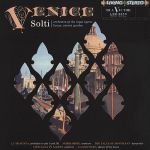
Venice on Classic Records

Hot Stamper Pressings of Classical and Orchestral Music

Classic Records remastered the tapes for LSC 2313 and even the people who like the sound of Classic’s Heavy Vinyl pressings used to complain about it, so you can imagine what we think of it.

What a piece of garbage. With smeary, shrill, screechy strings, it gives no indication of the beauty that is on the tape. 

The Victrola reissue, VICS 1119, is dramatically better sounding than any other reissue of the album we have played, including of course the Classic, and may even be better sounding that the Shaded Dog original itself.


This Heavy Vinyl reissue is noticeably lacking in a number of areas that are important to the proper presentation of orchestral music. If you own a copy of this title, listen for the qualities we identified above in the sound that came up short.

Below you will find links to other records that have the same shortcomings we heard when playing the Classic Records pressing of LSC 2313.


(more…)

On Ballet Music From The Opera, How Much Tubey Magic Is Too Much?

Hot Stamper Pressings of Living Stereo Recordings Available Now

UPDATE 2023

We have stopped buying the original LSC 2400 for the simple reason that it is not competitive with the budget VICS 1206 reissue from 1960 that replaced it in the RCA catalog.

The review we wrote for the Shaded Dog is probably close to twenty years old. There was a time when the shortcomings of the original RCA were not nearly as easy for us to recognize, but that time has long since past.

If any copy of the original, or any remastered version from the modern era sounds good to you, we can almost guarantee that you are mistaken about the quality of the sound, and, even better, we can offer you the pressing that makes our case better than any review can.


Our Old Review

The hall is HUGE — so transparent, spacious and three-dimensional it’s almost shocking, especially if you’ve been playing the kind of dry, multi-miked modern recordings that the 70s ushered in for London and RCA. (Many of Solti’s recordings from the decade are not to our liking, for reasons we lay out here.)

EMI recordings may be super spacious but much of that space is weird, coming from out-of-phase back channels folded in to the stereo mix. And often so mid-hall and distant. Not our sound, sorry.

We strongly believe that there will never be a modern reissue of this record that even remotely captures the richness of the sound found on the best of these Living Stereo original pressings.

Here are some of the strengths and weaknesses we noted on a copy we played way back when.

Side One

Big and lively. The Tubey Magical colorations are a bit much for us, with too much tube smear on the strings and brass to earn more than a single plus. 

Side Two

Even bigger and more spacious, with some smear caused by the serious amounts of tube compression being used, of course, but the quiet passages are magical. [Which is precisely what heavy tube compression is designed to accomplish.]

The Victrola Reissue

We much prefer the sound of the Victrola reissue, VICS 1206, which came out in 1966.

As for the Victrola pressing, we’re guessing — how could we possibly know for sure? — that less tube compression was used in the mastering.

It’s still plenty tubey, but more to our taste for not being overly tubey.

(more…)

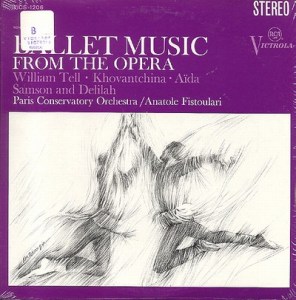
Ballet Music From The Opera – Yet Another Reissue that Trounces the Original

More of the Music of Camille Saint-Saens

More of the Music of Modest Mussorgsky

  • INCREDIBLE Shootout Winning Triple Plus (A+++) sound or close to it throughout this vintage Victrola 60s reissue, one of the best in the entire series
  • Both of these sides are big, lively, and dynamic, with the lovely bells and other percussive elements benefitting immensely from the wonderfully extended top
  • The sonics here have the power to transport you completely, with solid imaging and a real sense of space, qualities that allow us to forget we are in our listening rooms and not in the concert hall

Pay attention to the brass — yes, it may have some tubey smear, but listen to how huge and powerful it is! Drop the needle and watch (or listen) as the sound comes jumping out of your speakers.

Modern records can’t do that.

These Decca-derived recordings are highly sought after, and with good reason. It’s hard to imagine a more wonderful audiophile disc, both in terms of the program and the quality of the sound.

This is the precisely the kind of big, bold, lifelike sound Decca engineers were able to capture on tape, and RCA mastering engineers were able to master from that analog tape, 60+ years ago.

The original RCA (LSC 2400) sells for many, many hundreds of dollars in clean condition and may not have especially good sound, if our experience is any guide. Some of the ones we’ve played have been quite shrill. In other words, you could easily spend a ton of money on one and end up with a bad sounding collector piece destined to sit on your shelf for years between playings.

Or you could buy the Classic 180g reissue and end up with one of the biggest disasters in the history of remastering. More about that later.

Even though the album was recorded by Decca, it’s a superb example of Living Stereo Tubey Magic at its best. It is our belief that there will never be a reissue of this recording that even remotely captures the energy, transparency, sweetness and richness of the sound of this copy.

And the hall is huge — so spacious and three-dimensional it’s almost shocking, especially if you’ve been playing the kind of dry, multi-miked modern recordings that the 70s ushered in for London and RCA.

EMI’s recordings are often super spacious but much of that space is weird, coming from out of phase back channels folded in to the stereo mix. And so often mid-hall and distant. Not our sound, sorry.

(more…)

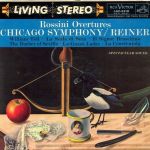
Audiophiles Should Give RCA’s Rossini Overtures a Miss

More of the music of Gioachino Rossini (1792-1868)
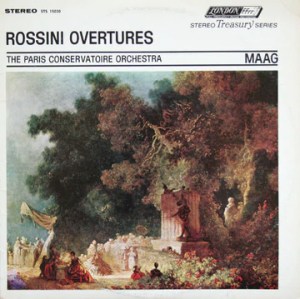
None of the pressings we played of this RCA were remotely competitive with Maag and the PCO on London.

The sound of this RCA was consistently boxy and congested, a case of the “old record” sound we find on countless vintage pressings. The world is full of bad records. We’ve suffered through them by the thousands.

Only an old school audio system can hide the faults of a pressing such as this. The world is full of those too, even though they might comprise all the latest and most expensive components.

There are quite a number of Golden Age pressings that we’ve run into over the years with obvious shortcomings.

Here are some of them, a very small fraction of what we’ve auditioned, broken down into the three major labels that account for most of the best classical and orchestral titles we’ve had the pleasure to play.

  • London/Decca records with weak sound or performances
  • Mercury records with weak sound or performances
  • RCA records with weak sound or performances

We’ve auditioned countless pressings in the 37 years we’ve been in business — buying, cleaning and playing them by the thousands.

This is how we find the best sounding vinyl pressings ever made, through trial and error. It may be expensive and time consuming, but there is simply no other method for finding better records that works. If you know of one, please write me!

We are not the least bit interested in records that are “known” to sound the best.

Known by whom? Which audiophiles — hobbyists or professionals, take your pick — can be trusted to know what they are talking about when it comes to the sound of records?

I have never met one, outside of those of us who work for Better Records. I remain skeptical of the existence of such a creature. The audiophile experts and reviewers I’ve encountered on the web seem hopelessly lost to me.


UPDATE: 2024

Woops, I take that back. I have met one, a certain Mr. Robert Brook. He has been conducting his own shootouts for a few years now and has made his findings available on his blog, The Broken Record. This is information you can trust.


(more…)

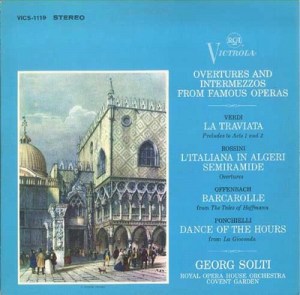
Overtures and Intermezzos – Solti

More Living Stereos

  • Off the charts “Triple Triple” (A+++) sound for this classic Decca engineered “Living Stereo” Victrola from 1965 – both sides of this pressing of VICS 1119 earned our top grade of A+++
  • Listen to how rich the cellos sound — this is Tubey Magical Analog and its most luscious and enchanting.
  • You could easily play one hundred classical albums and not hear this kind of sound!
  • If you have the real Living Stereo pressing (with the cool die-cut cover), let us send you this pressing to compare — who knows, you might like it even better than your Shaded Dog
  • Classic Records did this title back in the 90s, and it was one of the worst of their sorry releases

This 1959 Decca recording is overflowing with the kind of rich, spacious, Tubey Magical sound that can only be found on vintage vinyl.

On this copy you will find As Good As It Gets sound. It’s so BIG and RICH you will have a hard time believing that it’s a budget reissue from 1965, but that’s precisely what it is.

Ah but it’s a reissue from back in the day when they knew how to cut a record properly, regardless of its retail price.

The rich, textured, rosin-on-the-bow lower strings on this record are to die for. Find me a modern record that sounds like this and I will eat it.

And by “modern record” we hasten to include both modern recordings and modern remasterings of older recordings. NO ONE alive today can make a record that sound even remotely as good as this. To call it a lost art is to understand something that few vinyl-loving audiophiles appear to have grasped since the advent of the Modern Reissue, which is simply this: they can’t begin to compete.

After twenty years of trying and literally hundreds of failed examples the engineers of today have yet to make a record that sounds as powerful and life-like as this London from almost fifty years ago.

Fortunately for the both of us we are not trying to make a record that sounds the way this one does. We’re just trying to find one, and folks, we found the hell out of this one. (more…)

Rossini / Overtures / Maag – The Best on Record

More of the Music of Gioachino Rossini

  • With superb sound from start to finish, the orchestral power on display here is positively breathtaking
  • Wilkie’s Decca Tree recording is overflowing with the kind of rich, spacious, Tubey Magical sound that can only be found on vintage vinyl
  • Performances and sound like no other – Maag’s Rossini Overtures is in a league of its own
  • “You’d think Maag would approach the scores the way most conductors do: gung-ho and hell bent for leather. He doesn’t. In fact, Maag displays a good deal of reserve, calculating his interpretations for the biggest payoff. For instance, in William Tell he keeps the opening sections in check, and then he builds the final segment into a most-exciting whirlwind, the conclusion carrying you away.”
  •  When you hear how good this record sounds, you may have a hard time believing that it’s a budget reissue from the late-’60s, but that’s precisely what it is.
  • Even more extraordinary, the right copies are the ones that win shootouts

Maag breathes life into these works as only he can and the Decca engineering team led by Kenneth Wilkinson do him proud.

Everyone needs a good Rossini Overtures – the music is exciting and fun, not to mention Demonstration Quality on a pressing such as this. The combination of sound and performance on the best of the Maag-led Londons could not be equaled.

Gamba on London was much too sleepy for our tastes, and the famous Reiner on RCA left a lot to be desired. It’s mid-hall perspective and dynamic compression took all the fun out of this music.

After hearing the killer Maag pressings, nothing else would do!

Note that the orchestra is none other than the Paris Conservatoire, whose playing of the famously demanding Stravinsky Rite of Spring, under Monteux (LSC 2085), is absolutely stunning as well. (more…)

Verdi, et al. / Ballet Music From The Opera

Hot Stamper Pressings of Living Stereo Recordings Available Now

This Super Rare, Highly Collectible copy of LSC 2400 has vintage RCA Golden Age sound, for better and for worse. Even though the album was recorded by Decca, it’s got a healthy dose of Living Stereo Tubey Magic.

There will never be a reissue of this record that even remotely captures the richness of the sound found here.  

And the hall is HUGE — so spacious and three-dimensional it’s almost shocking, especially if you’ve been playing the kind of dry, multi-miked modern recordings that the 70s ushered in for London and RCA.

We much prefer the sound of the Victrola reissue, VICS 1206, which came out in 1966.

As for the Victrola pressing, we’re guessing — how could we possibly know for sure? — that less tube compression was used in the mastering.

It’s still plenty tubey, but more to our taste for not being overly tubey.

Price Versus Quality

Speaking of cheap reissues, we are on record as being fans of a great many budget reissue classical LPs for decades. My catalogs from the ’90s were full of reissues with exceptionally good sound.

Now that we do things differently, we’ve discovered some budget pressings that are so well-mastered they have the potential — accent on the word potential — to win shootouts.

(more…)

Rossini et al. / William Tell and other Overtures – Bernstein – Reviewed in 2008

More of the music of Gioachino Rossini (1792-1868)
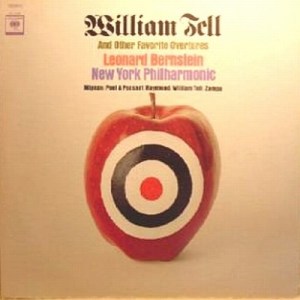
Our Favorite Performance of Rossini’s Overtures – Maag and The PCO

This is a SUPERB SOUNDING Columbia Masterworks LP of favorite overtures, energetically conducted by Leonard Bernstein. It’s exceedingly rare to find a Columbia pressing with sound like this: there’s tons of tubey magic; the string tone is surprisingly good; there’s huge amounts of depth and the overall presentation is tonally rich, sweet, and correct in the best golden age tradition.

There’s a bit of compression in the loudest passages, especially on side two. But this is a small price to pay for an otherwise wonderful sounding, beautifully mastered and pressed Columbia 360 Label LP.

Carl Stern plays the cello solo on the piece by Suppe and the sound is to die for, every bit as good as the famous Mercurys and RCAs we know so well. Truth be told, the quieter passages on this record are the most wonderful. The sense of real musicians playing in space is palpable, especially on side one.

The other pieces on this record are Zampa Overture, Mignon Overture, Raymond Overture and Poet and Peasant Overture.

Rimsky-Korsakov / Rossini / Tchaikovsky / Fiedler

  • This exceptionally rare and practically-impossible-to-find-in-audiophile-playing-condition Shaded Dog from 1958 has outstanding Double Plus (A++) sound on both sides
  • The sound on even the best pressings of this album is “good, not great” to these ears
  • Plenty of Tubey Magic, utilizing a closer mic setup than many early recordings – this provides more immediacy at the expense of less soundstage depth and width relative to other Hi-Fi Spectaculars from this era
  • “R. D. Darrell’s notes for the 1958 stereo LP release state that the three selections were specifically designed for demonstrate the newest heights yet attainable in the never-ending but ever-closer approach to perfect sonic replicas of the original “live” symphonic performances.”

(more…)

Ballet Music From The Opera / Fistoulari – Our Favorite Pressing

Better than Super Hot Stamper sound on side one of this lovely Victrola reissue from 1960, one of the best in the entire series.

Pay attention to the brass — yes, it may have some tubey smear, but listen to how HUGE and POWERFUL it is! Drop the needle on the first side and watch (or listen) as the sound comes jumping out of your speakers.

Modern records can’t do that.

These Decca-derived recordings are highly sought after, and with good reason. It’s hard to imagine a more wonderful audiophile disc, both in terms of the program and the quality of the sound.

This is the precisely the kind of big, bold, lifelike sound Decca engineers were able to capture on tape, and RCA mastering engineers were able to master from that analog tape, fifty or so years ago. (more…)