reversed_polarity

Here are some records with their polarity reversed on one or more sides.

Stillness – Our Reversed Polarity Copy from 2005

More of the Music of Sergio Mendes and Brasil ’66

This is one of the pressings we’ve discovered with reversed polarity.

This was a SEALED copy of Stillness, one of my favorite records of all time. Side two of this album is possibly THE MOST MAGICAL side of an album I’ve ever played. I don’t know of any other record like it. It seems to be in a class of its own. It’s my current favorite test disc as well [or was at the time anyway]. All tweaks and equipment changes and room treatments must pass the Stillness test. To fail to make this record sound better is to fail completely. The production is so dense, and so difficult to reproduce properly, that only recently have I begun to hear just how good this record can sound. 

There is still plenty to discover locked in these grooves, and I enthusiastically accept the challenge to find all the sounds that Sergio created in the studio, encoded in this vintage vinyl record all those years ago.

The sound is AMAZING. But only on one condition. You must REVERSE YOUR POLARITY! I discovered today (1/25/05) this fact and I owe Robert Pincus a debt of gratitude for suggesting it. These stampers have always sounded bright, upper midrangy and aggressive, with congested loud passages and thin bass. I just assumed that it was because of bad mastering. Bad mastering is the rule, not the exception, around here. I play badly mastered records all day long, searching for the exceptional pressings that for reasons unexplained succeeded in capturing the magic of the music in their grooves.

Reversing the absolute phase on this record today was a REVELATION. There before me was all the ambience, openness, sweetness, silkiness and warmth I had come to expect from the Hot Stampers. For the first time, these stampers showed their true colors.

(more…)

Leftoverture – Listen to the Differences Up High and Down Low

kansaleftoHot Stamper Progresive Rock Records in Stock Now

This is one of the pressings we’ve discovered with reversed polarity.

UPDATE 2014

Just played the record again and can say without fear of contradiction that the two easiest ways to recognize that the polarity is wrong are these:

  • The record is simply far too bright without the polarity reversed. It’s an interesting sound — I myself like a lot of top end — but switching back and forth it’s clear that the highs are overdone until you reverse the polarity. Once corrected they sound like the highs should sound on a Big Rock record from the ’70s.
  • Even more telling: the BASS. Reverse the polarity, then listen for the kick, the toms and the bass guitar. Assuming you have a good copy, they’re full-bodied, punchy and solid. Now put the polarity back to “normal” and hear how hollowed-out the bass sounds. The kick and the toms don’t punch through the way they should. It’s obviously worse and obviously wrong. The evidence down low is incontrovertible in my opinion.

With all that in mind, the first track still sounds good even when the polarity is wrong. It just sounds better when it’s right.

(more…)

Beatles ’65 – Listen for Reversed Polarity

More of the Music of The Beatles

This is one of the pressings we’ve discovered with Reversed Polarity.

This is a Capitol Records Purple Label LP with THE BEST SOUND I have ever heard for a Capitol Beatles LP (as of 7/5/06).

But there’s a catch. It only sounds good if you reverse your absolute phase. If you don’t, or can’t, forget it. 

I wrote the rave review you see below without realizing that I had reversed my headshell leads for the previous record I was playing and had forgotten to change them back. So all the nice things I said about Capitol really aren’t true: they got the phase backwards, which positively ruins the sound unless you can correct for it. I did, and was astonished at how musical the album sounded.

Do you want an AMAZING example of how phase can affect the sound of a recording? Switch back and forth on Honey Don’t, especially if you are the skeptical type like me. You will become a believer on the spot, all doubt forever banished.

I wonder how many other bad Beatle albums are phase reversed? We will report our findings as time goes on so watch for them. [We of course never did this. The Beatles pressings we sell are in correct polarity and we simply do not have the time to survey every Beatles record ever made.]

This is what I initially said about the record:

This is a Minty Capitol Purple Label LP with THE BEST SOUND I have ever heard for a Capitol Beatles LP. If more of them sounded like this we wouldn’t have said all those mean and nasty things about Capitol Records for the past forty years. Yes, they still “butchered” For Sale to create this “album”, but that’s not the point. The point is this record sounds like a good Parlophone pressing — rich and sweet, with dead-on tonality. Whatever tapes Capitol may have used had plenty of that famous Beatles Analog Magic in them — you won’t hear any Beatles CDs sound like this, that I can assure you. That sound is gone and it ain’t comin’ back.

The late Capitol mastering here is Right On The Money. I don’t think they ever cut a record better. You can be sure the original Rainbow Label pressings sound as bad as you remember. I have never heard ANY original Capitol pressing that sounded like this — not even close.

The two singles mentioned below both have DREADFUL SOUND, the kind we have come to expect from Capitol. Everything else is wonderful.


“Dave Dexter, Jr. (a name which will live in infamy) “assisted” the Beatles by pulling eight tracks from Beatles for Sale, one from A Hard Day’s Night [I’ll Be Back], and both sides of the latest Beatles single (“I Feel Fine”/”She’s a Woman”) for the creation of this album.” – AMG

(more…)

Brahms / Concerto for Violin and Cello – Reversed Polarity on LDS 2513

Hot Stamper Pressings Featuring the Violin
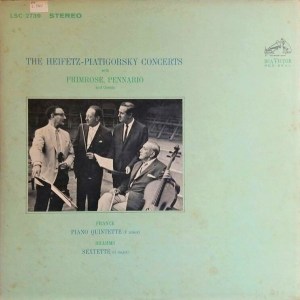
This is one of the pressings we’ve discovered with reversed polarity.

The orchestra is its typical shrill self. The cello and violin sound wonderful most of the time. When they really get going the sound can be a bit much. At moderate volumes the record is very enjoyable.

If I’m not mistaken, reversing your polarity will help the sound some.

This is a famous recording for having distortion and congestion in the louder orchestral passages. There is no such thing as a copy of this record that doesn’t have those problems as far as I know.

You listen to this record for the wonderful interplay between Heifetz and Piatigorsky and not much else.

(more…)

Reverse Your Polarity, My Wayward Son

kansalefto

This is one of the pressings we’ve discovered with Reversed Polarity.

About eight years ago (time flies!) we discovered that the first track on side one is in the wrong polarity, or out of absolute phase, whichever terminology you prefer (we ourselves use both). The full story can be found below.

Here’s what we wrote:

But last night (07/13/06) we made an AMAZING discovery. I was listening to another Sterling original, and the slightly aggressive, hi-fi-ish quality of the opening vocals made me think that maybe I had been putting up with a problem that I should have investigated further. What really sold me on the idea was listening to the vocals and noticing that the ambience was “disconnected” from the voices. It’s hard to explain exactly what that sound is, but it’s almost as if the ambience is added in on top of the voice instead of surrounding and resulting from the voice. I suspected reversed absolute phase.
(more…)

Bryan Ferry / In Your Mind Is a Real Puzzler

More Bryan Ferry

More Roxy Music

This British original pressing caused me a great deal of consternation. I’ve always been a big fan of this album — so much so that I even have the CD of it in my car — and I was under the impression that the sound was quite good. But playing a few British originals like this one caused me to have my doubts. The sound was aggressive and hard. I suspected the absolute phase might be reversed, and sure enough it was. But even after correcting for the improper polarity the sound is not what I would have hoped for. It’s a bit “grungy” and lacks the extreme highs that would sweeten the overall presentation. 

So if you can put up with less than state of the art sound you may find yourself thoroughly enjoying this one. Side one rocks hard from start to finish, more than any other Ferry album. (more…)

Gaite Parisienne – Reviewed in 2005

Hot Stamper Pressings of Living Stereo Titles Available Now

This is one of the pressings we discovered with reversed polarity. a very long time ago, 2005, before we got our EAR 324p phono stage that has a switch for reversing polarity.

Superb sound! The top end of this record is PERFECTION. When you hear all the percussion instruments, — the tambourines, triangles, wood blocks and whatnot — they just sound so lovely.

The overall sound is rich and sweet, just like a good vintage RCA should sound. Some may find the sound colored, but I find it enchanting.

Side two, however, sounded fairly unpleasant when I first played it. As I listened more and more, I came to the realization that the absolute phase was probably inverted. The orchestra, rather than being back behind the speakers where they belong, was coming AT me, a sure sign that something is funny. One way to think about it is the sound stage becomes convex instead of concave.

So I switched my headshell leads and sure enough everything got much better — the orchestra now had depth and the strings became less forward and shrill, and the horns took on more body and had less of that blary quality they sometimes do. (more…)

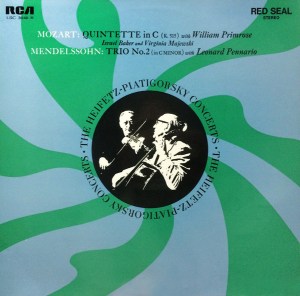
Mozart / Mendelssohn / The Heifetz-Piatigorsky Concerts

Hot Stamper Pressings Featuring the Violin

Superb Recordings with Jascha Heifetz Performing

Reviewed in 2011.

The Mozart side of this Red Seal pressing from 1975 sounds AMAZING. I have never heard better staging for a chamber work of this kind. All five instruments are so clearly set apart from each other and tonally correct (for the most part) that it is nothing less than fascinating to be able to follow each instrument as it weaves its way through the score.

If you’ve suffered through the horrendously sour and screechy recordings Heifetz and Piatigorsky are known for in audiophile circles — LDS 2513 and LDS 6159 — you will be glad to know that this side one sounds NOTHING like them.   

(Reversing your polarity on LDS 6159 helps but it can’t fix sound that’s that bad.)

Side one is, as we say, wonderfully clear and transparent. It does not have as much warmth and fullness as one might want, so for those of you who have plenty of tubey magic to bring to the recordings you play, this may just be the best chamber work you have ever heard. It is a touch hot in the 3-4k region but this is a minor quibble. Tons of recordings from this era are, including most RCAs and Mercuries; Deccas and Londons less so.

Side Two Sucks

Side two of this pressing is smeary, boxy and opaque, a sound we come across quite often when playing the scores of Golden Age classical recordings we audition every month here at Better Records.

(more…)

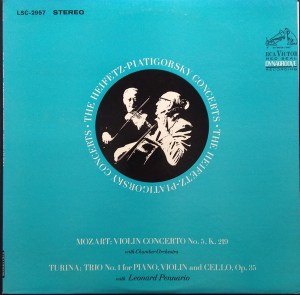
Franck / Piano Quintette & Brahms / Heifetz, Piatigorsky et al. – Reviewed in 2013

Hot Stamper Pressings Featuring the Violin
Superb Recordings with Jascha Heifetz Performing

This is one of the pressings we’ve discovered with Reversed Polarity.

A stellar reading of the Franck from this formidable group.

Side one of this Shaded Dog is excellent: rich, smooth and sweet.

The piano is exceptionally well-recorded, with real weight.

The Brahms is very good if you can reverse your polarity.    (more…)

TAS List Thoughts about Festival – Harry, This One Is Out of Polarity, Man!

Hot Stamper Pressings of Living Stereo Titles Available Now

Harry Pearson put this on his list of the best Classic Records RCAs. It may be. I don’t recall ever playing one.

If you can reverse your absolute phase, this original pressings of this record actually sound fairly decent. Do you think Harry knew to do that, or even how to do it? I have my doubts.

He’s gone now so the point is moot, but I maintain it’s the rare reviewer who grasps these kinds of issues with anything approaching the depth and understanding that are required in order to be informative and accurate.


This is an older classical/orchestral review

Most of the older reviews you see are for records that did not go through the shootout process, the revolutionary approach to finding better sounding pressings we started developing in the early 2000s and have since turned into a veritable science.

We found the records you see in these older listings by cleaning and playing a pressing or two of the album, which we then described and priced based on how good the sound and surfaces were. (For out Hot Stamper listings, the Sonic Grades and Vinyl Playgrades are listed separately.)

(more…)