piano-trio

Andre Previn – These Two OJC Pressings Didn’t Make the Grade

Hot Stamper Pressings of Contemporary Jazz Recordings Available Now

The mastering choices of the cutting engineers for these two recordings did them no favors.

Like so many of the early OJC pressings we’ve played over the years, we found that both of these reissues tended to be somewhat thin tonally, with a brittle top end, which can clearly be heard in the tizzy quality of the cymbals.

This is not remotely the right sound for a vintage Contemporary recording.

When doing the shootouts for these albums, warmth turned out to be key to the sound of the best copies.

When the piano sounds warm and smooth, everything else in the recording seems to fall into place.

(more…)

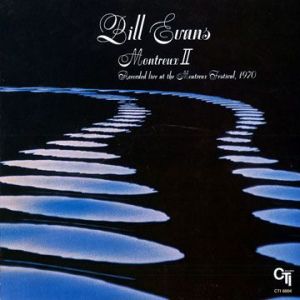
Bill Evans – Montreux II

More of the Music of Bill Evans

  • This vintage copy of this classic live jazz recording boasts solid Double Plus (A++) sound from first note to last
  • An excellent pressing, with lovely richness and warmth, real space and separation between the instruments
  • Recorded at the Montreux Jazz Festival in Switzerland, this 1970 release showcases Evans’s stylings in the trio setting that marked his best work
  • “Bill Evans’ second recording at the Montreux Jazz Festival in 1970 was a highly anticipated concert, finding the pianist in peak form, accompanied by bassist Eddie Gómez and drummer Marty Morell. “

(more…)

Oscar Peterson Trio – West Side Story

More Jazz Recordings Featuring the Piano

  • A West Side Story like you’ve never heard, with KILLER Shootout Winning Triple Plus (A+++) grades or close to them throughout this early Stereo Verve pressing
  • Rich, solid bass; you-are-there immediacy; energy and drive; instruments that are positively jumping out of the speakers – add it all up and you can see that this copy had the sound we were looking for
  • Which wouldn’t mean much if the music wasn’t swingin,’ but it is – every track shows just how good this trio was in 1962
  • Credit engineer Bob Simpson, the man behind the legendary Belafonte at Carnegie Hall live recording from a couple of years before
  • An absolute Must Own – for sound and music, this is our pick for The Best Oscar Peterson Album of All Time
  • It’s hard to imagine that any list of the Best Jazz Albums of 1962 would not have this record on it

(more…)

Bill Evans / Moon Beams on OJC

More of the Music of Bill Evans

  • This Riverside recording of Evans’s 1962 classic pressed on fairly quiet OJC vinyl boasts solid Double Plus (A++) sound or BETTER from first note to last
  • Full-bodied and warm, exactly the way vintage analog should sound, yet as clear and as open as any pressing you’ve heard (or your money back)
  • The first album Evans recorded after Scott LaFaro’s death and it is a deeply immersive experience
  • AllMusic raves it’s “…so well paced and sequenced the record feels like a dream … Moonbeams was a startling return to the recording sphere and a major advancement in his development as a leader.”

Moon Beams is one of the best sounding Bill Evans records we’ve ever played. You can see why we chose it to be the first OJC Hot Stamper of his to hit the site back in 2015.

Play It Might As Well Be Spring for the kind of sublime musical experience you only find on 20th century analog.

(Well, almost. Some of the newer OJC pressings from this century can be quite good too.)

(more…)

Andre Previn & His Pals – Pal Joey

More Contemporary Label Jazz

  • Pal Joey returns to the site for only the second time in nearly five years, here with solid Double Plus (A++) sound throughout this vintage Contemporary label pressing – fairly quiet vinyl too
  • Our better Hot Stamper copies will show you just how good 50s All Tube Analog can sound
  • Yet another Demo Disc for Contemporary, more brilliant work by the engineering team of Dunann and Holzer
  • One of Andre Previn’s better jazz performances on record – his pals Manne and Mitchell are no slouches either
  • 1957 just happens to be a wonderful year for analog recordings, as evidenced by this amazing group of albums, all recorded or released in that year.

The piano sounds uncannily lifelike right from the start, a beautiful instrument in a natural space, tonally correct from top to bottom. I can’t think of many records off the top of my head that get a better piano sound than this one. Dunann and Holzer in 1957 are hard to beat. (more…)

Bill Evans / Moon Beams on Riverside

More of the Music of Bill Evans

  • This Riverside reissue pressing of Evans’s 1962 classic boasts solid Double Plus (A++) sound from first note to last
  • Full-bodied and warm, exactly the way vintage analog should sound, yet as clear and as open as any pressing you’ve heard (or your money back)
  • The first album Evans recorded after Scott LaFaro’s death and it is a deeply immersive experience
  • AllMusic raves it’s “…so well paced and sequenced the record feels like a dream … Moonbeams was a startling return to the recording sphere and a major advancement in his development as a leader.”

Moon Beams is one of the best sounding Bill Evans records we’ve ever played. Play “It Might As Well Be Spring” for the kind of sublime musical experience you only find on 20th century analog.

Both sides are Tubey Magical, rich, open, spacious and tonally correct. We’ve never heard the record sound better, and that’s coming from someone who’s been playing Bill Evans’s albums since the 80s when they were first reissued in their current form.

These guys are playing live in the studio and you can really feel their presence on every track — assuming you have a copy that sounds like this one.

(more…)

The Three – Liner Notes and a Rave Review

Hot Stamper Pressings of The Three Available Now

Excerpts from the Liner Notes

On a windy and unusually cold night in Los Angeles, each of the three musicians arrived before the session start time of 10 PM on November 28, 1975. At exactly 10 PM, The Doobie Brothers session that was going on since morning ended. Two assistants immediately started setting up for the session. The Steinway concert grand piano, delivered the previous day, was wheeled in to the center of the room and got tuned. Shelly Manne’s drum kit was assembled in a makeshift “booth.” Microphones were set up, checked and positions adjusted.

Initially, Telefunken microphones were positioned on the piano, but later were replaced by two Neumann U87s. The piano lid was opened to the concert position and microphones were centered relative to the keys and placed a foot (30 centimeters) inward from the hammer and a foot (30 centimeters) away from the strings. One mic was pointed toward the bottom notes and the other pointed toward the top.

To record Ray Brown’s bass, a Shure SM56 and a Sony 38A were pointed at the bridge of the bass, two inches above it. The Shure was used to capture the attack and the Sony mic was used to capture the rich low tones.

Seven microphones were used to capture the sounds of the drum set. Two U87’s were placed overhead, roughly 16-inches above the cymbals facing down. The bottom quarter of the kick drum was dampened with a blanket on the outside and was mic’ed with a Shure SM56. SM56’s were also used for toms and bass toms. Sony 38A was used on the snare and Sennheiser’s Syncrhon on the high-hat.

Each mic was placed 2 inches away from the instruments in a close mic set up. Mr. Itoh got involved with fine tuning mic positioning for tone, stereo placement and balance. Meanwhile, final adjustments were being made on the cutting machine set up.

Within the hour, the set up was done and all preparations were completed. The musicians finished warming up and were ready for Take One. The usual banter subsided and everyone put on their “game face.” Even Ray Brown, who usually cracked jokes in a loud voice, looked serious as he turned his attention to Mr. Itoh, waiting for his cue. As soon as he was notified through the intercom that the cutting needle was put down, Mr. Itoh gave the signal with his hand, and the recording started. In 16 minutes, three tracks were recorded in rapid succession.

Relieved that the initial take was over, the musicians joined the producer and engineer in the control room to listen back from the 2-track tape that was used as back up. With the initial tension gone, all three excitedly made comments and evaluated their own performance and the sounds they got. The thumbs-up was given by the cutting engineer for take one and the musicians went back to the live room for the next take. This process was repeated until 4 AM the following morning, resulting in a total of three takes per track.

(more…)

The Three on Inner City – By Far the Best Way to Get All Six Tracks

More of the Music of The Three

  • A Demo Disc quality Inner City pressing of this wonderful recording with INCREDIBLE Shootout Winning Triple Plus (A+++) sound or close to it from start to finish
  • The transients are uncannily lifelike – listen for the powerful kinetic energy produced when Shelly whacks the hell out of his cymbals
  • My favorite Piano Trio Jazz Album of All Time; every one of those six tracks is brilliantly arranged and performed
  • 4 stars: “One of Joe Sample’s finest sessions as a leader” – with Shelly Manne and Ray Brown, we would say it’s clearly his finest session, as a leader or simply as the piano player in a killer trio

If you want to hear the full six tunes recorded by The Three at that famous Hollywood session (which ran all day and long into the night, 4 AM to be exact), these 33 RPM pressings are the best way to go. The music is so good that I personally would not want to live without the complete album. The Three is, in fact, my favorite Piano Trio Jazz Album of All Time; every one of those six tracks is brilliantly arranged and performed (if you have the right takes of course; more about that later).

More On The Subject Of Energy

This is a quality no one seems to be writing about, other than us of course, but what could possibly be more important? On this record, the more energetic copies took the players’ performances to a level beyond all expectations. It is positively shocking how lively and dynamic the best copies of this record are. I know of no other recording with this combination of sonic and musical energy. It is sui generis, in a league of its own.

Both sides are so transparent you can hear Shelly Manne vocalizing as he’s playing the drums. The drum solo on side two is killer here. So full of energy and so dynamic. Why aren’t more drum kits recorded this well? Check out the pictures inside the fold-open cover to see all the mics that were used on the drums. That’s where that wall-to-wall, floor-to-ceiling sound comes from.

The transients are uncannily lifelike, conveying the huge amounts of kinetic energy produced when Shelly whacks the hell out of his cymbals.

Ne Plus Ultra Piano Trio

This record is made from the “backup” tape for the session. East Wind released two versions of the famous direct to disc version at 33 RPM, and for those of you who bother to read the commentary, you know that take one of that pressing presents a completely different performance of the music than the one found on the Inner City on offer here.

There was a time when the best copies of a recording like this would go directly into my collection. If I wanted to impress someone, audiophile or otherwise, with the You-Are-There illusion that only Big Speakers in a dedicated room playing a live recording can create, this would be up near the top of the list. There is practically nothing like it on vinyl in my experience.

This is without a doubt my favorite piano trio record of all time. Joe Sample, Shelly Manne, and Ray Brown only made one album together, this one, recorded direct to disc right here in Los Angeles for Eastwind in the Seventies. Joe Sample for once in his life found himself in a real Class A trio, and happily for jazz fans around the world, he rose to the occasion. Actually, it was more like an epiphany, as this is the one piano trio album I put in a class by itself. All three of The Three are giving us the best they’ve got on that November day in 1975.

When it comes to small combo piano jazz, there is none better.

(more…)

Wynton Kelly Trio & Sextet – Kelly Blue

More Jazz Recordings Featuring the Piano

  • Wynton Kelly’s hard-to-find second album, here with KILLER Shootout Winning Triple Plus (A+++) sound or close to it on both sides of this vintage OJC pressing
  • A superb pressing, with lovely richness and warmth, good space, separation between the instruments, and real immediacy throughout
  • Kelly brings in jazz greats Nat Adderley, Bobby Jaspar, and Benny Golson, as well as several of his bandmates from Miles Davis’s sextet, including Paul Chambers and Jimmy Cobb
  • There are some bad marks (as is sometimes the nature of the beast with these vintage LPs) on “Old Clothes,” but once you hear just how incredible sounding this copy is, you might be inclined, as we were, to stop counting ticks and just be swept away by the music
  • 4 1/2 stars: “Kelly was renowned as an accompanist, but as he shows on a set including three of his originals and four familiar standards… A fine example of his talents.”
  • “Wynton Kelly demonstrates once again why he has been a major influence in the history of jazz piano.”

Jack Higgins was the engineer for these sessions. He recorded Chet Baker’s brilliant Chet album the same year, as well as many other albums for Riverside in New York in the 50s and 60s.

(more…)

Hampton Hawes / At The Piano

  • A huge, rich and natural Contemporary pressing boasting excellent Double Plus (A++) sound from first note to last
  • This is the last record Hawes made, and it’s one of the most deeply emotional and satisfying albums of his entire career – it may even be his best, and for a man of his talents, that’s really saying something
  • “Hampton Hawes’ final recording found him returning not only to the acoustic piano after having dabbled in electric keyboards from 1972-74, but to producer Lester Koenig and his Contemporary label, where Hawes recorded most of his classic gems of the 1950s… Teamed up with bassist Ray Brown and drummer Shelly Manne, Hawes shows that he was still in prime form.”
  • We’ve recently compiled a list of records we think every audiophile should get to know better, along the lines of “the 1001 records you need to hear before you die,” but with less of an accent on morbidity and more on the joy these amazing audiophile-quality recordings can bring to your life. Hampton Hawes last album is a good example of a record many audiophiles may not know well but should.

This is my favorite Hampton Hawes record of all time. He died less than a year after these sessions. Looking at the cover, you can almost see in his face his acceptance of the end he knew was coming. He plays with deep emotion here.

Ray Brown and Shelly Manne, the same rhythm section who back Joe Sample on my all-time favorite piano trio album, The Three, accompany Hawes beautifully here. (more…)