hv-dis-2023

Turning Master Tapes into Mud Pies – The Magic of the Electric Recording Company

Hot Stamper Pressings of Psychedelic Rock Recordings Available Now

““It’s magical what they’re doing, recreating these old records,” Fremer said as he swapped out more Electric Recording discs.”

Swapped them out? Anyone with an ounce of respect for Love’s music would have tossed them into the nearest trash bin.

We did a shootout for Love’s Forever Changes earlier this year, and it was our good luck to get hold of a copy of the Electric Recording Company’s pressing of the album in order to see how it would fare against our Gold Label Stereo original pressings.

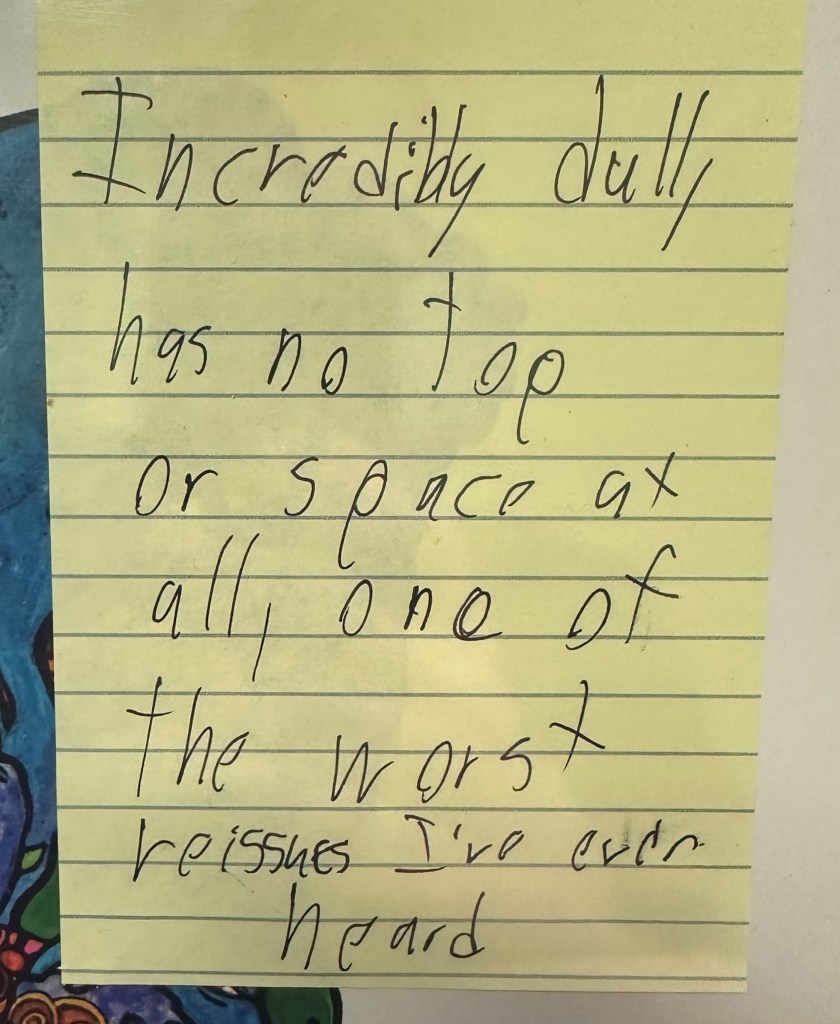
As you can see from the notes, to say that we could hardly believe what we were hearing clearly understates the depth of our befuddlement.

We simply have no context for a record that sounds as bad as this record sounds. We’ve never heard anything like it, and we’ve played a lot of records in the 35 years we’ve been in business. After critically auditioning thousands upon thousands of pressings in our shootouts, all day every day for the last twenty years, we’ve worn out scores of cartridges and even our Triplanar tonearm.

But this is new ground for us. A quick recap:

  • Incredibly dull,
  • Has no top or space at all,
  • One of the worst reissues I’ve ever heard.

You get the picture. What more needs be said? Last year I wrote the following:

Pete Hutchison of The Electric Recording Company makes some of the worst sounding records I have ever played in my life.

If you play me one of his awful records, and don’t tell me who made it, I can judge the record on its merits, the way we judge all records. We test records blindly for precisely this reason. We let the record tell us how well it was made, what it does right and wrong relative to other pressings of the same album, comparing apples to apples.

His records tell me he loves the sound of the murkiest, muddiest vintage tube equipment ever made, and wants every record he produces to have that sound.

In my book that is an egregious case of My-Fi, not Hi-Fi. We wrote about it here.

It’s astonishing to me that anyone takes this guy seriously.

In the Washington Post video, we did a little comparison on camera for two pressings of Quiet Kenny, a record I will have more to say about in Part Two of this commentary. Here is Geoff Edgers’ description in the article of how it all went down.

(more…)

Brilliant Corners – This Pig Sure Wears Pretty Lipstick

Hot Stamper Pressings of the Music of Thelonious Monk Available Now

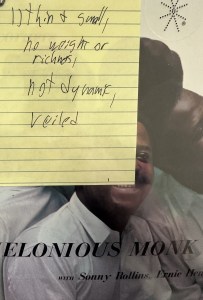
During our most recent shootout of Brilliant Corners, we took the opportunity to play the Craft pressing cut by Bernie Grundman and released in 2023.

We thought it was godawful, the worst sounding version of the album we’ve ever played.

But how is that possible? Read all about the best practices being followed and look at the description of the fancy packaging below. Why would they go to all that trouble just to produce a bad souding record?

For the answer to that question, you will have to ask them. We’re stumped.

  • Pressed using a one-step lacquer process at RTI utilizing Neotech’s VR900 compound
  • All-analog mastering by Bernie Grundman from the original master tapes
  • Housed in a foil-stamped, linen-wrapped slipcase
  • Numbered and limited to 4,000

They used Neotech’s VR900 compound! Really?! That must be one awesome compound!

Apparently even the VR900 compound was not enough to save this pathetic excuse for a record.

For those of you who might be new to this blog, we should point out that we have been dumbfounded by Bernie Grundman’s work for more than twenty five years. The first RCA he remastered for Classic Records, LSC 1806, was so bright and the strings were so shrill that it probably lasted on our turntable maybe all of three minutes. My ears just couldn’t take it, even on a system that was dramatically darker and less revealing than the one we have now.

Equally bad sounding Classic Records were to follow by the hundreds.

Our quickie notes for side one are shown on the left. After hearing side one fall so short of the mark, we dropped it from the shootout and put the Craft pressing on the shelf to go back to whoever loaned it to us. Who cares what side two sounds like if side one is that bad? Time is money. We are in the business of finding good records to sell to our customers, not playing crap Heavy Vinyl that only the most hard-of-hearing collector types would consider owning.

Before long we had a change of heart. We thought we owed it to Bernie’s fans to be more thorough, so we took our best side two and played it against the Craft pressing.

(more…)

Our Filmed Tapestry Shootout Was a Real Shocker

The Washington Post article that Geoff Edgers wrote includes a video of a little shootout we did for Tapestry, using, without my knowledge, the MoFi One-Step, a Hot Stamper pressing, and a current, modern, standard reissue of the album. Could I spot the Hot Stamper without knowing what record was playing?

First up (and of course unbeknownst to me), the MoFi. My impressions from the video:

That’s probably tonally correct for this record. It’s just missing everything that’s good about this record, which is a meaty, rich piano. And the vocal sounds very dry. There’s no Tubey Magic. It’s tonally correct. If you were playing me a CD right now, I wouldn’t be able to tell you weren’t. 

Next up, the cheap ($20?), current reissue:

Piano’s better.

Voice is better!

Richer and smoother.

That’s what this is supposed to sound like.

Her voice sounds mostly correct.

This might not be a particularly good record. If I played a real one for you, you might just say, oh, my God, there’s so much more.

But this is not a wrong record. It’s not awful. It’s doing something… I don’t know if I would say most things right. I’ll just say something right.

At least the person understands what she’s supposed to sound like.

Then the Hot Stamper (a Super Hot copy as it turns out):

She sounds pretty right on this copy.

I think there’s more space.

You hear more space, more three-dimensional space.

The piano: there’s more richness to the tone of the various notes that she’s playing.

I would probably pick this one.

Jeff sums it all up as follows:

So we have a winner, and I couldn’t fool the Hot Stamper king.

Without knowing what he was listening to, he chose the hot stamper of Tapestry.

If he still had it, that copy would be sold for about $400 on the Better Records website.

When we went back and played each of the pressings again, the differences were much more pronounced. The MoFi still sounded like a CD, the current Columbia reissue was still no better than passable, and the Hot Stamper became even better sounding than it had been earlier, with sound the other two could not begin to offer.

Our grades for the three pressings would have been F, C and A, in that order.

In the video, you can see that it took me a few minutes to get deep into the sound, but once I was there, it turned out to be no contest. The Hot Stamper was the only pressing capable of showing us just how good Tapestry can sound.

Colorations Are Bad Now?

The MoFi was by far the worst sounding of the three. As I said, it sounded to me like a CD.

(more…)

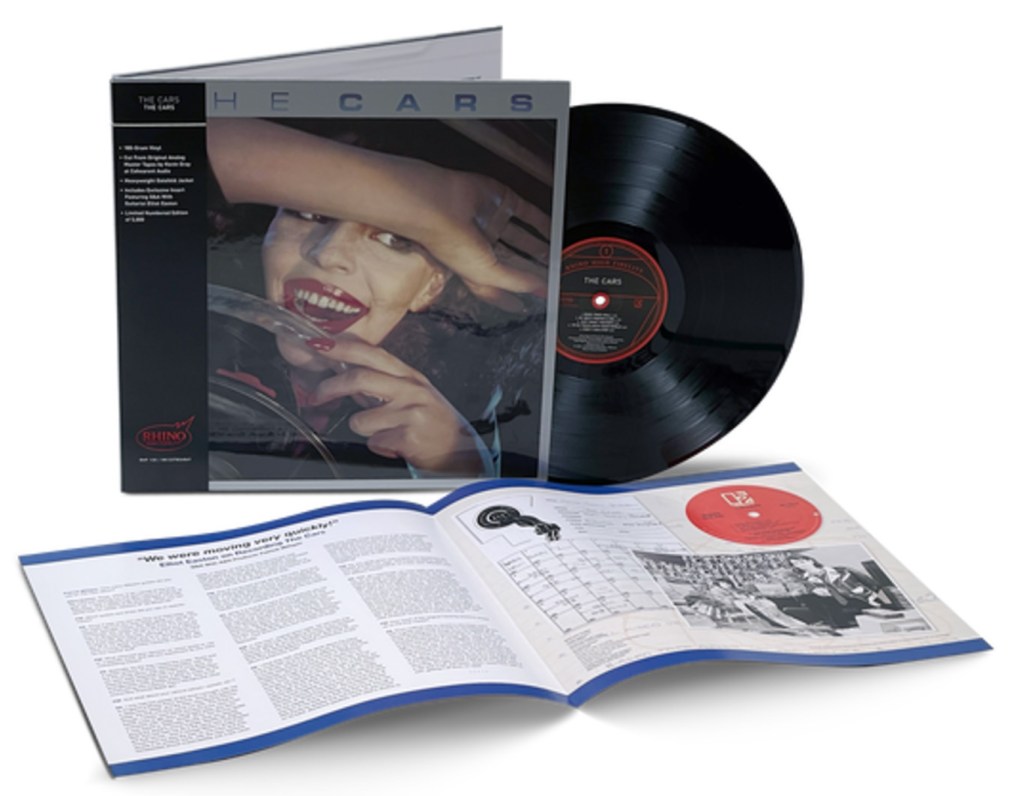
The Cars on Rhino – Man, This Record Is Bad

Hot Stamper Pressings of the Music of The Cars Available Now

I mean, really bad.

Kevin Gray has struck again. He’s a modern one man demolition crew, taking exceptionally well recorded analog albums and turning them into the vinyl equivalent of CDs, and bad CDs at that.

Steve Hoffman did the first Cars album on Gold CD and it sounds quite good. I still own mine. How can Kevin Gray, his former assistant, make such a mess of the album on vinyl?

This question has a rather obvious answer, and much of what we have to say about this record was said in our review of the disastrous Stand Up Gray cut for Analogue Productions.

Allow us to repeat ourselves:

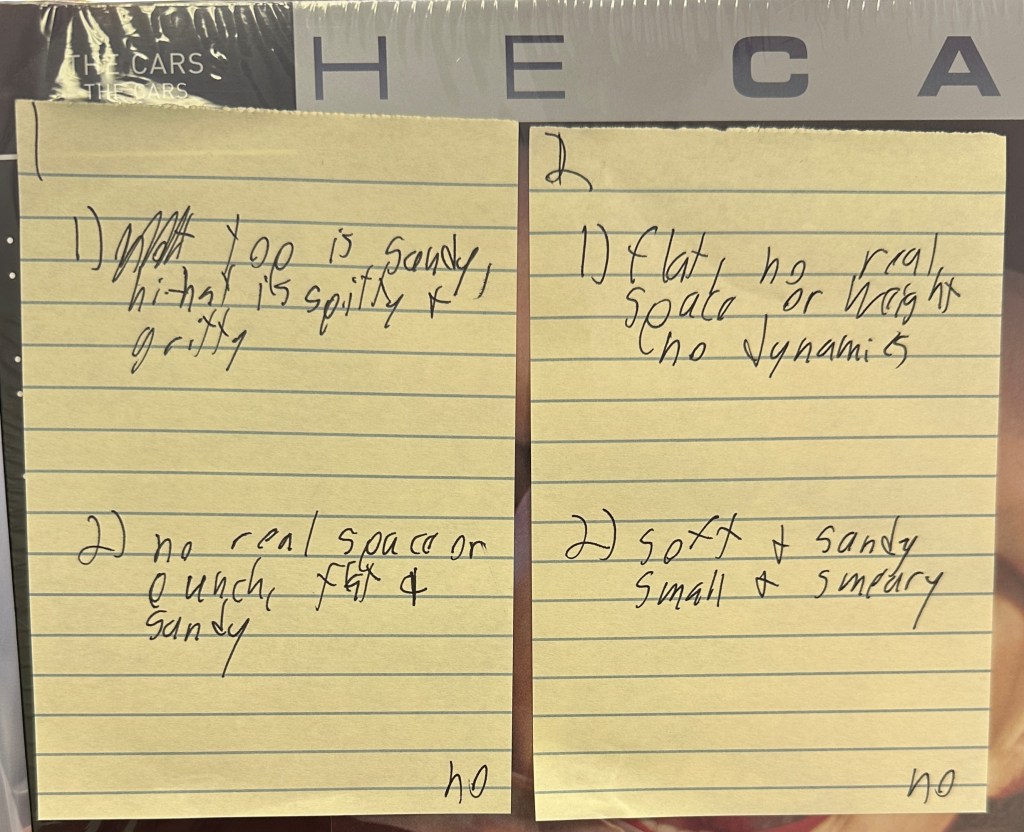
We were finally able to get our hands on the newly remastered Cars first album, a record we know well, having played them by the score. Our notes for the sound can be seen nearby.

If ever a record deserved a “no” grade, as in “not acceptable,” this new pressing mastered by Kevin Gray deserves such a grade, because it’s just awful.

Here is what we heard on side one of the new Cars remaster.

Good Times Roll

  • Top is sandy  [Sandy typically refers to transistory, dry, grainy, or gritty sound.]
  • Hi-hat is spitty and gritty

My Best Friend’s Girl

  • No real space or punch
  • Flat and sandy

You’re All I’ve Got Tonight

  • Flat
  • No real space or weight
  • No dynamics

Bye Bye Love

  • Soft and sandy
  • Small and smeary

Grant Green on Music Matters had many of these same problems. Unsurprisingly, it too was mastered by Kevin Gray.

How this guy is still getting work is beyond me.

I am clearly being facetious here. These guys get work because audiophiles will buy the records they master. The market has decided these records sound just fine, and who am I to say otherwise?

Of course, people can say anything they want about these records, opinions being worth what you pay for them.

We take a different approach. We will sell you the pressing of the album that can mop the floor with this Heavy Vinyl trash. We rarely have the first album in stock, but if you want one, just let us know and we will be glad to put you on the waiting list. Email Fred at fred@better-records.com.

Compared to What?

Is the Rhino pressing the worst version of the album ever made? In our view, it’s only competition would be this disaster, a record that also sold well back in the day. The more things change…

If I were to try to reverse engineer the sound of a system that could play this record and hide its many faults, I would look for a system that was thick, dark and fat, with plenty of tube colorations and no real top end to speak of.

I know that sound. I actually had a system thirty years ago with many of these shortcomings, but of course I didn’t have a clue about any of that. Like every audio enthusiast I met back then, I didn’t know what I didn’t know.

I’m glad to say things are different now, I think.

If you made the mistake of buying this record and can’t stand the phony top end, try covering your tweeter with something absorbent. Foam might work. Also you could try disconnecting your super tweeters if you have any. This is good advice for any record mastered by Stan Ricker as well.

Since that old school vintage tube sound takes the opposite approach to music reproduction that we’ve spent the last few decades working on here at Better Records — our goal being neutrality above all else — we are clearly not playing the record back on equipment that is capable of making it sound anything but godawful, hence our relentlessly negative reaction to the record.

On any properly setup, halfway decent stereo system, any original pressing with RTB in the dead wax should murder this Heavy Vinyl piece of junk. If you don’t have a system like that, we encourage you to get one. You will save a lot of money by not buying crap vinyl like this, only to discover later just how bad it sounds on the higher quality equipment you eventually end up with. (Here is some good news on that subject.)

Although, to be honest, if you are buying these kinds of awful records, it’s hard to see how you will ever get out of the hole you are in. Some audiophiles manage it, but I suspect that most never do.

You can also buy the CD — whether on DCC Gold or just whatever disc Elektra put out — and hear for yourself if it isn’t better sounding. I would be very surprised if it were not.

(more…)

Chad Has Served Poor Jethro Tull Most Barbarously

More of the Music of Jethro Tull

With a nod to our old friend, John Barleycorn.

We were finally able to get our hands on Analogue Productions’ newly remastered Stand Up, an album we know well, having played the British copies from every era by the score. Our notes for the sound can be seen below.

If ever a record deserved a “no” grade, as in “not acceptable,” this new 45 RPM pressing mastered by Kevin Gray deserves such a grade, because it’s just awful.

But let’s put that grade in context. The last time a good sounding version of Stand Up was released, as far as we can tell, was 1989, and that version was the Mobile Fidelity Gold CD. I bought mine soon after it came out. I wasn’t even planning on buying a CD player when the Compact Disc was first invented, but then Mobile Fidelity played a dirty trick on me. Instead of releasing Loggins and Messina’s first album on vinyl, they put it out exclusively on CD as part of their Silver MFCD series.

As a die-hard MoFi fan, that sealed the deal: now I had to buy a CD player. I picked up a cheap Magnavox player, the 1040. I think it ran me less than $100, and played my new Sittin’ In CD, which, as I recall, sounded pretty good. (One of my other early CD purchases was Tumbleweed Connection, the regular label release, and it was dreadful.)

I still own Stand Up on Gold CD, and I still find it superb in every way. (Many of the MFSL Gold CDs from this era are excellent and worth seeking out.)

It sounds nothing like this new vinyl release, and that’s a good thing.

On vinyl, Stand Up has rarely been given the care it deserved. The last version of Stand Up to have sound we would want to listen to was pressed in the UK in the early ’70s. That was close to fifty years ago.

We sold some domestic pressings of the album back in the early 2000s, describing them at the time as made from dub tapes with all the shortcomings that entails, but mastered very well from dub tapes. The best domestic pressings are rich, smooth, tonally correct and natural sounding. They’re too dubby to sell as Hot Stampers, but they are not bad records. Some later Chrysalis pressings are big and open, but often they are too thin and bass-shy for the music to work. We’ve never taken them seriously.

It wasn’t long before we’d eliminated everything but the early UK pressings for our shootouts, and we quickly discovered that the earliest of the UK pressings on the older Island label were not good at all. We wrote about the problem with some originals more than ten years ago.

What was surprising about the shootouts we had done in past years was how disappointing most of the early British pressings we played were. They were flat, lacked energy and just didn’t rock the way they should have.

We learned the hard way that most British Pink label pressings aren’t especially rich, that some are small and recessed, and some are just so smeary, thick and opaque that they frustrate the hell out of you as you’re trying to hear what any of the musicians other than Ian Anderson is doing.

So when a reviewer comes along and says something positive about the new pressing compared to some unidentified original, we appreciate the problem that is at the root of his mistaken judgments:

Here’s the deal: if the goal was to duplicate the original pink label Island sound, this reissue misses that, which is good because this new double 45 reissue is far superior to the original in every possible way.

The tape was in great shape, that’s for sure. Clarity, transparency, high frequency extension and especially transient precision are all far superior to the original. Bass is honest, not hyped up and the mastering delivers full dynamics that are somewhat (but only slightly), compressed on the original. Ian Anderson’s vocals are naturally present as if you are on the other side of the microphone. Most importantly, the overall timbral balance sounds honest and correct. But especially great is the transient clarity on top and bottom.

If you’re fortunate to have an original pink label Island, at first you might think the sound is somewhat “laid back”, but that’s only because the mids and upper mids are not hyped up as they are on the original. That adds some excitement, but it clouds the picture and greatly obscures detail.

If you scroll down to our notes, you will see what we thought of the “laid back” sound this reviewer talks about. (Keep in mind that we first read the above review mere moments ago.)

We think “smaller, thick and stuck in the speakers” may be someone’s idea of “laid back,” but, just so there is no misunderstanding, it’s our idea of “awful.”

None of these are good things. Our Hot Stamper pressings are never small, thick or stuck in the speakers. They’re the records with the opposite of that sound. Our records are big, transparent and open. That’s why we can charge so much money for them and have people lining up to buy them.

They deliver the big, bold sound that the brilliant engineer for the album, Andy Johns, was known for. Laid back was not in his vocabulary.

Here is more of what we heard on side one.

Jeffrey Goes to Leicester Square

“Transients are sharp but body is dull. Kinda phony.”

Phony sound is the key here. Messing with the EQ in the mastering benefits some aspects of the sound at the expense of others.

Nothing new there. Audiophile pressings with wacky EQ are the norm. I would be surprised if any common Reprise pressing from back in the day wouldn’t sound more “right,” more tonally correct, more seamless. I’ve played quite a few and I don’t recall ever hearing one sound “phony.”

On side two we played the first two tracks.

(more…)