good-test

Here are about 60 titles that are good for testing. All genres of music are represented.

Thoughts on One of the Most Dynamic Contemporary Recordings

Hot Stamper Pressings of the Music of Art Pepper Available Now

This commentary was written in 2008.


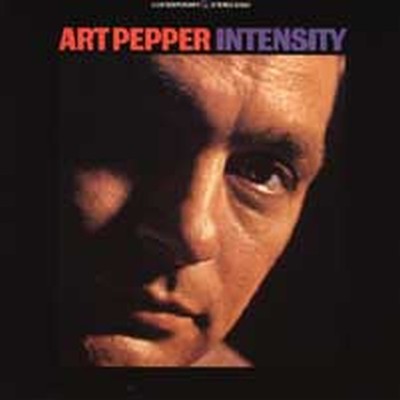
Intensity is right — this is some SERIOUSLY GOOD SOUNDING alto saxophone led quartet jazz. AMG was right to give this one 4 1/2 stars — the musicianship is top notch and Pepper’s playing is INSPIRED throughout. 

The real surprise was how well recorded this album from 1963 is. I can’t recall a more DYNAMIC Contemporary. Pepper’s sax gets seriously LOUD in some passages. This is very much a good thing. Not only is he totally committed to the music, but the engineers are getting that energy onto the record so that we at home can feel the moment to moment raw power of his playing.

(Pepper was famous for saying that his playing is best when he just plays whatever he feels in the moment, and this record is the best kind of evidence for the truth of that claim.)

Of course, since this is a Roy Dunann recording, all the tubey magical richness and sweetness are here as well, but what is surprising is how transparent, spacious and clear the sound is. Some of Roy’s recordings can sound a bit dead (recording in your stockroom is not always the best for spaciousness) and sometimes are a bit thick as well. Not so here. But it should be pointed out that we liked what we heard from a previous shootout too.

Last time around we wrote:

This record has superb sound: you can actually hear the keys clacking on the man’s alto. And that sort of detail does not come at the expense of phony brightness as it would with your typical audiophile recording. The tonality of the sax, drums, and bass are right on the money, exactly the way we expect Roy DuNann’s recording to be.

This time around we got more extension out of the cymbals. Either these copies are better, were cleaned better, or were helped quite a bit by our new Townshend SuperTweeters. (Probably the last two more than the first one.) (more…)

On First Light Listen for a Smeary Trumpet

Hot Stamper Pressings of the Music of Freddie Hubbard Available Now

UPDATE 2026

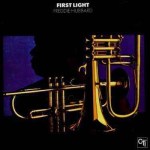
A shootout for First Light from way back in 2011 taught us a thing or two about trumpet smear.


This Hot Stamper original CTI pressing from our shootout in 2011 has a truly SUPERB side two that put to shame most of what we played.

Smeary, blurry trumpet blasts? Not here. Nope, the transient bite and energy of the trumpet is as REAL as it gets. 

Side Two

This Super Hot side earned a grade of A++ with its exceptional high end (although it doesn’t extend quite all the way, just most of the way) and its amazing transparency. It’s so clear! You really hear into this one, in the way that the best of the classic jazz recordings allow you to do, recordings such as Kind of Blue and the better Contemporaries.

And no smear. Trumpet records with no smear, by Freddie Hubbard or anyone else, or hard to come by. A bit more richness and this one would have been in White Hot Stamper territory. It is awfully close to the best we heard.

Side One

Earning a grade of A Plus, this is the side where some of that smear we discussed earlier can clearly be heard. The sound is rich, richer than side two even, with a huge stage and correctly sized instruments. It’s just that the midrange is a bit veiled and smeary, and the midrange is where the trumpet is.

Digging Creed Taylor Inc. and RVG

We’ve been really digging Creed Taylor‘s productions for years now. On the better albums such as this one, the players tend to sound carefree and loose — you can tell they’re enjoying the hell out of these songs. Don’t get me wrong — we still love the Blue Note and Contemporary label stuff for our more “hard core” jazz needs, but it’s a kick to hear top jazz musicians laying down these grooves and not taking themselves so seriously…especially when it sounds as good as this copy does.

Rudy Van Gelder gets one hell of a lively trumpet sound in this period of his career. If you have a good pressing of one of his early 70s jazz recordings, the sound can be positively explosive, with what feels like the power of live music.

(more…)

Charlie Mingus Asks the Question of the Day for Audiophiles – Compared to What?

Hot Stamper Pressings of the Music of Charles Mingus Available Now

We used to think the early Limelight pressing shown here was so amazing sounding that finding better sound for this recording would simply be impossible, but the original Mercury showed us just how wrong we were – the right Mercury pressing takes the recording to another level, one we never imagined it could reach. (In our experience records do that from time to time. We’ve written about some of the ones we’ve played here.)

Here is a small excerpt from our most recent commentary for the album:

The best copies recreate a live studio space the size of which you will not believe (assuming your room can do a good job of recreating their room). (Here are some of the other recordings we’ve auditioned with exceptional amounts of size and space.

The sound is tonally correct, Tubey Magical and above all natural. The timbre of each and every instrument is right and it doesn’t take a pair of golden ears to hear it — so high-resolution too.

If you love ’50s and ’60s large group jazz you cannot go wrong here. Mingus was a genius and the original music on this record is just one more album supporting the undeniability of that fact.

More evidence, if any were needed, that the three most important words in the world of audio are compared to what?

(more…)

Port’s Rule and The Song of the Volga Boatman

More Records that Helped Me Make Progress in Audio

The track that started us down the road to our first Sauter-Finegan shootout is, to this very day, our Number One Test Track of All Time, a little ditty known as the Song of the Volga Boatman.

We first heard it back in the 90s on Bob and Ray Throw a Stereo Spectacular, which is still the version we test with, but this album of forward-looking big band contains that track  as well as 10 others, all with truly amazing sound.

Why is the Song of the Volga Boatman our ultimate test track?

The simplest way to understand it is that all the instruments are being played live in the studio, and all of them in the huge soundfield are real and acoustic — string bass, drums, horns of every size and type, woodwinds, percussion, tubular bells, etc.

In addition, the arrangements given to this roomful of players is so complex and lively that if anything sounds “funny,” to use the precise audiophile nomenclature, it really calls attention to itself.

Port’s Rule states: If it isn’t easy for your Test Discs to sound wrong, they are not very good Test Discs.

Wrong is the natural order of things.

Getting it right is where the work comes in to play.

And it should seem more like play than work or you are unlikely to get very far with it. (That’s another one of Port’s Rules, sometimes referred to as music does the driving.)

When the stereo is right from top to bottom, this song is right from top to bottom, and every other record we know the sound of will have the sound it’s supposed to have.

It seems simple and in some ways it is.

We’ve been getting the Song of the Volga Boatman to sound bigger and better now for years, through scores and scores of changes. At our current stage of audio evolution, at the very loud levels we play it at, it’s shocking how big, powerful and real it seems. It has more of the “live music” qualities we prize than almost any other studio recording I can think of.

(more…)

Jump Into the Fire with Harry Nilsson

Hot Stamper Pressings of the Music of Harry Nilsson Available Now

This commentary was written more than ten years ago.


Jump Into The Fire is one of the best tests we use for side two.

Copies that are too smooth make the “just bass and drums” intro sound thick and smeared.

Too bright and the vocals will tear your head off.

The “just right” copies rock from the start and never get too far out of control, even when Harry does. The best we can hope for is that the loudest vocal parts stay tolerable. Believe me, it is not that easy to find a copy that’s listenable all the way through, not at the high volume I play the record at anyway!

Again, with Nilsson screaming at the top of his lungs, you better have a good copy to get through this track, and even then it’s a bit of a problem.

A tough test for the old stereo, that’s for sure. Make sure your equipment is tuned up and the electricity is good before you get anywhere near a pressing of this album.

Big production pop like this is hard to pull off. Harry did an amazing job, but the recording is not perfect judging by the dozen or so copies I played this week and the scores I’ve suffered through before.

Let’s face it: Jump Into The Fire will never be smooth and sweet; neither will Down on side one. But other tracks on this album have Demo Disc quality sound, and, of course, the music is to die for.

Side One

Gotta Get Up

A tough one right off the bat. If you have an aggressive sounding copy, you’ll know it pretty quick!

Driving Along (more…)

Virtuoso Guitar Is Potentially an Awesome Direct to Disc Record

Hot Stamper Pressings of Direct-to-Disc Recordings Available Now

This recording has very little processing or EQ boost, and the studio is somewhat dead sounding (all too common in the late-70s). That combination can mean only one thing: If you don’t play this record loud, it will not sound right. 

The famous Sheffield S9 is exactly the same way. It sounds dead and dull until you turn it up good and loud. When you do, lookout — it really comes alive. The best pressings can sound shockingly like live music, something one just does not hear all that often, even when one plays records all day long as we do.

The snare drum on this copy represents one of the most realistic and dynamic sounding snares I have ever heard. Talk about jumping out of the speakers! If you have plenty of large, fast, powerful dynamic drivers like we do, you are in for a real treat. Track one, side one — lookout!

Our Shootout Winner from Years Ago

As usual, the shootout allowed us to hear what was lacking on side two.

Side One

A+++ As Good As It Gets sound from top to bottom. No copy was as transparent, lively or high-rez. No copy actually did ANYTHING better, which is unusual. The distortion level is close to zero on this one. The louder you play it the better it sounds.

Side Two

With a grade of A Double Plus this copy was close to the best, falling a bit short in the area of upper midrange presence and top end. Still, there’s lots of space, the cello sounds full and rich, as does the guitar, and none of the plucked instruments suffer from smear at all.

A great side, just a bit dark compared to the very best.

(more…)

Jazz Giant and Tube Versus Transistor Tradeoffs

Hot Stamper Pressings of Contemporary Jazz Albums Available Now

In a commentary from more than ten years ago we weighed the tradeoffs in the sound of the originals versus the reissues.

This superb sounding original Black Label Contemporary pressing of Benny Carter’s swingin’ jazz quartet is the very definition of a top jazz stereo recording from the late ’50s recorded and mastered through an All Tube Chain.

There’s good extension on the top end for an early pressing, with TONS of what you would most expect: Tubey Magic and Richness. If that’s what you’re looking for, this copy has got it!

We prefer the later pressings in most ways, but this record does something that no later pressing we have ever played can do — get Benny’s trumpet to sound uncannily REAL.

If you want to demonstrate to your skeptical audiophile friends what no CD (or modern remastered record) can begin to do, play side two of this copy for them. They may be in for quite a shock.

The sound of the muted trumpet on side two is out of this world. 

It’s exactly the sonic signature of good tube equipment — making some elements of a recording sound shockingly real.

(more…)

For Arcana, Speed Is Key

Hot Stamper Pressings on Decca and London Available Now

This is a recording that allows your speakers to disappear completely like practically no other. A powerful Test Disc as well. Use this one to check your speed and staging, subtle changes in your equipment can have a big effect on recordings like this

Incredible sound for this CRAZY 20th Century music, featuring wild and wacky works which rely almost exclusively on percussion (not one, not two, but three bass drums!). My favorite piece here may be Ionisation, which uses real sirens (the Old School ones cranked by hand) as part of Varese’s uniquely specialized instrumental array.

But the main reason audiophiles will LOVE this album is not the music, but the SOUND. Ionisation has amazing depth, soundstaging, dynamics, three-dimensionality and absolutely dead-on tonality — it’s hard to imagine a recording that allows your speakers to disappear more completely than this one.

It also makes a superb test disc. Subtle changes in your equipment can have a big effect on recordings like this.

The instrumental palette is large and colorful, giving the critical listener plenty to work with.

And this copy is perfect for testing because is is nearly FLAWLESS in its sound. No other copy could touch it. Many copies are not especially transparent, spacious or three-dimensional, and lack extension on both ends of the frequency spectrum.

The SPEED of the percussion is also critical to its proper reproduction.

No two pieces of electronics will get this record to sound the same, and some will fail miserably.

If vintage tube gear is your idea of the ultimate in sound, this record may help you to better understand where its shortcomings lie.

(more…)

God Bless the Child Has Some of Don Sebesky’s Best Arrangements

Hot Stamper Pressings of the Music of Kenny Burrell Available Now

This is one of our favorite orchestra-backed jazz records here at Better Records. A few others off the top of my head would be Wes Montgomery’s California Dreaming (1966, also Sebesky-arranged), Grover Washington’s All the King’s Horses (1973) and Deodato’s Prelude (also 1973, with brilliant arrangements by the man himself).

On a killer copy like this the sound is out of this world. Rich and full, open and transparent, this one defeated all comers in our shootout, taking the Top Prize for sound and earning all Three Pluses.

What’s especially notable is how well recorded the orchestra’s string sections are.

They have just the right amount of texture and immediacy without being forced or shrill. They’re also very well integrated into the mix. I wouldn’t have expected RVG to pull it off so well — I’ve heard other CTI records where the recording quality of the orchestration was abominable — but here it works as well as on any album I know.

[Or maybe I just had a bad pressing of a very good recording!]

Both sides impressed us with their deep, wide soundstaging and full extension on both the top and the bottom.

The bass is deep and defined; the tonality of the guitar and its overall harmonic richness are right on the money.

The piano has the weight and heft of the real thing.

This kind of warm, rich, Tubey Magical analog sound is gone forever. You might have to go all the way back to 1971 to find it!

Watch out for some of the later pressings, even the later ones still mastered by Rudy Van Gelder. A case in point:

VAN GELDER in the dead wax is no guarantee of high quality sound, on any record.

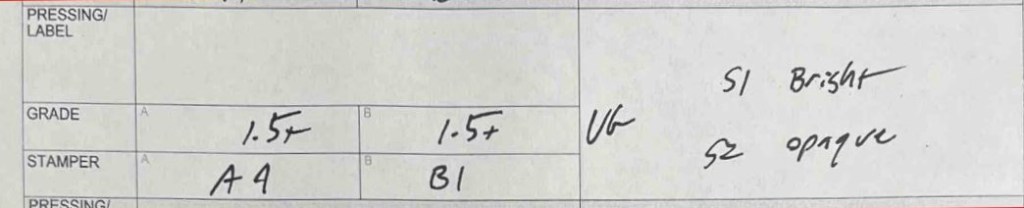
Side one of this original pressing with later stampers was bright and side two opaque. This pressing was not awful, or even mediocre — the reissues without VAN GELDER in the dead wax would most likely be much worse sounding, we stopped buying them years ago — but at 1.5+ we would say these grades point to the sound is good, not great.

The only way to guarantee higher quality sound is to put the album through a shootout with a good-sized pile of cleaned pressings and find the one that sounds the best using the rigorous testing methodologies we recommend. For this kind of work to be meaningful and reproducible, top quality playback is a must.

There is of course a way to avoid doing all that work and spending all the kind of money it takes to acquire piles of pressings — most of which you will eventually have no use for — and that’s to buy a Hot Stamper copy of the album from us.

The Music

The high point for side one is clearly the first track. It’s got a Midnight Blue relaxed groove going on, the kind that Kenny Burrell seems to be able to bring to any session he plays on. Or maybe it’s the rhythms Ray Barretto works out in the songs that make them so relaxed and swinging at the same time.

Side two is magical from start to finish. The two extended songs, both more than eight minutes in length, leave plenty of room for the band — and the orchestra! — to stretch out.

(more…)

The Turn Up Your Volume Test – Blood Sweat and Tears

Hot Stamper Pressings of the Music of Blood, Sweat and Tears Available Now

UPDATE 2025

This commentary was written about twenty years ago, back in the days when I could find clean 360 Label pressings of this album actually sitting in the bins of used record stores. The picture at the bottom says it all — I think we had more than forty copies to work through for our first shootout, pressings of the album that I had been buying (many from Robert Pincus, he was the B,S&T expert back then) since the late-80s. Blood, Sweat and Tears and I go way back.

You may notice that we rarely write about the album these days, and that’s simply because we are not able to find clean, early label pressings to play anymore. (The Red Label pressings can be good but they don’t come close to winning shootouts. Without at least some potential Shootout Winning copies, it makes no sense to do the shootout. The winners are the ones that pay for the losers, naturally, with some profit left over if things go as planned.)

Speaking of which: Our last shootout was quite a few years ago. If we somehow managed to luck into a few copies locally, it’s possible we could do the shootout tomorrow, but buying this title on Discogs and Ebay has been a nightmare, with upwards of 90% of the copies we buy ending up marked return to sender.

The cost in labor (and frustration) we incurred to pursue the album long ago forced us to move on, after plenty of swearing and licking of wounds of course. How is it that record sellers can be so oblivious to the scratches and wear on their consistently noisy vinyl offerings is beyond me.

For those of you who can’t devote the resources to finding a good copy on the Columbia 360 Label, the Gold CD put out long ago by Mobile Fidelity is excellent and well worth whatever you have to pay for it. And I mean that sincerely.


Our Old Commentary

In my opinion this is the BEST SOUNDING rock record ever made. I may be biased because I like the music so much, but played on a Big Speaker System a Hot Stamper pressing is nothing less than ASTOUNDING, the ultimate Demo Disc. It has the power of LIVE MUSIC.

You don’t find that on a record too often, practically never in fact. I put this record at the top of The Best Sounding Rock Records of All Time link (seen on the left) and said it was in a class of its own for good reason — IT IS IN A CLASS OF ITS OWN.

As I’ve noted before, this record is a milestone in the history of popular music. Not only is it The Most Successful Fusion of Rock and Jazz Ever. It’s also One of the Finest Recordings of Popular Music Ever.

The sound is nothing short of amazing. Just the drums alone are enough to win awards: the kick drum has real kick, the snare may actually be the best rock snare ever recorded, the cymbals shimmer like real cymbals; almost everything is right with this record. Especially the music.

Good Demo Disc, Good Test Disc Too

This is the kind of record that doesn’t fall into the good Demo Disc, bad test disc trap. It’s both a good Demo Disc and a good test disc; not too many records can make that claim. (Especially the kinds of records audiophiles tend to like.)

The good copies of this album sound good on almost any system. But the better systems reveal qualities to this recording that you are very unlikely to have ever heard on another record. That’s the Demo side.

On the test side, no matter what level your system is at, any change you make will be instantly obvious on this recording, for good or bad. Nothing can fool it. It’s too tough a test, the toughest I know of bar none. For this record to sound right, truly right, every aspect of its reproduction has to be at the highest level. Any shortcoming will be glaringly obvious. The record may still sound good, but it won’t really sound right. (Knowing what “right” means in this context makes all the difference in the world of course.)

One reason the turn up your volume test is such a great test — the louder the problem, the harder it is to ignore.

(more…)