
cart-tweak

Cartridge tweaking and tuning.

Cartridge Break-In and Setting Azimuth

Robert Brook runs a blog called The Broken Record, with a subtitle explaining that the aim of his blog is to serve as:
A GUIDE FOR THE DEDICATED ANALOG AUDIOPHILE

We know of none better, outside of our own humble attempt to enlighten that portion of the audiophile community who love records and are looking to understand them better.

Here is one of Robert’s most recent postings.

Cartridge BREAK-IN and Setting AZIMUTH

More of Robert’s advice on equipment and setup:

(more…)

Go Nude for Even Better Sound

Robert Brook runs a blog called The Broken Record, with a subtitle explaining what the aim of this blog is:

A GUIDE FOR THE DEDICATED ANALOG AUDIOPHILE

We know of none better, outside of our own humble attempt to enlighten that portion of the audiophile community who love hearing music reproduced with higher fidelity and are willing to go the extra mile to make that happen.

Nothing will bring you as much joy as when you manage, by whatever means, probably against all odds, to make significant audio progress.

The more progress you make, the more you will enjoy your favorite music. At least that’s what happened to me over the course of the last fifty years as I set about working on my system, room and a great deal more.

Here is Robert’s latest posting.

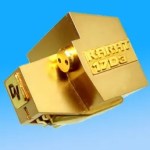
“NUDE” Your Dynavector KARAT 17DX Cartridge for EVEN BETTER Sound


More on Robert’s system here. You may notice that it has a lot in common with the one we use. This is not an accident.

And it is also no accident that these two systems just happen to be very good at showing their owners the manifold shortcomings of the modern remastered LP, as well as the benefits to be gained by doing shootouts in order to find dramatically better sounding pressings to play.

(more…)

Cartridge Tweaking and Turntable Setup Advice

More Turntable Setup Advice

Playing so many records every day means that we wear out our Dynavector 17DX cartridges much more often than most consumers would. They typically last us about three or four months.

This requires us to regularly mount a new cartridge in our Triplanar arm.

Once a new cartridge is broken in (50 hours minimum), we then proceed to carry out the fine setup work required to get it sounding its best. We do that by adjusting the VTA, azimuth and tracking weight for maximum fidelity using recordings we have been playing for decades and know well.

For the longest time our favorite test discs for this purpose have been these three:

  1. Bob and Ray Throw a Stereo Spectacular,
  2. Tea for the Tillerman, and
  3. Led Zeppelin II.

To be honest, I was the only guy on the listening panel using Bob and Ray. I have played that record at least 500 times, perhaps 1000, and would be lost without it.

Our listening guys — much younger and not nearly as interested in correctly reproducing The Song of the Volga Boatmen as I was — preferred numbers two and three, and of course those work fine too. In fact, when setting up our new studio, I came to realize Bob and Ray were not enough to get the room right, a subject I wrote about here.

We are in the process of making some lists (more lists! You can never have too many!) for records we’ve found to be good for testing, tweaking and tuning your system, your room and your front end setup, among other things. You may want to check them out.

These are the records that challenged me and helped me to achieve more progress in audio. If you are serious about improving your playback, these are some of the best records we know of to help get you to the next level.

(more…)

Azimuth, VTA, Anti-Skate and Tracking Weight – We Got to Live Together

More Record Playback Advice

With a shout out to my man Sly!

The commentary was written in 2005.

One of the reasons this record is sounding so good today (1/12/05) is that I spent last weekend adjusting my Triplanar tonearm. The sound was bothering me somewhat, so I decided to start experimenting again with the azimuth adjustment.

I changed the azimuth in the smallest increments I could manage, which on this turntable are exceedingly small increments, until at some point the following changes became evident:

  1. The bass started to go deeper,
  2. The dynamics improved, and
  3. The tonal balance became fuller and richer.

In essence the cartridge was becoming perfectly vertical to the record.

I don’t think this can be done any other way than by ear, although I don’t know that for a fact.

Azimuth, VTA, anti-skate and tracking weight all work in combination to create the sound you hear. They are like trying to juggle four balls at the same time. They all interact with each other in mysterious ways.

This is one of the reasons why I think everyone needs to know how to set up their own front end. Nobody you could ever pay is going to put the time and effort into getting it just right. I have at least 30 or 40 and probably closer to 50 hours of set up time in this arm. [It is in the many hundreds by now.]

This is, of course, over a period of two years. But as I have played around and experimented in different ways with the setup, I have managed to tailor the sound to my taste while maintaining what I consider to be the highest levels of accuracy.

Robert Brook has some advice for those who would like to learn more about analog setup, and you can find it here.

(more…)

Turntable Tweaking Advice – Try This at Home, It Worked for Us

More Setup Advice for Turntables and Cartridges

UPDATE 2020

This commentary was written around 2010 or so. Mapleshade stopped sending me catalogs not long after this commentary, probably not because of anything I’d written. More likely it was because I never bought anything from them. And why would I? They give out some good advice, sure, but it’s mixed in with a lot of audiophile nonsense, the purest kind of nonsense that the audio world is currently drowning in.


The Mapleshade website has a piece of audio advice that caught the eye of one our customers, who sent me the excerpt below.  

Like most advice, especially audio advice, we find that some of it accords well with our own experience and some of it clearly does not. The relationship of good to bad is hard to determine without making a more careful study, but let’s just say that there is plenty of both and let that suffice.

That being the case, we thought it would be of service to our customers to break it down in more detail, separating the wheat from the chaff so to speak.

Here is the complete quote:

To get first rate sound and to get your money’s worth from any expensive cartridge, you MUST meticulously adjust VTA or tracking force every 3-4 months — that’s because stylus suspensions always sag with use. This lowers VTA and seriously kills dynamics and treble sparkle. Lots of people misinterpret this as a worn-out cartridge, an expensive error. Instead, raise VTA or lighten tracking force until your test record’s treble sounds too harsh, then drop VTA or lighten tracking force a hair. Your test record must not be thicker or thinner than the bulk of your record collection. Adjusting tracking force yields slightly better sonic results and longer cartridge life than adjusting VTA — and adjusting tracking force on most arms is WAY easier than adjusting VTA.

The basic idea here is that your cartridge sags over time, causing the VTA (Vertical Tracking Angle) to change, which results in less dynamics and “treble sparkle.”

(By the way, this is a term you will encounter on this blog as a criticism. Treble should never “sparkle,” but we get the point. We make fun of the sparkly sound Mobile Fidelity records are famous for, a sound which bugs the hell out of us, but which does not seem to bother some audiophiles. We assume their speakers or systems lack top end and could use a bit of a boost there. Our Townshend super tweeters allow us to hear all the top end there is on the records we play, unboosted, thank you very much.)

(more…)