1972

Tim Buckley – Greetings From L.A.

More Tim Buckley

  • This outstanding early WB Green Label pressing boasts solid Double Plus (A++) sound on both sides – exceptionally quiet vinyl too, easily the quietest original pressing we have ever had the good fortune to run into (after about ten years of trying)
  • Recorded for Warners in 1972, if you’re looking for vintage analog Tubey Magical richness and smoothness, look no further
  • 4 stars: Stepping back from the swooping avant-garde touches of Starsailor for a fairly greasy, funky, honky tonk set of songs, the opening lines of Greetings from L.A. set the tone: “I went down to the meat rack tavern/And I found myself a big ol’ healthy girl.”

(more…)

Canteloube / Songs Of The Auvergne Vol. 1 & 2 (and a Swipe at Classic Records)

This 1972 Vanguard pressing (VSD-713/714) has SUPERB SOUND for the Volume One material — it’s super-transparent, with an extended top end that is not often heard on the typical vintage Vanguard pressing. The overall sound is HTF – Hard To Fault — and if it hadn’t been for one other pressing we heard that blew our minds even more, we would surely have thought this first disc was as good as it was going to get. (As you can imagine, many copies over the years have been rejected as they came in and never made the cut, for both noise and sound issues.)

Miss Devrath is front and center, live in your livingroom, as natural a human voice as you will ever hear on record. It’s clear what the best copies are really capable of — completely natural Demo Disc Sound.

Sides Three and Four

Good, but quite a step down from sides one and two. Although musical and enjoyable, sides three and four were somewhat veiled and smeary compared to the sound we heard on sides one and two. We gave them both a grade of A Plus. Even these two lesser sides would probably beat the Classic reissue, and sides one and two would kill it.

TAS and Classic Records

I believe Volume One used to be on the TAS Super Disc List, and for a time the Classic Heavy Vinyl reissue may have been as well. I remember playing the Classic years ago and thinking the sound was not bad, not as awful as most of their stuff, but still far from what it should be.

How anybody can take Classic Records seriously is beyond me, yet HP has many of their records on his Super Disc list and he is certainly not alone in praising their remastered vinyl. In our opinion, you should be able to hear what’s wrong with their records from another room, a test we would happily submit to. That dark, hard, smeary, transient- and texture-free sound one hears on all their records is pretty obvious to those of us who listen to The Real Thing all the time.

How these audiophile reviewers can be fooled by such second-rate fare is frankly beyond our understanding.  (more…)

Johnny Nash – I Can See Clearly Now

  • Johnny Nash makes his site debut with this SUPERB pressing of his Number One Album, boasting Shootout Winning Triple Plus (A+++) sound or close to it throughout – mostly quiet vinyl too  
  • When we first dropped the needle on a copy of the album, we were knocked out by just how RICH and SMOOTH the chorus was on the title track
  • Here was a Top Quality Analog Recording to rival the best releases of 1972, one that we had practically never heard of – and of course, the shootout produced an even better copy that the one we’d auditioned
  • 4 stars: “Nash’s buoyant, breezy, optimistic classic proved to be a phenomenal record holding the number one pop position for four weeks… It’s a tribute to its high quality that I Can See Clearly Now was in print almost three decades after its original release.”

Seventies Analog

Produced in 1972, the best copies of I Can See Clearly Now are rich, smooth and sweet in the best tradition of the ANALOG record.

Less than ten years later the warm, rich analog sound we Old School Audiophiles prize would go completely out of style. Those later years were a difficult time for audiophiles who liked the pop music of the day but not the pop sound of the day. Heavy-handed processing, as well as the overuse of synthesizers and drum effects, with the whole of the production slathered in digital reverb, not to mention a puzzling lack of bass foundation, have resulted in many of the albums recorded after 1980 being all but impossible to enjoy on a modern high-end system.

For some reason, the ’70s seems to get little respect from audiophiles, when in fact a high percentage of the best recordings we know of were made in that arbitrarily designated ten year period. A rough count leads me to think that more than half of our Top 100 Rock Albums were recorded in the years spanning 1970-79, which is very unlikely to be a statistical anomaly.

The pool of well-recorded albums was simply wider and deeper. Great sounding records like this one were made by the hundreds, their numbers falling off precipitously in the decades that followed. Fortunately for us hard core analog holdouts, we have easy access to the best of the ’70s recordings, still widely available in their original format: the vinyl LP.

Like many of our favorites from the ’70s, this one is not well known in audiophile circles, but we hope to change that with this wonderful sounding pressing. Both the sound and the music are worth your time, and if you find that you don’t agree with us about the music or the sound, feel free to return the record, at our expense even. (more…)

Muddy Waters – The London Muddy Waters Sessions

  • Shootout Winning Triple Plus (A+++) sound throughout making this the best copy to ever hit the site!
  • Forget whatever dead-as-a-doornail Heavy Vinyl record they’re making these days – if you want to hear the Tubey Magic, size and energy of these wonderful sessions, this is the way to go
  • The London Muddy Waters Sessions won the 1972 Grammy Award for Best Ethnic or Traditional Folk Recording! 
  • A great lineup: Blues fans Rory Gallagher, Steve Winwood and Mitch Mitchell are all featured here, along with many other Bluesmen

(more…)

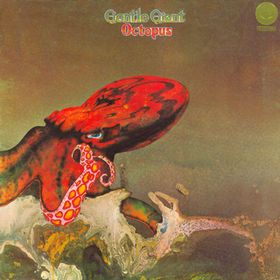
Gentle Giant – Octopus

This minty Vertigo Spaceship label British import original pressing has SUPERB SUPER HOT Stamper sound on side one. It’s BIG, open and Tubey Magical in the best tradition of British Prog Rock. If you’re a fan of ELP, Yes, Tull, Floyd and the like, this music might just be right up your alley. And unless you have some seriously expensive pressings, not many albums by the above-named bands will be competitive sonically with the sound of this side one. The album is VERY well-recorded.

Side one was tonally correct with an extended top end, the kind of top that many British pressings only hint at. We gave side one a grade of A++. It will be very hard to beat because it sounds AMAZING. It’s British analog at its richest and tubiest.

Side two was a step down sonically. Although rich and full-bodied, there is some smear on the transients and the stage is not as big as it is on this superb side one. (more…)

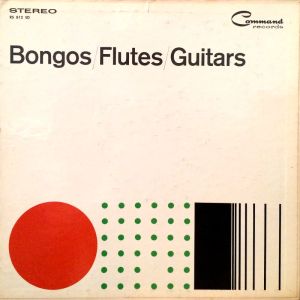
Los Admiradores – Robert Fine Knocked This One Out of the Park

More Hot Stamper Pressings of Easy Listening Albums

More Recordings by Robert Fine

First things first: one of the main bongo players is none other than Ray Barretto himself. You jazz guys out there will know exactly who that is, a man whose reputation for brilliant rhythmic contributions to some of the greatest classic jazz albums of the ’60s is beyond dispute. One listen to Midnight Blue will do the trick. The man had a gift. And he is here joined by two other top players.

And of course the guitarist has to be the incomparable Tony Mottola, the man behind one of our favorite jazz guitar records of all time: Warm, Wild and Wonderful.

Soundfield, Timbre and Dynamics

The spaciousness of the studio is reproduced with uncanny fidelity, with both huge depth and width, but there is another dimension that this record is operating in that Bang, Baa-room and Harp, just to take one example, does not — the instruments are capable of jumping out of your speakers, seemingly right into your listening room.

The effect is astonishing. I have never heard these instruments sound more real than they do here. The timbre is perfection. The dynamics are startling.

Add to those clearly unattenuated dynamics, high and low frequencies that are also not attenuated, and microphones capable of deadly accuracy, and you have yourself a recording of virtually unparalleled fidelity. We’ve played these kinds of records by the score but I have rarely heard one that can do what this one is doing.

No Reverb? Say What?

In discussing Robert Fine’s approach to this recording in the lengthy liner notes ( a full two pages worth!), the author notes that Fine does not tolerate added reverb or echo of any kind. He feels it distorts and degrades the clarity and timbral accuracy of the instruments.

The crazy thing is, this album is swimming in reverberation. The space is enormous, the presentation as three-dimensional as any you have ever heard, with clearly audible reflections bouncing off the walls of the studio deep into the soundstage.

If the notes are to be believed, it’s all REAL. And I have no trouble taking Fine at his word. As the engineer behind some of the greatest orchestral recordings in the history of the world for Mercury, his bona fides are fully in order.

(more…)

Rita Coolidge – The Lady’s Not For Sale

More Rita Coolidge

  • Rita Coolidge’s third album arrives with superb Shootout Winning Triple Plus (A+++) sound or close to it from first note to last
  • Fans of Linda Ronstadt’s ’70s music are going to find a lot of Tubey Magical sound to like here – this is a simply wonderful example of the kind of album that makes record collecting fun
  • John Haeny, the principal engineer for Rita and hubby Kris Kristofferson during the ’70s, in fact worked on some of Linda’s albums, as well as those by Judy Collins, Bonnie Raitt, Jackson Browne, Little Feat and many others
  • “… a fine mixture of covers and originals that manages to showcase her fine vocal abilities as well as show off an impressive array of friends.”

(more…)

Sibelius / The Popular Sibelius – Reviewed in 2005

More of the music of Jean Sibelius (1865-1957)

This Minty looking EMI is a real SLEEPER!

BIG, EXCITING SOUND! With a spirited performance to match from Berglund, a man well known for his Sibelius work. This is not one of those vague, washed out EMIs

This record is ALIVE. Recorded by Stuart Eltham in 1972, you will be hard pressed to find more immediacy in an EMI. The sound may even be a bit over the top on some selections — whether it is or not will probably depend on your tastes and playback system. But one listen to the third track on side one should convince you that you’re in the presence of a superb recording.

This record includes Finlandia, Valse Triste, Karelia – Intermezzo, The Swan Of Tuonela, Lemminkaines’s Return, King Christian II – Elegy, Musette & Nocturne.

(more…)

Carpenters – A Song For You

  • An outstanding original A&M pressing, with both sides earning excellent Double Plus (A++) sonic grades – exceptionally quiet vinyl too
  • This LP is full of the Midrange Magic that has the Carpenters sounding rich, smooth, sweet and breathy – in other words, in ANALOG, so they sound every bit as good as you remember them
  • 4 1/2 stars: “The duo’s best album, and the place to start beyond the hits compilations… a seemingly unified concept album written and recorded during a frantic period of concert activity, and brimming with lovely musical ideas even more lovingly executed, laced with good humor, and enough hits of its own to have established any artist’s career on its own. And even in between the hits, the album was built on material that could have made a whole career for anyone.”

(more…)

Dave Mason – Headkeeper

More Dave Mason

  • An excellent copy with Double Plus (A++) sound from the first note to the last – reasonably quiet vinyl too
  • Some of the best sound Dave Mason ever managed, so let’s give credit where credit is due, to the amazing engineer Al Schmitt
  • If you’re a Dave Mason fan this is one of the better albums he’s put out and it deserves a place in your collection
  • “The spare, acoustic solo performance of “Can’t Stop Worrying, Can’t Stop Loving” heard here, for example, makes the undistinguished full-band studio version instantly obsolete. And the live version of “World In Changes” is one of the best pieces of early ’70s rock, period.”

This is some of the best sound Dave Mason ever managed, so let’s give credit where credit is due, to the amazing Al Schmitt. He recorded and mixed this album and he sure knocked it out of the park.

We know his work well; he happens to have engineered many albums with SUPERB SOUND: Aja, Hatari, Breezin’, Late for the Sky, Toto IV – the guy’s won 13 Grammies, which ought to tell you something.

Side one of the album is recorded in the studio, side two live from the Troubador. Many of the songs on side one would be recorded again by Mason, and not as well in most cases. Mastered at Artisan (where Kevin Gray got his start) by none other than the owner, Bob MacLeod, this record got the A Team treatment from start to finish. (more…)