1961

Bizet / Saint-Saens / Gounod, et al. – Ballet Highlights From French Opera

More of the Music of Georges Bizet

    • With top grades on both sides, this original Mercury stereo pressing of these renowned ballet works features some of the BEST sound we’ve heard from Paray
    • Listen to the lush strings and the weighty, rich sound on the Massenet piece on side two – that is the sound of a shootout winning pressing
    • The Ballet Music from Faust may just give the impossibly rare RCA (LSC 2449) a run for its money in terms of sound and performance
    • Vibrant orchestrations, top quality sound and scratch-free surfaces combine for an astounding listening experience
    • This spectacular Demo Disc recording is big, clear, rich, dynamic, transparent and energetic – HERE is the sound we love
    • If you’re a fan of delightful orchestral showpieces such as these ballet highlights, this LP from 1961 belongs in your collection
    • The complete list of titles from 1961 that we’ve reviewed to date can be found here.

(more…)

Bernstein – Conducts Symphonic Dances from West Side Story

More music written or performed by Leonard Bernstein (1918-1990)

More Orchestral Spectaculars

  • This vintage Columbia stereo pressing boasts outstanding sound from first note to last
  • The best copies are out of this world, reproducing some of the most dynamic, exciting, richest, and most spacious sound we have ever heard from Columbia records, especially those conducted by Leonard Bernstein
  • The music is wonderful of course, with the Suites giving you all the best parts of his marvelous compositions with none of the filler
  • These vibrant orchestrations are played with tremendous energy, and that, coupled with rich and tubey analog sound, combine for an especially immersive and engrossing listening experience, particularly on side one here
  • For those of you playing along at home, it should be obvious why side one earned the higher grade – some of the qualities important to the sound are in greater abundance on side one, and this is not in any way difficult to hear

This is one of the great Columbia recordings. I suspected it might have been done at their legendary Columbia studios in New York but I was wrong, Manhattan Center’s huge stage served as the venue. Either way the sound is no less glorious.

One of the biggest advantages this copy had over most of what we played is fuller brass. The shrill sounding horns on most Columbia albums is what gets them tossed into the trade pile. Fortunately for us audiophiles who care about these sorts of things, the sound here is rich and clean, with solid, deep bass. The stage is huge, with the multi-miking kept to a minimum so that you can really hear the space this big group of musicians occupies.

There is a HUGE amount of top end on this recording. Wildly splashing cymbals and other percussion instruments are everywhere, and they are a joy to hear. No original was as clean up top as this reissue, and without a clear, (mostly) distortion-free top end, the work will simply not sound the way Bernstein wanted it to.

All that percussion is in the score. The high-frequency energy – perhaps the most I have ever heard from any recording of his music — is there for a reason. He conducted his own score, and one can only assume he liked the way it came out. We sure did. (more…)

Mahler’s Symphony No. 4 with Solti on Decca/London

Hot Stamper Pressings of Decca Recordings

Deep bass; rich, smooth strings, lots of lovely hall space – this copy was right up there with the best we heard, and clearly won the shootout for side two. You will hear immediately why this side two could not be beat – it’s wonderful.

CS 6217 is potentially every bit as good.

What amazing sides such as these are doing right is not hard to hear:

  • The biggest, most immediate staging in the largest acoustic space
  • The most Tubey Magic, without which you have almost nothing. CDs give you clean and clear. Only the best vintage vinyl pressings offer the kind of Tubey Magic that was on the tapes in 1961
  • Tight, note-like, rich, full-bodied bass, with the correct amount of weight down low
  • Natural tonality in the midrange — with all the instruments of the orchestra having the correct timbre
  • Transparency and resolution, critical to hearing into the three-dimensional space of the concert hall

No doubt there’s more but we hope that should be enough for now.

And of course, playing the record is the only way to hear all of the above.

An Orchestra Needs This Kind of Space

One of the qualities that we don’t talk about on the site nearly enough is the SIZE of the record’s presentation. Some copies of the album just sound small — they don’t extend all the way to the outside edges of the speakers, and they don’t seem to take up all the space from the floor to the ceiling. In addition, the sound can often be recessed, with a lack of presence and immediacy in the center.

Other copies — my notes for these copies often read “BIG and BOLD” — create a huge soundfield, with plenty of room for all of the players. These copies are not brighter, they’re not more aggressive, they’re not hyped-up in any way, they’re just bigger and clearer.

And most of the time those very special pressings are just plain more involving. When you hear a copy that does all that — a copy like this one — it’s an entirely different listening experience.

Side One

Heiter, Bedächtig, Nicht Eilen 
In Gemächlicher Bewegung

Side Two

Ruhevoll 
Sehr Behaglich

About the Symphony

Mahler had begun work on the 4th symphony in 1899 but the ingredients were not all created from scratch. The music of the final movement dates back to 1892 and a particular collection of songs he composed that February. Many were destined to become part of the epic folk-cycle Das Knaben Wunderhorn but the stand-alone Das himmlische Leben (“Heavenly life”) was intended to be an important component of the massive 3rd Symphony. Indeed, melodic material from this song can be found in that earlier work but Mahler soon realized that it deserved more elaborate treatment.

With a technique not uncommon in Mahler’s oeuvre, he used an idea from one symphony to inform another. Much like the trumpet fanfare in the 4th Symphony’s first movement that foreshadows the 5th Symphony, the “Leben” song fragments of the 3rd Symphony’s fifth movement find their apotheosis in the 4th.

There is a decidedly “Classical” feel to the score of the 4th Symphony and the work employs a much more concentrated emotional profile than the prior symphonies. The child’s view of heaven depicted in the 4th Symphony’s closing movement is largely responsible for this overarching simplicity but there is also a sense that Mahler was attempting something novel with this work.

Interestingly, he does not supply explanatory titles to the first three movements (a rarity to this point in his career) but rather allows the music, in all its sunny subtlety, to speak for itself.

Program Notes

Wilkie and the Decca Tree

Decca was an early adopter of the LP album, which put it ahead of its direct competitor EMI. The company was also an early exponent of stereophonic recording. Wilkinson would make the move to stereo recordings for Decca in April 1958, but until then he remained the engineer with the monaural recording team (for a time there were parallel recording teams) because mono was considered the more important release. In the early 1950s, together with Roy Wallace (1927–2007) and Haddy, he developed the Decca tree spaced microphone array used for stereo orchestral recordings. Decca began to use this for recordings in May 1954 [the month and year I was born!] at Victoria Hall in Geneva, a venue Wilkinson did not record in. He preferred recording in London and Paris although he also recorded in Amsterdam, Bayreuth, Chicago, Copenhagen, Rome, and Vienna.

Wilkinson discussed the use of the Decca tree in an interview with Michael H. Gray in 1987.

You set up the Tree just slightly in front of the orchestra. The two outriggers, again, one in front of the first violins, that’s facing the whole orchestra, and one over the cellos. We used to have two mikes on the woodwind section – they were directional mikes, 56’s in the early days. You’d see a mike on the tympani, just to give it that little bit of clarity, and one behind the horns. If we had a harp, we’d have a mike trained on the harp. Basically, we never used too many microphones. I think they’re using too many these days.

Wilkinson’s method of selecting recording venues was recounted in an article on concert hall orchestral sound written by the conductor Denis Vaughan in 1981:

I have recorded in many halls throughout Europe and America and have found that halls built mainly of brick, wood and soft plaster, which are usually older halls, always produce a good natural warm sound. Halls built with concrete and hard plaster seem to produce a thin hard sound and always a lack of warmth and bass. Consequently when looking for halls to record in I always avoid modern concrete structures.

Wilkinson went on to engineer at hundreds of recording sessions. He was said to have worked with more than 150 conductors. He was the engineer most responsible for Richard Itter’s Lyrita recordings (which Decca produced). Itter always requested Wilkinson as engineer, calling him “a wizard with mics.”

Wilkinson’s stereo recordings with the conductor Charles Gerhardt (including a series of Reader’s Digest recordings and the RCA Classic Film Scores series) and the producer John Culshaw made his name and reputation known to record reviewers and audiophiles. His legacy was extended by the fact that he trained every Decca engineer from 1937 onwards.

Wilkinson, always called “Wilkie” in the music business, was known as a straight-talking man, interested only in the quality of the work. The Decca producer Ray Minshull (1934–2007) recalled Wilkinson’s methods in an interview with Jonathan Valin in March 1993:

Everyone loved and respected Wilkie, but during a session he could be exacting when it came to small details. He would prowl the recording stage with a cigarette – half-ash – between his lips, making minute adjustments in the mike set-up and in the orchestral seating. Seating arrangement was really one of the keys to Wilkie’s approach and he would spend a great deal of time making sure that everyone was located just where he wanted them to be, in order for the mikes to reflect the proper balances.

Of course, most musicians had a natural tendency to bend toward the conductor as they played. If such movement became excessive, Wilkie would shoot out onto the stage and chew the erring musician out before reseating him properly. He wanted the musicians to stay exactly where he had put them. He was the steadiest of engineers, the most painstaking and the most imaginative. In all of his sessions, he never did the same thing twice, making small adjustments in mike placement and balances to accord with his sense of the sonic requirements of the piece being played.

His recordings were characterized by the producer Tam Henderson in an appreciation: “The most remarkable sonic aspect of a Wilkinson orchestral recording is its rich balance, which gives full measure to the bottom octaves, and a palpable sense of the superior acoustics of the venues he favored, among them London’s Walthamstow Assembly Hall and The Kingsway Hall of revered memory”.

On retiring, Wilkinson received a special gold disc produced by Decca with extracts of his recordings. He received three Grammys for engineering: 1973, 1975, and 1978. He also received an audio award from Hi-Fi magazine in 1981 and the Walter Legge Award in 2003 “…for extraordinary contribution to the field of recording classical music.”

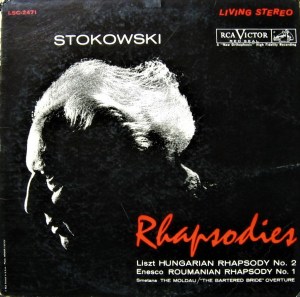
Liszt, Enesco, Smetana / Rhapsodies / Stokowski

More of the music of Franz Liszt (1811-1880)

Our Favorite Recording of the Hungarian Rhapsodies

This RCA Living Stereo LP (LSC 2471) has SUPERB SOUND!

I’m a big fan of this title. The string tone is rich and dark and just wonderful. If you want an exciting record with outstanding Living Stereo sound — dynamic, with strings to die for, and an energetic performance, this is the one!

Don’t let the White Dog fool you. I doubt if the average Shaded Dog is any better.

[I suspect that the Shaded Dog has the potential to be better, but when this review was written I did not.]

This record sounds just right to me. Listen to how clear and correct the triangle is. 

I wonder if the Shaded Dog copies would be cut that clean. Without one here to compare there’s no way to know.

[We have since compared them and our Shaded Dogs were slightly better than any of the White Dogs.]

The Classic version sounds fine until you play it next to the real McCoy.

Then you hear how brightening up the strings ruins everything.

Here are some of the other records we’ve discovered that are good for testing string tone and texture.

(more…)

Oscar Peterson / The Trio – Live From Chicago

Reviews and Commentaries for the Recordings of Oscar Peterson

xxx

  • Tonally correct from top to bottom and as transparent as any vintage recording you’ve heard, the combination of clarity and Tubey Magic here is hard to beat
  • The Trio, including Ray Brown and Ed Thigpen, are in fine form on these live recordings from the London House in Chicago; if you want to hear one of the great jazz trios at the height of their powers, this is the ticket!
  • “…[Peterson] was generally in peak form during this era. He sticks to standards on this live [album] (a good example of the Trio’s playing), stretching out ‘Sometimes I’m Happy’ creatively for over 11 minutes and uplifting such songs as ‘In the Wee Small Hours of the Morning,’ ‘Chicago’ and ‘The Night We Called It a Day.'”
  • If you’re a fan of Oscar’s, this Top Title from 1961 belongs in your collection.
  • The complete list of titles from 1961 that we’ve reviewed to date can be found here.

Peterson really puts on a great show. He’s made an awful lot of records during his career and most of them aren’t especially noteworthy. This album is clearly an exception to that rule. (If You Could See Me Now is another one.)

This pressing was a HUGE step up from the other copies we played in our recent shootout. This killer copy has the immediacy that puts you front and center at The London House for a great jazz show. Ray Brown is his usual incredible self on bass.

(more…)

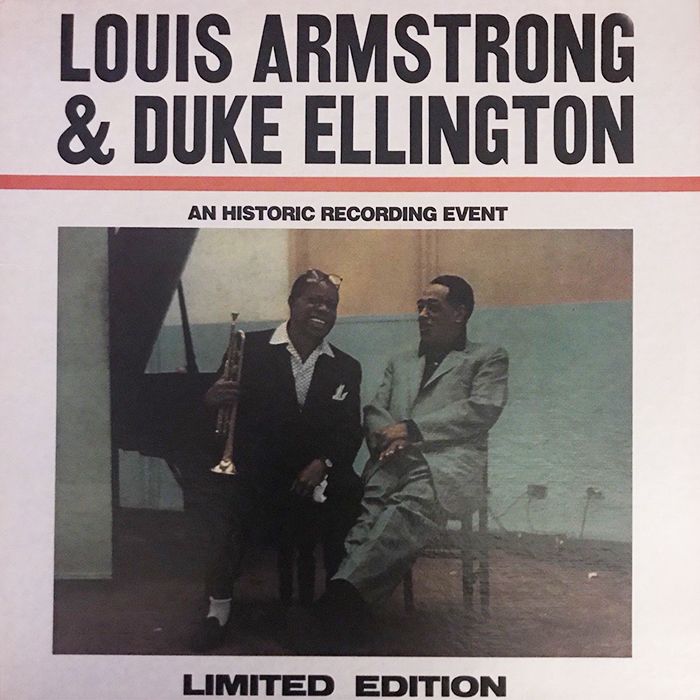
Armstrong & Ellington / An Historic Recording Event

More Jazz Recordings Featuring the Piano

  • Lively, dynamic, transparent, spacious and musical throughout – you won’t believe how good this Jazz Classic from 1961 sounds
  • We guarantee there is dramatically more richness, fullness and presence on this copy than anything you have ever heard, and that’s especially true if you made the mistake of buying whatever godawful Heavy Vinyl pressing is currently on the market (or the Classic Records pressing, which sounded fine at the time, but up against the real thing, forget it
  • “The music resulting from Thiele’s inspired experiment is outstanding and utterly essential. That means everybody ought to hear this album at least once, and many will want to hear it again and again all the way through, for this is one of the most intriguing confluences in all of recorded jazz. Armstrong blew his horn with authority and sang beautifully and robustly.”

(more…)

Eric Dolphy – Out There in 2021

More Saxophone Jazz

  • Insanely good sound throughout with both sides earning Shootout Winning Triple Plus (A+++) grades
  • This copy was doing it all right: rich, full-bodied and Tubey Magical yet still super open and spacious
  • “A somber and unusual album by the standards of any style of music, Out There explores Dolphy’s vision in approaching the concept of tonality in a way few others — before, concurrent, or after — have ever envisioned.” – All Music, 5 Stars

(more…)

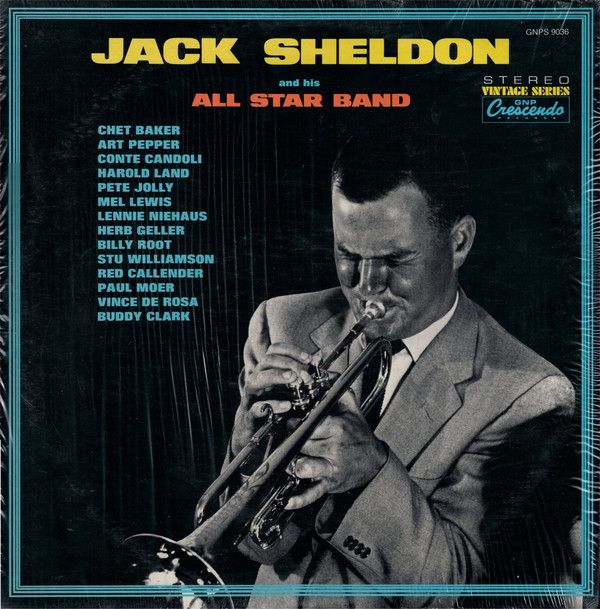
Today’s Cool Record Find from 1961 – Jack Sheldon And His All-Star Band

More Jazz Featuring the Trumpet

xxx

  • With a Triple Plus (A+++) side two and a better than Double Plus (A++ to A+++) side one, here’s a copy that’s practically as good as it gets
  • This fun, lively, superbly well-recorded 1961 release is a real SLEEPER of Demo Disc Quality West Coast Jazz
  • Huge, spacious, clear, Tubey Magical, natural and above all REAL, this copy blew our minds when we stumbled on it in our shootout
  • 4 Stars: “High-quality and consistently swinging West Coast jazz … this was the initial album to gain wide recognition and helped to introduce the L.A.-based trumpeter’s talents to the East Coast.”

This is a wonderful example of the kind of record that makes record collecting FUN.

If you large group swinging West Coast Jazz is your thing — think Art Pepper Plus Eleven — you should get a big kick out of this one.
(more…)

George Shearing and the Montgomery Brothers – The Best Sounding George Shearing Record We’ve Ever Played

More Jazz Piano Recordings

More Wes Montgomery

  • This superb collabration makes its Hot Stamper debut here with STUNNING Shootout Winning Triple Plus (A+++) sound from start to finish on this early Jazzland stereo pressing
  • With a rich, lively, present piano, as well as dead-on timbral accuracy for everyone else, this is by far the best sounding George Shearing record we have ever played
  • “… features a rich blend of sound between piano, guitar and vibes all firmly supported by Monk Montgomery’s formidable bass work and Walter Perkins’ solid drumming.”
  • 4 stars: “Pianist George Shearing meets up with guitarist Wes, vibraphonist Buddy, and bassist Monk Montgomery on this enjoyable if slightly lightweight outing… some fine soloing by the principals.”

(more…)

Liszt / Enesco – Hungarian Rhapsodies / Roumanian Rhapsodies / Dorati

More of the music of Franz Liszt (1811-1880)

More Orchestral Spectaculars

  • This wonderful collection of exciting rhapsodies returns to the site for only the second time in two years, here with superb Double Plus (A++) sound from first note to last
  • It’s also impossibly quiet at Mint Minus to Mint Minus Minus, a grade that practically none of our vintage classical titles – even the most well-cared-for ones – ever play at
  • One of the best of the Mercury Living Presence titles – the orchestra is big, rich and tubey, yet the dynamics and transparency are first rate
  • Beautifully performed by the London Symphony Orchestra (our favorite performances of these works, in fact, and a true orchestral spectacular), under the direction of Antal Dorati
  • Other versions – the Oscar Danon we like on RDG, for example – may be faster, but Dorati and the LSO bring an energy and spirit to these pieces that we feel is unequaled on vintage vinyl
  • Problems in the vinyl are sometimes the nature of the beast with these early pressings – there simply is no way around them if the superior sound of vintage analog is important to you
  • Click on this link to see more records like this one of our favorite orchestral performances with top quality sound

(more…)