Top Studios and Concert Halls

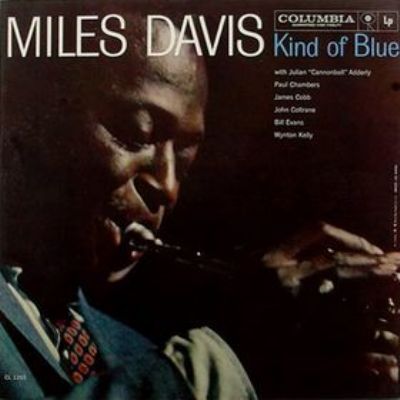
Miles Davis – Kind of Blue on a Killer 70s Red Label Pressing

More Miles Davis

  • With two solid Double Plus (A++) sides, this Red Label pressing has Demo Disc sound – sound that’s guaranteed to make you want to take all of your remastered pressings and dump them off at the Goodwill
  • After auditioning a Hot Stamper Kind of Blue like this one – a pressing that captures the sound of this amazing group like nothing you have ever heard – you may be motivated to add a hearty, “Good riddance to bad audiophile rubbish!”
  • KOB is the embodiment of the big-as-life, spacious and timbrally accurate 30th Street Studio Sound Fred Plaut was justly famous for
  • Space, clarity, transparency, and in-the-room immediacy are some of the qualities to be found on this pressing (particularly on side one)
  • It’s guaranteed to beat any copy you’ve ever played, and if you have the new MoFi pressing, please, please, please order this copy so that you can hear just how screwy the sound of their ridiculous remaster is
  • 5 stars: “KOB isn’t merely an artistic highlight for Miles Davis, it’s an album that towers above its peers, a record generally considered as the definitive jazz album, a universally acknowledged standard of excellence.”
  • If you’re a fan of the music Davis, Adderley and Coltrane were playing circa 1959, this album clearly belongs in your collection

The Labels of Kind of Blue

The 6 Eye label domestic stereo pressings win our shootouts, in the case of Kind of Blue without exception.

The 360 label pressings, black print (1962-63) or white print (1963-70), as well as the rare 70s red label (1970-?), can sound very good, but they never win shootouts.

We’ve identified a select group of reissues with the potential to do well in shootouts, typically earning a grade of Super Hot (A++) when up against the best originals, which earn our top grade, White Hot (A+++). Kind of Blue is one of those recordings.

Scores of differently mastered versions have been cut over the years, but to find one that’s lively and dynamic yet still communicates the relaxed nature of this music is a trick that few of them can pull off. These sides did just that.

When the band really starts cutting loose on “So What,” you’re going to lose your mind! The sound is open and spacious with a wonderful three-dimensional quality that gives each musician a defined space. You can easily tune in to one player or another and follow their contribution as the band stretches out.

Quick Listening Tests

This is an easy one. Just listen to the trumpet at the start of Freddie Freeloader. Most copies do not properly reproduce the transient information of Miles’ horn, causing it to have an easily recognizable quality we talk about all the time on the site: smear. No two pressings will have precisely the same amount of smear on his trumpet, so look for the least smeary copy that does everything else right too. (Meaning simply that smear is important, but not all-important.)

On All Blues (track one, side two), the drums in the right channel are key to evaluating the sound of the better copies. The snare should sound solid and fat — like a real snare — and if there is space in the recording on your copy you will have no trouble hearing the room around the kit.

[The drums are precisely where one of the major faults of the disastrous MoFi 2 LP 45 RPM pressing can be heard. A fuller review is coming, soon I hope!}

Next check the cymbals. No two copies will get the cymbals to sound the same, so play a few and see which ones sound the most natural to you. The most natural will be the one with the best top end.

When Adderley comes in hard left, his alto should not be thin, squawky or stuck in the speaker. The best of the best copies have the instrument sounding full-bodied (for an alto) and reedy. The reedy quality tells you that your pressing is highly resolving and not smeared.

(more…)

Prokofiev – Violin Concerti Nos. 1 and 2 / Ricci / Ansermet

More of the Music of Sergei Prokofiev

  • With two outstanding Double Plus (A++) sides, this early London Stereo pressing of Ricci and Ansermet’s performance of Prokofiev’s Violin Concerti Nos. 1 and 2 will be very hard to beat
  • It’s also remarkably quiet at the high end of Mint Minus Minus, a grade that even our most well-cared-for vintage classical titles have trouble playing at
  • Ricci is a fiery player – this pressing will allow you to appreciate his playing in a coherent, natural and realistic way
  • The sound of the orchestra is dramatically richer and sweeter than you will hear on nearly all other pressings – what else would you expect from Decca‘s engineers and the Suisse Romande?

(more…)

Yes, Sometimes There Is Only One Set of Magic Stampers

Hot Stamper Pressings of the Music of Rimsky-Korsakov Available Now

Way back in 2015 we wrote:

There are certain stampers that seem to have a consistently brighter top end. They are tolerable most of the time, but the real magic can only be found on the copies that have a correct or even slightly duller top. Live classical music is never “bright” the way recordings of it so often are.

On the other hand, it’s rarely “rich” and “romantic” the way many vintage recordings are — even those we rave about — but that’s another story for another day.

We recently did the shootout again, and now with a much more resolving, clear, accurate upper midrange and an even more extended top end, the stampers that we used to find “brighter than ideal” are almost always just too damn bright, period.

We will never buy another copy with those stampers except by accident or misfortune.

We was wrong and we don’t mind admitting it. We must be learning something in our shootouts, right?. We ran an experiment, we discovered something new about this album, and that should be seen as a good thing.

If you have been making improvements to your system, room, electricity, etc., then you too own records which don’t sound as good as you remember them. You just don’t know which ones they are, assuming you haven’t played them in a while.

One Stamper to Rule Them All

Which leaves one and only one stamper that can win a shootout. There is another stamper we like well enough to offer to our discriminating customers, but after that it is all downhill, and steeply.

Here are some of the other albums we’ve discovered for which one set of stampers has been consistently winning shootouts for years now.

Wouldn’t you know it — the right stampers are the hardest ones to find.

Which of course pretty much explains why you will rarely see a copy of the album for sale on our site.

(more…)

An Extraordinary Recording of the Carmen Fantasie – This Is Why You Must Do Shootouts

It has been years since a Whiteback pressing on the later label won a shootout. Some reissue copies of CS 6165 have earned Nearly White Hot Stamper grades, but we would be very surprised if one of the Blueback originals we play in the next shootout does not come out on top. They are just too good.


This London Whiteback LP has DEMO DISC sound like you will not believe, especially on side two, which earned our coveted A Triple Plus rating. The sound is warm, sweet and transparent; in short, absolutely GORGEOUS. We call it AGAIG — As Good As It Gets!

As this is one of the Greatest Violin Showpiece Albums of All Time, it is certainly a record that belongs in every right-thinking audiophle’s collection. (If you’re on our site and taking the time to read this, that probably means you.) Ruggiero Ricci is superb throughout.

And side one was just a step below the second side in terms of sound quality, with very solid A++ sound. To find two sides of this caliber, on quiet vinyl no less, is no mean feat. You could easily go through ten copies without finding one as consistently good sounding as this one.

A True Demo Disc, Or Was It?

Ricci’s playing of the Bizet-Sarasate Carmen Fantasie is OUT OF THIS WORLD. There is no greater perforrmance on record in my opinion, and few works that have as much Audiophile Appeal.

Which is why I’ve had a copy of this record in my own collection for about fifteen years marked “My Demo Disc.” But this copy KILLED it. How could that be?

It just goes to show: No matter how good a particular copy of a record may sound to you, when you clean and play enough of them you will almost always find one that’s better, and often surprisingly better.

Shootouts are the only way to find these kinds of records. That’s why you must do them.

Nothing else works. If you’re not doing shootouts (or buying the winners of shootouts from us) you simply don’t have top quality copies in your collection, except in the rare instances where you just got lucky. In the world of records luck can only take you so far. The rest of the journey requires effort.

(more…)

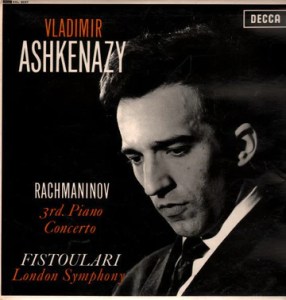
Rachmaninoff – Piano Concerto No. 3 / Ashkenazy / Fistoulari (Decca)

More of the Music of Sergei Rachmaninoff

  • Here is a vintage UK Boxed Decca stereo pressing of Rachmaninoff’s Piano Concerto No. 3 with solid Double Plus (A++) sound or close to it from start to finish
  • It’s also impossibly quiet at Mint Minus to Mint Minus Minus, a grade that practically none of our vintage classical titles – even the most well-cared-for ones – ever play at
  • Spacious, rich and smooth (particularly on side one) – only vintage analog seems capable of reproducing all three of these qualities without sacrificing resolution, staging, imaging or presence
  • If you’re looking to demonstrate just how good 1963 Tubey Analog sound can be, this superb copy may be just the record for you
  • If you love this well-known piano concerto as much as we do, this is surely a classic from 1963 that belongs in your collection.
  • To read the 60-odd reviews and commentaries we’ve written for piano concertos, please click here

(more…)

Violin Concertos Are Ideal for Testing Table Setup

Hot Stamper Pressings Featuring the Violin Available Now

This is one of the ALL TIME GREAT violin concerto records. In Ruggiero Ricci’s hands both works are nothing short of magical. If you want to know why people drool over Golden Age recordings, listen to the violin. Careful, when you hear it you may find yourself drooling too.

The staging of the orchestra and violin is exactly the way we want to hear it in our heads. Whether it would really sound this way in a concert hall is impossible to say — concert halls all sound different — but the skill and the emotion of the playing is communicated beautifully on this LP. This is a sweetheart of a record, full of the Tubey Magic for which London recordings are justly famous.

As we noted above, engineering took place in the legendary Kingsway Hall. There is a richness to the sound of the strings that is exceptional, yet clarity and transparency are not sacrificed in the least.

VTA and the Violin

This is truly The Perfect Turntable setup disc. When your VTA, azimuth, tracking weight and anti-skate are correct, this is the record that will make it clear to you that your efforts have paid off.

What to listen for you ask? With the proper adjustment the harmonics of the strings will sound extended and correct, neither hyped up nor dull; the wood body of the instrument will be more audibly “woody”; the fingering at the neck will be noticeable but will not call attention to itself in an unnatural way. In other words, as you adjust your setup, the violin will sound more and more right.

And you can’t really know how right it can sound until you go through hours of experimentation with all the forces that affect the way the needle rides the groove. Without precise VTA adjustment there is almost no way this record will do everything it’s capable of doing. There will be hardness, smear, sourness, thinness — something will be off somewhere. With total control over your arm and cartridge setup, these problems will all but vanish. (Depending on the quality of the equipment of course.)

We harp on all aspects of reproduction for a reason. When you have done the work, records like this are nothing less than GLORIOUS.

(more…)

Simon and Garfunkel – Parsley, Sage, Rosemary and Thyme

More of the Music of Simon and Garfunkel

  • A Parsley, Sage… like you’ve never heard, with excellent Double Plus (A++) sound or close to it on both sides of this vintage Stereo 360 pressing – fairly quiet vinyl too
  • Their best recording, a Top 100 album and a Demo Disc for Tubey Magical voices and guitars (particularly on side one)
  • Especially smooth, present, breathy vocals (also particularly on side one) – this is the sound we love here at Better Records
  • Having played them by the hundreds, we’ve found that midrange presence and resolution are precisely what go missing on the modern Heavy Vinyl reissue, and that if those qualities are important to you, vintage vinyl is the only solution to your problem
  • 4 1/2 stars: “…an achievement akin to the Beatles’ Revolver or the Beach Boys’ Pet Sounds album, and just as personal and pointed as either of those records at their respective bests.”
  • Fans of this folky duo should definitely find a place for this 1966 release, which is also their best sounding album
  • One specific set of stampers always win our shootouts, and when you hear them you will know why – the sound is big, rich and clear like no other
  • We’ve discovered a number of titles in which one stamper always wins, and here are some others

(more…)

Albeniz / Iberia – Another Knockout of a Recording, Conducted by Ernst Ansermet

More of the Music of Albeniz

  • This superb classical release (only the second copy to hit the site in close to two and a half years) boasts big, bold, dynamic Shootout Winning Triple Plus (A+++) sound or close to it throughout this early London pressing
  • It’s also fairly quiet at Mint Minus Minus, a grade that even our most well-cared-for vintage classical titles have trouble playing at
  • Here you will find the huge hall, correct string tone, spacious, open sound that are hallmarks to all the best vintage orchestral pressings
  • Listen to the plucked basses – clear, not smeary, with no sacrifice in richness. Take it from us, the guys that play classical recordings by the score, this is hard for a record to do!
  • Ernst Ansermet conducted some of the best sounding records ever made — here are some of the ones we’ve reviewed

The sound of this copy is so transparent, undistorted, three-dimensional and real, without any sacrifice in solidity, richness or Tubey Magic, that we knew we had a real winner on our hands as soon as the needle hit the groove.

We were impressed with the fact that it excelled in so many areas of reproduction. The illusion of disappearing speakers is one of the more attractive aspects of the sound here, pulling the listener into the space of the concert hall in an especially engrossing way.

(more…)

Bizet / L’arlesienne And Carmen Suites – Ansermet

More of the Music of Georges Bizet

  • An early London pressing that was doing just about everything right, earning solid Double Plus (A++) grades from first note to last
  • This is a spectacular recording — it’s guaranteed to put to shame any Heavy Vinyl pressing of orchestral music you own
  • Vibrant orchestrations, top quality sound and scratch-free surfaces combine for an astounding listening experience
  • Some old record collectors (like me) say classical recording quality ain’t what it used to be – here’s all the proof anyone with two working ears and top quality audiophile equipment needs to make the case
  • If you’re looking to demonstrate just how good ’50s All Tube Analog can be, this killer copy should be just the record to do it
  • Recorded in 1958 using the amazing Decca Tree mic setup, it’s yet another remarkable disc from the Golden Age of Vacuum Tube Recording
  • 1958 just happens to be one of the truly great years for analog recordings, as evidenced by this amazing group of albums, all recorded or released in that year
  • This is a Must Own album, along with these other entries in our core classical/orchestral collection

Production and Engineering

James Walker was the producer, Roy Wallace the engineer for these sessions from 1958 in Geneva’s glorious Victoria Hall. It’s yet another remarkable disc from the Golden Age of Vacuum Tube Recording.

The gorgeous hall the Suisse Romande recorded in was possibly the best recording venue of its day, possibly of all time; more amazing sounding recordings were made there than any other hall we know of. There is a richness to the sound that exceeds all others, yet clarity and transparency are not sacrificed in the least. It’s as wide, deep and three-dimensional as any, which is of course all to the good, but what makes the sound of these recordings so special is the weight and power of the brass and the timbral accuracy of the instruments in every section.

This is the kind of record that will make you want to take all your heavy vinyl classical pressings and put them up for sale. None of them, I repeat not a single one of them, can ever begin to sound the way this record sounds.

Quality record production is a lost art, and it’s been lost for a very long time.

Famous in its Day

The Carmen Ballet Suite was deservedly famous in audiophile circles back in the ’70s. Even with the dubious equipment that a high-end stereo store might be running, this record would still sound shockingly good. It has so much “life” to it, so many interesting colors, and above all such three-dimensional spaciousness, it can make even bad transistor equipment, which is pretty much all there was back then, sound good.

The store I frequented carried the classic tube Audio Research electronics — that’s where I bought mine — but most stores were all-transistor, and high-power transistors at that, not a sound I care to revisit. Would love to hear my SP3-A-1 again though!

(more…)

In the Market for New Speakers? See How Well They Handle the Energy of Far More Drums

Hot Stamper Pressings of the Music of Dave Brubeck Available Now

The drum solo Joe Morello lets loose on Far More Drums is one of the best on record. I was playing that song recently and it occurred to me that it is practically impossible for a screen or panel speaker of any design to reproduce the sound of those drums properly, regardless of how many subs you have.

Most of the music is not in the deeper bass anyway. It’s the whack of instruments whose energy is in the lower midrange and mid-bass that a screen speaker will struggle with.

A good large-driver dynamic speaker fed by fast electronics can handle the energy in that range with ease.

This is the album you need to take with you next time you head to your local stereo store to audition speakers.

It will help clarify the issues. Screen speakers do many things well, but drums are not one of them, at least in my experience they aren’t. If drums are important to you, do yourself a favor and buy a dynamic speaker, the bigger the better.

brubeck in the studio733

Time Further Out, like most of the classic Brubeck albums, is a big speaker record. It requires a pair of speakers that can move air with authority below 250 cycles and play at fairly loud levels. If you don’t own speakers that can do that, this record will never really sound the way it should.

(more…)