Kingsway Hall – Reviews and Commentaries

Pictures at an Exhibition – Uncannily Natural Piano Reproduction

More of the music of Modest Mussorgsky (1839-1881)
In a recent listing for a shootout winning pressing, we noted:

This original London pressing of the solo piano version of Pictures at an Exhibition has uncannily natural piano reproduction, which is why we are awarding this side one our highest sonic grade, A Triple Plus.

The fact that the recording takes place in Kingsway Hall in 1967 no doubt plays a large part in the natural sound. The hall is bigger here than on other copies, the piano even more solidly weighted, yet none of this comes at the expense of the clarity of the playing.

The piano has no smear, allowing both the percussive aspects of the instrument and the extended harmonics of the notes to be heard clearly and appreciated fully.

Side two has Mehta’s performance of the orchestrated work squeezed onto side two, which is never a good idea if one is looking for high quality orchestral sound. The performance itself is mediocre as well.

We are not, and never haver been, big fans of Mehta’s work with the Los Angeles Philharmonic on London.

The exceptionally rare copy of Mehta’s Planets can sound good, but 90% of them do not — just don’t make the mistake of telling that to the average audiophile who owns one. Harry told him it was the best, he paid good money for it, and until someone tells him different it had better be “the one Planets to own.” (Our favorite performance of The Planets can be found here.)

We see one of our roles here at Better Records as being the guys who actually will “tell you different,” and, more importantly, can back up our opinions with the records that make our case for us. (more…)

This Living Stereo from 1958 Didn’t Make the Grade

Hot Stamper Pressings of Living Stereo Records Available Now

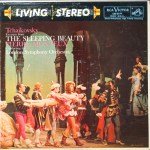
Our notes for this copy of LSC 2177 read “blary, bright, not nearly as good as Anserment’s recordings,” which are the ones we compared it to, both the complete ballet and the highlights.

In other words, it just sounded like an old record.

If you are looking for a top quality pressing with a performance to match, we recommend two:

  1. The complete ballet on three discs with Anserment conducting, and/or
  2. The highlights, on a single disc, again with Ansermet conducting.

This Shaded Dog might be passable on an old school audio system, but it was unpleasant when played on the high quality modern equipment we use.

There are quite a number of other vintage classical releases that we’ve run into over the years with similar shortcomings. For fans of vintage Living Stereo pressings, here are some to avoid.

(more…)

Brahms / Piano Concerto No. 1 – What to Listen For

Hot Stamper Pressings of of the Music of Brahms Available Now

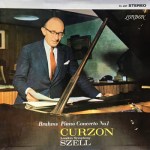
Our general notes for the recording seen below explain why the typical copy in our shootout fell short.

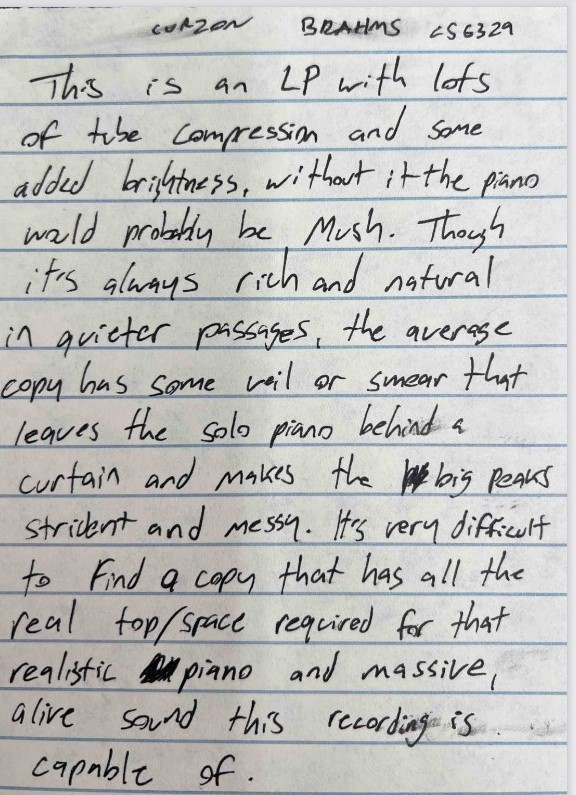
This is an LP with lots of tube compression, and some added brightness.

Without the added brightness, the piano would probably be mud.

The added brightness and compression results in a piano that always sounds rich and natural in the quieter passages.

The average copy also has some veiling or smearing that make the solo piano parts sound like they are coming fom behind a curtain. On these copies, the big peaks can often get strident and very messy.

It’s difficult to find a copy that has all the top end extension and space required to reproduce both a realistic piano and the massive live sound the orchestra is capable of.


All of which adds up to a difficult shootout in which relatively few copies had the sound we were looking for.

Production and Enginneering

(more…)

Was It Even Possible for Harry Pearson to Create a Meaningful Super Disc List?

Hot Stamper Pressings of TAS Super Disc Recordings Available Now

A customer brought up Harry Pearson in a discussion we were having about the best sounding records, which went a little something like this:

“You’re as much a pioneer as Harry Pearson ever was, and your authenticity is unchallengeable…”

Even I wouldn’t go that far! We make plenty of mistakes, and we learn new things about records all the time, so calling us “unchallengable” is a bit off the mark. However, we are always up for the challenge, and are happy to put our records up against any and all comers.

As far as Harry Pearson, I had this to say about the man:

Very kind of you to say. I think Harry could have been much better at his job if he had had access to modern record cleaning technology, better playback, and a staff of people playing thousands of records every year to help him discover the best sounding pressings.

No one can succeed as a one man show in audio. Audio is too complicated. It takes a team of dedicated professionals with expertise in every area of audio and record collecting to do it right.

He never understood stampers and the like because he didn’t have the research staff to get the data he would have needed to test all the stamper variations and learn from them.

He was stuck at the level of labels, and also not nearly skeptical enough of the idea that “the original is better,” a myth audiophiles cling to to this very day. That, and the superiority of the Heavy Vinyl remaster, which we both know is a crock of sh*t.

TP

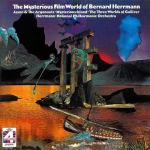
Our comments for The Fantasy Film World of Bernard Herrmann have something to say about these same issues.

Decca Versus London

There’s a reason this record is on the TAS List of Super Discs — if any LP should be called a Super Disc, this one should. (With Phase Four sound you might even call it a Super-Duper-Disc.)

But Harry is, not atypically, rather misinformed about the catalog number and country of manufacture. He exclusively admits the Decca pressing to his list, and that is clearly contrary to our experience in general as well as our findings for this shootout. The best Decca pressing we played rated no better than a B+ for either side. That’s five — count them, five — sonic grades lower than the A Triple Plus sides of our best London copy.

If you are one of those audiophiles who’s been following Harry down the rabbit hole for years, discovering a little site called Better Records may just turn out to be a life-changing event. Here you can find records that live up to the hype, ours and his.

Selling the Hype

Record dealers that sell records based on their reputation — and that means pretty much all of them — are selling the hype.

If they haven’t played the record, they can’t tell you what it sounds like, TAS List or no TAS List.

The catalog number may be right, but finding the sound that lives up to the description can only be done one way: by playing the record.

Most copies of The Fantasy Film World, whether they have a Decca label or a London one (all of the ones we are selling are mastered and pressed by Decca; some get one label and some get the other) leave much to be desired.

Kenneth Wilkinson Discusses His Favorite Venues — They’re the Older Ones

Hot Stamper Pressings of Recordings by Kenneth Wilkinson

Reviews and Commentaries for the Recordings of Kenneth Wilkinson

Wilkinson’s method of selecting recording venues was recounted in an article on concert hall orchestral sound written by the conductor Denis Vaughan in 1981:

I have recorded in many halls throughout Europe and America and have found that halls built mainly of brick, wood and soft plaster, which are usually older halls, always produce a good natural warm sound. Halls built with concrete and hard plaster seem to produce a thin hard sound and always a lack of warmth and bass. Consequently when looking for halls to record in I always avoid modern concrete structures.

Wilkinson went on to engineer at hundreds of recording sessions. He was said to have worked with more than 150 conductors. He was the engineer most responsible for Richard Itter’s Lyrita recordings (which Decca produced). Itter always requested Wilkinson as engineer, calling him “a wizard with mikes.”

Wilkinson’s stereo recordings with the conductor Charles Gerhardt (including a series of Reader’s Digest recordings and the RCA Classic Film Scores series) and the producer John Culshaw made his name and reputation known to record reviewers and audiophiles. His legacy was extended by the fact that he trained every Decca engineer from 1937 onwards.

(more…)

An Exceptionally Natural Piano Recording of Pictures at an Exhibition

More of the music of Modest Mussorgsky (1839-1881)
This original London pressing of the solo piano version of Pictures has uncannily natural piano reproduction, which is why we are awarding this side one our highest sonic grade, A Triple Plus.

The fact that the recording takes place in Kingsway Hall in 1967 no doubt plays a large part in the natural sound. The hall is bigger here than on other copies, the piano even more solidly weighted, yet none of this comes at the expense of the clarity of the playing.

The piano has no smear, allowing both the percussive aspects of the instrument and the extended harmonics of the notes to be heard clearly and appreciated fully.

Pianos are very good for testing your system, room, tweaks, electricity and all the rest, not to mention turntable setup and adjustment. More records that are good for testing and improving your playback can be found here.


Side two has Mehta’s performance of the orchestrated work squeezed onto side two, which is never a good idea if one is looking for high quality orchestral sound. The performance itself is mediocre as well.

We are not, and never have been, big fans of Mehta’s work with the Los Angeles Philharmonic on London Records.

The exceptionally rare copy of Mehta’s Planets can sound good, but 90% of them do not — just don’t make the mistake of telling that to the average audiophile who owns one. Harry told him it was the best, he paid good money for it, and until someone tells him otherwise it had better be “the one Planets to own.” (Why audiophiles need someone to tell them what recordings are the best is a mystery. Can’t they just play them and listen for themselves?)

We see one of our roles here at Better Records as being the guys who actually will “tell you different,” and, more importantly, can back up our opinions with the records that make our case for us.

(more…)

Kenneth Wilkinson Is One of Our Favorite Engineers

Hot Stamper Pressings of Recordings by Kenneth Wilkinson

Reviews and Commentaries for the Recordings of Kenneth Wilkinson

More of Our Favorite Engineers

Click on the links above to find our in-stock Kenneth Wilkinson engineered albums, as well as plenty of our famous commentaries. 

Reviews and Commentaries for Recordings by Decca

Top Studios and Concert Halls – Kingsway Hall

Top Studios and Concert Halls – Victoria Hall

The Royal Ballet – Gala Performances – on Classic Records

More Reviews of Classic Records Classical Titles

Sonic Grade: C or Better 

Probably a fairly good Classic Records album. When I played this record years ago, I thought it was one of the better Classic RCA titles. You can be sure it won’t sound like the original — [almost] no Classic record does — but it might be pretty good all things considered. One thing to consider is that the original in clean condition sells for many thousands of dollars!

Here are a few commentaries you may care to read about Bernie Grundman‘s work as a mastering engineer, good and bad.

The Vintage Vinyl Sound You Won’t Find on Modern LPs and CDs

Classical Living Stereo Titles Available Now

Here is the kind of record that will make you want to take all your heavy vinyl classical pressings and put them in storage. 

It’s also proof positive that Decca’s choice of Kingsway Hall as a recording venue was a good one. The full range of colors of the orchestra are here presented with remarkable clarity, dynamic contrast, spaciousness, sweetness, and timbral accuracy.

If you want to demonstrate to a novice listener why modern recordings are so consistently unsatisfactory, all you have to do is play this record for them. In our experience, no CD and no Heavy Vinyl pressing ever sounded like this.

The richness of the strings, a signature sound for Decca in the Fifties and Sixties, is on display here for fans of the classical Golden Age. It’s practically impossible to hear that kind of string sound on any recording made in the last thirty years (and this of course includes practically everything pressed on Heavy Vinyl).

It may be a lost art, but as long as we have these wonderful vintage pressings to play, it’s an art that is not lost on us. I don’t think the Decca engineers could have recorded this music much better than they dhave here — it has all the orchestral magic one could ask for, as well as the clarity and presence that are missing from so many other vintage Golden Age records.

(more…)

A Decent Speakers Corner Mahler Reissue from 1996

More of the Music of Gustav Mahler

Sonic Grade: B?

Probably one of the better Speakers Corner Decca reissues.

It was recorded in Kingsway Hall early in 1964, so it already had a lot going for it.

We haven’t played a copy of this reissue in years, but back in the day (1996 or thereabouts) we liked it, so let’s call it a “B” with the caveat that the older the review, the more likely we are to have changed our minds.

Obviously we can’t be sure we would still like it, and it’s very unlikely we would like it as much as we used to, but it’s probably a good reissue at the price, assuming the price is around $30.

(more…)