Kingsway Hall

Mendelssohn and Bruch / Violin Concertos / Ricci

More of the music of Felix Mendelssohn (1809-1847)

Hot Stamper Pressings Featuring the Violin

  • With two outstanding sides, we guarantee you’ve never heard the Mendelssohn Violin Concerto sound as good as it does here, and the Bruch Concerto on the second side is every bit as good
  • The glorious sound of these truly great 1958 All Tube “Decca Tree” recordings from Kingsway Hall is faithfully captured in all its beauty on this disc, and once the needle hits the groove it won’t take you long to hear it
  • It’s also fairly quiet at Mint Minus Minus, a grade that even our most well-cared-for vintage classical titles have trouble playing at
  • With sonic grades like these, you can be sure this pressing will be competitive with nearly all comers, including the performances by Heifetz, Rybar, and others that have impressed in the past
  • The violin is so sweet and present, so rich, natural and real, you will forget you’re listening to a record at all

This is one of the ALL TIME GREAT violin concerto records. In Ruggiero Ricci’s hands both works are nothing short of magical. If you want to know why people drool over Golden Age recordings, listen to the violin. Take care, when you hear it you may find yourself drooling too.

The staging of the orchestra and violin is exactly the way we want to hear it in our heads. Whether it would really sound this way in a concert hall is impossible to say — concert halls all sound different — but the skill and the emotion of the playing is communicated beautifully on this LP. This is a sweetheart of a record, full of the Tubey Magic for which London recordings are justly famous.

As we noted above, engineering took place in the legendary Kingsway Hall. There is a richness to the sound of the strings that is exceptional, yet clarity and transparency are not sacrificed in the least.

(more…)

Sibelius – Violin Concerto / Ricci – Fjelstad

Hot Stamper Pressings Featuring the Violin

  • This Sibelius Violin Concerto has top sonics and a performance to match
  • It’s some of the best sound we have ever heard for the work, right up there with our longtime favorite, the Heifetz on Living Stereo (LSC 2435)
  • One of the truly great 1958 All Tube recordings from Kingsway Hall, captured faithfully in all its beauty by Alan Reeve & Gordon Parry on this very disc
  • “In the easier and looser concerto forms invented by Mendelssohn and Schumann I have not met a more original, a more masterly, and a more exhilarating work than the Sibelius violin concerto.”
  • If you’re a fan of Ricci’s (as are we), this is a Must Own from 1958 that belongs in your collection.
  • The complete list of titles from 1958 that we’ve reviewed to date can be found here.

The best Shaded Dog pressings of the Heifetz performance on RCA (LSC 2435) are the equal of this London. RCA presents the violin more immediately in the soundfield. Decca’s engineers integrated the violinist into the orchestra, which of course is the way it would be heard in the concert hall. To our ears, both approaches work exceptionally well — when you have at your disposal exceptional pressings of each. We had copies of both that were Hard to Fault, which made for a very enjoyable shootout.

Note that it has been close to ten years since our last big shootout for the work. That’s how long it takes to find enough clean London, Decca and RCA pressings for recordings such as these. Noisy, second-rate copies are everywhere. Top quality early pressings in clean condition come our way less than once a year. There are literally thousands of clean, vintage classical pressing sitting in our stockroom, waiting for a few more copies to come our way so that we can finally do a shootout.

With engineering in the legendary Kingsway Hall, there is a richness to the sound of the strings that is exceptional, yet clarity and transparency are not sacrificed in the least.

It’s practically impossible to hear that kind of string sound on any recording made in the last thirty years (and this of course includes practically everything pressed on Heavy Vinyl). It may be a lost art but as long as we have these wonderful vintage pressings to play it’s an art that is not being lost on us.

It’s also as wide, deep and three-dimensional as any, which is, of course, all to the good, but what makes the sound of these recordings so special is the timbral accuracy of the instruments in every section.

I don’t think the Decca engineers could have cut this record any better — it has all the orchestral magic one could ask for, as well as the resolving power, clarity and presence that are missing from so many other vintage Golden Age records.

This is the kind of record that will make you want to take all your heavy vinyl classical pressings and put them in storage. They cannot begin to sound the way this record sounds. (Before you put them in storage or on Ebay please play them against this pressing so that you can be confident in your decision to rid yourself of their unforgiveable mediocrity.)

(more…)

Prokofiev / Saint-Saëns – Peter and the Wolf / Carnival of the Animals

More of the music of Sergei Prokofiev (1891-1953)

More of the music of Camille Saint-Saëns (1835-1921)

  • With two top sides, this early Wideband UK stereo London pressing had the sound we were looking for
  • This Demo Disc Quality recording has wonderful sound for both of these works, bettering our favorites from years past
  • Like so many of the top Deccas from this era, the sound is big, clear, rich, dynamic, transparent and energetic
  • Here you will find some of the best orchestral Hot Stamper sound we offer
  • The sound of the orchestra is dramatically richer and sweeter than you will hear on any other performance or pressing of the work — we would expect nothing else from Decca’s engineers working in Kingsway Hall
  • If you’re a fan of orchestral showpieces such as these, this Decca recording from 1960 belongs in your collection.
  • The complete list of titles from 1960 that we’ve reviewed to date can be found here.
  • More Reviews and Commentaries for Peter and the Wolf

(more…)

Mendelssohn and Bruch / The World of the Great Classics, Vol. 3

More of the music of Felix Mendelssohn (1809-1847)

Hot Stamper Pressings Featuring the Violin

  • A superb Decca reissue with Double Plus (A++) sound from the first note to the last
  • A spectacular Demo Disc Quality Orchestral recording – big, clear, rich, dynamic, transparent and energetic
  • The violin is so sweet and present, so rich, natural and real, you will forget you’re listening to a record at all
  • The glorious sound of these truly great 1958 All Tube “Decca Tree” recordings from Kingsway Hall is faithfully captured in all its beauty on this very disc

This is one of the ALL TIME GREAT violin concerto records. In Ruggiero Ricci’s hands both works are nothing short of magical. If you want to know why people drool over Golden Age recordings, listen to the violin. Careful, when you hear it you may find yourself drooling too.

The staging of the orchestra and violin is exactly the way we want to hear it in our heads. Whether it would really sound this way in a concert hall is impossible to say — concert halls all sound different — but the skill and the emotion of the playing is communicated beautifully on this LP. This is a sweetheart of a record, full of the Tubey Magic for which London recordings are justly famous.

As we noted above, engineering took place in the legendary Kingsway Hall. There is a richness to the sound of the strings that is exceptional, yet clarity and transparency are not sacrificed in the least.

(more…)

Mahler’s Symphony No. 4 with Solti on Decca/London

Hot Stamper Pressings of Decca Recordings

Deep bass; rich, smooth strings, lots of lovely hall space – this copy was right up there with the best we heard, and clearly won the shootout for side two. You will hear immediately why this side two could not be beat – it’s wonderful.

CS 6217 is potentially every bit as good.

What amazing sides such as these are doing right is not hard to hear:

  • The biggest, most immediate staging in the largest acoustic space
  • The most Tubey Magic, without which you have almost nothing. CDs give you clean and clear. Only the best vintage vinyl pressings offer the kind of Tubey Magic that was on the tapes in 1961
  • Tight, note-like, rich, full-bodied bass, with the correct amount of weight down low
  • Natural tonality in the midrange — with all the instruments of the orchestra having the correct timbre
  • Transparency and resolution, critical to hearing into the three-dimensional space of the concert hall

No doubt there’s more but we hope that should be enough for now.

And of course, playing the record is the only way to hear all of the above.

An Orchestra Needs This Kind of Space

One of the qualities that we don’t talk about on the site nearly enough is the SIZE of the record’s presentation. Some copies of the album just sound small — they don’t extend all the way to the outside edges of the speakers, and they don’t seem to take up all the space from the floor to the ceiling. In addition, the sound can often be recessed, with a lack of presence and immediacy in the center.

Other copies — my notes for these copies often read “BIG and BOLD” — create a huge soundfield, with plenty of room for all of the players. These copies are not brighter, they’re not more aggressive, they’re not hyped-up in any way, they’re just bigger and clearer.

And most of the time those very special pressings are just plain more involving. When you hear a copy that does all that — a copy like this one — it’s an entirely different listening experience.

Side One

Heiter, Bedächtig, Nicht Eilen 
In Gemächlicher Bewegung

Side Two

Ruhevoll 
Sehr Behaglich

About the Symphony

Mahler had begun work on the 4th symphony in 1899 but the ingredients were not all created from scratch. The music of the final movement dates back to 1892 and a particular collection of songs he composed that February. Many were destined to become part of the epic folk-cycle Das Knaben Wunderhorn but the stand-alone Das himmlische Leben (“Heavenly life”) was intended to be an important component of the massive 3rd Symphony. Indeed, melodic material from this song can be found in that earlier work but Mahler soon realized that it deserved more elaborate treatment.

With a technique not uncommon in Mahler’s oeuvre, he used an idea from one symphony to inform another. Much like the trumpet fanfare in the 4th Symphony’s first movement that foreshadows the 5th Symphony, the “Leben” song fragments of the 3rd Symphony’s fifth movement find their apotheosis in the 4th.

There is a decidedly “Classical” feel to the score of the 4th Symphony and the work employs a much more concentrated emotional profile than the prior symphonies. The child’s view of heaven depicted in the 4th Symphony’s closing movement is largely responsible for this overarching simplicity but there is also a sense that Mahler was attempting something novel with this work.

Interestingly, he does not supply explanatory titles to the first three movements (a rarity to this point in his career) but rather allows the music, in all its sunny subtlety, to speak for itself.

Program Notes

Wilkie and the Decca Tree

Decca was an early adopter of the LP album, which put it ahead of its direct competitor EMI. The company was also an early exponent of stereophonic recording. Wilkinson would make the move to stereo recordings for Decca in April 1958, but until then he remained the engineer with the monaural recording team (for a time there were parallel recording teams) because mono was considered the more important release. In the early 1950s, together with Roy Wallace (1927–2007) and Haddy, he developed the Decca tree spaced microphone array used for stereo orchestral recordings. Decca began to use this for recordings in May 1954 [the month and year I was born!] at Victoria Hall in Geneva, a venue Wilkinson did not record in. He preferred recording in London and Paris although he also recorded in Amsterdam, Bayreuth, Chicago, Copenhagen, Rome, and Vienna.

Wilkinson discussed the use of the Decca tree in an interview with Michael H. Gray in 1987.

You set up the Tree just slightly in front of the orchestra. The two outriggers, again, one in front of the first violins, that’s facing the whole orchestra, and one over the cellos. We used to have two mikes on the woodwind section – they were directional mikes, 56’s in the early days. You’d see a mike on the tympani, just to give it that little bit of clarity, and one behind the horns. If we had a harp, we’d have a mike trained on the harp. Basically, we never used too many microphones. I think they’re using too many these days.

Wilkinson’s method of selecting recording venues was recounted in an article on concert hall orchestral sound written by the conductor Denis Vaughan in 1981:

I have recorded in many halls throughout Europe and America and have found that halls built mainly of brick, wood and soft plaster, which are usually older halls, always produce a good natural warm sound. Halls built with concrete and hard plaster seem to produce a thin hard sound and always a lack of warmth and bass. Consequently when looking for halls to record in I always avoid modern concrete structures.

Wilkinson went on to engineer at hundreds of recording sessions. He was said to have worked with more than 150 conductors. He was the engineer most responsible for Richard Itter’s Lyrita recordings (which Decca produced). Itter always requested Wilkinson as engineer, calling him “a wizard with mics.”

Wilkinson’s stereo recordings with the conductor Charles Gerhardt (including a series of Reader’s Digest recordings and the RCA Classic Film Scores series) and the producer John Culshaw made his name and reputation known to record reviewers and audiophiles. His legacy was extended by the fact that he trained every Decca engineer from 1937 onwards.

Wilkinson, always called “Wilkie” in the music business, was known as a straight-talking man, interested only in the quality of the work. The Decca producer Ray Minshull (1934–2007) recalled Wilkinson’s methods in an interview with Jonathan Valin in March 1993:

Everyone loved and respected Wilkie, but during a session he could be exacting when it came to small details. He would prowl the recording stage with a cigarette – half-ash – between his lips, making minute adjustments in the mike set-up and in the orchestral seating. Seating arrangement was really one of the keys to Wilkie’s approach and he would spend a great deal of time making sure that everyone was located just where he wanted them to be, in order for the mikes to reflect the proper balances.

Of course, most musicians had a natural tendency to bend toward the conductor as they played. If such movement became excessive, Wilkie would shoot out onto the stage and chew the erring musician out before reseating him properly. He wanted the musicians to stay exactly where he had put them. He was the steadiest of engineers, the most painstaking and the most imaginative. In all of his sessions, he never did the same thing twice, making small adjustments in mike placement and balances to accord with his sense of the sonic requirements of the piece being played.

His recordings were characterized by the producer Tam Henderson in an appreciation: “The most remarkable sonic aspect of a Wilkinson orchestral recording is its rich balance, which gives full measure to the bottom octaves, and a palpable sense of the superior acoustics of the venues he favored, among them London’s Walthamstow Assembly Hall and The Kingsway Hall of revered memory”.

On retiring, Wilkinson received a special gold disc produced by Decca with extracts of his recordings. He received three Grammys for engineering: 1973, 1975, and 1978. He also received an audio award from Hi-Fi magazine in 1981 and the Walter Legge Award in 2003 “…for extraordinary contribution to the field of recording classical music.”

Herrmann – Bernard Herrmann Conducts Jane Eyre And Other Film Scores

Hot Stamper Phase 4 Recordings Available Now

Reviews and Commentaries for Phase 4 Recordings

 [PLEASE NOTE: We no longer give Four Pluses out as a matter of policy, but that doesn’t mean we don’t come across records that deserve them from time to time.]

This Beyond White Hot Stamper Side Two completely blew our minds with Bernard Herrmann orchestral MAGIC. Side two is just OUT OF THIS WORLD. Since side two is where the Three Worlds of Gulliver suite is found — the very same superbly recorded music that is on Harry’s Super Disc List — you can be sure that is this is some of the best sounding Bernard Herrmann music you will ever have the opportunity to hear, if not THE best. The sound is DEMONSTRATION QUALITY of the HIGHEST ORDER. 

When it comes to this side two what we have here is a record that sounds so good, with the needle hits the groove you will feel like you’ve just threaded up the master tape and hit play. The effect is that you’re so totally IMMERSED in the musical experience you forget you’re listening to a record. You’re hearing the music exactly the way the musicians intended it to sound. You can’t ask for more than that. (more…)

Shostakovich – Symphony No. 1 / The Age Of Gold Ballet Suite / Martinon

More of the Music of Dmitri Shostakovich

  • This superb pressing boasts better than Shootout Winning Triple Plus (A+++) sound on side one for the symphony
  • Side one of this copy was so much better than every other side we auditioned we were tempted to call it 3.5 (A+++ – A++++), but we don’t do that anymore, so let’s just say you won’t believe how good side one of this pressing sounds
  • The Symphony No. 1 concludes over the first inch of side two and the sound here is excellent as well, with many of the same sonic attributes, as rightly befits a true Golden Age Classic from 1959
  • The Age of Gold Ballet Suite found on side two of this record is one of the best recordings we know of the work, if not the best
  • Recorded in Kingsway Hall with the London Symphony, this Decca licensed title has orchestral sound to rival the anything you’ve heard
  • “This is an example of what art as recorded sound should strive to be. A triumph for all participants.”

Our Story

The first copy of the album I got my hands on and needle-dropped blew me away with its big, open, clear, solid orchestral sound. Close to three years later, when we had enough copies to do this shootout, sure enough it won. That rarely happens — in a big pile of records there’s almost always something better than whatever we’ve heard — but it happened this time.

Imagine if I had played one of the bad sounding or noisy ones to start with. It’s unlikely I would have been motivated to pursue the title and consequently the shootout we just did would have never happened. Lucky for us all that that first copy was so good.

These sides are “real” sounding, with a clean bottom and clean lower mids. Little to no smear. The sound is full-bodied and rich, yet clear and clean, and spread out on a huge stage – it’s yet another example of proper orchestral reproduction.

This is the kind of record that will make you want to take all your heavy vinyl classical pressings and put them in storage.  (more…)

Albeniz / Suite Espanola / De Burgos – Such a Dynamic Recording

More of the Music of Isaac Albeniz

  • With two Shootout Winning Triple Plus (A+++) sides, we guarantee you’ve never heard Suite Espanola sound remotely as good as it does on this amazing London pressing
  • The orchestral power on display is positively breathtaking – few recordings we know of are this DYNAMIC and EXCITING
  • Wilkie’s Decca Tree recording is overflowing with the kind of clear, spacious, realistic sound that can only be found on the best vintage vinyl LPs
  • Performances and sound like no other – De Burgos’s Suite Espanola is practically in a league of its own

Wow, is this record ever DYNAMIC! I would put it right up there with the most dynamic recordings we have played over the course of the last twenty five years. It also has tons of DEPTH. The brass is at the far back of the stage, just exactly where they would be placed in the concert hall, which greatly adds to the realism of the recording.

Note that careful VTA adjustment for a record with this kind of dynamic energy is a must. Having your front end carefully calibrated to this record is the only way to guarantee there is no distortion or shrillness in even the loudest passages.

What to Listen For

Clear castanets.

Big bass drum thwacks.

Crescendos that build to intense climaxes.

We Was Wrong (Already?)

The last time we did this shootout we noted:

The strings may not be quite as sweet as the best earlier Londons, but the trade off is well worth it when you hear a record with this kind of LIFE and so little distortion. Rich strings (or as rich as they can be in 1969, a good ten years after the amazingly Tubey Magical recordings of the ’50s).

This time around we heard plenty of Tubey Magic on our Shootout Winning pressing. Did we find a hotter one than last time? Are we doing a better job of bringing out that quality during playback?  Would this pressing hold its own against another recording made in Kingsway Hall a decade earlier?

Yes. No. Maybe? Who really knows?

We will leave it to the lucky customer who ends up with this killer copy to tell us. (more…)

Debussy / Prelude & Ravel / Rapsodie Espagnole / Monteux

  • With two Nearly Triple Plus (A++ to A+++) sides, this original stereo copy of CS 6248 (similar to the Decca above) is hard to beat
  • This copy is HUGE, rich, clear, dynamic, with exceptionally three-dimensional hall space (the snare is WAY back there)
  • Superb 1961 All Tube recordings of groundbreaking masterpieces by Debussy and Ravel
  • The exceptionally natural recording Prelude to the Afternoon of a Faun lets you appreciate the wonder of the piece

Transparent and spacious, wide and naturally staged, clean yet rich, with zero coloration, there is nothing here to fault. Nearly Triple Plus all the way. So relaxed and natural you will soon find yourself lost in the music. (more…)

Herrmann – Conducts Psycho and Other Film Scores

More Bernard Herrmann

Bernard Herrmann Records We’ve Reviewed

More Recordings on the London Phase IV Label

  • An incredible sounding copy of this London Phase 4 title with both sides earning Shootout Winning Triple Plus (A+++) grades
  • Especially noteworthy is the ’Psycho Narrative For Orchestra’, at 14 minutes the longest piece here – written purely for string orchestra, the string tone is Right On The Money, with biting violins and cellos that growl like the real thing
  • This London recording is yet another brilliant showcase for one of the great orchestral colorists, Bernard Herrmann
  • The London Phase IV recording approach allows powerful orchestral works such as these to explode right out of your speakers and into your listening room
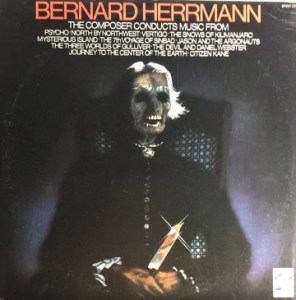
  • Features works from Citizen Kane, Snows of Kilimanjaro, North by Northwest, Mysterious Island, Vertigo, The 7th Voyage of Sinbad, Jason and the Argonauts, The Three World of Gulliver, Journey to the Centre of the Earth, The Devil and Daniel Webster, and Psycho

(more…)