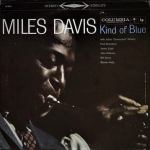
Top Artists – Wynton Kelly

Letter of the Week – “Oh my gosh, so much money wasted on magic buttons, secret sauce and dilithium crystals…”

Hot Stamper Pressings of Miles’s Albums Available Now

One of our good customers had this to say about some Hot Stampers he purchased a long time ago (emphasis added):

Hey Tom,

I imagine you get a little bored with audiophile negativity around the concept of Hot Stampers. I have to admit, they are expensive and I sometimes just can’t push myself to buy (even though I want to). As an alternative I have purchased some of the “new” remastered all analogue classics like Kind of Blue hoping to get great sound.

I listen for enjoyment, but like many folks I get caught up in the hype of technology hoping for better sound. Oh my gosh, so much money wasted on magic buttons, secret sauce and dilithium crystals for a different but really not better sound.

So, to the point, I purchased a copy of Kind of Blue from you about 2 years ago. It was graded by you as A++ – A+++ on both sides. I tell myself this story when I need an incentive and want to buy another Hot Stamper.

I played the newly remastered UHQR KOB. It was quiet, wonderful, excellent.

And so just for fun I decided to listen to the copy of KOB I bought from you.

My Hot Stamper is a re-press from Columbia probably from the ’70’s. The difference between both copies was startling.

My Hot Stamper copy of KOB had bigger dynamics, air, tonal awareness, spatial sense.

Bass, sax, piano and Miles – alive and vibrant. It sounded better. The only negative difference was the vinyl was not as quiet.

My experience with the albums I buy from you has always been satisfying because they sound so good. So thanks and screw all the naysayers .

Anyways, just felt like saying thanks and trying to push myself forward on my next purchase.

Best, Art

Art,

Thanks for your letter. You are our letter of the week!

This caught my eye:

“…so much money wasted on magic buttons, secrete sauce and dilithium crystals for a different but really not better sound.”

Ain’t it the truth. Lots of smoke and mirrors and fancy packaging, but when the record in question is at best mediocre, as you discovered for yourself, we describe such a record as putting lipstick on a pig.

Michael Fremer says it’s the best KOB ever, and will be for all time.

Why can’t you hear what he can?

Seriously, could there be a more absurd and ridiculous statement? When discusssing pressings, this kind of certainty is the unmistakable mark of shallow and misguided thinking.  Audiophiles as a group evince far too much credulity and not nearly enough skepticism about both records and audio, which is why they are always looking for easy answers and quick fixes.

They don’t want to do the work. They want someone to tell them they don’t have to do the work.

(more…)

Wynton Kelly Trio & Sextet – Kelly Blue

More Jazz Recordings Featuring the Piano

  • Wynton Kelly’s hard-to-find second album, here with KILLER Shootout Winning Triple Plus (A+++) sound or close to it on both sides of this vintage OJC pressing
  • A superb pressing, with lovely richness and warmth, good space, separation between the instruments, and real immediacy throughout
  • Kelly brings in jazz greats Nat Adderley, Bobby Jaspar, and Benny Golson, as well as several of his bandmates from Miles Davis’s sextet, including Paul Chambers and Jimmy Cobb
  • There are some bad marks (as is sometimes the nature of the beast with these vintage LPs) on “Old Clothes,” but once you hear just how incredible sounding this copy is, you might be inclined, as we were, to stop counting ticks and just be swept away by the music
  • 4 1/2 stars: “Kelly was renowned as an accompanist, but as he shows on a set including three of his originals and four familiar standards… A fine example of his talents.”
  • “Wynton Kelly demonstrates once again why he has been a major influence in the history of jazz piano.”

Jack Higgins was the engineer for these sessions. He recorded Chet Baker’s brilliant Chet album the same year, as well as many other albums for Riverside in New York in the 50s and 60s.

(more…)

How to Avoid Making this Rookie Record Collecting Mistake

Record Shopping Day Video!

Not sure how much of this video you can stand — nothing could interest me less than watching a couple of vinyl enthusiasts spouting off on what they think about some random records sitting in a local store’s bins.

But one or two bits caught my eye. I thought I might take the opportunity to share my take on them with you.

Is there any value to the comments of these two collectors? If you care about what music they like, perhaps.  Anything about what to look for on the label or jacket that might correspond to better sound?  If it’s there I sure didn’t see it, but I admit to speeding through most of it, so I can’t say for sure.

The first bit I refer to above is at 18:42.  The album in question is the legendary Kind of Blue. At this point the unseen helmet-cammed audiophile picks up the record, recognizes the cover, and proceeds to pull the record out to see what era the pressing is from.

Drat! The disappointment in this audiophile’s voice is palpable as he drops the record back in the bin with his dismissive comment that  “it’s a later pressing.”

But we here at Better Records would be falling all over ourselves to get our hands on that later pressing.

Those late pressings can and often do win shootouts. We would never look down our noses at a Red Label Columbia jazz LP, and neither should you.


UPDATE 2025

As good as the best pressings on the Red Label can sound, it has been years since one won a shootout. Here is our commentary for a recent 70s copy that went up on the site, one that earned a Super Hot grade on both sides.

They tend to sell for four or five hundred dollars these days. Why so much you ask? Because they beat the pants off of every so-called audiophile pressing of the album ever made. The testimony of one of our customers does a good job of describing the differences.

In addition, it turns out that at least nine out of ten of the copies with the red label are not remotely as good as the ones that earn Super Hot grades. The good ones are so rare that we only pick them up locally since practically none of the ones we find on the web have the right stampers. Trying to find the right red label needle in the haystack is more trouble than it’s worth, so don’t expect to see many coming to the site.


Our intrepid audiophile explorer does much the same thing about 23 minutes in. It seems pretty clear to us that he has no respect for such reissues, another example of one of the most common myths in record collecting land, the myth that the  original pressing is always, or to be fair, usually better.

This is simply not true, and those of our customers who have purchased White Hot Stamper pressings from us that turned out to be reissues know exactly what I am talking about. This is especially true for the records we sell by The Beatles. No original pressing has every won a shootout. [With one exception.]

Let’s get back to Kind of Blue.

Is the 50s original always better, is the 70s reissue always better, is the 60s 360 pressing always better?

No to one, two and three.

Why? Because no pressing is always better. All pressings are unique and should only be judged on their merits, and you do that by playing them, not by looking at their labels. For us this truth is practically axiomatic. It is in fact the premise of our entire business. Over the course of the 28 years we have been selling records we have never found any compelling evidence to invalidate it.

The day that someone can accurately predict the sound quality of a specific record by looking at the label or cover is a day I do not expect to come, ever.


UPDATE 2025

The above is somewhat misleading. With enough clean 6-Eye pressings on hand to play in a shooout, one of them will win.

That being the case, we have created two lists for those who would like to know which Columbia labels win shootouts — one for 6-Eye winners and one for 360 Label winners.


(more…)
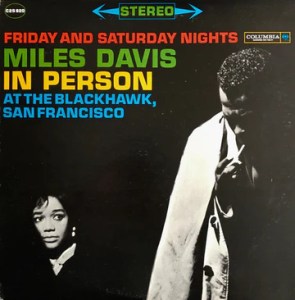
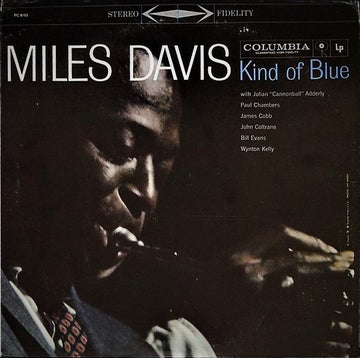
Miles Davis – Kind of Blue on a Killer 70s Red Label Pressing

More Miles Davis

  • With two solid Double Plus (A++) sides, this Red Label pressing has Demo Disc sound – sound that’s guaranteed to make you want to take all of your remastered pressings and dump them off at the Goodwill
  • After auditioning a Hot Stamper Kind of Blue like this one – a pressing that captures the sound of this amazing group like nothing you have ever heard – you may be motivated to add a hearty, “Good riddance to bad audiophile rubbish!”
  • KOB is the embodiment of the big-as-life, spacious and timbrally accurate 30th Street Studio Sound Fred Plaut was justly famous for
  • Space, clarity, transparency, and in-the-room immediacy are some of the qualities to be found on this pressing (particularly on side one)
  • It’s guaranteed to beat any copy you’ve ever played, and if you have the new MoFi pressing, please, please, please order this copy so that you can hear just how screwy the sound of their ridiculous remaster is
  • 5 stars: “KOB isn’t merely an artistic highlight for Miles Davis, it’s an album that towers above its peers, a record generally considered as the definitive jazz album, a universally acknowledged standard of excellence.”
  • If you’re a fan of the music Davis, Adderley and Coltrane were playing circa 1959, this album clearly belongs in your collection

The Labels of Kind of Blue

The 6 Eye label domestic stereo pressings win our shootouts, in the case of Kind of Blue without exception.

The 360 label pressings, black print (1962-63) or white print (1963-70), as well as the rare 70s red label (1970-?), can sound very good, but they never win shootouts.

We’ve identified a select group of reissues with the potential to do well in shootouts, typically earning a grade of Super Hot (A++) when up against the best originals, which earn our top grade, White Hot (A+++). Kind of Blue is one of those recordings.

Scores of differently mastered versions have been cut over the years, but to find one that’s lively and dynamic yet still communicates the relaxed nature of this music is a trick that few of them can pull off. These sides did just that.

When the band really starts cutting loose on “So What,” you’re going to lose your mind! The sound is open and spacious with a wonderful three-dimensional quality that gives each musician a defined space. You can easily tune in to one player or another and follow their contribution as the band stretches out.

Quick Listening Tests

This is an easy one. Just listen to the trumpet at the start of Freddie Freeloader. Most copies do not properly reproduce the transient information of Miles’ horn, causing it to have an easily recognizable quality we talk about all the time on the site: smear. No two pressings will have precisely the same amount of smear on his trumpet, so look for the least smeary copy that does everything else right too. (Meaning simply that smear is important, but not all-important.)

On All Blues (track one, side two), the drums in the right channel are key to evaluating the sound of the better copies. The snare should sound solid and fat — like a real snare — and if there is space in the recording on your copy you will have no trouble hearing the room around the kit.

[The drums are precisely where one of the major faults of the disastrous MoFi 2 LP 45 RPM pressing can be heard. A fuller review is coming, soon I hope!}

Next check the cymbals. No two copies will get the cymbals to sound the same, so play a few and see which ones sound the most natural to you. The most natural will be the one with the best top end.

When Adderley comes in hard left, his alto should not be thin, squawky or stuck in the speaker. The best of the best copies have the instrument sounding full-bodied (for an alto) and reedy. The reedy quality tells you that your pressing is highly resolving and not smeared.

(more…)

Letter of the Week – “Who needs an equipment upgrade with records like these?”

Hot Stamper Pressing of Miles’s Albums Available Now

One of our good customers had this to say about some Hot Stampers he purchased recently:

Hey Tom, 

Listening to Kind Of Blue. Who needs an equipment upgrade with records like these?

Our reply:

So true!

It’s actually one of the common faults of audiophile thinking, present company excluded, that if you can make a record like KOB sound great, you must have a good stereo system.

The opposite is true; the real test is to get difficult to reproduce recordings to sound good, not easy to reproduce recordings.

If you want to test the limits of your system, here are some difficult to reproduce records that will allow you to do it.

And if you want to buy some records that sound great but are difficult to reproduce because you love or challenge, or for any other reason, these Hot Stamper pressings should do the trick.

Either way, KOB is killer, and the MoFi of it is a joke, but don’t tell this guy, who appears to be rather new to this whole “reviewing” thing.  Watch it here. If you can stomach more than two minutes worth, you may be reading the wrong blog.

(more…)

Wes Montgomery – The Alternative Wes Montgomery (Revisited)

Hot Stamper Pressings of the Music of Wes Montgomery Available Now

UPDATE 2025:

Many years ago, back in our pre-shootout days, we played a copy of this album and liked what we’d heard.

We just got another copy in and thought the sound was not worthy of a Hot Stamper shootout.

We judge it to have middling sound quality.

If you see one for cheap, pick it up, but don’t expect the sound to be anything special.


Our Old Review

This Milestone Two-Fer LP with EXCELLENT sound has 14 unreleased alternate versions of songs recorded in a variety of settings by guitarist Wes Montgomery during his period with Riverside. In many cases, the versions here are dramatically different from the versions that appear on his original albums. 

Producer Orrin Keepnews, who assembled this collection, notes, “With an artist who insisted on several takes, and the obvious need to eventually pick only one for release, we had to make some rather arbitrary, borderline decisions that at the time seemed to have doomed some excellent music to oblivion.”

This set helps to rescue some of that excellent music. The tracks feature Montgomery playing with notable musicians such as include Milt Jackson, Wynton Kelly, Kenny Burrell, Philly Joe Jones and Victor Feldman.

On compilations of unreleased material such as this, the master tapes are used to make the record. There’s no need for a copy tape to have ever been made.


(more…)

John Coltrane – Coltrane Jazz

More of the Music of John Coltrane

  • Both sides of this copy have excellent sound for Coltrane’s brilliant sixth studio album
  • This pressing captures the classic Coltrane sound that Tom Dowd and Phil Iehle achieved in the studio in 1961, with plenty of the Tubey Magic that makes a vintage jazz album like this one such a special listening experience
  • It’s the rare pressing that isn’t mediocre if not outright awful – it took us a long time to find the right stampers for this one
  • It’s trial and error, no more, no less, a process that has worked for plenty of other hard-to-find-good-sound-for Coltrane albums too
  • 4 1/2 stars: “The first album to hit the shelves after Giant Steps… While not the groundbreaker that Giant Steps was, Coltrane Jazz was a good consolidation of his gains as he prepared to launch into his peak years of the 1960s.”
  • This is a Must Own album from 1961 that belongs in any jazz-loving audiophile’s collection

For us audiophiles both the sound and the music here are wonderful. If you’re looking to demonstrate just how good 1961 All Tube Analog sound can be, this killer copy will do the trick.

This pressing is super spacious, sweet and positively dripping with ambience. Talk about Tubey Magic, the liquidity of the sound here is positively uncanny. This is vintage analog at its best, so full-bodied and relaxed you’ll wonder how it ever came to be that anyone seriously contemplated trying to improve it.

(more…)

Miles Davis – Someday My Prince Will Come on 360

More of the Music of Miles Davis

  • Seriously good sound throughout this Miles Davis classic, with both sides earning Double Plus (A++) grades – fairly quiet vinyl too
  • This early Stereo 360 LP is full-bodied, high-rez and spacious, with Miles’s horn uncannily present, a sound you just cannot find on Heavy Vinyl no matter who makes it
  • If you have the big system and dedicated room a record of this quality demands, you can put Miles right in the room with you with a Hot Stamper pressing as good as this
  • Vintage pressings that play this reasonably quiet and are free of scratches and groove damage are few and far between, but here’s one, perfect for even the most demanding audiophile
  • Another engineering triumph for Fred Plaut at Columbia’s legendary 30th Street Studios – the man is a genius
  • Musically this is one of our very favorite Miles albums, and the sound is Demo Disc quality on the better copies

(more…)

Skip the OJCs of Letter from Home and Come Along With Me

Hot Stamper Pressings of Excellent Jazz Recordings Available Now

If you see this OJC pressing in your local record store, our best advice is to skip it. We found the sound to be much too dry and bright — think CD-like sound — for our tastes. Veiled too, lacking the resolution common to good vintage pressings.

We’ve never played an early pressing of the album, but we know a bad sounding record when we hear one, and this OJC is pretty bad.

It clearly lacks Tubey Magic as well as weight in the lower registers, and that is simply not a sound we can abide, whether it’s found on a cheap jazz reissue or a modern Heavy Vinyl pressing.

Same with Come Along With Me. The copy we played years ago had many of the same problems.

Our OJC Overview

We’ve easily played more than a hundred OJC pressings in the more than 37 years we’ve been in the record business.

Some OJC pressings have the potential to be great.

We’ve even found some of the more recent pressings on OJC that have good — not great mind you, but good — sound. (Just to be clear, any OJC produced this century is to our way of thinking a recent pressing.)

Some are we’ve played are just awful.

And the only way to judge them fairly is to judge them individually, which requires actually throwing one on the turntable and giving it a spin. If it shows promise, we buy a bunch more and see if we can find some good ones.

If the sound is hopeless, we don’t pursue it. We have way too many potentially good sounding records waiting to be played.

It’s a Lot of Work

Since virtually no record collectors or audiophiles like going the extra mile, they draw faulty conclusions based on their lack of rigor, among other things, when evaluating pressings. They are quick to judge the whole series based on a few examples.

OJC’s are cheap reissues sourced from digital tapes, run for the hills!

Those who approach the problem of finding top quality pressings with what can only be described as an utter lack of seriousness can be found on every audiophile forum there is. The youtubers are the worst, but are the self-identified aristocrats of audio any better?

I see no evidence to support that proposition, for or against. None of them in our estimation seem to know much about the mysteries and arcana that lie at the heart of the vinyl LP.

(more…)

Six-Eye, 360 Black Print, 360 White Print, 70s Red Label – Which Is the Best Sounding Kind of Blue?

Hot Stampers Pressings of the Music of Miles Davis Available Now

Is the 50s original always better, is the 70s reissue always better, is the 60s 360 pressing always better?

The answer is “no” to all three.

Why? Because no pressing is always better. All pressings are unique and should only be judged on their merits, and you do that by playing them, not by looking at their labels. For us this truth is practically axiomatic. It is in fact the premise of our entire business. Over the course of the 28 years we have been selling records we have never found any compelling evidence to invalidate it.

The day that someone can accurately predict the sound quality of a specific record by looking at the label or cover is a day I do not expect to come, ever.


UPDATE 2024 – Our Latest Thinking on KOB

The 6 Eye label domestic stereo pressings win our shootouts, in the case of Kind of Blue without exception.

The 360 label pressings, black print (1962-63) or white print (1963-70), as well as the rare 70s red label (1970-?), can sound very good, but they never win shootouts.

We’ve identified a select group of reissues with the potential to do well in shootouts, typically earning a grade of Super Hot (A++) when up against the best originals which earn our top grade, White Hot (A+++). Kind of Blue is one of those recordings.


A Larger Point

But there is a larger point to be made. Let’s assume that the best original Six Eye Columbia pressings can be the best — the most Tubey Magical, the most involving, the most real. You just happen to have a clean pressing, and you absolutely love it.

But is it the best? How could you possibly know that?

Unless you have done a comparison with many copies under controlled conditions, you simply cannot know where on the sonic curve your copy should be placed.

Perhaps you have a mediocre original. Or a mediocre 360 Label copy. Since you haven’t done a massive shootout you simply have no way of knowing just how good sounding the album can be.

(more…)