Top Artists – Miles Davis

Workin’ And Steamin’ – We Were Dead Wrong about the Originals

davismiles

Hot Stamper Pressings of the Music of Miles Davis Available Now

This review is for a pressing we put up around 2010.

Up to that time we had never played a clean, early pressing, and when we finally were able to put some in our shootout, one of them had sound that was out of this world.

In the commentary below we discuss what we think the early pressings probably sound like. Now, having heard how good the best of them can sound, we admit we clearly needed to do more research and development.

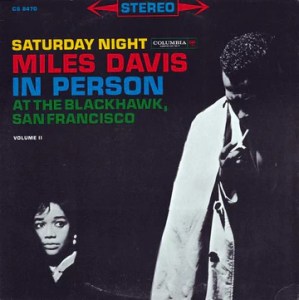
The record pictured above can have superb sound, much better than any modern Heavy Vinyl reissue you care to name.

However, the right properly-cleaned early pressings have the potential to take the sound of this music to the next level, a level we had no idea could exist until that right record came our way.

(more…)

Miles Davis / In Person – Friday Night on the 70s Label

More of the Music of Miles Davis

  • This vintage 70s reissue boasts very good Hot Stamper sound from first note to last – exceptionally quiet vinyl too
  • It’s rare for us to offer any Hot Stamper pressing on this label, but this one surprised us, sounding mostly tonally correct, with much of the richness and space we look for on this title
  • 4 1/2 stars: “The first of two sets recorded during a weekend in 1961 features the Miles Davis Quintet at a period of time when Hank Mobley was on tenor and the rhythm section was comprised of pianist Wynton Kelly, bassist Paul Chambers, and drummer Jimmy Cobb. This is an underappreciated group because of its relatively short life, but as evidenced here, the bandmembers swung fast and hard and never looked back.”

Reissues

There are some very good sounding reissues from the 70s, this being one of them. Again and again my notes made it clear that on these reissue pressings the sound could have used some tubes in the chain.

On this record, more than any other, the tubes potentially make all the difference.

Now keep in mind that we are talking only about 1961 tubes, not the stuff that engineers are using today to make “tube-mastered” records. Those modern records barely hint at the Tubey Magical sound of a record like this, if our experience with hundreds of them is any guide.

Unlike so many of the audiophile reviewers of today, we have a very hard time taking any of the new pressings seriously. We think our position is pretty clear in that regard.

(more…)

Miles Davis – In Person: Saturday Night At The Blackhawk, Volume II

More of the Music of Miles Davis

  • This superb 6-Eye Stereo pressing boasts relaxed, full bodied, three-dimensional Double Plus (A++) sound or BETTER from start to finish
  • Both of these sides are huge, spacious, lively, transparent and above all real – you won’t believe how good the live sonics captured on this album is (until you play it anyway)
  • 4 1/2 stars: “Davis himself has never played with more intensity and muscularity on record than he does here. Miles fans will need both [sets] to fully appreciate how special this engagement with this particular band was.”

(more…)

Is Kind of Blue a Good Test Record?

Hot Stamper Pressing of Miles’s Albums Available Now

One of our good customers had this to say about some Hot Stampers he purchased recently:

Hey Tom, 

Listening to Kind Of Blue. Who needs an equipment upgrade with records like these?

Our reply at the time:

So true!

But on further reflection, it became clear to me that there is more to this idea than one might think upon first hearing it.

When records sound as good as Kind of Blue on vintage vinyl (not this piece of trash), it’s easy to think that everything in the system must be working properly, and, more to the point, reproducing the sound of the album at a high level.

If only more records were as well recorded as KOB, we could save ourselves a lot of time and money, time and money that we’re currently spending on tweaking, tuning and upgrading the various components of our systems. (Assuming you are in fact doing these things. I certainly hope you are. Achieving higher quality sound is one of the greatest joys to be had in all of audio.)

This is undoubtedly true, as far as it goes. But we must live in the world of records as we find it, not the one we want to exist.

Finding good sound for most of the records you wish to enjoy takes a great deal of effort, assuming you are setting your standards for sound at an exceptionally high level. Yours don’t have to be as high as ours — we’re the guys who put their reputations on the line for extravagantly priced Hot Stampers, not you — but the records you are playing have to sound good enough to allow you to forget they are records and just get lost in the music.

With every improvement you make to your system, you eventually will find yourself banging your head up against the psychological effect of Hedonic Adaptation.* Once you have achieved better sound, it doesn’t take long before you get used to it, and now your much-improved “new normal” isn’t as thrilling as it was when you first experienced it.

(more…)

Miles Davis / In Person – Friday Night

More Miles Davis

More of Our Best Jazz Trumpet Recordings

  • This early 6-Eye Stereo pressing had the big, rich, transparent and real sound we were looking for, earning outstanding Double Plus (A++) sonic grades on both sides – exceptionally quiet vinyl too
  • If you want to hear a healthy dose of the Tubey Magic, size and energy of this wonderful live session, the first of two recorded at the Blackhawk in April 1961, this copy will let you do that
  • 4 1/2 stars: “The first of two sets recorded during a weekend in 1961 features the Miles Davis Quintet at a period of time when Hank Mobley was on tenor and the rhythm section was comprised of pianist Wynton Kelly, bassist Paul Chambers, and drummer Jimmy Cobb. This is an underappreciated group because of its relatively short life, but as evidenced here, the bandmembers swung fast and hard and never looked back.”

(more…)

Somethin’ Else Sets the Record for Straight Ahead Jazz

Hot Stamper Pressings of Blue Note Albums Available Now

In 2010 or thereabouts we had this to say about a copy of Somethin’ Else we had just played:

The music here is amazing — as I’m sure most of you know, this is as much a showcase for Miles Davis as it is for Cannonball himself — but the good news for audiophiles is that it’s also one of the BEST SOUNDING BLUE NOTE ALBUMS we know of!

When you hear it on a copy like this, it’s about As Good As It Gets.

Setting the Record for Straight Ahead Jazz

After doing this shootout in 2015, I would like to amend the above remarks for being much too conservative. The current consensus here at Better Records is that this album deserves to hold three — count ’em, three — somewhat related titles:

  • One, The Best Sounding Blue Note record we have ever played.
  • Two, The Best Sounding Jazz Record we have ever played.
  • Three, Rudy Van Gelder’s Best Engineering (based on the copies we played).

Our shootout winners had more energy, presence, dynamics and three-dimensional studio space than any jazz recording we have ever heard. The sound was as BIG and BOLD as anything in our audio experience.

Add to that a perfectly balanced mix, with tonality that’s correct from top to bottom for every instrument in the soundfield and you may begin to see why we feel that the best copies of this album set a standard that no other jazz record we’re aware of can meet.

Have we played every Blue Note, every RVG recording, every jazz record? We would never say such a thing (nor should anyone else).

However, in our defense, who could possibly claim to have critically evaluated the sound of more jazz records than we have?

(more…)

The Best Jazz Record Ever Made, or the Best Jazz Record We’ve Ever Played?

Masterpieces of Jazz – The List So Far

I ran across this listing for Cannonball Adderley’s Somethin’ Else today, a record we raved about after doing a shootout for it years ago. Notice the careful hedging in the phrases with newly added italics:

The music here is amazing — as I’m sure most of you know, this is as much a showcase for Miles Davis as it is for Cannonball himself — but the good news for audiophiles is that it’s also one of the BEST SOUNDING BLUE NOTE ALBUMS we know of. When you hear it on a copy like this, it’s just about As Good As It Gets.

After doing this shootout in 2015 I would like to amend the above remarks for being much too conservative. The current consensus here at Better Records is that this album deserves to hold three — count ’em, three — somewhat related titles:

One, The Best Sounding Blue Note record we have ever played.

Two, The Best Sounding Jazz Record we have ever played.

Three, Rudy Van Gelder’s Best Engineering (based on the copies we played).

Our shootout winners had more energy, presence, dynamics and three-dimensional studio space than any jazz recording we have ever heard. The sound was as BIG and BOLD as anything in our audio experience.

Add to that a perfectly balanced mix, with tonality that’s correct from top to bottom for every instrument in the soundfield and you may begin to see why we feel that the best copies of this album set a standard that no other jazz record we’re aware of can meet.

Have we played every Blue Note, every RVG recording, every jazz record?

Of course not. We would never make such a claim. It’s preposterous on its face.

All Well and Good, But Bear This in Mind

In our defense, who could possibly claim to have critically evaluated the sound of more jazz records than we have?

There are multitudes of music experts in the world of jazz. For jazz sound quality the numbers must surely be orders of magnitude smaller, and here is where we’re [pretty sure we have more than a few critically valuable advantages, to wit:

  • better playback equipment,
  • better record cleaning technologies,
  • stacks of pressings of the same title,
  • a scientifically oriented approach and, most importantly of all,
  • a single-minded purpose. 

All our efforts are in service to only one end, to find the pressing with the ultimate in analog sound.

(Naturally we leave the sound of CDs and other digital formats to others. Although CDs often outperform their modern Heavy Vinyl pressing equivalent — here is a case in point — we know our lane and and are happy to stay within it.) (more…)

Miles Davis – Jazz Track (Reissue Pressing)

More Miles Davis

  • This copy of Davis’ superb 1959 release boasts outstanding Double Plus (A++) sound from start to finish
  • Yes, there is no question that the early Six Eye pressings will always win our shootouts — they can be amazing
  • Nevertheless, we were fairly shocked that this budget jazz reissue from 1973 did as well as it did, with the best copy earning a very respectable two pluses
  • More evidence that high quality remastering was being done regularly throughout the ’70s and ’80s 
  • Davis partners here with jazz greats, including John Coltrane, Bill Evans, Cannonball Adderley and others
  • “… it should become clear why ‘Jazz Track’ is a vital Miles album as well as a testimony to the importance of the movies to jazz–as a medium for improvised soundtracks and, more importantly, as a source of theme music potentially as rich as the music of Broadway…”
  • “It’s doubtful that “On Green Dolphin Street” and “Stella by Starlight” would have caught on without Bill [Evans’] artistry (which is not to take anything away from Red [Garland], whose ballads simply lacked the intricate, delicately shaded beauty of Bill’s pensive voicings on the slow ballads).”

The nine minute plus long Green Dolphin Street that opens side two is nothing short of amazing, some of the coolest jazz you will ever hear, on any record, at any price. With Stella by Starlight and Fran Dance on the same side, that gives you about 20 minutes of great sounding jazz by Miles’ classic Kind of Blue lineup. (more…)

Robert Brook Undoubtedly Has an Impressive System

Robert Brook runs a blog called The Broken Record, with a subtitle explaining that the aim of his blog is to serve as:

A GUIDE FOR THE DEDICATED ANALOG AUDIOPHILE

We know of none better, outside of our own humble attempt to enlighten that portion of the audiophile community who love records and are looking to understand them better.

Below is a link to a review he has posted from a guest contributor, ab_ba, a person who has written us a number of letters as well.

Please read his posting on Robert’s blog and then check out my notes below.

I FINALLY Heard A TRULY GREAT STEREO, and Oh!

Wires dangling from the ceiling?

Check!

ab_ba writes:

So, if we can’t hear distortion until it’s been removed, reason leads us to conclude that we can never declare a stereo free of distortion, even one that sure sounds like it is. And indeed, Robert could readily demonstrate for me that his system still has some distortion. While I sat there marveling at the sound of John Bonham’s drumming on his pristine Ludwig pressing of Led Zeppelin II, Robert hopped up to shut off the breaker to the fridge.

We have been writing about this subject ourselves for a very long time. Here are a couple of links.

And here is a good overview of our approach: How To Get The Most Out Of Your Records – A Step By Step Guide

As for getting one’s stereo act together, we are all for it. The better the stereo, the more obvious the superiority of a top quality pressing will be. ab_ba notes in his posting:

Listening to good records on a good system is a delight, but hearing a great system is an absolute revelation. If you want to find really great copies of your favorite records, they’re out there, but you need a stereo that will enable you to identify them.

We wrote a commentary addressing that subject, entitled: First Get Good Sound – Then You Can Recognize and Acquire Good Records

One of the (many) reasons Robert Brook’s stereo has such low distortion is that he uses the same Townshend Seismic Platforms that we do. If you are interested in getting distortion out of your system, we can supply you with one to try. We have never had one returned. They are by far the cheapest, fastest, easiest way to improve the sound of any stereo. (Of course unplugging your fridge is even cheaper, but it may not be as easy.)

Robert uses the same Hallographs that we employ to help improve the acoustics of his room. We have three pair. Three of the units can be seen in the photograph above.

Tweaking and tuning are the foundation of good sound. The 80/20 rule is very real, and, if I may offer up my own experience to serve as a guide, the numbers are probably closer to 90/10.

(more…)

Kind of Blue – How Smeary Is Miles’ Trumpet on Your Copy?

Hot Stamper Pressings of Miles’s Albums Available Now

Listen to the trumpet at the start of Freddie Freeloader. Most copies do not fully convey the transient information of Miles’ horn, causing it to have an easily recognizable quality we talk about all the time on the site: smear.

No two pressings will have precisely the same amount of smear on his trumpet, so look for the least smeary copy that does everything else right too.

Meaning simply that smear is important, but not all-important.

If you click on the above link, you will see that we regularly talk about smeary brass instruments, smeary violins and smeary Classic Records classical reissues.

Pianos are good for testing smear simply because it’s easy to hear when the individual notes blur together.

(more…)