Top Artists – John Coltrane

Monk’s Music on Riverside 9242 Didn’t Make the Grade

Hot Stamper Pressings of the Music of Thelonious Monk Available Now

The Riverside 9242 pressing of Monk’s Music we played recently was very much not to our liking.

In fact, every copy of this record we have ever played sounded terrible. The early pressings sounded bad and the OJC sounded bad.

We give up. We’re cutting our losses. We love Monk, but why on earth would we keep throwing money down this rathole? Our notes for this copy read:

  • Dry (more records with dry sound can be found here), and
  • Bright (more records with bright sound can be found here),
  • Overall grade: No Good

Some reviewers of the audiophile persuasion prefer to review only records that sound good to them and ignore the rest. We think this does the audiophile community a disservice.

Like Consumer Reports, we like to test things. They test toasters, we test records. We put them through their paces and let the chips fall where they may.

They want to find out if the things they are testing offer the consumer good quality and value.

We want to find out if the records we are testing offer the audiophile good sound and music.

It takes a dedicated group of people and a healthy budget to carry out these kinds of tests in large numbers.

No other record dealers, record reviewers or record collectors could possibly have auditioned more than a small fraction of the records that we’ve played. We’ve been looking for the best sounding pressings of the recordings that have stood the test of time for decades. Now, with a staff of ten or more, we can buy, clean and play records at a scale that would be unimaginable for any single person to attempt.

That puts us in a unique position to help audiophiles looking for the highest quality pressings.

Yes, we have the resources, the staff and the budget. More importantly, we came up with a much scientifically reliable approach.

(more…)

Another Unimpressive Reissue Pressing of Coltrane’s Music — What Is Going On?

Hot Stamper Pressings of the Music of John Coltrane Available Now

We had an early Blue Label Prestige mono pressing that was not as awful as the original Yellow Label mono we played, but it’s not very good either. Our grade for a record that earns one plus on both sides is passable.

Which means you could play it, maybe even enjoy it, but you would have no idea just how well Rudy Van Gelder recorded the sessions in 1958 that went into the making of the album, which as you know was not compiled for release until 1962.

As you can see from the notes above, it was crude, smeary and thick. We don’t sell records that sound like that.

I can’t say that most modern remastered records are crude, although some of them are, but a great many we’ve played are smeary, and almost all of them are thick — that is, lacking in transparency — to some degree. That last quality — a lack of transparency — may be the most irritating of all, a subject we discuss here.

(A great many records we’ve auditioned over the years are good for testing transparency. Those wanting to improve this aspect of their playback should consider making use of them.

(more…)

John Coltrane / Standard Coltrane

More of the Music of John Coltrane

  • You’ll find STUNNING Shootout Winning Triple Plus (A+++) sound or close to it throughout this Prestige recording pressed on fairly quiet OJC vinyl
  • For those of you who want the album with the original track listing exactly as it came out in 1962, with sound that could not be beat, this one’s for you
  • Let’s give Rudy Van Gelder a hand, the tonality on both of these sides is hard to fault
  • “…this set of four tunes catches the saxophonist in four distinct moods. ‘Invitation’ finds him trying some of the ideas that he used so effectively with Thelonious Monk in 1957. One of these was the building of contrasting harmonic lines around a single “home” note. It’s a fascinating musical game in the hands of a jazzman as imaginative Coltrane.” – Downbeat

(more…)

Miles Davis – Sketches of Spain on 6-Eye in Stereo

More of the Music of Miles Davis

  • With two solid Double Plus (A++) or BETTER sides, this 6-Eye Stereo pressing is guaranteed to blow the doors off any other Sketches of Spain you’ve heard
  • Side one was sonically very close to our Shootout Winner – you will be amazed at how big and rich and tubey the sound is
  • Reasonably quiet vinyl for an early label pressing, few are this clean, and none come much quieter if our experience with dozens of them over the decades counts for anything
  • The better copies capture the realistic sound of Davis’s horn, the body, the breath and the bite (and the correct amount of squawk as well)
  • Balanced, clear and undistorted, this 30th Street recording shows just how good Columbia’s engineers (lead by the inestimable Fred Plaut) were back then
  • 5 stars: “Sketches of Spain is the most luxuriant and stridently romantic recording Davis ever made. To listen to it in the 21st century is still a spine-tingling experience…”
  • This pressing is clearly a Demo Disc for orchestral size and space

On the better pressings of this masterpiece, the sound is truly magical. (AMG has that dead right in their review.) It is lively but never strained. Davis’s horn has breath and bite, just like the real thing. What more can you ask for?

(more…)

How to Avoid Making this Rookie Record Collecting Mistake

Record Shopping Day Video!

Not sure how much of this video you can stand — nothing could interest me less than watching a couple of vinyl enthusiasts spouting off on what they think about some random records sitting in a local store’s bins.

But one or two bits caught my eye. I thought I might take the opportunity to share my take on them with you.

Is there any value to the comments of these two collectors? If you care about what music they like, perhaps.  Anything about what to look for on the label or jacket that might correspond to better sound?  If it’s there I sure didn’t see it, but I admit to speeding through most of it, so I can’t say for sure.

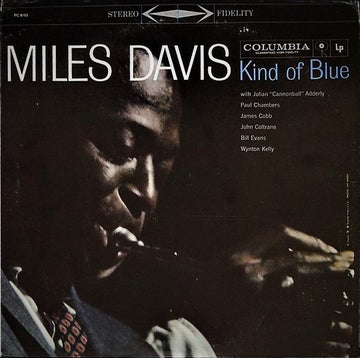
The first bit I refer to above is at 18:42.  The album in question is the legendary Kind of Blue. At this point the unseen helmet-cammed audiophile picks up the record, recognizes the cover, and proceeds to pull the record out to see what era the pressing is from.

Drat! The disappointment in this audiophile’s voice is palpable as he drops the record back in the bin with his dismissive comment that  “it’s a later pressing.”

But we here at Better Records would be falling all over ourselves to get our hands on that later pressing.

Those late pressings can and often do win shootouts. We would never look down our noses at a Red Label Columbia jazz LP, and neither should you.


UPDATE 2025

As good as the best pressings on the Red Label can sound, it has been years since one won a shootout. Here is our commentary for a recent 70s copy that went up on the site, one that earned a Super Hot grade on both sides.

They tend to sell for four or five hundred dollars these days. Why so much you ask? Because they beat the pants off of every so-called audiophile pressing of the album ever made. The testimony of one of our customers does a good job of describing the differences.

In addition, it turns out that at least nine out of ten of the copies with the red label are not remotely as good as the ones that earn Super Hot grades. The good ones are so rare that we only pick them up locally since practically none of the ones we find on the web have the right stampers. Trying to find the right red label needle in the haystack is more trouble than it’s worth, so don’t expect to see many coming to the site.


Our intrepid audiophile explorer does much the same thing about 23 minutes in. It seems pretty clear to us that he has no respect for such reissues, another example of one of the most common myths in record collecting land, the myth that the  original pressing is always, or to be fair, usually better.

This is simply not true, and those of our customers who have purchased White Hot Stamper pressings from us that turned out to be reissues know exactly what I am talking about. This is especially true for the records we sell by The Beatles. No original pressing has every won a shootout. [With one exception.]

Let’s get back to Kind of Blue.

Is the 50s original always better, is the 70s reissue always better, is the 60s 360 pressing always better?

No to one, two and three.

Why? Because no pressing is always better. All pressings are unique and should only be judged on their merits, and you do that by playing them, not by looking at their labels. For us this truth is practically axiomatic. It is in fact the premise of our entire business. Over the course of the 28 years we have been selling records we have never found any compelling evidence to invalidate it.

The day that someone can accurately predict the sound quality of a specific record by looking at the label or cover is a day I do not expect to come, ever.


UPDATE 2025

The above is somewhat misleading. With enough clean 6-Eye pressings on hand to play in a shooout, one of them will win.

That being the case, we have created two lists for those who would like to know which Columbia labels win shootouts — one for 6-Eye winners and one for 360 Label winners.


(more…)

Kind of Blue on a Killer 70s Red Label Pressing

More Miles Davis

  • With two solid Double Plus (A++) sides, this Red Label pressing has Demo Disc sound – sound that’s guaranteed to make you want to take all of your remastered pressings and dump them off at the Goodwill
  • After auditioning a Hot Stamper Kind of Blue like this one – a pressing that captures the sound of this amazing group like nothing you have ever heard – you may be motivated to add a hearty, “Good riddance to bad audiophile rubbish!”
  • KOB is the embodiment of the big-as-life, spacious and timbrally accurate 30th Street Studio Sound Fred Plaut was justly famous for
  • Space, clarity, transparency, and in-the-room immediacy are some of the qualities to be found on this pressing (particularly on side one)
  • It’s guaranteed to beat any copy you’ve ever played, and if you have the new MoFi pressing, please, please, please order this copy so that you can hear just how screwy the sound of their ridiculous remaster is
  • 5 stars: “KOB isn’t merely an artistic highlight for Miles Davis, it’s an album that towers above its peers, a record generally considered as the definitive jazz album, a universally acknowledged standard of excellence.”
  • If you’re a fan of the music Davis, Adderley and Coltrane were playing circa 1959, this album clearly belongs in your collection

The Labels of Kind of Blue

The 6 Eye label domestic stereo pressings win our shootouts, in the case of Kind of Blue without exception.

The 360 label pressings, black print (1962-63) or white print (1963-70), as well as the rare 70s red label (1970-?), can sound very good, but they never win shootouts.

We’ve identified a select group of reissues with the potential to do well in shootouts, typically earning a grade of Super Hot (A++) when up against the best originals, which earn our top grade, White Hot (A+++). Kind of Blue is one of those recordings.

Scores of differently mastered versions have been cut over the years, but to find one that’s lively and dynamic yet still communicates the relaxed nature of this music is a trick that few of them can pull off. These sides did just that.

When the band really starts cutting loose on “So What,” you’re going to lose your mind! The sound is open and spacious with a wonderful three-dimensional quality that gives each musician a defined space. You can easily tune in to one player or another and follow their contribution as the band stretches out.

Quick Listening Tests

This is an easy one. Just listen to the trumpet at the start of Freddie Freeloader. Most copies do not properly reproduce the transient information of Miles’ horn, causing it to have an easily recognizable quality we talk about all the time on the site: smear. No two pressings will have precisely the same amount of smear on his trumpet, so look for the least smeary copy that does everything else right too. (Meaning simply that smear is important, but not all-important.)

On All Blues (track one, side two), the drums in the right channel are key to evaluating the sound of the better copies. The snare should sound solid and fat — like a real snare — and if there is space in the recording on your copy you will have no trouble hearing the room around the kit.

[The drums are precisely where one of the major faults of the disastrous MoFi 2 LP 45 RPM pressing can be heard. A fuller review is coming, soon I hope!}

Next check the cymbals. No two copies will get the cymbals to sound the same, so play a few and see which ones sound the most natural to you. The most natural will be the one with the best top end.

When Adderley comes in hard left, his alto should not be thin, squawky or stuck in the speaker. The best of the best copies have the instrument sounding full-bodied (for an alto) and reedy. The reedy quality tells you that your pressing is highly resolving and not smeared.

(more…)

John Coltrane – Soultrane

More of the Music of John Coltrane

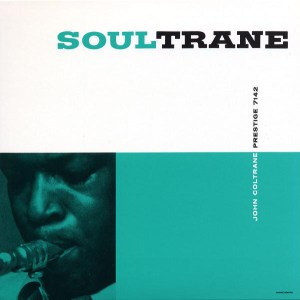
  • Both sides of this vintage Prestige recording — remastered and repressed on vinyl during this century (!) — were giving us the sound we were looking for, earning excellent Double Plus (A++) grades, and pressed on remarkably quiet OJC vinyl
  • Normally this is information we might not choose to share, as anyone can buy a modern OJC, but the fact that so many different OJC versions exist — I counted six different OJC-021s — means you probably would spend a lot more money finding a good sounding OJC pressing than the price we are charging
  • However, if you do find a great sounding OJC, be sure to drop us a line and tell us the stamper numbers — we would be curious to know if anyone was actually able to succeed with such an effort
  • This album is in pure, glorious MONO, with sonics that are full-bodied, relaxed, Tubey Magical and tonally correct
  • Here is the palpable jazz energy, the life of the music, that’s sure to be missing from whatever dead-as-a-doornail Heavy Vinyl pressing is being stamped out these days
  • “… a classic of the 20th century jazz canon and an essential point of reference in Coltrane’s own tumultuous career…. this is the album on which Coltrane first emerged as the primary innovator of the jazz world, wielding an astonishing technical virtuosity and a blinding vision of the possibilities of the tenor sax.”

(more…)

John Coltrane – Expression on the Green Label

Hot Stamper Pressings of the Music of John Coltrane Available Now

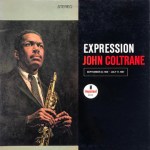
The best pressings have huge space, size and clarity, with Tubey Magical richness befitting the 1967 recording dates of these sessions at Van Gelder Studio.

That Tubey Magic is surely long gone by now, so those of you looking for this kind of sound on a modern pressing should face facts — that ship has sailed.

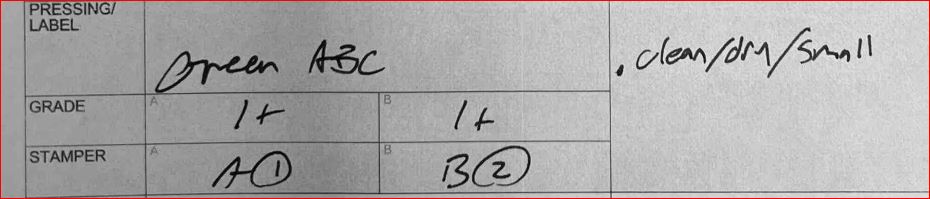
The Green Label ABC/Impulse label pressings did not retain much of the magic that we heard on the  real Impulse pressings, so best to avoid them.

They’re clean but dry and small, not big and bold like the real thing. The CD is probably better.

4 stars: “Recorded at two sessions in early 1967, Expression represents John Coltrane’s final recording sessions just months before his death. It’s remarkable that [the album] is not some world-weary harbinger of death and sickness, but an endlessly jubilant affair. Even in what must have been a time of tremendous pain and darkness, Coltrane’s single-minded quest for understanding and transcendence took him to places of new exploration and light.”


(more…)

Letter of the Week – “Who needs an equipment upgrade with records like these?”

Hot Stamper Pressing of Miles’s Albums Available Now

One of our good customers had this to say about some Hot Stampers he purchased recently:

Hey Tom, 

Listening to Kind Of Blue. Who needs an equipment upgrade with records like these?

Our reply:

So true!

It’s actually one of the common faults of audiophile thinking, present company excluded, that if you can make a record like KOB sound great, you must have a good stereo system.

The opposite is true; the real test is to get difficult to reproduce recordings to sound good, not easy to reproduce recordings.

If you want to test the limits of your system, here are some difficult to reproduce records that will allow you to do it.

And if you want to buy some records that sound great but are difficult to reproduce because you love or challenge, or for any other reason, these Hot Stamper pressings should do the trick.

Either way, KOB is killer, and the MoFi of it is a joke, but don’t tell this guy, who appears to be rather new to this whole “reviewing” thing.  Watch it here. If you can stomach more than two minutes worth, you may be reading the wrong blog.

(more…)

John Coltrane – Coltrane Jazz

More of the Music of John Coltrane

  • Both sides of this copy have excellent sound for Coltrane’s brilliant sixth studio album
  • This pressing captures the classic Coltrane sound that Tom Dowd and Phil Iehle achieved in the studio in 1961, with plenty of the Tubey Magic that makes a vintage jazz album like this one such a special listening experience
  • It’s the rare pressing that isn’t mediocre if not outright awful – it took us a long time to find the right stampers for this one
  • It’s trial and error, no more, no less, a process that has worked for plenty of other hard-to-find-good-sound-for Coltrane albums too
  • 4 1/2 stars: “The first album to hit the shelves after Giant Steps… While not the groundbreaker that Giant Steps was, Coltrane Jazz was a good consolidation of his gains as he prepared to launch into his peak years of the 1960s.”
  • This is a Must Own album from 1961 that belongs in any jazz-loving audiophile’s collection

For us audiophiles both the sound and the music here are wonderful. If you’re looking to demonstrate just how good 1961 All Tube Analog sound can be, this killer copy will do the trick.

This pressing is super spacious, sweet and positively dripping with ambience. Talk about Tubey Magic, the liquidity of the sound here is positively uncanny. This is vintage analog at its best, so full-bodied and relaxed you’ll wonder how it ever came to be that anyone seriously contemplated trying to improve it.

(more…)