More Miles Davis
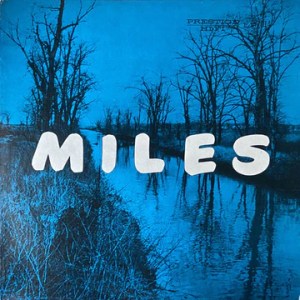
- An excellent Prestige MONO reissue with solid Double Plus (A++) sound or close to it from the first note to the last – exceptionally quiet vinyl too
- If you want to hear a healthy dose of the Tubey Magic, size and energy of this wonderful session from 1956 – recorded by none other than Rudy Van Gelder – this pressing will let you do that
- “…Coltrane’s restless, turbulent lines show how Davis had finally found his perfect foil, much as the trumpeter’s introspective lyricism complemented Charlie Parker’s harmonic flights.”
This vintage Prestige Mono pressing has the kind of Tubey Magical Midrange that modern records can barely BEGIN to reproduce. Folks, that sound is gone and it sure isn’t showing signs of coming back. If you love hearing INTO a recording, actually being able to “see” the performers, and feeling as if you are sitting in the studio with the band, this is the record for you. It’s what vintage all analog recordings are known for — this sound.
If you exclusively play modern repressings of vintage recordings, I can say without fear of contradiction that you have never heard this kind of sound on vinyl. Old records have it — not often, and certainly not always — but maybe one out of a hundred new records do, and those are some pretty long odds.
What The Best Sides Of Miles Have To Offer Is Not Hard To Hear
- The biggest, most immediate staging in the largest acoustic space
- The most Tubey Magic, without which you have almost nothing. CDs give you clean and clear. Only the best vintage vinyl pressings offer the kind of Tubey Magic that was on the tapes in 1956
- Tight, note-like, rich, full-bodied bass, with the correct amount of weight down low
- Natural tonality in the midrange — with all the instruments having the correct timbre
- Transparency and resolution, critical to hearing into the three-dimensional studio space
No doubt there’s more but we hope that should do for now. Playing the record is the only way to hear all of the qualities we discuss above, and playing the best pressings against a pile of other copies under rigorously controlled conditions is the only way to find a pressing that sounds as good as this one does.
Copies with rich lower mids and nice extension up top did the best in our shootout, assuming they weren’t veiled or smeary of course. So many things can go wrong on a record! We know, we’ve heard them all.
Top end extension is critical to the sound of the best copies. Lots of old records (and new ones) have no real top end; consequently, the studio or stage will be missing much of its natural air and space, and instruments will lack their full complement of harmonic information.
Tube smear is common to most vintage pressings and this is no exception. The copies that tend to do the best in a shootout will have the least (or none), yet are full-bodied, tubey and rich.
What We’re Listening For On Miles
- Energy for starters. What could be more important than the life of the music?
- The Big Sound comes next — wall to wall, lots of depth, huge space, three-dimensionality, all that sort of thing.
- Then transient information — fast, clear, sharp attacks, not the smear and thickness so common to these LPs.
- Tight punchy bass — which ties in with good transient information, also the issue of frequency extension further down.
- Next: transparency — the quality that allows you to hear deep into the soundfield, showing you the space and air around all the instruments.
- Extend the top and bottom and voila, you have The Real Thing — an honest to goodness Hot Stamper.
The Players
- Paul Chambers – Bass
- “Philly” Joe Jones – Drums
- Red Garland – Piano
- Miles Davis – Trumpet
- John Coltrane – Tenor Saxaphone
- Rudy Van Gelder – Engineer
Side One
Just Squeeze Me
There Is No Greater Love
How Am I To Know?
Side Two
S’Posin’
The Theme
Stablemates
AMG Review
The New Miles Davis Quintet made its first visit to the recording studios on November 16, 1955. By October 26, 1956, when they made their last session for Prestige, Davis had signed with recording giant Columbia, he had featured the most influential band in all of jazz (which would spawn the most charismatic musician of the ’60s), and was well on his way toward international stardom. Listen to The Musings of Miles, an earlier quartet date with bassist Oscar Pettiford, then listen to the difference bassist Paul Chambers and tenor saxophonist John Coltrane make. Philly Joe Jones’ dancing hi-hat reverie introduces “How Am I to Know,” and the band takes it at a galloping tempo. The youthful bassist pushes the music into more modern directions with his solid time, driving beat, ringing tone, and uncanny sense of melodic counterpoint. He opens the music right up, and his rhythmic flexibility frees up Jones to play ahead of the beat and instigate an insistent polyrhythmic dialogue.
From the finger-snappin’ opening groove of Benny Golson’s “Stablemates,” it’s clear that this rhythm section just swings harder (and in more different styles), than anyone this side of Basie’s All-Americans or the drummer-led bands of Art Blakey and Max Roach. In Red Garland, the trumpeter found a pianist who understood his idea about touch, voicings, and space, and was able to orchestrate in the expansive style Davis favored. (Listen to his discreetly rocking, two-handed intro to “Just Squeeze Me,” or his rhapsodic responses to Davis’ little boyish Harmon mute on “There Is No Greater Love.”) And Coltrane’s restless, turbulent lines show how Davis had finally found his perfect foil, much as the trumpeter’s introspective lyricism complemented Charlie Parker’s harmonic flights. On “S’Posin’,” Trane follows Davis’ lilting, floating mute work by getting right on top of the beat with relentless syncopations. On the vaudevillian airs of “The Theme,” he answers Davis’ playful melodies by scurrying about with the screaming intensity of a blues guitarist, playing catch-up-and-fall-behind, trying to double- and triple-up with every other breath.