Top Artists – Ry Cooder

On this Jazz, Transparency Is Key

Hot Stamper Pressing of the Music of Ry Cooder Available Now

The best copies realistically convey the live in the studio quality of the sound. This is a tight ensemble working at the top of their game, no surprise there — Ry surrounds himself with nothing but the best.

But the better copies have such amazingly transparent sound you can’t help feeling as though you really are in the presence of live human beings. You really get the sense of actual fingers plucking those guitar strings. You hear mouths blowing air through horns and woodwinds.

These are sounds that most recordings pretend to capture, and like hypnotist’s subjects, we go along for the ride. This recording has the potential to actually bring forth that living, breathing musician sound, no imagination required.

As is sometimes the case, there is one and only one set of stampers that consistently wins our shootouts for this album.  Click on this link to see other titles with one set of stamper numbers that always come out on top

(more…)

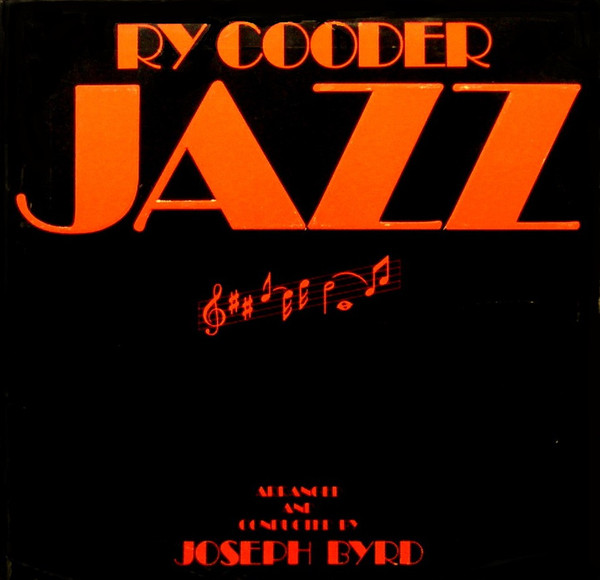
Ry Cooder / Jazz

More of the Music of Ry Cooder

  • You’ll find solid Double Plus (A++) grades or BETTER throughout this vintage copy – fairly quiet vinyl too
  • These are the stampers that always win our shootouts, and when you hear them you will know why – the sound is big, rich and clear
  • A one-time TAS list Super Disc that proves its worth on this superb pressing
  • “The complexity of the material on Jazz, as well as the arrangements by Joseph Byrd, dictate that this is Cooder’s most polished and orchestrated effort to date.”
  • We’ve discovered a number of titles in which one stamper always wins, and here are some others
  • If you’re a fan of Ry Cooder’s, this classic from 1978 belongs in your collection.
  • “The complexity of the material on Jazz, as well as the arrangements by Joseph Byrd, dictate that this is Cooder’s most polished and orchestrated effort to date.”

We’re big fans of Ry Cooder here at Better Records, and it’s always fun to hear the eccentric instruments and arrangements he and his cohorts cook up. Of course, it’s even more fun when you have a great sounding pressing like this one that lets you hear what the musicians were up to. (more…)

Was Jazz Really a TAS List Superdisc?

Hot Stamper Pressings of TAS List Super Disc Albums

The typical pressing of this record doesn’t even hint at how magical the album can sound. If your copy isn’t exceptionally full-bodied, rich, and sweet, you can bet that it will sound edgy and irritating with the extensive amount of listening required to appreciate and enjoy this music.

There’s a reason this record was on the TAS list [not sure when it was removed, maybe ten years ago] but you’d never know it by playing the average Warner Brothers pressing. Most copies of this record just sound like an old record. You would never even know how magical this recording is by playing a copy that, for all intents and purposes, appears to be the pressing Harry Pearson was recommending on his Super Disc list.

The catalog number is the same, the sound is not. Unless you have at least a half-dozen copies of this record, you have little chance of finding even one exceptional side.

This has always been the problem with the TAS list.

The pressing variations on a record like this are HUGE and DRAMATIC. There is a world of difference between the best copies and what the typical audiophile owns based on HP’s list. I’ve been complaining for years that the catalog number that Harry supplies has very little benefit to the typical audiophile record lover.

Without at least the right stampers, the amount of work required to find a copy that deserves a Super Disc ranking is daunting, requiring the kind of time and effort that few audiophiles could ever devote to such a difficult and frustrating project.

As is sometimes the case, there is one and only one set of stampers that consistently wins our shootouts for this album.  Click on this link to see other titles with one set of stamper numbers that always come out on top.

(more…)

Ry Cooder – Paris, Texas

More of the Music of Ry Cooder

  • This excellent copy of Ry Cooder’s soundrack LP (one of only a handful to hit the site in close to a three and a half years) boasts solid Double Plus (A++) grades from start to finish
  • The sound on these TAS-approved sides is bigger and livelier than most others we played – above all it’s balanced, avoiding the tonality issues we heard on so many other pressings
  • 4 stars: “Suggestive of both the imagery of Wim Wenders’ movie Paris, Texas and the desert itself, Ry Cooder’s score is a peaceful, poetic journey into the soul of an acoustic guitar… a powerful and immensely evocative journey for those whose experience with the material is the album alone. “
  • If you’re a fan of Ry Cooder’s, this classic from 1985 belongs in your collection.
  • The complete list of titles from 1985 that we’ve reviewed to date can be found here.

(more…)

MoFi Sure Added Plenty of Sparkle to These Acoustic Guitars

Hot Stamper Pressing of the Music of Ry Cooder Available Now

This review is from many years ago. Hard to imagine I would not still agree with it though.

As you probably know, the MoFi of Jazz goes for big bucks nowadays — $500 and up. Is it worth it? 

You’ve got to be kidding. It’s a nice record as far as it goes, but it suffers from the same shortcomings as just about every Mobile Fidelity pressing we bother to play these days (with some obvious exceptions of course).

We have a test pressing, and knowing that the MoFi is the standard against which many audiophiles prefer to judge our Hot Stampers, we listened to it first before going about our comparison test.

Our MoFi copy is actually tonally correct, which was a bit of a surprise. (Yours of course could very well be otherwise.)

Right away we could hear exactly what people like about it, the same thing that has always impressed audiophiles about half-speed mastered records: their often outstanding transparency.

Jazz on MoFi has zero-distortion, utterly clear, spacious, see-through sound.

But listen past that and what do you hear?

Don’t those guitars seem to have that MoFi Tea-for-the-Tillerman “sparkly” quality you hate: all pluck and no body, all detail and no substance?

Nothing has any weight.

Nothing has any solidity.

Nothing has any real life.

It’s pretty, maybe, but it sure ain’t right.

It’s the kind of sound that shouts out to the world “Hey, look at me, I’m an audiophile record! See how I sound? So clear! So clean!”

Which isn’t bad for about two minutes, and then it’s positively insufferable.

(more…)

Ry Cooder – Show Time

More Ry Cooder

More Roots Rock

  • An original Palm Tree pressing of Cooder’s 1977 live album (only the second copy to ever hit the site) with a KILLER Shootout Winning Triple Plus (A+++) side two mated to a solid Double Plus (A++) side one – fairly quiet vinyl too
  • The sound is big, lively, open and clear with Tubey Magical richness that only these good vintage pressings can show you
  • Of course the main attributes that set the best copies apart from the also-rans are size, energy, weight, vocal presence and an overall freedom from grit and grain, and we guarantee that this copy will do better in all of these areas than any you have ever heard
  • “…it’s the Negro spiritual, ‘Jesus on the Mainline,’ stripped down to just four voices and Cooder’s remarkable bottleneck, that’s the real showstopper here.”

(more…)

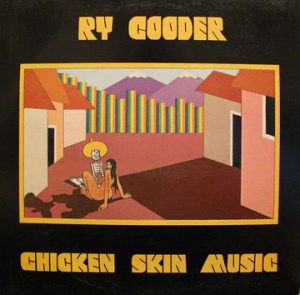
Chicken Skin Music – A Great Recording of Stringed Instruments

More of the Music of Ry Cooder

Much like our best copies of Jazz, this pressing really conveys the live-in-the-studio performance qualities of the music. This is a tight ensemble working at the top of their game, no surprise there; Ry surrounds himself with nothing but the best.

Absolutely crucial to this album is the sound of the various stringed instruments. Over the course of the two sides you’ll be treated to many different styles of guitar — electric, slack-key, Hawaiian, bottleneck, steel, and acoustic — plus mandolin, mandola, tiple, and more. You’ll need an open and spacious copy with superb transparency and clarity to fully appreciate the lovely and unusual sounds of these instruments.

Like we’ve said about Ry Cooder’s Jazz, rounding up a panoply of relatively exotic instruments for an album doesn’t make it especially noteworthy. Thankfully, it’s obvious that Ry Cooder’s up to a lot more than that. Using an ensemble of seriously talented musicians, as well as studio engineers who really understand how to capture these instruments, Cooder again succeeds in giving the audiophile public a full course spread of lovely and uncommon sounds.

What to Listen For

What typically separates the killer copies from the merely good ones are three qualities that we often look for in the records we play: transparency, speed, and lack of smear.

Transparency allows you to hear into the recording, reproducing the ambience and subtle musical cues and details that high-resolution analog is known for.

Note that most Heavy Vinyl pressings being produced these days seem to be quite Transparency Challenged. Lots of important musical information — the kind we hear on even second-rate regular pressings — is simply nowhere to be found.

Lack of smear is also important, especially on a recording with so many plucked instruments. The speed and clarity of the transients, the sense that fingers are pulling on strings, strings that are ringing with tonally correct harmonics, is what makes these Ry Cooder records so much fun to play.

The best copies really get that sound right, in the same way that the best copies of Cat Stevens’ records get the sound of stringed instruments right.

(more…)
Ry Cooder – Into the Purple Valley

More Ry Cooder

  • A vintage Reprise pressing of Ry Cooder’s 1972 release boasting KILLER Tubey Magical Shootout Winning Triple Plus (A+++) Master Tape sound or close to it on both sides – fairly quiet vinyl too
  • Side two was Tonally Right On The Money from top to bottom and from start to finish – it’s got the kind of presence and energy needed to bring these old songs to life
  • All of the elements you could ask for from this kind of music are here: superb clarity; amazing richness and warmth; serious energy and immediacy; texture to the vocals and so on
  • It’s pretty cool to hear these old Dust Bowl-era numbers by greats like Woody Guthrie and Leadbelly performed by top musicians and recorded on quality equipment by one of the All Time Great engineers, Lee Herschberg
  • 4 1/2 stars: “‘Phenomenal’ is the descriptive word to describe his playing, whether it is on guitar, Hawaiian ‘slack key’ guitar, mandolin, or the more arcane instruments he has found. This is a must for those who love instrumental virtuosity, authentic reworkings of an era, or just plain good music.”
  • If you’re a Ry Cooder fan, and what audiophile wouldn’t be?, this title from 1972 is clearly one of his best, and one of his best sounding

We’ve become pretty big Ry Cooder fans here at Better Records, and an amazing pressing like this one will show you exactly why. We played a big stack of these this week, and you’re going to have a very difficult time finding a copy that can keep up with this one!

Most of the copies we played were overly clean sounding, lacking in the richness and warmth that are critical to the enjoyment of top quality analog. Not this one though — it’s got plenty of Tubey Magic, with the kind of sound that keeps guys like you and me digging in bins and spinning dusty old records instead of going digital.

There’s A Good Reason Audiophiles Love Ry

Ry’s music holds special appeal to us audiophiles, as he’s always throwing instruments into the mix that you hardly ever hear on your standard rock album. I wish I could tell you everything he plays on this album, but I’d just be guessing if I tried. (Wikipedia credits him for guitar, bass, and mandolin, but I’d bet my bottom dollar there’s more to it than that.)

This I can tell you — when the man picks up an instrument, he can sure play the heck out of it, and it’s an audiophile’s treat to hear how naturally he incorporates these sounds into his songs.

I’m not personally familiar with Fitz Maclean’s original version of “F.D.R. In Trinidad,” but I can’t imagine there’s a recording of it that sounds nearly as good as Ry’s version here.

(more…)

Ry Cooder – Chicken Skin Music

More Ry Cooder

More Roots Rock

  • An early Reprise pressing of Cooder’s 1976 release boasting incredible Nearly Triple Plus (A++ to A+++) sound throughout – just shy of our Shootout Winner
  • Both of these sides are super transparent, lively and tonally correct from top to bottom with lots of deep, well-defined bass and exceptionally present and breathy vocals
  • The stringed instruments all sound natural, correct, and wonderful, with the accordion sounding particularly good here — you can really hear the instrument moving some air
  • 4 stars: “Chicken Skin Music is probably Ry Cooder’s most eccentric record since his first, but it’s also one of his most entertaining.”

These Nearly White Hot Stamper pressings have top-quality sound that’s often surprisingly close to our White Hots, but they sell at substantial discounts to our Shootout Winners, making them a relative bargain in the world of Hot Stampers (“relative” meaning relative considering the prices we charge). We feel you get what you pay for here at Better Records, and if ever you don’t agree, please feel free to return the record for a full refund, no questions asked.


From the moment the needle hit the groove, we were blown away by the huge soundfield and the in-the-room presence of all the musicians. Here was the massive amount of energy that had us believing that Ry and his crew were right there with us, playing their hearts out.

For me, this clearly one of Cooder’s two or three best LPs. The two cuts with Hawaiian great Gabby Pahinui are superb! What kind of cold-hearted person couldn’t love this music?

Much like the better copies of Jazz, this pressing really conveys the live-in-the-studio performance qualities of the music. This is a tight ensemble working at the top of their game, no surprise there; Ry surrounds himself with nothing but the best.

Absolutely crucial to this album is the sound of the various stringed instruments. Over the course of the two sides you’ll be treated to many different styles of guitar — electric, slack-key, Hawaiian, bottleneck, steel, and acoustic — plus mandolin, mandola, tiple, and more. You’ll need an open and spacious copy with superb transparency and clarity to fully appreciate the lovely and unusual sounds of these instruments.

Using an ensemble of seriously talented musicians, as well as studio engineers who really understand how to capture these instruments, Cooder again succeeds in giving the audiophile public a full course spread of lovely and uncommon sounds.

(more…)

Ry Cooder – Self-Titled

More Ry Cooder

More Debut Albums of Interest

  • A vintage Reprise pressing of Ry Cooder’s 1970 debut with seriously good Double Plus (A++) sound on both sides
  • If you want to hear the brilliant Lee Herschberg‘s All Analog Recording skills brought to bear on so many different instruments serving an assortment of sonic textures, this is the copy that will let you do it
  • 4 stars: “Cooder’s debut creates an intriguing fusion of blues, folk, rock & roll, and pop, filtered through his own intricate, syncopated guitar; Van Dyke Parks and Lenny Waronker’s idiosyncratic production… Cooder puts this unique blend across with a combination of terrific songs, virtuosic playing, and quirky, yet imaginative, arrangements.”
  • This is clearly Ry Cooder’s best sounding album. Roughly 150 other listings for the Best Sounding Album by an Artist or Group (sounds like a Grammy Awards category, doesn’t it?) can be found here.
  • This is a Must Own Title from 1970, a great year for Rock and Pop music, perhaps the best ever

The music reminds me a lot of early Little Feat, which is a good thing. The sound is somewhat similar as well, which is to say that it is natural and musical, nothing like the hyped-up hi-fi sound of his TAS-listed album Jazz — and that’s a good thing as well.

There are some great songs here, including My Old Kentucky Home, One Meat Ball and How Can A Poor Man Stand Such Times And Live. It may even be his best album. (more…)