Testing Dynamics

Thoughts on One of the Most Dynamic Contemporary Recordings

Hot Stamper Pressings of the Music of Art Pepper Available Now

This commentary was written in 2008.


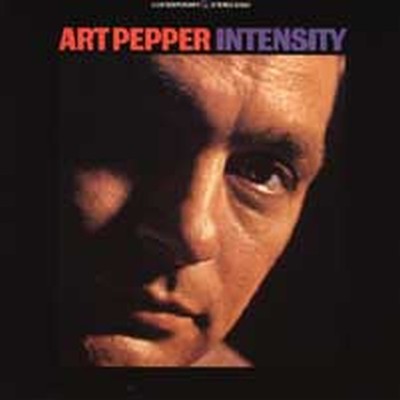
Intensity is right — this is some SERIOUSLY GOOD SOUNDING alto saxophone led quartet jazz. AMG was right to give this one 4 1/2 stars — the musicianship is top notch and Pepper’s playing is INSPIRED throughout. 

The real surprise was how well recorded this album from 1963 is. I can’t recall a more DYNAMIC Contemporary. Pepper’s sax gets seriously LOUD in some passages. This is very much a good thing. Not only is he totally committed to the music, but the engineers are getting that energy onto the record so that we at home can feel the moment to moment raw power of his playing.

(Pepper was famous for saying that his playing is best when he just plays whatever he feels in the moment, and this record is the best kind of evidence for the truth of that claim.)

Of course, since this is a Roy Dunann recording, all the tubey magical richness and sweetness are here as well, but what is surprising is how transparent, spacious and clear the sound is. Some of Roy’s recordings can sound a bit dead (recording in your stockroom is not always the best for spaciousness) and sometimes are a bit thick as well. Not so here. But it should be pointed out that we liked what we heard from a previous shootout too.

Last time around we wrote:

This record has superb sound: you can actually hear the keys clacking on the man’s alto. And that sort of detail does not come at the expense of phony brightness as it would with your typical audiophile recording. The tonality of the sax, drums, and bass are right on the money, exactly the way we expect Roy DuNann’s recording to be.

This time around we got more extension out of the cymbals. Either these copies are better, were cleaned better, or were helped quite a bit by our new Townshend SuperTweeters. (Probably the last two more than the first one.) (more…)

Donald Gets Dynamic on Rikki

Pretzel Logic is one knockout of a recording.

Having done shootouts for every Steely Dan title, I can say that sonically this one has no equal in their canon. (Click on that link to see two hundred others.)

Which is really saying something, since Becker and Fagen are known to be audiophiles themselves and real sticklers for sound. No effort in the recording of this album was spared, that I can tell you without fear of contradiction.

They sweated the details on this one. The mix is perfection.

But you would never know it by playing the average pressing of this album, which is dull, compressed and dead as the proverbial doornail.

(We’ve played plenty of records — actually, specific pressings of records — that were dull, compressed, and dead as a doornail. We’ve made links for them by the hundreds here so that audiophiles who do not want records with these problems can more easily avoid them.)

It’s positively criminal the way this amazingly well-recorded music sounds on the typical LP pressing. Hint: avoid all imports and anything not on ABC.) How can you possibly be expected to appreciate the music when you can’t hear it right?

(more…)

What to Listen For on Breakfast in America

What follows is some advice on what to listen for.

If you are interested in digging deeper, our listening in depth commentaries have extensive track breakdowns for some of the better-known albums for which we’ve done multiple shootouts.

What to listen for, you ask?

Number One

Too many instruments and voices jammed into too little space in the upper midrange. When the tonality is shifted-up, even slightly, or there is too much compression, there will be too many elements — voices, guitars, drums — vying for space in the upper part of the midrange, causing congestion and a loss of clarity.

With the more solid sounding copies, the lower mids are full and rich; above them, the next “level up” so to speak, there’s plenty of space in which to fit all the instruments and voices comfortably, not piling them one on top of another as is often the case. Consequently, the upper midrange area does not get overloaded and overwhelmed with musical information.

(more…)

Port’s Rule and The Song of the Volga Boatman

More Records that Helped Me Make Progress in Audio

The track that started us down the road to our first Sauter-Finegan shootout is, to this very day, our Number One Test Track of All Time, a little ditty known as the Song of the Volga Boatman.

We first heard it back in the 90s on Bob and Ray Throw a Stereo Spectacular, which is still the version we test with, but this album of forward-looking big band contains that track  as well as 10 others, all with truly amazing sound.

Why is the Song of the Volga Boatman our ultimate test track?

The simplest way to understand it is that all the instruments are being played live in the studio, and all of them in the huge soundfield are real and acoustic — string bass, drums, horns of every size and type, woodwinds, percussion, tubular bells, etc.

In addition, the arrangements given to this roomful of players is so complex and lively that if anything sounds “funny,” to use the precise audiophile nomenclature, it really calls attention to itself.

Port’s Rule states: If it isn’t easy for your Test Discs to sound wrong, they are not very good Test Discs.

Wrong is the natural order of things.

Getting it right is where the work comes in to play.

And it should seem more like play than work or you are unlikely to get very far with it. (That’s another one of Port’s Rules, sometimes referred to as music does the driving.)

When the stereo is right from top to bottom, this song is right from top to bottom, and every other record we know the sound of will have the sound it’s supposed to have.

It seems simple and in some ways it is.

We’ve been getting the Song of the Volga Boatman to sound bigger and better now for years, through scores and scores of changes. At our current stage of audio evolution, at the very loud levels we play it at, it’s shocking how big, powerful and real it seems. It has more of the “live music” qualities we prize than almost any other studio recording I can think of.

(more…)

The Best Pressings of Brothers in Arms Are Not Hard to Recognize

We try to be upfront with our customers that the Hot Stamper pressings of Brothers in Arms on our site have many nice qualities, but some of the best qualities of analog recordings from the 50s, 60s and 70s are not among them.

It would be foolish to pretend otherwise. We want our customers to know what to expect when they buy a modern recording, and, having played copies of this album (as well as Love Over Gold) by the score, we are qualified to tell them what even the best pressings do not do as well as we might like. In a recent listing we introduced one of the best sounding pressings from our last shootout this way:

  • Tonally correct from start to finish, with a solid bottom and fairly natural vocals (for this particular recording of course), here is the sound they were going for in the studio
  • Drop the needle on “So Far Away” – it’s airy, open, and spacious, yet still rich and full-bodied
  • We admit that the sound may be too processed and lacking in Tubey Magic for some
  • When it comes to Tubey Magic, there simply is none — that’s not the sound Neil Dorfsman, the engineer who won the Grammy for this album, was going for
  • We find that the best properly-mastered, properly-pressed copies, when played at good loud levels on our system, give us sound that was wall to wall, floor to ceiling, glorious, powerful and exciting — just not Tubey Magical

The notes you see below catalog the qualities of our 2025 Shootout Winner.

Side One

Track One (So Far Away)

  • Meaty guitar and bass
  • Big, weighty and present

Track Two (Money for Nothing)

  • Wide, full and weighty
  • Lots of punch

Side Two

Track One (Ride Across the River)

  • Tight, deep and weighty [bass]
  • Vocals are sweet and present
  • Most space yet
  • Rich too

Note that the person doing the listening confined himself to what the record was doing right. In the case of this Shootout Winning Top Shelf 3/3 pressing, there really wasn’t any aspect of the sound to find fault with. As far as we were concerned, the record was doing what the record was trying to do, and doing it better than any of the other copies we played, hence the high grades.

If you have five or ten early domestic pressings of Brothers in Arms, you can judge them accurately by limiting yourself to the qualities the best of them have. For any copy you might play, you could ask:

  • How big is it?
  • How weighty is it?
  • How present is it?
  • How wide is the soundstage?
  • How full-bodied is the sound?
  • How punchy is it?
  • How tight, deep and weighty is the bass?
  • How sweet and present are the vocals?
  • How much space does the recording have?
  • How rich is the sound?

If your equipment, room, electricity, etc. are good enough, and your front end is properly set up, all these questions can be answered with relatively little effort. You could even create a checklist of them after playing a few copies and hearing what the best of them did well.

(more…)

Orchestral Music Is the Ultimate Test for Proper Turntable-Arm-Cartridge Setup

Hot Stamper Pressings of the Music of Stravinsky Available Now

Dorati’s performance of The Firebird for Mercury is excellent for adjusting tracking weight, VTA, azimuth and the like.

A huge and powerful recording such as The Firebird quickly separates the men from the boys when it comes to the honest recreation of an orchestra performing live in a concert hall.

Recordings of this quality are the reason $10,000+ front ends exist in the first place. Just ask Robert Brook.

You don’t need to spend that kind of money to play this record, but if you do, this might just be the record that will show you what you got for all your hard-earned dough.

Ideally you would want to work your setup magic at home with this record, then take it to a friend’s house and see if the same results could be achieved on his system.

I actually did this sort of thing for years.

Sadly, not so much anymore; nobody I know can play records such as these the way we can.

Playing and critically evaluating records all day, every day, year after year, you get pretty good at it. And the more you do it, the easier it gets.


UPDATE 2025

The above was written about ten years ago. By then I had learned enough to know that all the systems my audio friends owned were woefully inadequate to the proper reproducton of sonic blockbusters such as The Firebird. They simply hadn’t spent the money on their equipment or done the tweaking and tuning work that it takes to play a magnificent recording such as this.

It was about this time that I stopped visiting them. In my experience, mediocre sound is not simply a matter of being less enjoyable than good sound. In fact, I found it to be the opposite of enjoyable. It was frustrating, irritating and unpleasant, and I wanted no part of it. My friends couldn’t hear what was wrong — they had nothing better to compare the sound to. I knew how much better it could sound because I had the killer pressings and the highly-tweaked system that were able to work magic on orchestral spectaculars like The Firebird. (More on that subject here.)

By the way, Robert Brook can get your front end tuned up and working right.

We highly recommend his new service. It might just put you on the path to achieving the next level in audio. (You will definitely struggle to get there with a table, arm and cartridge that aren’t set up with a high degree of precision by a person who knows what they are doing, and Robert has been doing this work for years now.)


Properly set VTA is especially critical on this record, as it is on most classical recordings. The smallest change will dramatically affect the timbre, texture and harmonic information of the strings, as well as all the other instruments of the symphony orchestra of course.

(more…)

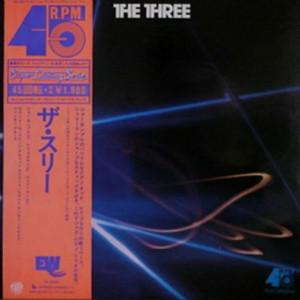
The Three at 45 RPM Has Energy Like No Recording We’ve Ever Heard

Hot Stamper Pressings Featuring Shelly Manne Available Now

When it comes to blockbuster sound that jumps out of the speakers, the wind is at your back with The Three because this is one seriously well-recorded album. If this record doesn’t wake up your stereo, nothing will.

We call it a “blockbuster” because it does not sound very much like a jazz trio performing in a club or some such venue.

But where is the harm in that? It’s not trying to.

What it’s trying to be is huge and powerful in your home. Everything has been carefully and artificially placed in the soundfield. Shelly Manne’s cymbals are placed as far left and as far right as possible on the “stage,” making him the longest-armed drummer to have ever sat behind a kit.

The drum solo on side two is full of energy and so dynamic. Why aren’t more drum kits recorded this well?

Check out the pictures inside the fold-open cover to see all the mics that were used on the drums. That’s where that wall-to-wall, floor-to-ceiling sound comes from.

It’s a phenomenal big speaker jazz Demo Disc.

Play this one as loud as you can. The louder you play it, the better it sounds.

Speaking of Energy

The transients found on this recording are uncannily lifelike. Listen for the huge amounts of kinetic energy produced when Shelly whacks the hell out of his cymbals.

This is a quality no one seems to be writing about, other than us of course, but what could possibly be more important? On this record, the more energetic copies took the players’ performances to a level beyond all expectations. It is positively shocking how lively and dynamic the best copies of this record are.

I know of no other jazz recording with this combination of sonic and musical energy.

(more…)

Our Shootout Winner Needed to Solve Some Common Problems with Mercury Recordings

Hot Stamper Pressings Featuring the Violin Available Now

We described our shootout winning copy of Szeryng Plays the Music of Fritz Kreisler this way:

With INCREDIBLE Shootout Winning Triple Plus (A+++) sound from first note to last, this Plum Label Mercury stereo pressing (the first copy to ever hit the site) is doing everything right.

The violin is so sweet and present, so rich, natural and real, you will forget you’re listening to a record at all.

This recording is not your typical dry, bright, nasaly, upper-midrangy Merc – the sound is rich and smooth like a good London, with a big stage and lovely transparency.

As is sometimes the nature of the beast with these early pressings, there are marks that play, but if you can tough those out, this copy is going to blow your mind.

Here are the notes that back up what we said above:

Notice that on side one, track four, we mention “not strident,” and the second track we note it’s “not too dry.”

Side has a note to the effect that it’s “kinda rich” and “not too bright.”

This tells you that practically all the other copies had these kinds of problems, something that anyone with a good selection of Mercury violin recordings is sure to know.

Our job is to find the pressings that not strident, not dry, not bright, and richer than others.

When you buy a top copy of an album from us, you don’t hear those problems because they are mostly not there.

What you hear is a side one that is:

  • Much fuller and 3-D, with a
  • Sweet and lively violin, one with
  • The most space

On side two you hear more of the same, and that’s a good thing:

  • 3-D and alive violin
  • Kinda rich
  • More dynamic and jumping out
  • Not too bright

Probably not the best solo violin recording we’ve ever sold, but certainly one of the best.

(more…)

Belafonte at Carnegie Hall – Key Tracks for Side One

Hot Stamper Pressings of Pop and Jazz Vocal Albums Available Now

Harry Pearson brought this record to the attention of audiophiles with his TAS list a long time ago, and rightfully so: it’s an amazing recording.

We happen to love the music too, which makes it one of the most recommendable records we have ever offered. If you can find a better combination of demo disc sound, with music worth the hassle and expense of reproducing it properly, more power to you. We sure can’t.

Because this is a live recording, because it has lots of natural instruments as well as a vocal, because it was recorded in the Golden Age by one of the greatest labels of all time, RCA, by Bob Simpson no less — for this and many other reasons, it has to be considered one of the most amazing recordings in the history of the world.

That said, it is our contention (and the basis of our business model) that the brilliant quality of the recording can only be appreciated if you have the pressing that captured the sound that the engineers recorded. In other words, a Hot Stamper.

From an audiophile point of view, you get to hear live musicians and all the energy they bring to this music, all on the stage at the same time: strings, brass, percussionists, and Harry Belafonte front and center. Tube mics (and not too many of them), a tube tape recorder, RCA’s superb engineering and all-tube mastering chain ensure that the “breath of life” is captured intact.

I know of no better live popular vocal recording on the planet.

Side One

Introduction
Darlin’ Cora
Sylvie 

This is a wonderful song, sung by Belafonte with virtually no accompaniment. His voice should be rich and full-bodied with plenty of presence. In other words, he should sound like a living, breathing person.

Cotton Fields 

The liner notes say this song was introduced in the previous year in Las Vegas. Before I read that I noted that the uptempo arrangement had a jazzy feel to it. The walking bass is well up in the mix and the piano and a few of the other instruments in the song are well behind — it’s pretty much Belafonte and bass. The bass is deep and very note-like.

This is of course a big system record. Do not expect good results from small speakers.

But what makes this one of the best Demo Quality tracks on the album is Belafonte’s amazingly energetic performance. He really sells this song.

As I was listening to the dynamics on the best pressings, it made me think about all the compressed-to-death vocals that are so much a part of the recording style of the modern era. Nobody gets loud anymore.

Belafonte did back in 1959, and not too many followed him.

(more…)

Why Do So Few Living Stereo Pressings Sound as Good as This One?

Hot Stamper Pressings of Orchestral Spectaculars Available Now

We introduced our most recent shootout winning copy of The Reiner Sound from 1958 this way:

The Reiner Sound returns to the site for the first time in years, here with big, bold, dynamic Triple Plus (A+++) Living Stereo sound throughout this original Shaded Dog pressing.

These are just a few of the things we had to say about this amazing copy in our notes: “fully extended up top”…”sweet and rich”…”supremely dynamic and spacious!!!” (side one)…”massive and tubey and 3D”…”like no other” (side two)…”explosive finish.”

These sides are doing everything right – they’re rich, clear, undistorted, open, spacious, and have depth and transparency to rival the best recordings you may have heard.

This record will have you asking why so few Living Stereo pressings actually do what this one does.

The more critical listeners among you will recognize that this is a very special copy indeed.

Everyone else will just enjoy the hell out of it.

And here are the notes to prove it!

Side one was at least 3+.

  • Lots of tape hiss
  • The top end really extends
  • Sweet and spacious dynamic peaks, and rich
  • Supremely dynamic and spacious

Side two was right up there with it:

  • Massive and tubey and three-dimensional
  • Very full and dynamic
  • The explosive finish is like no other

(more…)