Records – Audiophile

Here you will find records that are designed to appeal to audiophiles, including direct-to-disc recordings, Japanese pressings. 45 RPM pressings, and those made by audiophile labels such as Reference and Chesky.

Cat Stevens Part 2 – Is This the Truest Tillerman of Them All?

If you haven’t read Part 1 of this story, please click here.

Back to our real story. I listened to my good original pressing. I call it White Hot at least!

Then I put the new pressing on the table, set the SDS for 45 RPM, and got the volume just right. I proceeded to carefully adjust the VTA by ear, going up and down with the arm until the sound was right, which is simply standard operating procedure for every record we audition.

These are my actual notes for But I Might Die Tonight.

This is what I heard as the song worked its way through the various sections, in real time.  The first thing I heard at the start was Zero Tubey Magic for the first verse. One of the last things I heard at the end was No Real Space. Space is what you hear at the end for the big piano and drums finish.

Let’s take it line by line. First up:

Zero Tubey Magic

I didn’t hear much Tubey Magic on the new pressing. The best early pressings — domestic A&M Browns, Pink or Sunray UK Islands — often have simply phenomenal amounts of the stuff. It’s a hallmark of the recording.

If a new pressing comes along without it, that’s a problem. I guess that George Marino‘s cutting system at Sterling could probably do some things well, but it sure doesn’t seem to be able get the sound of tubes right. His 33 RPM cutting had no Tubey Magic, and this one has no Tubey Magic. If I had hired him to cut a record for me and it came out sounding like this, I would find somebody else to cut records for me.

He’s dead now, rest in peace. I would doubt that anyone at Sterling has a better cutting system, and therefore no one should expect any records that have been mastered there to sound very good.

Vocal Is Clear, Clean and Dry

This is the sound you sometimes get with modern, super-clean transistor cutting equipment. It’s low distortion, like a CD is low distortion. We don’t think we should have to put up with dry vocals on records when the good pressings we have been playing all our lives have noticeably richer vocals.

Not rich like Dream With Dean, nothing is that rich, but rich and full-bodied the way the good pressings of this album always make them sound.
(more…)

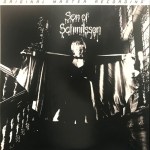
Son of Schmilsson at 45 RPM – How Can It Possibly Sound This Bad?

Hot Stamper Pressings of the Music of Harry Nilsson Available Now
Alternately titled: Forty Five, Schmorty Five.

Recently someone loaned us a copy of the Mobile Fidelity pressing of this album, the one they put out in 2021 on two discs cut at 45 RPM, remastered by that notorious hack, Krieg Wunderlich.

Our last shootout took place all the way back in 2021. Although I listen to this title regularly,  unfortunately it does not sell all that well, so we haven’t been making the effort we should to find copies in order to offer the best of them to our customers.

Why the album is not more popular is a question we ask about a number of titles on our site. We love the music and we love the sound, as can be seen from what we (with the help of Allmusic) had to say about a very good sounding pressing back then:

  • This is one of Nilsson’s best albums, sonically and musically. (With Ken Scott at the board at Trident Studios the sound just has to be good, doesn’t it?)
  • Son of Schmilsson has more than half a dozen of the best songs Nilsson ever wrote, and should make it a Must Own for every right thinking audiophile with sophisticated tastes in popular music (we hope this means you)
  • 4 1/2 stars: “… this is all married to a fantastic set of songs that illustrate what a skilled, versatile songsmith Nilsson was. No, it may not be the easiest album to warm to — and it’s just about the weirdest record to reach number 12 and go gold — but if you appreciate Nilsson’s musicality and weirdo humor, he never got any better.”

So true!

The MoFi, however, is a joke next to a properly-mastered and properly-pressed RCA vintage release. Our notes for it read:

  • Big but flat
  • Voice is recessed and lacks richness
  • Rock songs, track one in particular work OK but
  • Ballads lose all the magic

(more…)

Dave Grusin – Discovered Again!

  • Grusin’s jazz Masterpiece from 1976 returns to the site for only the second time in sixteen months, here with INCREDIBLE Shootout Winning Triple Plus (A+++) grades or close to them throughout this original import copy – fairly quiet vinyl too
  • Here are just a few of things we had to say about this killer copy in our notes: “weighty, deep bass and kick”…”3D, rich, and silky”…”excellent detail and size”
  • After critically listening to this record good and loud, and hearing it sound the way this copy sounds, we have to call it One of the All Time Great Direct to Disc Recordings
  • The songs, the players, the arrangements, the sound – this is a record that will reward hundreds of plays for decades to come
  • Side one of this copy is out of polarity and not a copy you should buy if you can’t switch
  • “…makes for the kind of demo material audiophiles are so fond of using to impress friends and neighbors.”

We are on record as being big fans of this album. Unlike most Direct to Disc recordings, Discovered Again actually contains real music worth listening to. During our all-day shootout, the more we played the record, the more we appreciated it. These are top quality players totally in the groove on this material. When it’s played well, and the sound is as good as it is here, there’s nothing dated about this kind of jazz. Hey, what can we say — it works.

(more…)

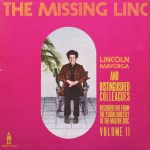
Lincoln and Doug Produced The Audiophile Sgt. Pepper of Its Day

Hot Stamper Pressings of the Music of Lincoln Mayorga Available Now

When I was selling audio equipment back in the 70s (Audio Research, Fulton speakers), The Missing Linc this was a favorite Demo Disc in our store.

With a big speaker like the Fulton J, the bass drum at the end of track two would shake the walls. At the time I had never heard a record with bass that went remotely that deep. (The album came out in 1972. I’m guessing I probably first heard a copy in ’75 or ’76 when I bought my Fultons, which would have been sometime in my early twenties.)

Every bit as amazing to me was the string quartet on side 2. You could actually hear the musicians breathing and turning the pages on their music stands, just as if you were actually in their “living presence.” No recording I had ever owned allowed me to hear that level of natural detail.

This is one of the albums that made me realize how good audio in the home could be.

(more…)

Good Digital Beats Bad Analog Any Day

Hot Stamper Pressings of the Music of Sonny Rollins Available Now

And this is some very bad analog indeed!

We here present our 2010 review of the Sonny Rollins Plus 4 album, the one remastered on two slabs of 45 RPM Analogue Productions Heavy Vinyl.

It has everything going for it, right?

Steve Hoffman, Kevin Gray, 45 RPMs, Heavy Virgin Vinyl, fancy packaging — clearly no expense was spared!

The ingredients may have been there, but the cake they baked was not only not delicious, it was positively unlistenable — I mean, inedible.

I cannot recall hearing a more ridiculously thick, opaque and unnatural sounding “audiophile” pressing than this Rollins record, and believe me, I’ve heard plenty. (And it seems the bad news will never stop.)

As I noted in another commentary “Today’s audiophile seems to be making the same mistakes I was making as a budding enthusiast more than thirty forty years ago. Heavy Vinyl, the 45 RPM 2 LP pressing, the Half-Speed limited edition — aren’t these all just the latest audiophile fads, each with a track record more dismal than the last one?”

It reminds me of the turgid muck that Doug Sax was cutting for Analogue Productions back in the 90s. The CD has to sound better than this. There’s no way could it sound worse.


CD Update:

I managed to track down a copy of the CD and it DOES sound better than this awful record, and by a long shot. It’s not a great sounding CD, but it sure isn’t the disaster this record is.

Buy the CD, and whatever you do, don’t waste money on this kind of crap vinyl.


This is a very bad sounding record, so bad that one minute’s play will have you up and out of your chair trying to figure out what the hell is wrong with your system. But don’t bother. It’s not your stereo, it’s this record.

It has the power to make your perfectly enjoyable speakers sound like someone wrapped them in four inches of cotton bunting while you weren’t looking.

(more…)

Laurindo Almeida – Virtuoso Guitar

More of the Music of Laurindo Almeida

  • A killer copy of this 45 RPM direct to disc recording featuring Shootout Winning Triple Plus (A+++) sound or close to it on both sides – fairly quiet vinyl too
  • Some of the tubiest, warmest acoustic guitar sound you could ask for from a “modern” record – this is the sound of analog done right
  • It has the kind of sound we prefer, with none of the razor sharpness that you get on some direct to disc recordings
  • One of the best Almeida albums we know of and probably the best Crystal Clear title (which we know isn’t saying much)

Volume Is Key

This recording has very little processing or EQ boost, and the studio is somewhat dead sounding (all too common in the late 70s). That combination can mean only one thing: If you don’t play this record loud enough, it will not sound right.

The famous Sheffield S9 is exactly the same way. It sounds dead and dull until you turn it up. When you do, lookout — it really comes alive.

The best pressings can sound shockingly like live music, something one just does not hear all that often, even when one plays records all day long as we do.

(more…)

Virtuoso Guitar Is Potentially an Awesome Direct to Disc Record

Hot Stamper Pressings of Direct-to-Disc Recordings Available Now
This recording has very little processing or EQ boost, and the studio is somewhat dead sounding (all too common in the late-70s). That combination can mean only one thing: If you don’t play this record loud, it will not sound right. 

The famous Sheffield S9 is exactly the same way. It sounds dead and dull until you turn it up good and loud. When you do, lookout — it really comes alive. The best pressings can sound shockingly like live music, something one just does not hear all that often, even when one plays records all day long as we do.

The snare drum on this copy represents one of the most realistic and dynamic sounding snares I have ever heard. Talk about jumping out of the speakers! If you have plenty of large, fast, powerful dynamic drivers like we do, you are in for a real treat. Track one, side one — lookout!

Our Shootout Winner from Years Ago

As usual, the shootout allowed us to hear what was lacking on side two.

Side One

A+++ As Good As It Gets sound from top to bottom. No copy was as transparent, lively or high-rez. No copy actually did ANYTHING better, which is unusual. The distortion level is close to zero on this one. The louder you play it the better it sounds.

Side Two

With a grade of A Double Plus this copy was close to the best, falling a bit short in the area of upper midrange presence and top end. Still, there’s lots of space, the cello sounds full and rich, as does the guitar, and none of the plucked instruments suffer from smear at all.

A great side, just a bit dark compared to the very best.

(more…)

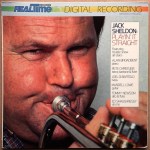
Jack Sheldon / Unreleased UHQR Test Pressing

More Hot Stamper Pressings of Digital Recordings with Audiophile Quality Sound
UPDATE

We reviewed this album in 2007, which was a long time ago, so please take that into consideration when reading this review.


This is a practically brand new UHQR JVC test record.

I’m SHOCKED at how good this record sounds.  It has AMAZING live-in-the-studio jazz sound.

(more…)

Our Shootout Winner Had Sound that Was Really Jumping Out of the Speakers

Hot Stamper Pressings of Direct-to-Disc Recordings Available Now

Recently we put up a copy of this wonderful direct to disc recording with this description:

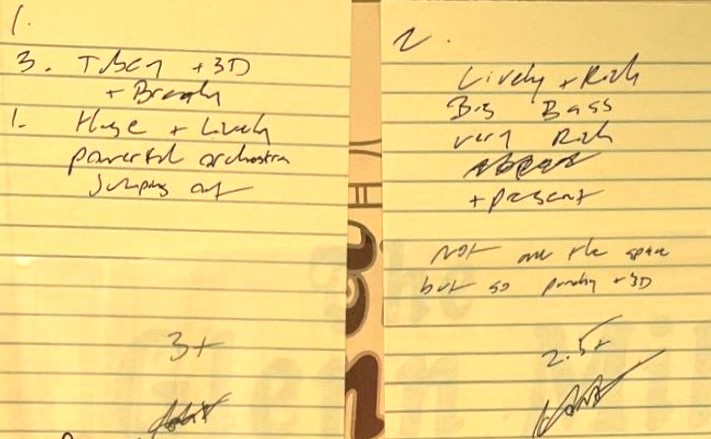
Here are just a few of the things we had to say about this incredible copy in our notes: “tubey and 3D and breathy”…”huge and lively”…”powerful orchestra”…”jumping out of the speakers”…”very rich and present.”

Great energy, but the sound is relaxed and Tubey sweet at the same time, never squawky, with plenty of extension on both ends – that’s analog for ya!

This is no sleepy over-the-hill Sheffield Direct-to-Disc (referring to the later Harry James titles, not the excellent first one) – these guys are the real deal and they play their hearts out on this album, recorded in a church with exemplary acoustics.

Note that side two did not have all the space, but was so punchy and 3-D that it was easy to award it a Nearly White Hot Stamper grade of 2.5+. The copy that beat it had all the same qualities and more space, sounding more like side one of this very pressing.

And here are the actual notes for the Shootout Winning copy we found.

We have no trouble hearing when a record is doing everything right, and when a record has one side that is a bit lacking, it’s the shootout that shows us in what area it is lacking.

In this case, our notes read:

  • Not all the space but so punchy and 3-D

Track one had sound that “jumped out of the speakers,” and if — like us — that’s the kind of sound you are looking for, our Hot Stamper pressings are where you can find it.

If you would like to test the pressings you own, here are a few that might make good tests for that quality. Also, many of our customers have commented about that quality in the Hot Stamper pressings we sent them, and you can read their letters here.

(more…)

The Three – Liner Notes and a Rave Review

Hot Stamper Pressings of The Three Available Now

Excerpts from the Liner Notes

On a windy and unusually cold night in Los Angeles, each of the three musicians arrived before the session start time of 10 PM on November 28, 1975. At exactly 10 PM, The Doobie Brothers session that was going on since morning ended. Two assistants immediately started setting up for the session. The Steinway concert grand piano, delivered the previous day, was wheeled in to the center of the room and got tuned. Shelly Manne’s drum kit was assembled in a makeshift “booth.” Microphones were set up, checked and positions adjusted.

Initially, Telefunken microphones were positioned on the piano, but later were replaced by two Neumann U87s. The piano lid was opened to the concert position and microphones were centered relative to the keys and placed a foot (30 centimeters) inward from the hammer and a foot (30 centimeters) away from the strings. One mic was pointed toward the bottom notes and the other pointed toward the top.

To record Ray Brown’s bass, a Shure SM56 and a Sony 38A were pointed at the bridge of the bass, two inches above it. The Shure was used to capture the attack and the Sony mic was used to capture the rich low tones.

Seven microphones were used to capture the sounds of the drum set. Two U87’s were placed overhead, roughly 16-inches above the cymbals facing down. The bottom quarter of the kick drum was dampened with a blanket on the outside and was mic’ed with a Shure SM56. SM56’s were also used for toms and bass toms. Sony 38A was used on the snare and Sennheiser’s Syncrhon on the high-hat.

Each mic was placed 2 inches away from the instruments in a close mic set up. Mr. Itoh got involved with fine tuning mic positioning for tone, stereo placement and balance. Meanwhile, final adjustments were being made on the cutting machine set up.

Within the hour, the set up was done and all preparations were completed. The musicians finished warming up and were ready for Take One. The usual banter subsided and everyone put on their “game face.” Even Ray Brown, who usually cracked jokes in a loud voice, looked serious as he turned his attention to Mr. Itoh, waiting for his cue. As soon as he was notified through the intercom that the cutting needle was put down, Mr. Itoh gave the signal with his hand, and the recording started. In 16 minutes, three tracks were recorded in rapid succession.

Relieved that the initial take was over, the musicians joined the producer and engineer in the control room to listen back from the 2-track tape that was used as back up. With the initial tension gone, all three excitedly made comments and evaluated their own performance and the sounds they got. The thumbs-up was given by the cutting engineer for take one and the musicians went back to the live room for the next take. This process was repeated until 4 AM the following morning, resulting in a total of three takes per track.

(more…)