Pre-Shootout Reviews

Reviews from our (mostly) pre-shootout days.

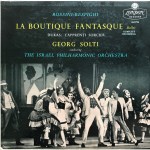
La Boutique Fantasque – Mono Reviewed in 2010

UPDATE 2024

A long time ago I liked a mono pressing of La Boutique Fantasque with Solti.

I doubt I would be impressed by it now, but I can’t rule out the possibility.

Some monos can be amazing. We should know, we’ve played plenty of them.

However, when the stereo pressings are also amazing, as is the case here, wouldn’t you rather hear it in stereo? We didn’t even bother to buy one to put into our recent shootout, which was, shockingly, 14 years in the making.


This London Mono Radio Promotion Copy is a stunner. DEMO QUALITY SOUND.

They even knew it back then — it was given the Hi-Fi Record Of The Month award. The orchestration and the sound of this music are ideal for audiophile listening.

The Sorcerer’s Apprentice that closes out side two has slightly better sound by the way — it’s quite good.

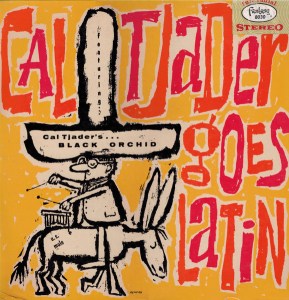
Cal Tjader – Cal Tjader Goes Latin

This is the cleanest, quietest original colored vinyl Fantasy pressing I have ever played in my life. To say these are normally beat to death is the understatement of the year.

Even more surprising is the superb saxophone playing of Jose Silva, a tenor man with whom I was not familiar. I thought he was Ben Webster or maybe Coleman Hawkins, his tone is so rich and sweet. The tracks that he’s on sound amazing — very full bodied and not a trace of hi-fi-ishness.

Overall the sound is a bit dark. A little treble boost would do wonders.

“… the highlights of the album are the four ballads that showcase Guaraldi’s distinctive piano style and the light tone of tenor saxophonist Jose Silva: Howard Arlen’s “Happiness Is a Thing Called Joe,” “Out of Nowhere,” “Close Your Eyes,” and the bolero-like “Contigo.” – AMG


This is an Older Jazz Review.

Most of the older reviews you see are for records that did not go through the shootout process, the revolutionary approach to finding better sounding pressings we developed in the early 2000s and have since turned into a fine art.

We found the records you see in these older listings by cleaning and playing a pressing or two of the album, which we then described and priced based on how good the sound and surfaces were. (For out Hot Stamper listings, the Sonic Grades and Vinyl Playgrades are listed separately.)

We were often wrong back in those days, something we have no reason to hide. Audio equipment and record cleaning technologies have come a long way since those darker days, a subject we discuss here.

Currently, 99% (or more!) of the records we sell are cleaned, then auditioned under rigorously controlled conditions, up against a number of other pressings. We award them sonic grades, and then condition check them for surface noise.

As you may imagine, this approach requires a great deal of time, effort and skill, which is why we currently have a highly trained staff of about ten. No individual or business without the aid of such a committed group could possibly dig as deep into the sound of records as we have, and it is unlikely that anyone besides us could ever come along to do the kind of work we do.

The term “Hot Stampers” gets thrown around a lot these days, but to us it means only one thing: a record that has been through the shootout process and found to be of exceptionally high quality.

Not just a good sounding record. A record that was played in a shootout and did well.

The result of our labor is the scores of jazz titles seen here, every one of which is unique and guaranteed to be the best sounding copy of the album you have ever heard or you get your money back.


Further Reading

Xavier Cugat and His Orchestra – Viva Cugat

This crazy Cugat record (is there any other kind?) is a BALL and has absolutely amazing Demo Disc quality sound on side two, better than Super Hot Stamper quality. 

It sounds like Henry Mancini on speed, and the recording quality puts most of Mancini’s records to shame to boot. This is Bachelor Pad music for those who like their Bachelor Pad to be FUN!

Side Two

With A++ to A+++ sound this side is pretty much doing it all. So spacious! And such tremendous low and high frequency extension, the kind that vintage records usually have trouble with. Not this copy. The strings and horns can get slightly aggressive

Make sure you have your VTA set dead right or this record will be a mess. Careful adjustment is critical to reproduce this kind of complex and lively sound. (more…)

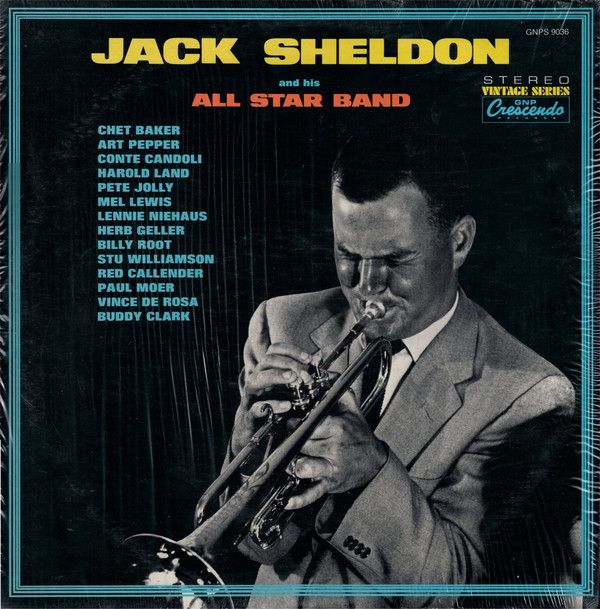
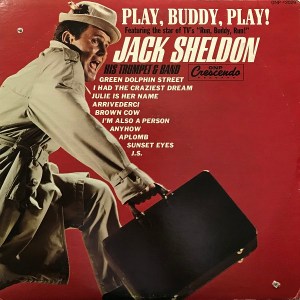
Jack Sheldon – Jack Sheldon And His All-Star Band Comes with Many Covers

xxx

If you like the sound of relaxed, tube-mastered jazz — and what red-blooded audiophile doesn’t — you can’t do much better than Jack Sheldon And His All-Star Band. The warmth and immediacy of the sound here are guaranteed to blow practically any Big Band record you own right out of the water.

This is a wonderful example of the kind of record that makes record collecting FUN.

If you large group swinging West Coast Jazz is your thing — think Art Pepper Plus Eleven — you should get a big kick out of this one.

Both sides of this very special pressing are huge, rich, tubey and clear. As soon as the band got going we knew that this was absolutely the right sound for this music. There was practically nothing that could beat it, in any area of reproduction. (more…)

Jefferson Airplane / After Bathing At Baxter’s – Our Shootout Winner from 2012

More Jefferson Airplane

Reviews and Commentaries for The Jefferson Airplane

This RCA pressing was a BIG step up from most copies we played. Most copies we’ve played are too lean down low, which takes a lot of the power out of this crazy psychedelic music. This one gives you more weight down low and good energy, which helps these songs sound the way The Airplane must have intended.

I’m not familiar with the Sundazed pressing, but I would be shocked if it was even in the ballpark with a Super Hot Stamper copy like this one. Is anyone seriously buying their records for sound quality these days? (more…)

The Alan Parsons Project / Tales of Mystery & Imagination – Our Shootout Winner from 2015

Alan Parsons’ concept album based on the stories of Edgar Allen Poe was a TAS Super Disc for a while back in the day, and one can easily see why. The sound on the better pressings is big, solid and full-bodied with amazing resolving power and dynamics.

The best copies usually have exceptionally extended top ends. The best top ends are difficult to come by but they sure make a difference in the sound, revealing three-dimensional space that most copies do no better than to hint at. 

The upper harmonics of the instruments are reproduced beautifully here, and there’s ambience and air that are simply not audible on the average original pressing.

This was the first Alan Parsons Project album, and it features songs based on the stories of Edgar Allen Poe. It’s crazy music for sure, certainly not for everyone, but the recording is excellent, as you might expect from the man who engineered Dark Side Of The Moon, Abbey Road and mixed the first Ambrosia album.

The Raven is a highlight, featuring vocoder-enhanced vocals, a boy’s choir, big rock guitars and crazy synthesizers. Click the “AMG Review” tab above to learn more — they do an excellent job communicating what’s interesting about the music on this album. Those of you who like the first Ambrosia album may get a kick out of this one, as all four members participate in the festivities. (more…)

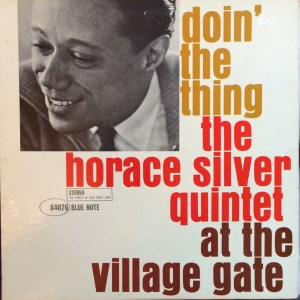
Horace Silver Quintet – Doin’ The Thing

This Minty Blue Note LP has EXCELLENT LIVE JAZZ SOUND! It’s rich, full, and tonally correct from top to bottom. Just listen to the cymbals on the track Doin’ The Thing — you’ll hear how wonderfully extended the top end is.

“This live set (recorded at the Village Gate) finds pianist/composer Horace Silver and his most acclaimed quintet (the one with trumpeter Blue Mitchell, tenor saxophonist Junior Cook, bassist Gene Taylor and drummer Roy Brooks) stretching out on four selections, including his new song Filthy McNasty… [An] enjoyable and always funky hard bop session.” (more…)

Joan Armatrading – Self-Titled

TWO AMAZING SIDES! We’ve known for quite some time that this can be an amazing sounding record, but until this week we didn’t realize just how stunning the best copies can be! This one’s an absolute knockout — side one earned the high grade of A++ while side two is As Good As It Gets!
The average copy of this album has a tendency to sound a bit too hi-fi for our tastes. Most audiophiles love that kind of sound, but us analog freaks prefer richness and warmth over hyper-detailed, unnatural sound. That’s why most of the heavy vinyl stuff we play around here gets the hook after just moments. We just aren’t interested in records that sound like CDs.

Side one is incredibly airy, open, and transparent. Turn down the lights, drop the needle, and your speakers will practially disapper! The soundfield is spacious and three-dimensional. The top end is silky sweet, the bottom is rich and solid, and the acoustic guitar sounds JUST RIGHT. Listen to how full-bodied and present the vocals sound on Down To Zero — lovely!

Side two has AMAZING MASTER TAPE SOUND! It’s big and lively with unbelievable immediacy to the vocals. The acoustic guitar has just the right amount of pluck and twang. Most copies don’t have this degree of clarity and transparency. There’s lots of ambience and room around the drums that weren’t nearly as clear on other pressings. We gave this side our top grade of A+++.

Our Man Glyn Johns At The Helm

This album was produced and engineered by Glyn Johns and recorded at Olympic Studios in London. Glyn, of course, is one of our all-time favorite engineers. If you like the sound of Who’s Next, Let It Bleed, On The Border (my personal favorite Eagles album), Led Zeppelin’s debut, and Sticky Fingers, you have Glyn Johns to thank for that.

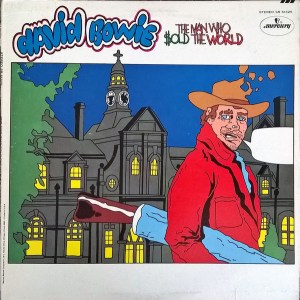
David Bowie / The Man Who Sold The World – On the Real Mercury Pressing

More David Bowie

The sound is rich and full, just the way the Brits like it. The heavy compression that both Bowie and Scott favor works its magic at every turn, adding fatness and richness and lovely harmonics to the guitars and the drums.

Not many Bowie albums from his “classic” period sound good on domestic vinyl, nothing I know of before Diamond Dogs with the exception of this album and the occasional copy of Space Oddity. Strangely enough, from then on practically every one of Bowie’s albums sounds best on domestic vinyl, all the way through to Let’s Dance, after which we more or less check out — don’t know those albums well and don’t plan on finding out more.

Ah but here, here we have some truly prime period Bowie, recorded, mastered and pressed with Top Quality sound!

Side One

Mick Ronson’s guitars are wonderfully clear. The vocals can get a bit hot on the first track (as is often the case), but by track two the sound has settled in and is rich and smooth, just the way we like it. Very present and lively vocals are a strong point.

Side Two

Listen to the big bass, richness and Tubey Magic of the third track — that is some Ken Scott studio wizardry at play.

Note that the second track seems to be where Alice Cooper found his “sound.” More power to him I say. You could get away with ripping off Bowie in 1970; nobody bought this album in the states, which is why it’s so damn rare and expensive.

And that is the reason there are so many bootlegs. Practically every copy on ebay is a bootleg.  They sound terrible by the way.

How to Spot the Bootleg Copies, Courtesy of Discogs

This release has stamped matrix numbers in the dead wax. All other versions with this cover are counterfeits (with etched matrix numbers) and should not be listed here.

This US release is the first release on LP of The Man Who Sold the World. It was only released in two countries – US and Japan (SFX-7345) – with this original cover. The building in the background is the Cane Hill Hospital where David Bowie’s half-brother Terry was a patient.

The album was released in a further three countries on the Mercury label – Germany (David Bowie – The Man Who Sold The World) in a large circular fold-out cover and the United Kingdom and Australia with a picture of David reclining in a dress. This latter cover is the one used on contemporary releases.

The US Mercury album was counterfeited (see David Bowie – The Man Who Sold The World) in the early 1970s after Bowie became popular. It was possible for a potential buyer to choose between the official RCA reissue (in yet another cover, see David Bowie – The Man Who Sold The World) and the widely distributed counterfeit.

The following visual indicators can be used to confirm an original US Mercury LP:
• The matrices in the runout (the space between the label and the grooves) are machine stamped (the counterfeits are hand etched).
• The space between the final lyric line of The Supermen and the cartoon bubble “Oh By Jingo” on the back cover is approximately the height of a line of text, while on the counterfeits the space is notably wider.

There are other differences, though these can be more easily seen and described in a side-by-side comparison.
Rights Society: ASCAP

Matrix / Runout (Side A, Runout, Stamped): SR 61325-A- M2
Matrix / Runout (Side B, Runout, Stamped): SR 61325-B- M1

(more…)