Genres

Chet Atkins and Les Paul – Chester & Lester

More of the Music of Chet Atkins

  • Chester & Lester makes its Hot Stamper debut with INSANELY GOOD Shootout Winning Triple Plus (A+++) grades on both sides of this vintage RCA pressing
  • Huge, rich, present, with an abundance of energy and great depth and room around the guitars — it’s all here
  • The notes for this copy rave about the sound — apparently, this live in the studio recording from 1975 has the sound that RCA and Chet Atkins were famous for back in the 50s and 60s. Who knew?
  • Chester & Lester won the Grammy Award for Best Country Instrumental Performance in 1976
  • Les Paul’s recordings from back in the day can be off the charts Tubey Magical, but the music is rarely compelling, so we don’t do shootouts for his records anymore, but you can be sure this wonderful sounding title will be a regular on the site from now on
  • 4 stars: “After eight years away from the microphones, Les Paul joined forces with country music’s Chet Atkins in a marvelously relaxed, tasty session of cross-cultural jamming. You won’t have any problem telling Chester and Lester apart on these tracks; Les’ bright, almost metallic sound and twirling, yet now more economical flurries are a world away from Chet’s mellow fingerpicking, lightly tarted with echo. Yet the two styles play brilliantly off each other….”

(more…)

Obscured By Cloudy Japanese Vinyl

Hot Stamper Pressings of the Music of Pink Floyd Available Now

When I was just getting up to speed in audio and exploring the world of music available on vinyl in the 70s, many of the stereo stores I frequented carried Japanese pressings. They were widely believed to have superior sound relative to their domestic counterparts — in this case, the mass-produced pressings I would see at the Tower Records right across from the Sports Arena in my hometown of San Diego. I went there at least once a week, probably more like two or three times.

Tower was far and away the best place to go record shopping in those days. The store was huge and they had dramatically more stock than Licorice Pizza or The Wherehouse.

They also had a separate section for Half-Speed mastered pressings from a number of labels, which of course was the first place in the store I would visit, digging through the bins to see what new remastered titles may have been produced for audiophiles searching for the ultimate in sound quality.

Of course, I identified as just such a person. In terms of sound quality, and with the extremely limited knowledge I had acquired at the time, I believed I set a high standard for the sound of the records I bought. I was willing — eager even, you could even say excited — to pay whatever premium price I had to for a record that was sure to deliver superior sound quality. To me, in the late 70s, that meant two things: direct to disc recordings, and Half-Speed mastered pressings.

(There was a another category of records that did not fall into the above two, best exemplified by American Grammaphone and the Fresh Aire series, but the less said about those schlocky releases the better, other than to point out that some of their titles are TAS list carryovers from HP’s time running the Super Disc list, specifically Fresh Aire 2 and 3, both best avoided.)

And, like any other open-minded individual, when it came to Japanese vinyl I was willing to give a few a spin.

However, the more of them I bought, the more clear it became to me that even the best of them sounded mediocre (veiled, smeary and dubby from second generation tapes) and more often than not they were just plain awful. (Second generation tape issues being the main problem, of course, with the additional insult of poor tonality, the result of being mastered using wacky equalization, typically with added brightness where none was needed.)

Pink Floyd

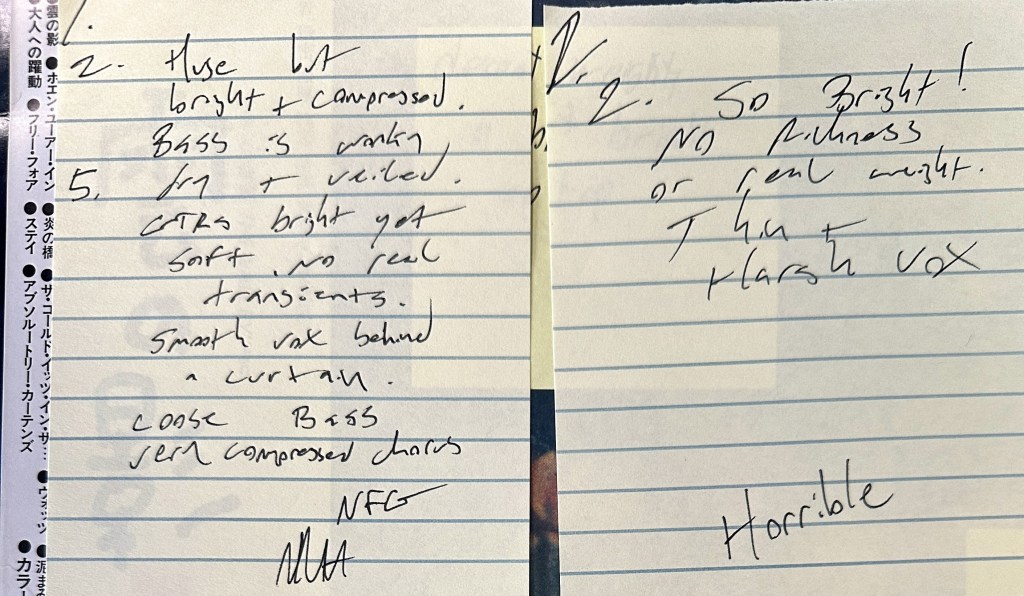
The notes for the Pink Floyd album you see below, Obscured by Clouds, were written sometime in March of 2025 as part of the shootout we conducted for the album.

If we assume it would be an audiophile who would be attracted to this pressing, perhaps for its quieter playing surfaces, perhaps operating under the assumption that the Japanese engineers mastering the record would be more likely to do a better job as well, then what we have here is a textbook case of an audiophile bullshit pressing.

One that sounds nothing like the album is supposed to, based on having played a number of exceptionally good sounding copies, all British and all on the Green Harvest label, mastered from good tapes, sometimes by the legendary Harry T. Moss. We feel we are more than qualified to make these judgments. If we can’t make them, nobody can.
Discogs allows us to glean some information regarding the desirability of this Japanese reissue with the record buying public currently in the market for Pink Floyd vinyl who register on their site.

(more…)
Breakfast in America – An A&M Half-Speed Mastered Disaster

Hot Stamper Pressings of the Music of Supertramp Available Now

Sonic Grade: F

This title is yet another Half-Speed we think belongs in our audiophile hall of shame.

It’s better suited to the stone age stereos of decades past. I should know — my system in 1976 was one-tenth as revealing as the one we use now.

But this pressing is so awful even my old system could not be fooled by this kind of audiophile BS sound. The console you see pictured might be the ideal system to play it. Hard to say, I haven’t heard one of those since the 60s.

It is just ridiculous that someone would consider marketing this kind of sound to audiophiles.

So washed out, brittle, thin and lifeless, it practically defies understanding that anyone with two working ears ever considered calling this piece of crap an “audiophile” record.

But are today’s remastered records marketed to those looking for superior sound any better? Not the ones we’ve played recently. (If you know of any good ones, please drop us a line.)

Is this A&M pressing the worst version of the album ever made? It’s hard to imagine it would have much competition.

(more…)

Pros and Cons of this Copy of Swings in High Stereo

Hot Stamper Pressings of Large Group Jazz Recordings Available Now

Side One

Big and spacious, yet clear, dynamic and energetic. The brass is never “blary” the way it can be on so many Big Band or Dance Band records from the 50s and 60s. (Basie’s Roulette records tend to have a bad case of blary brass as a rule.)

Sharp transients and mostly correct tonality and timbres, powerful brass — practically everything you want in a Hot Stamper is here!

The stage is exceptionally wide on this copy.

Listen to the top end on track two — man, that is some natural sound!

This side could use a bit more weight so we feel a grade of Super Hot (A++) gets it right.

(more…)

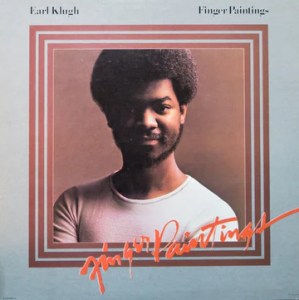
Earl Klugh – Finger Paintings

More Jazz Recordings Featuring the Guitar

  • Finger Paintings appears on the site for the first time ever, here with an INCREDIBLE Shootout Winning Triple Plus (A+++) side two mated to a solid Double Plus (A++) side one
  • Both of these sides are clean, clear and lively with an abundance of detail and a solid bottom end
  • Some of the tubiest, biggest and richest guitar sonics you could ask for from a “modern” record – this is the sound of analog done right

(more…)

The Seeds of Love – A Nearly Perfect Pop Masterpiece

tearsseeds_1510s_1448982243

Hot Stamper Pressings of Art Rock Albums Available Now

The band’s magnum opus, a Colossus of Production to rival the greatest Prog, Psych and Art Rock recordings of all time. (Whew!)

When it comes to Genre Busting Rock I put this album right up at the top of the heap, along with several other landmark albums from the Seventies: Roxy Music’s first, The Original Soundtrack, Crime of the Century, Ambrosia’s first two releases, Fragile, Dark Side of the Moon and a handful of others.

The Seeds Of Love is clearly the band’s masterpiece, and being able to hear it on a White Hot Stamper pressing is nothing short of a THRILL.

I have a long history with this style of Popular Music, stretching all the way back to the early ’70s. I grew up on Bowie, Roxy Music, 10cc, Eno, The Talking Heads, Ambrosia, Peter Gabriel, Supertramp, Yes, Zappa and others, individuals and bands that wanted to play rock music but felt shackled by the constraints of the conventional pop song. Nothing on Sowing the Seeds of Love fits the description of a Conventional Pop Song.

Which albums by The Beatles break all the rules? Side two of Abbey Road and the whole of The White Album, which is why both are Desert Island Discs for me. Can’t get enough of either one.

The Discovery of a Lifetime

When I discovered these arty rock bands in my early twenties I quickly became obsessed with them and remain so to this day.

My equipment was forced to evolve in order to be able to play the scores of challenging recordings issued by these groups and others in the 70s. These albums informed not only my taste in music but the actual stereo I play that music on. I’ve had large dynamic speakers for the last four decades precisely because they do such a good job of bringing to life huge and powerful recordings such as these.

Tears For Fears on this and their previous album continue that tradition of big-as-life and just-as-difficult-to-reproduce records. God bless ’em for it.

Analog Sound

The sound of most copies is aggressive, hard, harsh and thin. What do you expect? The album is recorded digitally and direct metal mastered at Masterdisk.

Most of us analog types put up with the limitations of the sound because we love the music, some of the most moving, brilliantly written and orchestrated psychedelic pop of the last thirty years.

Imagine if the Beatles in their Sgt. Pepper/ Magical Mystery Tour phase kept going in that direction. They very well might have ended up in the neighborhood of Sowing the Seeds of Love.

But wait — the best pressings have smooth, sweet, analog richness and spaciousness I didn’t think was possible for this recording. The bass is full and punchy. When it really starts cooking, such as in the louder, more dynamic sections of Woman in Chains or the title cut, it doesn’t get harsh and abrasive like most copies. It’s got energy and life without making your ears bleed — if you have the system to play it.

(more…)

Dire Straits – Love Over Gold

More of the Music of Dire Straits

  • A Love Over Gold like you’ve never heard, with solid Double Plus (A++) grades from top to bottom
  • Quiet vinyl for this album too – owing to the fact that there are so many quiet passages, it is the rare vintage pressing that can play quiet enough to earn even our Mint Minus Minus grade
  • The open, spacious soundstage, full-bodied tonality and Tubey Magic here are obvious for all to hear on these TAS-approved sides – huge, punchy, lively and rockin’ throughout
  • This Hot Stamper is far more natural than any other pressing you’ve heard – we guarantee it
  • “Certainly a quantum leap from the organic R&B impressionism of the band’s early LPs and the gripping short stories of Making Movies, Love Over Gold is an ambitious, sometimes difficult record that is exhilarating in its successes and, at the very least, fascinating in its indulgences.” – Rolling Stone

This modern album (from 1982, which makes it 40+ years old, but that’s modern in our world) can sound surprisingly good on the right pressing. On most copies, the highs are slightly grainy and can be harsh, not exactly the kind of sound that inspires you to turn your system up good and loud and really get involved in the music. I’m happy to report that both sides here have no such problem – they rock and they sound great loud.

We pick up every clean copy we see of this album, domestic or import, because we know from experience just how good the best pressings can sound. What do the best copies have? REAL dynamics for one. And with those dynamics, you need rock solid bass. Otherwise, the loud portions simply become irritating. (more…)

Kansas – Point of Know Return

More of the Music of Kansas

  • An original Kirshner pressing that is doing practically everything right, with KILLER Shootout Winning Triple Plus (A+++) sound or close to it on both sides
  • Big and solid guitars and keyboards, with great bass, full vocals, and plenty of Tubey Magic – this the way to hear the band
  • Most copies are just too thin and bright to be any good for seriously listening at serious levels, but the best of the best manage to stay smooth enough and tonally correct enough to allow an extra click or two of volume, which of course results in a much more powerful audio experience
  • 4 stars: “This is the definitive Kansas recording. . . their interplay and superior musicianship make this both an essential classic rock and progressive rock recording.”

Drop the needle on Dust in the Wind — here the guitars and vocals are full-bodied and natural, qualities unfortunately in short supply on the typical pressing. (more…)

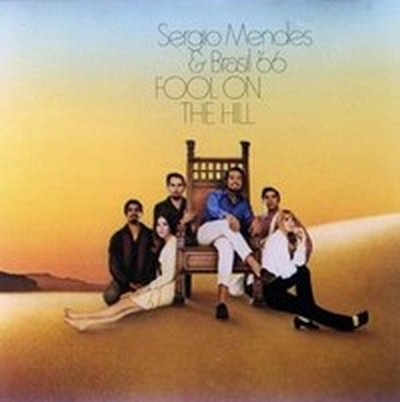
Sergio Mendes and Brasil ’66 – Fool on the Hill

More of the Music of Sergio Mendes

  • Boasting two excellent Double Plus (A++) sides, this vintage copy is guaranteed to blow the doors off any other Fool on the Hill you’ve heard – fairly quiet vinyl too
  • Side one of this copy is in reverse polarity – for those of you who cannot switch your polarity, not much can be done since all the best side ones, even the supers, were reversed
  • The polarity problems are easily recognized when playing the first two tracks – unless you reverse your polarity, the sound is hard and smeary and much of the bass goes missing
  • Sergio’s unique rearrangement of two songs in particular here make this a Must Own album: “Scarborough Fair” and the title track
  • Top engineers for A&M, Henry Lewy and Larry Levine, capture the natural, breathy intimacy in the voices of the wonderful female leads, Lani Hall, Karen Philipp and Gracinha Leporace
  • 4 1/2 stars: “Even though he had become thoroughly embedded in the consciousness of mainstream America, Mendes still managed to have it three ways, exposing first-class tunes from little-known Brazilian talent, garnering commercial hits, and also making some fine records.”
  • If you’re a fan of Sergio and the band, this early pressing from 1968 belongs in your collection.

Two songs in particular make this a Must Own album: Scarborough Fair and The Fool On The Hill. Both of them are given wonderfully original treatments. These songs hold their own against the originals, and that’s saying something.

(more…)

Turning Master Tapes into Mud Pies – The Magic of the Electric Recording Company

Hot Stamper Pressings of Psychedelic Rock Recordings Available Now

UPDATE 2026

This commentary originally came out in 2023 I believe. The comments section at the end is a bit of a hoot. Man, there sure are some real wackos in the world of audio.


““It’s magical what they’re doing, recreating these old records,” Fremer said as he swapped out more Electric Recording discs.”

Swapped them out? Anyone with an ounce of respect for Love’s music would have tossed them into the nearest trash bin.

We did a shootout for Love’s Forever Changes earlier this year, and it was our good luck to get hold of a copy of the Electric Recording Company’s pressing of the album in order to see how it would fare against our Gold Label Stereo original LPs.

As you can see from the notes, to say that we could hardly believe what we were hearing clearly understates the depth of our befuddlement.

We simply have no context for a record that sounds as bad as this record sounds. We’ve never heard anything like it, and we’ve played a lot of records in the 37 years we’ve been in business. After critically auditioning thousands upon thousands of pressings in our shootouts, all day every day for the last twenty years, we’ve worn out scores of cartridges and even our Triplanar tonearm.

But this is new ground for us. A quick recap:

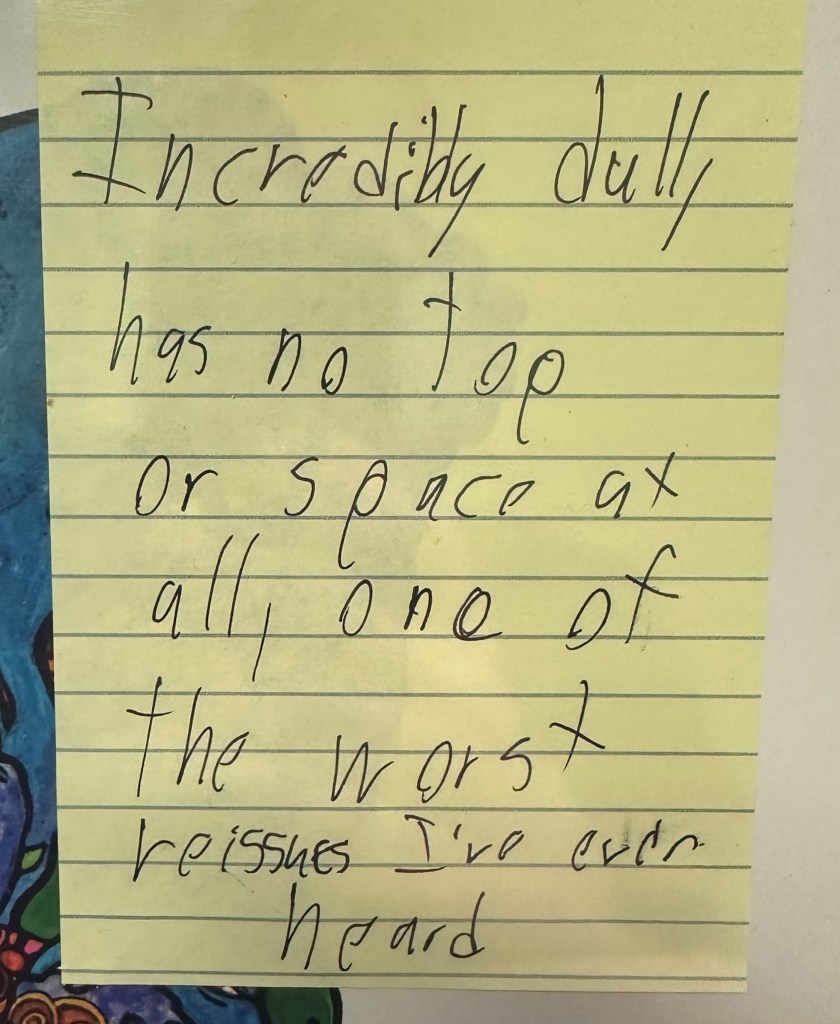
  • Incredibly dull,
  • Has no top or space at all,
  • One of the worst reissues I’ve ever heard.

You get the picture. What more needs be said? Last year I wrote the following:

Pete Hutchison of The Electric Recording Company makes some of the worst sounding records I have ever played in my life.

If you play me one of his awful records, and don’t tell me who made it, I can judge the record on its merits, the way we judge all records. We test records blindly for precisely this reason. We let the record tell us how well it was made, what it does right and wrong relative to other pressings of the same album, comparing apples to apples.

His records tell me he loves the sound of the murkiest, muddiest vintage tube equipment ever made, and wants every record he produces to have that sound.

In my book that is an egregious case of My-Fi, not Hi-Fi. We wrote about it here.

It’s astonishing to me that anyone takes this guy seriously.

In the Washington Post video, we did a little comparison on camera for two pressings of Quiet Kenny, a record I will have more to say about in Part Two of this commentary. Here is Geoff Edgers’ description in the article of how it all went down.

(more…)