_Composers – Bach

Bach / Organ Music – Karl Richter

More of the music of J.S. Bach (1685-1750)

Hot Stamper Decca and London Pressings Available Now

  • Some audiophiles buy organ records to show off their subwoofers, and records like this can do that, but records this good have musical qualities far beyond simple demonstrations of bass reproduction – with this pressing you can feel the cool air in the hall!
  • With this pressing you can feel the cool air in the hall, something no Telarc or audiophile organ record can offer in our experience
  • We’ve played plenty of them, and it is our opinion that the more modern the recording, the worse it sounds, especially if it’s on an audiophile label — those are the worst!
  • Karl Richter understands this music and makes it come alive in a way I’ve never heard any other musician manage to do – the Decca engineers are of course a big help too

For those of you who think technology marches on — which of course it does in some ways — this 1956 recording (finally released in stereo in 1960) shows that they could capture the authentic sound of the real instrument with the equipment of the day. Maybe they could even capture it better back in those days. I certainly can’t think of a better organ record than this, and musically I don’t think there are too many organists in Richter’s class. (more…)

The Fox Touch Is Not As Good As We Thought, Sorry!

Hot Stamper Pressings of the Music of J.S. Bach Available Now

The review reproduced below was written in 2010. More recently (2015 or so) I have played copies of these Crystal Clear organ recordings and been much less impressed.

The ambience is a fraction of what it should be, and the reason I know that is that the vintage organ recordings we play these days have dramatically more size and space than these audiophile pressings do. (We wrote about it here.)

A classic case of live and learn.

As we like to say, all these audiophile records sound great sitting on the shelf. When you finally pull one out to play it, you may find that it doesn’t sound the nearly as good as you remember, and that’s a good thing.

It’s a sign you are making progress in this hobby.

Ten years from now, if during that time you’ve worked hard on your stereo system, room, electricity and all the rest, your Heavy Vinyl pressings will also have plenty of flaws you never knew were there.

Our customers know what I am talking about. Some have even written us letters about it.

Linked here are some other records that are good for testing orchestral depth, size and space.


Our old review — way off the mark it seems!

White Hot on both sides, a DEMO DISC quality organ Direct to Disc recording.

Full, rich, spacious, big and transparent, with no smear.

The size and power of a huge church organ captured in glorious direct to disc analog.

We’ve never been fans of Crystal Clear, but even we must admit this recording is Hard To Fault.

Are we changing our tune about Audiophile records? Not in the least; we love the ones that sound right.

The fact that so few of them do is not our fault. 

The methods used to make a given record are of no interest whatsoever to us. We clean and play the pressings that we have on hand and judge the sound and music according to a single standard that we set for all such recordings. Organ records, in this case, get judged against other organ records. If you’ve been an audiophile for forty years as I have, you’ve heard plenty of organ records.

Practically every audiophile label on the planet produced at least one, and most made more than one. Some of the major labels made them by the dozen in the ’50s and ’60s, and many of those can sound quite wonderful.

Who made this one, how they made it or why they made it the way they did is none of our concern, nor in our mind should it be of any concern to you. The music, the sound and the surfaces are what are important in a record, nothing else.

Richter was making recordings of this caliber for London in the ’50s. Clearly the direct to disc process is not revelatory when it comes to organ records (or any other records for that matter), but finding vintage Londons with quiet vinyl that sound as good as this disc does is neither easy nor cheap these days, so we are happy to offer our Bach loving customers a chance to hear these classic works sounding as good as they can outside of a church or concert hall.

(more…)

J.S. Bach and Franz Liszt – Bach and Liszt Organ Music / Richter

More of the music of J.S. Bach (1685-1750)

More of the music of Franz Liszt (1811-1880)

  • An outstanding copy of this wonderful classical recording with solid Double Plus (A++) sound from start to finish – fairly quiet vinyl too
  • Some audiophiles buy organ records to show off their subwoofers, and records like this can do that, but records this good have musical qualities far beyond simple demonstrations of bass reproduction – with this pressing you can feel the cool air in the hall!
  • With this pressing you can feel the cool air in the hall, something no Telarc or audiophile organ record can offer
  • Karl Richter understands this music and makes it come alive in a way I’ve never heard any other musician manage to do – the Decca engineers are of course a big help too

For those of you who think technology marches on — which of course it does in some ways — this 1956 recording shows that they could capture the authentic sound of the real instrument with the equipment of the day. Maybe they could even capture it better back in those days. I certainly can’t think of a better organ record than this, and musically I don’t think there are too many organists in Richter’s class.

(more…)

Bach / Organ Music Volume 2 / Weinrich

More of the music of Johann Sebastian Bach (1685-1750)

  • Behold: The size and power of a huge organ captured on analog tape using an All Tube Recording Chain and released on Living Stereo in 1963
  • The organ is so effortlessly clear and relaxed you will soon forget you are actually sitting in your listening room, not on a church pew
  • For those of you who know your Living Stereo organ recordings from this era, it’s Volume 2 that has the better sound

(more…)

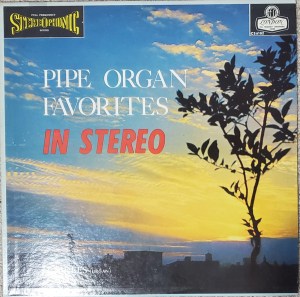
Handel, Bach, et al. / Pipe Organ Favorites / Rees

More Bach

Side two of this exceptionally quiet London Blueback (CS 6102) has the Super Hot sound we love, with tons of deep bass and plenty of top end air.

It’s also incredibly transparent — you can really feel the space and appreciate just how big the church must be.

Side one is not quite as good, earning a single plus Hot Stamper grade (A+).

[UPDATE: We no longer sell records with the A+ grade.]

It’s rich, smooth and big like side two, but not quite as transparent and not extending low and high the way side two does.

This album comprises a number of quite well known pieces by Bach, Handel and Elgar, so if you already have a plenty of organ recordings you probably don’t need this one. If this is your first it’s a very good place to start! If your system plays deep bass well, so much the better. 

(more…)

Bach / Organ Music Volume 2 – Size and Space Are Key

Hot Stamper Pressings of the Music of J.S. Bach Available Now

Some audiophiles buy organ records to show off their subwoofers. Exceptional pressings of exceptional recordings such as this one will allow you to do that, but the best of them have musical qualities far beyond simple demonstrations of bass fundamentals. Carl Weinrich understands this music perfectly and makes it come alive in a way I’ve rarely heard by other performers.

For those of you who think technology marches on — which of course it does in some ways — this 1963 recording shows that the RCA engineers were capable of capturing the authentic sound of the instrument with the vintage tube equipment available to them. In my opinion they could do it better back in those days.

Musically speaking there aren’t many organists in Carl Weinrich’s class. The only other Bach organ records of this caliber that we know of are the two volumes that Karl Richter recorded for Decca in the mid-’50s. You can’t go wrong with any of them. At least one belongs in any serious audiophile’s collection.

Size and Space

One of the qualities that we don’t talk about on the site nearly enough is the SIZE of the record’s presentation. Some copies of the album just sound small — they don’t extend all the way to the outside edges of the speakers, and they don’t seem to take up all the space from the floor to the ceiling. In addition, the sound can often be recessed, with a lack of presence and immediacy in the center.

Other copies — my notes for these copies often read “BIG and BOLD” — create a huge soundfield. They’re not brighter, they’re not more aggressive, they’re not hyped-up in any way, they’re just bigger and clearer.

We often have to go back and downgrade the copies that we were initially impressed with in light of such a standout pressing. Who knew the recording could be that huge, spacious and three dimensional? We sure didn’t, not until we played the copy that had those qualities, and that copy might have been number 8 or 9 in the rotation.

Think about it: if you had only seven copies, you might not have stumbled upon the copy that sounded so exceptionally open and clear. And how many of even the most dedicated audiophiles would have more than one of two clean vintage pressings with which to do a shootout? These kinds of records are expensive and hard to come by in good shape. Believe us, we know whereof we speak when it comes to getting hold of vintage Living Stereo albums.

When you hear a copy do what this copy can, it’s an entirely different – and dare I say unforgettable — listening experience.

(more…)

Vivaldi / Bach / Guitar Concertos / Yepes / Alonso

More of the Music of Antonio Vivaldi (1678-1741)

  • This wonderful classical guitar recording makes its Hot Stamper debut here with Shootout Winning Triple plus (A+++) sound or close to it – exceptionally quiet vinyl too
  • The sound here is glorious, brimming with the wonderful qualities that make listening to classical music in analog so involving
  • The orchestra sounds rich and sweet, yet the guitar is clear, present and appropriately placed relative to the surrounding ensemble
  • As is to be expected from the Decca engineers in 1959, the sound is so relaxed and correct that you immediately find yourself simply enjoying the performances of these two well-known pieces, which is entirely the point, although we sometimes forget the purpose of all our audiophile rigmarole

(more…)

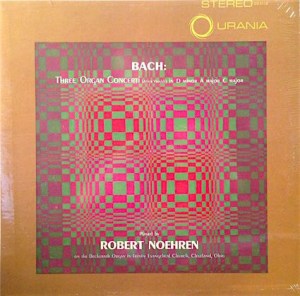
Bach / Three Organ Concerti After Vivaldi / Noehren

  • This rare Urania recording has superb sound on both sides
  • Both sides are rich and Tubey Magical, yet clear and transparent
  • This is the right sound for these well known works for the organ
  • The performance is lively; Noehren plays these pieces with gusto

A wonderful recording of Bach concerti for the organ. Very natural sound from this vintage recording.

Side One

A+++, hard to fault really.

Side Two

A+++, with a big and very solid bottom end. (more…)

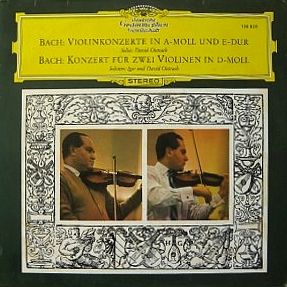
Bach / Violin Concertos / Igor and David Oistrakh – Reviewed in 2008

More of the music of J.S. Bach (1685-1750)

This Minty looking Deutsche Grammophon LP has rich, smooth sound. We didn’t have any other copies to compare it to, but we’ve played enough DG LPs around here to know that the average DG record is nothing to get excited about.

Nowadays we would not be able to sell a record such as this.

Without a proper cleaning and shootout, no record can go up on the site.

It’s the only way we know of to guarantee that the quality would be superior to whatever pressing you have or have heard.

(more…)

The Jacques Loussier Trio – Brandenburg Concerto No. 5

  • This jazzy, innovative interpretation of three of Bach’s most famous works boasts Shootout Winning Triple Plus (A+++) sound throughout – exceptionally quiet vinyl too
  • Baroque genius meets jazz pioneer in this unique confluence of musical conventions
  • Full-bodied and warm, exactly the way you want your vintage analog to sound – the piano is surprisingly real here, solid and dynamic
  • Born from his love of classical works and improvisation, Loussier “loved to play the music, but add my own notes, expanding the harmonies and playing around with that music,” and the results should be interesting to fans of jazz and classical music alike

(more…)