Month: February 2021

Ramping Up the Horsepower of The Cars Like Crazy

More of the Music of The Cars

The best copies must have one key ingredient that we’ve discovered is absolutely essential if this groundbreaking New Wave album is to come to life — a huge, spacious soundstage.

Some copies are huge; others, not so much. The effect of these size differentials is ENORMOUS. The power of the music ramps up like crazy — how could this recording possibly be this BIG and POWERFUL? How did it achieve this kind of scale? You may need twenty copies to find one like this, which begs the question: why don’t the other 19 sound the way this one does? The sound we heard has to be on the master tape in some sense, doesn’t it? Mastering clearly contributes to the sound, but can it really be a factor of this magnitude?
(more…)

Tom Petty – Tom Petty and the Heartbreakers

More Tom Petty

  • You’ll find outstanding Double Plus (A++) sound from first note to last on this superb copy of the Tom and the band’s debut album – exceptionally quiet vinyl too
  • The sound is present and punchy with excellent bass, freedom from grain and real rockin’ energy
  • 4 1/2 stars: “Petty & the Heartbreakers feel underground on this album, at least to the extent that power pop was underground in 1976… the highlights — ‘Rockin’ Around (With You),’ ‘Hometown Blues,’ ‘The Wild One, Forever,’ the AOR staples ‘Breakdown’ and ‘American Girl’ — still illustrate how refreshing Petty & the Heartbreakers sounded in 1976.”

This is the classic first album, with two of their best songs: Breakdown and American Girl. It’s straight ahead rock and roll, with sonics to match. This is not purely an audiophile album. But when you find a copy with Hot Stampers, the elements start to work together, and the good far outweighs the bad. If somebody tried to EQ this album differently, they’d probably end up taking away some of the Raw Rock Energy. (more…)
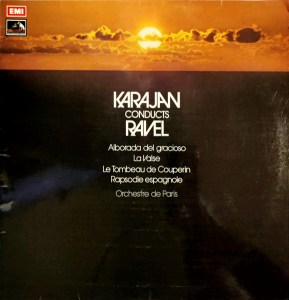
Ravel / Karajan Conducts Ravel / Orchestre de Paris

EXCELLENT SOUND!

I recently purchased a large number of EMI classical pressings from the ’70s, many of which had disappointing sonics. Without paying any attention to this particular record, I threw it on and was pleasantly surprised — it really sounded good! Checking the back of the cover (the old fold-over flap kind) I noted that this recording was from 1972 — of course it sounds great! EMI from that period is often AMAZING. It’s only later, when they got into quadraphonic, that their sound becomes vague, diffuse, hard and even sour. Some of the EMI records on the TAS List can sound that way, which is a real scandal in my opinion.

As for the performances, they are wonderful. This is not a German orchestra. The French know how to play their own music!

This record includes alborada de gracioso, rapsodie espagnole, valses nobles et sentimentales and more.


This is an Older Classical/Orchestral Review

Most of the older reviews you see are for records that did not go through the shootout process, the revolutionary approach to finding better sounding pressings we started developing in the early 2000s and have since turned into a veritable science.

We found the records you see in these older listings by cleaning and playing a pressing or two of the album, which we then described and priced based on how good the sound and surfaces were. (For out Hot Stamper listings, the Sonic Grades and Vinyl Playgrades are listed separately.)

We were often wrong back in those days, something we have no reason to hide. Audio equipment and record cleaning technologies have come a long way since those darker days, a subject we discuss here.

Currently, 99% (or more!) of the records we sell are cleaned, then auditioned under rigorously controlled conditions, up against a number of other pressings. We award them sonic grades, and then condition check them for surface noise.

As you may imagine, this approach requires a great deal of time, effort and skill, which is why we currently have a highly trained staff of about ten. No individual or business without the aid of such a committed group could possibly dig as deep into the sound of records as we have, and it is unlikely that anyone besides us could ever come along to do the kind of work we do.

The term “Hot Stampers” gets thrown around a lot these days, but to us it means only one thing: a record that has been through the shootout process and found to be of exceptionally high quality.

The result of our labor is the hundreds of titles seen here, every one of which is unique and guaranteed to be the best sounding copy of the album you have ever heard or you get your money back.

(more…)

Benny Golson – Groovin’ with Golson

More Benny Golson

More Recordings by Rudy Van Gelder

  • Benny Golson makes his debut on the site with this STUNNING pressing of his 1959 release
  • These sides show off Rudy Van Gelder’s engineering chops to full effect – they’re big, full-bodied and lively, with good studio space around all the players
  • “In this ’59 session, he stretches out on some simple blues patterns and one standard ballad. It’s all done at a swinging tempo that allows Fuller to shine on trombone with near perfect solos; the underrated Ray Bryant adds his impeccable piano touch (he’s as great as Kelly or Clark); Paul Chambers was never better on bass than here, both as accompanist and soloist; and the irrepressible drummer, Art Blakey, makes the whole session sparkle. Backed by this band, Golson is as smooth as butter in tone, and as dazzling in his virtuosity as any tenor player of the times.”

(more…)

Bola Sete – Tour De Force

More Bola Sete

More Jazz Recordings Featuring the Guitar

  • Bola Sete’s superb 1963 release makes its Hot Stamper debut here with Shootout Winning Triple Plus (A+++) sound from first note to last
  • Exceptionally spacious and three-dimensional, as well as relaxed and full-bodied sound that blew away every other copy we played
  • A distinguished member of the Better Records Jazz Hall of Fame and my favorite Latin jazz guitar record of all time
  • 4 1/2 stars: “[Tour de Force] tilts a little to the mellower, more sentimental side than more driving sessions such as the one he did the previous year for Bossa Nova. It’s still quality by-the-fire jazz bossa nova music, Sete’s playing a lesson in both skill and discreet economy.”

This pressing is tonally correct from top to bottom. As the old saying goes, it wasn’t broke so don’t try to fix it. Aficionados of the guitar or Latin music will find this record very satisfying in all respects.

(more…)

Marty Robbins – More Gunfighter Ballads And Trail Songs

More Marty Robbins

  • This superb follow up to Marty’s 1959 release arrives on the site with outstanding Double Plus (A++) sound or BETTER from start to finish – exceptionally quiet vinyl too
  • These sides are doing most everything right — they’re full-bodied, clear, and solid, with the Tubey Magical Midrange that can only be found on recordings from this era
  • 4 1/2 stars: ” Robbins’ originals are authored in an authentically vintage style, interspersed with public domain titles that are the real article, some established works by Bob Nolan of the Sons of the Pioneers, and a handful of new compositions (notably by Jim Glaser).”

(more…)

Reviewers Weigh In on The Beatles in 1964 – Who Knew the Band Was This Awful?

“The Beatles are not merely awful, they are god awful. They are so unbelievably horrible, so appallingly unmusical, so dogmatically insensitive to the magic of the art that they qualify as crowned-heads of anti-music.”
—William F. Buckley, Jr. , Boston Globe, Sept. 13, 1964

“Visually they are a nightmare…musically they are a near disaster…their lyrics are a catastrophe.”

—Newsweek, Feb 24, 1964

“The Beatles vocal quality can be described as hoarsely incoherent.”

—Theodore Strongin , New York Times, Feb. 19, 1964

“The Beatles must be a huge joke, a whacky gag, a giant put on.”

—Donald Freeman, Chicago Tribune, Feb. 19, 1964

“Just thinking about the Beatles seems to induce mental disturbance.”

—George Dixon, Washington Post, Feb 13, 1964

“Not even their mothers would claim that they sing well.”

—Los Angeles Times, 1964

A Very Good Sounding Record from Perry Como on Living Stereo

Living Stereo Titles Available Now

A very good sounding Living Stereo record from 1961, engineered by Bob Simpson. One problem. Where are you going to find enough clean copies with which to do the shootout and, more importantly, who’s going to buy them?

If you see one locally in clean condition and you like Perry Como, pick it up and give it a listen. We liked the copy of LSP 2390 we played.

(more…)

British Band Classics Vol. 2 – The First Classical Record I Bought as an Audiophile

Hot Stamper Mercury Pressings Available Now

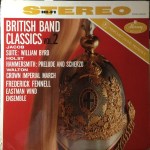
British Band Classics Volume Two was the first Mercury classical LP I ever bought. After hearing it at an audiophile friend’s house I went down to Tower Records and found one in the bin. I think the price was $3.99 for the Golden Import, the same pressing you see pictured, which of course was all that was available as the real Mercury pressings we long out of print.

That was what I had heard, so I had no idea what the original even looked like, and of course I had no idea that the original sounded dramatically better, or that one day I would be selling original Mercury pressings like it for many hundreds of dollars.

This was the mid-70s, a time when you could walk into a record store and buy new records, not long before HP would create a feeding frenzy for vintage Mercs and other Golden Age recordings.

As I’m writing this, I can picture myself in the store. I can still remember that the clerk who helped me find the record commented that I should have come in the week before when the record was on sale for $1 off. I certainly feel like I got my money’s worth that day. This album went on to become one of my personal treasures. I used to marvel at the way the wind instruments actually sounded like the pipes of an organ. (I wasn’t really sure at first that there wasn’t an organ playing somewhere on the record. I didn’t know much about classical music then. )

When I went to England a number of years ago I attended a wind band concert in the park not far from Buckingham Palace. Out in the open the sound was very sweet but dull — the high frequencies dissipate in the open air. It was one of my early lessons in audio. Live sound is not always what it’s cracked up to be, and recorded sound can be amazing — on the right stereo with the right pressing of the right recording.

Much of the credit for the sound on this album must go to Fennell. I’ve been told that he was a stickler for making sure everyone was perfectly in tune and playing correctly within the ensemble. That’s exactly what you hear when you play a record like this — it’s practically sonic perfection.

Also, if you ever see a clean copy of Vol. 1, which is only available in Mono, pick it up. If it’s cut right, it is out of this world.

(more…)

Nat “King” Cole – Where Did Everyone Go?

More Nat “King” Cole

  • With two seriously good Double Plus (A++) sides, this early Capitol Rainbow Label stereo pressing will be very hard to beat – fairly quiet vinyl too
  • With especially rich, intimate and natural vocal reproduction, this side one was close to the best we played of Nat’s wonderful “songs of love and loss”
  • If all you know are the weirdly unnatural remixes DCC did (or the dreadful Analogue Productions pressings), this LP will be nothing less than a revelation
  • “His rich and cozy baritone carries the ache of “Am I Blue?” and the slinky “I Keep Goin’ Back to Joe’s” into an understated, almost plaintive blues. Here he perfectly demonstrates a boundless capacity as a melodic interpreter of song.”
  • The early mono pressing we played was crude, gritty and dark, a finding we considered unsurprising since so many of the mono pressings from this era are just awful, so we say skip the mono.
  • (For records that we think sound best in mono, click here.)

Where Did Everyone Go? is the third and final collaboration between Gordon Jenkins and Nat King Cole, and like the first two, we think it belongs in any audiophile record collection worthy of the name. And if you have any horrid Heavy Vinyl LP of Nat King Cole’s music (the only one found passable was the one done on S&P), now is the time to play them against your new Hot Stamper pressing, recognize their manifold shortcomings, and get them out of your collection and into the hands of the Heavy Vinyl True Believers.

One of the key elements we noticed on the best of the best was the relaxed quality of Nat’s performance. He seems to sings so effortlessly (even more effortlessly than usual!) on the better sounding pressings. On other pressings that casual quality is not nearly as evident.

Warmth and sweetness were also important, the distinctive and unmistakable hallmarks of vintage All Tube Analog. These qualities combined to make the music on each of these sides as thoroughly involving and enchanting as practically any album of its kind we have ever offered. (more…)