Month: April 2018

Highway 61 Revisited – Not So Good on Sundazed in Mono

More of the Music of Bob Dylan

Sonic Grade: D

I don’t think mono works for this album, so we never carried this pressing, and we certainly would not have recommended it back in the days when we were selling Heavy Vinyl (before 2007).

To see our current selection of Hot Stamper pressings that sound better in mono, click here.

To see our current selection of Hot Stamper pressings that sound better in stereo, click here.

The Doors – Energy and Raw Power Are Key

More of the Music of The Doors

Reviews and Commentaries for The Doors’ Debut

Reviews and Commentaries for the Music of The Doors

What to listen for you ask? ENERGY and RAW POWER. Few audiophiles have any idea how well recorded this album is, simply because most pressings don’t do a very good job of encoding the life of the master tape onto the vinyl of the day, regardless of whether that day is in 1967 or 2017.

The first Doors album is without a doubt the punchiest, liveliest, most powerful recording in the entire Doors catalog.

Huh? I’m guessing this statement does not comport well with your own experience of the album, and there’s a good reason for that: not many copies of the album provide strong evidence for any of the above qualities.

Most pressings are opaque, flat, thin, veiled, compressed, lifeless and sound exactly the way so many old rock records sound: like some old rock record. (more…)

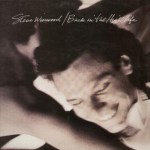
Steve Winwood / Back In The High Life – Richness or Clarity?

On some of the copies we played richness and warmth seemed to have been sacrificed for the sake of greater clarity. That’s never been our sound, one of the reasons we do relatively few albums from the ’80s, and we noticed that on the copies with that tonal balance it was much more difficult to become involved in the music.

The richer, warmer, smoother, more balanced copies presented no such problem. Their sound transported us into the world of music Winwood had created in these songs.

If you clean and play enough copies you too might get lucky and find a copy that sounds as good as this one, where the obvious analog qualities are much more pronounced, and neither clarity or space is compromised.

Of course you might. We say it all over the site: it ain’t a magic trick to find a copy of Back In The High Life that sounds as good as this one does. All you need is a reliable source for large numbers of British pressings, the right cleaning techniques, and the time to painstakingly shoot out your copies one by one. We recommend scheduling the better part of a day. It’s how we found this outstanding pressing, and it’s how we found every other title you see on our site.

We find great sounding records like this every day, and we do it the only way it can be done, the old fashioned way: by working at it.

Brit Vs Domestic

It’s no contest. The British early pressings are the only way to go. The domestic pressings are clearly made from dubs and sound dull, smeary and small.

Spencer & Kirwan, Lost Guitar Heroes

More of the Music of Fleetwood Mac

Kiln House is one of the all-time great Fleetwood Mac albums. It’s the first album they recorded after Peter Green left. With Green gone Jeremy Spencer’s influence came to the fore. Apparently he was quite a fan of Buddy Holly. His songs are excellent: straightforward and unerringly melodic.

The co-leader for Kiln House is Danny Kirwan, and he rocks the hell out of this album. Three of the best songs Fleetwood Mac ever did, regardless of incarnation, are here: Tell Me All The Things You Do, Station Man and Jewel Eyed Judy, all written by Kirwan (with the help of others). His guitar work on these three songs is blistering.

Any Fleetwood Mac greatest hits collection would be a joke without these tracks. Of course they are consistently missing from all such compilations, at least the ones with which I am familiar. The sad fact is that few people miss them because few people have ever heard them.

The closest thing I can think of to the kind of music the new Mac plays is moody rock of the middle-period Beatles. Kiln House is similar to Beatles ’65 in its dual concerns with vintage rock ‘n’ roll and muted, romantic pieces. Jeremy Spencer took care of the former area, while Danny Kirwan extended the style best represented by McCartney’s “I’ll Follow the Sun.”

(more…)

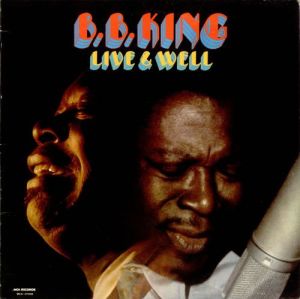
B.B. King – Live & Well

More B.B. King

More Electric Blues


  • With two Triple Plus (A+++) shootout winning sides, this original Bluesway pressing from 1969 simply could not be beat
  • Surprisingly dynamic, with great energy, this copy brought BB King’s music to life in our listening room like no other could
  • This copy had the Tubes and the Big Bass that this music needs to work it’s Electric Blues Magic from The Master himself
  • “…a worthy recording on its own merits, divided evenly between live and studio material. King’s always recorded well as a live act, and it’s the concert tracks that shine brightest…”

Some of the Bluesway pressings we’ve auditioned recently have had exceptionally big, rich, lively sound, and that’s the way we like our music to sound.

There are plenty of dogs in the King canon, especially in the ’70s, so you have to be somewhat careful with the man’s recordings, but good titles in the ’60s with excellent sound can still be found if you’re willing to do the work (or you’re willing to let us do it for you). (more…)

Hokey Pokey – Album Background

More of the Music of Richard Thompson

This is one of R&L Thompson’s best albums, their second release, following the luminous I Want to See the Bright Lights Shine from a year earlier. Rich and full-bodied, with big bass and gobs of studio ambience, this is the way this music was meant to be heard.

Wikipedia on Hokey Pokey

Hokey Pokey is the second album by the British duo of singer Linda and singer/songwriter/guitarist Richard Thompson. It was recorded in the autumn of 1974 and released in 1975.

Listeners keen to try to find connections between the albums by the Thompsons and their personal lives may be confused by the delays between writing, recording and release of the early albums. I Want to See the Bright Lights Tonight was conceived and recorded prior to the Thompsons’ embracing of Islam, but the album’s release was substantially delayed. By the time that album was released the Thompsons were living in an Islamic commune in London.

In the meantime the Thompsons had toured as a trio with Fairport Convention guitarist Simon Nicol. Nicol recalls that period: (in Patrick Humphries’ biography of Richard Thompson)

We did the folk clubs as a trio … It was just after they got married, and it was lovely. I look back on that period with great affection … It was really powerful. You could hear a pin drop at most of those gigs. Rapt attention. Two acoustic guitars, and the bass pedals went through a little backline combo amp, we’d use house microphones … It was stuff from Bright Lights … and Hokey Pokey, in the process of creation, Hank Williams’ songs …

So much of the material on the Hokey Pokey album was written sometime before the album was recorded and even predates the conversion to Islam. To add to the confusion the release of the eventual album was again delayed and so the song and the themes of the album lagged behind the development of the Thompsons’s personal lives.

(more…)

Every Good Boy Deserves Favour on MoFi Anadisc

More of the Music of The Moody Blues

Sonic Grade: F

Pure Anadisc murky mud, like all the Moody Blues records MoFi remastered and ruined in the ’90s with their misbegotten foray back into the world of vinyl. By 1999 they were bankrupt and deservedly so.

Their records were completely worthless to those of us who play LPs and want to hear them sound good but, unsurprisingly, a quick search on ebay indicates that they’re still worth money to those who collect the kind of audiophile trash this label put out.

Folks, seriously, you really have to work at it to find pressings of the Moody Blues albums that sound worse than the ones MoFi did in the 90s. To be honest, we really don’t know of any.

Which means that, as far as we’re concerned, their pressing of Every Good Boy Deserves Favour is the worst version of the album ever made.

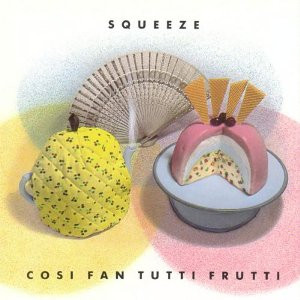
Squeeze – Cosi Fan Tutti Frutti

  • This British original earned excellent sonic grades of Double Plus (A++) on both sides – the band sounds great here
  • This has long been a favorite album of mine, a desert island disc if you will, with some of the most powerfully produced, intelligently written and passionately performed songs in the entire Squeeze canon
  • The domestic pressings are obviously made from dubs, and only the best of the Brits have sound even approaching this copy 
  • “”By Your Side,” “I Learnt How to Pray,” and “Last Time Forever” are all darker tunes than just about any Squeeze had done so far but they carry an emotional punch.” Boy, do they

If you’re a fan of Elvis Costello, Graham Parker, Nick Lowe, Joe Jackson and even quite a few other lesser-knowns from this era, Squeeze is the band for you. I put them right up there with Elvis Costello and Peter Gabriel in the pantheon of Best British Pop Music of All Time.

The Sound

There’s plenty of Tubey Magical richness and smoothness on the best British pressings — such as this one — qualities the domestic pressings are sorely lacking. If you want to hear this music right, on vinyl it’s British or nothing, and with one of our Hot Stamper pressings it’s British and everything — everything that’s good about this recording is captured on these sides. (more…)

An Interview with Martin Barre

More of the Music of Jethro Tull

Reviews and Commentaries for Aqualung

(No, that’s not him pictured.)

Martin Barre’s Guitar Wizardry

Clarity and resolution are the key to getting the most out of this album. How about all the fuzz on Barre’s fuzzed out guitar on the song Aqualung? Sure, there’s guitar fuzz on the typical pressing but there’s SO MUCH MORE on the truly elite copies. When you hear it right, the sound of that guitar makes you really sit up and take notice of how amazing Barre’s solos are. (The guy is criminally underrated as both an innovator and technically accomplished guitarist.) The distortion is perfection and so is the playing.

Highlights from an Interview with Premiere Guitar  in 2011

Max Mobley

You have very pure tones on your recorded work. Do you use much processing or EQ in the studio?

No, I don’t use any EQ. I only want the sound of the guitar coming out of the amplifier—nothing else. When I go to any studio, I insist the EQ is either turned off or set to null.

The tone on your solo work, while it doesn’t sound processed, is quite different from your tone with Jethro Tull.

Well, in Jethro Tull, I get one or two hours and that’s it. If I haven’t got it by then, then my solo is going to be a flute solo. On my solo albums, I have the luxury of spending as much time as I want to experiment with different guitars, different sounds, and mics. It’s a different process and there is no pressure. With Jethro Tull, there’s always somebody waiting to record their part, so there is a bit of pressure on you. I don’t spend a lot of time doing guitar parts, because I want them to be fresh. But I think that if something doesn’t work in one or two takes, that bit of music doesn’t work or you’ve got to completely rethink what you are doing. You can’t just keep bashing away at the same idea.

You used a 1958 Les Paul Junior on Aqualung. Why that guitar?

We did a tour with Mountain. Back then, bands weren’t particularly friendly with one another, and Mountain was the first band that we really became friends with. I just loved Leslie West’s playing and they truly were a great “feel” band with the way they fed off each other live. He’s probably the only guitarist who has influenced me directly. He played a Les Paul Junior, so that’s why I bought mine.

(more…)
Milt Jackson & John Coltrane on Killer ’70s Reissue Vinyl

  • Stunning sound on this stereo pressing with both sides rating close to our Shootout Winner, just shy of Triple Plus (A++ to A+++)
  • One of Tom Dowd’s many outstanding recordings of John Coltrane at the height of his powers – the sound is to die for
  • Exceptionally quiet on both sides for a vintage jazz album such as this – it actually plays a true Mint Minus
  • 5 stars: “Vibraphonist Milt Jackson and tenor saxophonist John Coltrane make for a surprisingly complementary team on this 1959 studio session, their only joint recording.”

If all you have ever played is an original pressing or a modern reissue, you are in for a treat — this copy is going to murder them.

We found all of this out the hard way, by having some originals and some of the “wrong” reissues in our shootout. Of course, we didn’t know they were not going to be especially good sounding until we played them, but it didn’t take long to recognize there was one stamper and one stamper only that had the sonic goods. It was simply no contest. And it was not an original pressing.

Needless to say, this record has that stamper. (more…)