4-2018

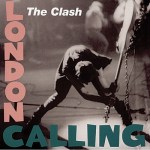
London Calling – A Killer Bill Price Recording

Hot Stamper Pressings of the Music of The Clash Available Now

What sets this album apart sonically is The Clash’s use of reggae and dub influences. You can really hear it when you tune in to the bottom end. Your average late-70s punk record won’t have this kind of rich and meaty bass, that’s for sure.

Drop the needle on The Guns Of Brixton (last track on side two) to hear exactly what I’m talking about. On a Hot Stamper copy played at the correct levels (read: loud) the effect is positively hypnotic.

Nobody in 1979 would have accused The Clash of being an audiophile-friendly band, but the best pressings will make you think twice about that.

Bill Price engineered and, as we never tire of saying about recordings with the potential to sound as good as this one does, he knocked it out of the park. The best sounding record from 1979? Probably not, but one of the best for sure.

1979

1979 sure was an interesting year for pop/rock music.

The Wall, Breakfast in America, London Calling, Off the Wall, Get the Knack, Damn the Torpedoes, Armed Forces, Spirits Having Flown, Reggatta de Blanc, Fear of Music, Tusk, The B-52s, Lodger, Rust Never Sleeps, Rickie Lee Jones, Candy-O — the variety is remarkable.

Even more remarkable is the number of albums recorded in 79 that sound fresh and engaging to this day, more than 40 years after they were released. I could sit down in front of my speakers today and play any one of them all the way through. Try that with your ten favorite albums from 1989, 1999, 2009 or 2019 (assuming you can find ten. I sure couldn’t). (more…)

The Doors – Energy and Raw Power Are Key

More of the Music of The Doors

Reviews and Commentaries for The Doors’ Debut

Reviews and Commentaries for the Music of The Doors

What to listen for you ask? ENERGY and RAW POWER. Few audiophiles have any idea how well recorded this album is, simply because most pressings don’t do a very good job of encoding the life of the master tape onto the vinyl of the day, regardless of whether that day is in 1967 or 2017.

The first Doors album is without a doubt the punchiest, liveliest, most powerful recording in the entire Doors catalog.

Huh? I’m guessing this statement does not comport well with your own experience of the album, and there’s a good reason for that: not many copies of the album provide strong evidence for any of the above qualities.

Most pressings are opaque, flat, thin, veiled, compressed, lifeless and sound exactly the way so many old rock records sound: like some old rock record. (more…)

Spencer & Kirwan, Lost Guitar Heroes

More of the Music of Fleetwood Mac

Kiln House is one of the all-time great Fleetwood Mac albums. It’s the first album they recorded after Peter Green left. With Green gone Jeremy Spencer’s influence came to the fore. Apparently he was quite a fan of Buddy Holly. His songs are excellent: straightforward and unerringly melodic.

The co-leader for Kiln House is Danny Kirwan, and he rocks the hell out of this album. Three of the best songs Fleetwood Mac ever did, regardless of incarnation, are here: Tell Me All The Things You Do, Station Man and Jewel Eyed Judy, all written by Kirwan (with the help of others). His guitar work on these three songs is blistering.

Any Fleetwood Mac greatest hits collection would be a joke without these tracks. Of course they are consistently missing from all such compilations, at least the ones with which I am familiar. The sad fact is that few people miss them because few people have ever heard them.

The closest thing I can think of to the kind of music the new Mac plays is moody rock of the middle-period Beatles. Kiln House is similar to Beatles ’65 in its dual concerns with vintage rock ‘n’ roll and muted, romantic pieces. Jeremy Spencer took care of the former area, while Danny Kirwan extended the style best represented by McCartney’s “I’ll Follow the Sun.”

(more…)

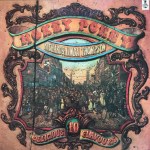
Hokey Pokey – Album Background

More of the Music of Richard Thompson

This is one of R&L Thompson’s best albums, their second release, following the luminous I Want to See the Bright Lights Shine from a year earlier. Rich and full-bodied, with big bass and gobs of studio ambience, this is the way this music was meant to be heard.

Wikipedia on Hokey Pokey

Hokey Pokey is the second album by the British duo of singer Linda and singer/songwriter/guitarist Richard Thompson. It was recorded in the autumn of 1974 and released in 1975.

Listeners keen to try to find connections between the albums by the Thompsons and their personal lives may be confused by the delays between writing, recording and release of the early albums. I Want to See the Bright Lights Tonight was conceived and recorded prior to the Thompsons’ embracing of Islam, but the album’s release was substantially delayed. By the time that album was released the Thompsons were living in an Islamic commune in London.

In the meantime the Thompsons had toured as a trio with Fairport Convention guitarist Simon Nicol. Nicol recalls that period: (in Patrick Humphries’ biography of Richard Thompson)

We did the folk clubs as a trio … It was just after they got married, and it was lovely. I look back on that period with great affection … It was really powerful. You could hear a pin drop at most of those gigs. Rapt attention. Two acoustic guitars, and the bass pedals went through a little backline combo amp, we’d use house microphones … It was stuff from Bright Lights … and Hokey Pokey, in the process of creation, Hank Williams’ songs …

So much of the material on the Hokey Pokey album was written sometime before the album was recorded and even predates the conversion to Islam. To add to the confusion the release of the eventual album was again delayed and so the song and the themes of the album lagged behind the development of the Thompsons’s personal lives.

(more…)

An Interview with Martin Barre

More of the Music of Jethro Tull

Reviews and Commentaries for Aqualung

(No, that’s not him pictured.)

Martin Barre’s Guitar Wizardry

Clarity and resolution are the key to getting the most out of this album. How about all the fuzz on Barre’s fuzzed out guitar on the song Aqualung? Sure, there’s guitar fuzz on the typical pressing but there’s SO MUCH MORE on the truly elite copies. When you hear it right, the sound of that guitar makes you really sit up and take notice of how amazing Barre’s solos are. (The guy is criminally underrated as both an innovator and technically accomplished guitarist.) The distortion is perfection and so is the playing.

Highlights from an Interview with Premiere Guitar  in 2011

Max Mobley

You have very pure tones on your recorded work. Do you use much processing or EQ in the studio?

No, I don’t use any EQ. I only want the sound of the guitar coming out of the amplifier—nothing else. When I go to any studio, I insist the EQ is either turned off or set to null.

The tone on your solo work, while it doesn’t sound processed, is quite different from your tone with Jethro Tull.

Well, in Jethro Tull, I get one or two hours and that’s it. If I haven’t got it by then, then my solo is going to be a flute solo. On my solo albums, I have the luxury of spending as much time as I want to experiment with different guitars, different sounds, and mics. It’s a different process and there is no pressure. With Jethro Tull, there’s always somebody waiting to record their part, so there is a bit of pressure on you. I don’t spend a lot of time doing guitar parts, because I want them to be fresh. But I think that if something doesn’t work in one or two takes, that bit of music doesn’t work or you’ve got to completely rethink what you are doing. You can’t just keep bashing away at the same idea.

You used a 1958 Les Paul Junior on Aqualung. Why that guitar?

We did a tour with Mountain. Back then, bands weren’t particularly friendly with one another, and Mountain was the first band that we really became friends with. I just loved Leslie West’s playing and they truly were a great “feel” band with the way they fed off each other live. He’s probably the only guitarist who has influenced me directly. He played a Les Paul Junior, so that’s why I bought mine.

(more…)

Counting Down to Ecstasy and Singing Along with My Old School

Hot Stamper Pressings of the Music of Steely Dan Available Now

We’ve found that two songs are especially helpful in challenging your setup and playback: Razor Boy on side one, and My Old School on side two.

Countdown to Ecstasy shares top honors with Katy Lied as the toughest Steely Dan album to reproduce properly.

It’s a positive shame that most copies are such sonic let-downs. They’re often congested, bass-shy, veiled, compressed and grainy. There’s a good reason we don’t do this album but once a year [make that once every two years these days], and it’s not because of a lack of demand. It’s because so many copies are mastered and pressed so poorly.

What to Listen For

Side One: Piano and Vibes

On Razor Boy listen especially to how clear and solid the piano and vibes are underneath the vocals. On the best copies their contributions are easy to follow and really provide support in the lower registers for the vocals above them. If your copy they’re a murky mess don’t be surprised; that’s pretty much the way they sound on most copies. (They’re a good test for the quality of your reproduction from the mid-bass up through the lower midrange.)

Side Two: the Chorus

The female background singers who make up the chorus on My Old School sound different on every copy you play. When they sound right you’ll know it immediately. The copies with clarity and energy always seem to also have a wonderful “sing along” quality that lets the music really come to life. We didn’t hear it happen too often but when it does it’s a THRILL, one you can buy.

(more…)

Listening in Depth to Let It Bleed

Hot Stamper Pressing of the Music of The Rolling Stones Available Now

Glyn Johns is one of the Five Best Rock Engineers who ever lived. Ken Scott, Stephen Barncard, Alan Parsons and a few others are right up there with him of course. We audiophiles are very lucky to have had guys like those around when the Stones were at their peak. 

This copy does not have the typical warned-over, smeared sound I’ve come to expect from bad import pressings of this album, which are the norm, not the exception.

Side One

Gimme Shelter
Love in Vain

One of the best sounding Rolling Stones songs of all time. In previous listings I’ve mentioned how good this song sounds — thanks to Glyn Johns, of course — but on the best Hot Stamper copies it is OUT OF THIS WORLD.

This is our favorite test track for side one. The first minute or so clues you into to everything that’s happening in the sound.

Listen for the amazing immediacy, transparency and sweetly extended harmonics of the guitar in the left channel.

Next, when Watts starts slapping that big fat snare in the right channel, it should sound so real you could reach out and touch it.

If you’re like me, that tubey magical acoustic guitar sound and the rich whomp of the snare should be all the evidence you need that Glyn Johns is one of the Five Best Rock Engineers who ever lived.

Country Honk
Live With Me
Let It Bleed

Side Two

Midnight Rambler
You Got the Silver
Monkey Man

On the best copies this song will have Demo Quality Sound. The piano should have nice weight to it without sounding hard and there should be lots of ambience around the vocals.

You Can’t Always Get What You Want

The intro to this song is a great test for transparency. On a Hot Stamper copy you’ll be able to pick out each voice in the choir. When the music comes in you should hear rich, full-bodied acoustic guitars. On the best pressings they sound every bit as rich, tubey, sweet, delicate and harmonically correct as those found on Tea For the Tillerman, Rubber Soul, Comes a Time or any of the other phenomenal recordings we rave about on the site. (Our Top 100 is full of others if you want to check them out.)

(more…)