weighty-brass

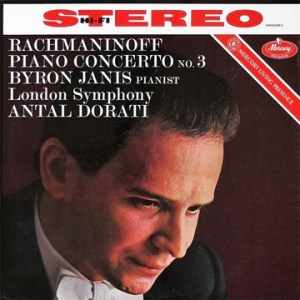
Rachmaninoff – Piano Concerto No. 3 / Janis / Dorati

More of the Music of Sergei Rachmaninoff

  • Outstanding sound for this classic Byron Janis Mercury album, with both TAS-approved sides earning solid Double Plus (A++) grades or BETTER
  • The piano is huge and weighty, the strings rich and highly resolving, and the overall presentation is powerful, balanced, dynamic and exciting like few other piano concerto recordings we have ever had the pleasure to audition
  • Not only is this the consistently best sounding copy we have had to offer in years, but we are happy to report that the vinyl is reasonably quiet for a Mercury stereo pressing of this vintage
  • If you have the system to play a record as big and powerful as this Mercury from 1961, we cannot recommend it any more highly
  • There are about 175 orchestral recordings we’ve awarded the honor of offering the best performances with the highest quality sound, and this record certainly deserve a place on that list.
  • This is one of the two Must Own Mercury piano concerto recordings, the other being SR 90300, which often suffers from inner groove distortion — not to worry, as a matter of grading policy, we check the inner grooves of every record we offer on the site

Not only is the sound amazing — yes, it’s on the TAS Super Disc list, and for good reason: a copy as good as this one really is a Super Disc — but this copy has another vitally important characteristic that most copies of the record do not: no Inner Groove Distortion.

We can’t begin to count the times we have had to return (or toss) a copy of one of these famous Byron Janis records because the piano breakup for the last inch or so of the record was just unbearable. That’s a sound no serious listener could possibly tolerate, yet I would venture to guess that a great many Mercury piano concerto recordings suffer from this kind of groove damage.

Enough about those typically bad copies, let’s talk about how good this one is.

This is an early Mercury Plum label stereo pressing of one of Byron Janis’s most famous performances (along with the Rachmaninoff 1st; it’s also a longtime member of the TAS super disc list).

The sound is rich and natural, with lovely transparency and virtually no smear to the strings, horns or piano. What an amazing recording! What an amazing piece of music.

The recording is explosively dynamic and on this copy, the sound was positively jumping out of the speakers. In addition, the brass and strings are full-bodied, with practically no stridency, an unusual feat the Mercury engineers seem to have accomplished while in Russia.

Big, rich sound can sometimes present problems for piano recordings. You want to hear the percussive qualities of the instrument, but few copies pull off that trick without sounding thin. This one showed us a piano that was both clear and full-bodied.

With huge amounts of hall space, weight and energy, this is Demo Disco quality sound by any standard. Once the needle has dropped you will quickly forget about the sound (and all the money you paid to get it) and simply find yourself in the presence of some of the greatest musicians of their generation, captured on the greatest analog recordings of all time.

(more…)

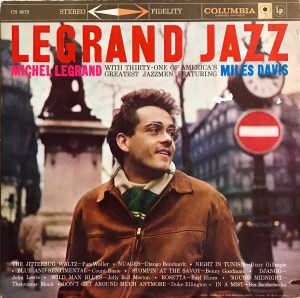
Michel Legrand – Legrand Jazz

More Large Group Jazz Recordings

  • This original 6-Eye Stereo pressing was doing just about everything right, earning solid Double Plus (A++) grades from start to finish
  • Both of these sides are open and spacious with real depth to the soundfield and lots of separation between the various instruments, a very important quality for a recording of a large ensemble recording such as this
  • Rich, solid bass; you-are-there immediacy; energy and drive; instruments that are positively jumping out of the speakers – add it all up and you can see that this copy had the sound we were looking for
  • Legrand rounded up 31 of the greatest jazz players of the 50s, divided them up into three groups, and the result was a landmark 30th Street Studio recording with audiophile sound to die for
  • We’re talking jazz giants: John Coltrane, Miles Davis, Bill Evans, Ben Webster, Herbie Mann, Art Farmer, Donald Byrd, Phil Woods — everybody who was anybody is on this record
  • 4 1/2 stars: “Throughout this superlative album, the arrangements are colorful and unusual, making one wish that Legrand had recorded more jazz albums through the years.”
  • Robert Brook recently played the “award winning” Impex 45 RPM pressing from 2019 (as did we) and wants to know what you think of the sound

This album is more common in mono than stereo, but we found the sound of the mono pressing we played seriously wanting. It’s dramatically smaller and more squawky and crude than even the worst of the stereo pressings we played.

We had a copy we liked years ago, but that was years ago. We don’t have that copy anymore and we don’t have a stereo that sounds the way our old one did either.

The unique voices of each of the jazz giants featured on this landmark recording contributes memorable solos then receeds into the group to provide the structure for the rest of the music. Which is an awkward way of saying everybody does his thing in service to the song and then gets out of the way. “The Jitterbug Waltz,” which opens up side one, is a perfect example: the arrangement is completely original, and within its structure, Miles DavisPhil WoodsJohn Coltrane and others solo beautifully, each taking a turn at the melody. If three minutes into this song you don’t like what you’re hearing, jazz is just not for you.

(more…)

Stravinsky – Les Noces / Symphony Of Psalms / Ansermet

More of the Music of Igor Stravinsky

  • Stravinsky’s Les Noces / Symphony of Psalms appears on the site for only the second time ever, here with bold, dynamic, and Tubey Magical Nearly Triple Plus (A++ to A+++) sound throughout this early London pressing – just shy of our Shootout Winner
  • These sides are doing practically everything right – they’re rich, clear, undistorted, open, spacious, and have depth and transparency to rival the best recordings you may have heard
  • The sonics here have the power to transport you completely, with solid imaging and a real sense of space, qualities that allow us to forget we are in our listening rooms and not in a concert hall

(more…)

Mussorgsky & Ravel – Pictures at an Exhibition

More of the Music of Modest Mussorgsky

  • With two seriously good Double Plus (A++) sides, this British EMI import pressing is doing just about everything right – exceptionally quiet vinyl too
  • Our favorite performance by far, with big, bold and powerful sonics like no other recording we know
  • The brass clarity, the dynamics, the deep bass and the sheer power of the orchestra are almost hard to believe
  • No vintage recording of these works compares with Muti’s – and Stravinsky’s Firebird Suite is an extra special added bonus on side two
  • There are about 150 orchestral recordings we’ve awarded the honor of offering the best performances with the highest quality sound, and this record certainly deserve a place on that list.
  • If you like orchestral spectaculars, have we got amazing sounding records for you

This EMI import pressing gives you the complete Pictures at an Exhibition with a top performance and superb sonics.

As this is my All Time Favorite performance of Pictures, this record naturally comes very highly recommended. Pictures is a piece of music that has been recorded countless times, and I’ve played scores of different recordings, but the only one that truly satisfies is this one, Muti’s 1979 recording with the Philadelphia Orchestra. Much like Previn and the LSO’s performance of The Planets, he finds the music in the work that no one else seems to.

A Must Own Classical Record

This orchestral spectacular should be part of any serious Classical Collection. Other Must Own classical recordings can be found here.

For his 1979 review of the Mussorgsky, Robert Layton in the GRAMOPHONE writes of Muti and The Philadelphia Orchestra :

…what orchestral playing they offer us. The lower strings in ‘Samuel Goldenberg and Schmuyle’ have an extraordinary richness, body and presence, and “Baba Yaga”, which opens the second side, has an unsurpassed virtuosity and attack as well as being of demonstration standard as a recording. The glorious body of tone, the richly glowing colours, the sheer homogeneity of the strings and perfection of the ensemble is a constant source of pleasure.

Of the performance of Stravinsky’s Firebird, Layton writes:

…Muti’s reading is second to none and the orchestral playing is altogether breathtaking. The recording is amazingly lifelike and truthful.

(more…)

Herrmann – The Mysterious Film World of Bernard Herrmann

More of the Music of Bernard Herrmann

  • This vintage pressing of the National Phil’s performance of selections from three of Herrmann’s classic “phantasmagorical” film scores boasts solid Double Plus (A++) grades from first note to last
  • A superb recording with a huge three-dimensional stage, open, clear, extended up top and down low — the sound on this pressing is nothing short of amazing
  • 4 stars: “The sound glitters, some of the brightest and richest audio of its period (attested to by the album’s being part of Decca/London Phase 4 Stereo), and the performances have a dignity and intensity that makes the music — drawn from the key parts of Herrmann’s scores for the Ray Harryhausen-created fantasy films The Three Worlds of GulliverMysterious Island, and Jason and the Argonauts — seem even more serious and profound than it originally did.”
  • If like us you’re a fan of blockbuster orchestral recordings, this is a killer album from 1975 that belongs in your collection.

Side one boasts some wonderful material from Mysterious Island and Jason and the Argonauts. Who else but Herrmann could have orchestrated such phantasmagorical goings on?

The Three Worlds Of Gulliver Suite takes up all of side two. The complete score from which the suite is taken can be found on the original Herrmann album The Three Worlds of Gulliver, a long-time and extremely rare member of the TAS Super Disc List.

This vintage London Phase 4 Stereo pressing has the kind of Tubey Magical Midrange that modern records can barely BEGIN to reproduce. Folks, that sound is gone and it sure isn’t showing signs of coming back. If you love hearing INTO a recording, actually being able to “see” the performers, and feeling as if you are sitting in the studio with the band, this is the record for you. It’s what vintage all analog recordings are known for —this sound.

If you exclusively play modern repressings of vintage recordings, I can say without fear of contradiction that you have never heard this kind of sound on vinyl. Old records have it — not often, and certainly not always — but maybe one out of a hundred new records do, and those are some pretty long odds. (more…)

Chabrier / Orchestral Music – Ansermet (Decca)

More of the Music of Emmanual Chabrier

  • This superb Chabrier album containing one of our two favorite performances of the España Rhapsody boasts INCREDIBLE Shootout Winning Triple Plus (A+++) sound on side two mated with outstanding Double Plus (A++) sound on side one
  • This spectacular Demo Disc recording is big, clear, rich, dynamic, transparent and energetic – HERE is the sound we love
  • All the energy and power of Chabrier’s remarkable orchestration, thanks to the brilliant engineering of Roy Wallace
  • Ansermet’s Chabrier disc has long been a favorite of ours here at Better Records – this copy will show you why

If you want a classical record to TEST your system, if you want a classical record to DEMO your system, you will have a hard time finding a better pressing than this very copy.

Who can resist these sublime orchestral works? To quote an infamous (around here) label, they are an audiophile’s dream come true.

So clear and clean, and spread out on such a huge stage, either one or both of these sides will serve you well as your go-to reference disc for Orchestral Reproduction.

Listen for the waves of sound in Espana — only the best copies bring out the energy and power of Chabrier’s remarkable orchestration.

(more…)

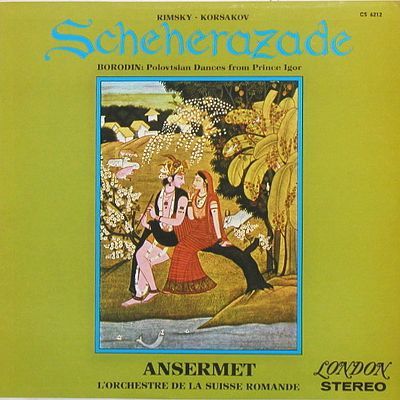
Rimsky-Korsakov / Scheherazade (Early Reissue)

More of the Music of Rimsky-Korsakov

rimskscheh_6212_1610_1389793105

  • Very good sound throughout this vintage London pressing of Ansermet and the Suisse Romande’s superb performance of this dazzlingly symphonic suite, with both sides earning Hot Stamper grades
  • It’s richer, fuller and with more presence than the average copy, and that’s especially true for whatever godawful Heavy Vinyl pressing is currently being foisted on an unsuspecting record buying public
  • This is true of even our lowest-priced, lowest-graded copies – they are guaranteed to sound much better than any pressing you can find on the market today, as well as any pressing you may already own
  • This copy is in fact one of those lowest graded copies – as you can see from the shootout notes below, it’s a bit small and veiled, and maybe dry in places
  • Even with these common shortcomings, we doubt there is any modern pressing that can touch it, and even the best vintage pressings of other recordings of the work will more than likely come up short when played head to head with this very LP
  • We’ve come up with a simple listening test to help our audiophile brethren judge pressings of Scheherazade, especially those woeful iterations of the music on Heavy Vinyl. We hope you will find time to avail yourself of the lessons we’ve learned

We did a monster shootout for this music in 2014, one we had been planning for more than two years. On hand were quite a few copies of the Reiner on RCA; the Ansermet on London (CS 6212, his second stereo recording, from 1961, not the earlier and noticeably poorer sounding recording from in 1959); the Ormandy on Columbia, and a few others we felt had potential.

The only recordings that held up all the way through — the fourth movement being THE Ball Breaker of all time, for both the engineers and musicians — were those by Reiner and Ansermet. This was disappointing considering how much time and money we spent finding, cleaning and playing those ten or so other pressings.

Here it is many years later and we’re capitalizing on what we learned from the first big go around, which is simply this: the Ansermet recording on Decca/London can not only hold its own with the Reiner on RCA, but beat it in virtually every area. The presentation and the sound itself are both more relaxed and natural, even when compared to the best RCA pressings.

The emotional content of the first three movements (all of side one) under Ansermet’s direction are clearly superior. The roller-coaster excitement Reiner and the CSO bring to the fourth movement cannot be faulted, or equaled. In every other way, Ansermet’s performance is the one for me. We did a monster shootout for this music in 2014, one we had been planning for more than two years. On hand were quite a few copies of the Reiner on RCA; the Ansermet on London (CS 6212, his second stereo recording, from 1961, not the earlier and noticeably poorer sounding recording from in 1959); the Ormandy on Columbia, and a few others we felt had potential. (more…)

Rimsky-Korsakov / Scheherazade / Ansermet (Decca)

More of the Music of Rimsky-Korsakov

  • Excellent sound throughout this vintage Decca pressing of Ansermet and the Suisse Romande’s superb performance of this dazzlingly symphonic suite, with both sides earning solid Double Plus (A++) grades or BETTER
  • It’s also remarkably quiet at the high end of Mint Minus Minus, a grade that even our most well-cared-for vintage classical titles have trouble playing at
  • This copy will go head to head with the hottest Reiner pressing and is guaranteed to blow the doors off of it or your money back
  • The top end is natural and sweet – this is the way the solo violin in the left channel is supposed to sound
  • Extraordinary Demo Disc sound – the brass has weight and energy on that powerful first movement like nothing you’ve ever heard in your life )outside of a live performance)
  • This is the first full price Decca pressing we have ever offered with Hot Stampers — most Decca pressings of this title are awful sounding and it took us a long time to figure out how to find the good ones
  • Marks in the vinyl are sometimes the nature of the beast with these early pressings – there simply is no way around them if the superior sound of vintage analog is important to you

We did a monster shootout for this music way back in 2014, one we had been planning for more than two years. On hand were quite a few copies of the Reiner on RCA; the Ansermet on London (CS 6212, his second stereo recording, from 1961, not the earlier and noticeably poorer sounding recording from in 1959); the Ormandy on Columbia, and a few others we felt had potential.

The only recordings that held up all the way through — the fourth movement being the Ball Breaker of all time, for both the engineers and musicians — were those by Reiner and Ansermet. This was disappointing considering how much time and money we spent finding, cleaning and playing those ten or so other pressings.

Here it is over a decade later and we’re capitalizing on what we learned from the first big go around, which is simply this: the Ansermet recording on Decca/London can not only hold its own with the Reiner on RCA, but beat it in virtually every area. The presentation and the sound itself are both more relaxed and natural, even when compared to the best RCA pressings.

The emotional content of the first three movements (all of side one) under Ansermet’s direction are clearly superior. The roller coaster excitement Reiner and the CSO bring to the fourth movement cannot be faulted, or equaled. In every other way, Ansermet’s performance is the one for me.

(more…)

Gershwin – Concerto In F / Cuban Overture / Wild / Fiedler

More of the Music of George Gershwin

  • Both sides of this original Shaded Dog pressing were giving us the big and bold Living Stereo sound we were looking for on these wonderful orchestral pieces, earning solid Double Plus (A++) grades or BETTER
  • It’s also fairly quiet at Mint Minus Minus, a grade that even our most well-cared-for vintage classical titles have trouble playing at
  • If you love the sound of a big bass drum, the Concerto in F is the work for you, and the engineers know how to capture both the bass and the space surrounding it
  • The rich, textured sheen of the strings that Living Stereo made possible in the 50s and early 60s is clearly evident throughout these pieces, something that the Heavy Vinyl crowd will never experience, because that sound just does not exist on modern repressings
  • Everything that is wrong with the low-res Classic reissue – boosted mids, strings lacking in texture and sheen, etc. – is nowhere to be found on these superb sides, overflowing with Living Stereo Tubey Magic from 1962
  • This is yet another Must Own orchestral recording from 1962
  • For a more complete list, the highest quality recordings of piano concertos that we’ve auditioned to date can be found here

(more…)

Herrmann – The Fantasy Film World of Bernard Herrmann

More of the Music of Bernard Herrmann

  • This early British London pressing gives you plenty of blockbuster sound for those who can play a record like this good and loud, here with incredible Nearly Triple Plus (A++ to A+++) sonics on both TAS-approved sides – just shy of our Shootout Winner
  • On the better copies, you will hear the power of the orchestra come to life right in your very own listening room
  • The soundfield is big, open and transparent, with the kind of wall to wall and floor to ceiling spaciousness that may just leave you in awe
  • A superb Phase 4 recording by Arthur Lilley, taking advantage of the legendary acoustics of Kingsway Hall
  • If like us you’re a fan of blockbuster orchestral recordings, this is a killer album from 1974 that belongs in your collection.

The soundfield is big, open and transparent, with the kind of three-dimensionality most orchestral recordings simply fail to reproduce. The brass here is weighty and powerful, and you can really hear the pluck of the strings on the harp.

Taxing the Limits

An orchestral dreadnought such as this requires mastering and pressing of the highest quality. It taxes the limits of LP playback itself, with deep organ notes (listen for the famous Decca rumble accompanying the organ if you have the deep bass reproduction to hear it); incredible dynamics from every area of the stage; masses of strings playing at the top of their registers with abandon; huge drums; powerful brass effects everywhere — every sound an orchestra can produce is found on this record, and then some. (You will hear plenty of sounds that defy description, that’s for sure. Some of the time I can’t even imagine what instrument could possibly make such a sound!)

Harry Pearson put the Decca pressing of this title on his TAS List of Super Discs. (We take issue with that choice below.)

(more…)