vin-jazz-w

We judged these vintage jazz records to have unacceptable sound based solely on the specific pressings we played.

We can’t say that other pressings don’t sound better. We just don’t plan on playing any more copies to find out.

These Two Return to Forever Albums Didn’t Make the Grade

Hot Stamper Pressings of Jazz Rock Fusion Albums Available Now

Pictured are two Return to Forever albums we auditioned at some point in the past and found unimpressive.

Without going into specifics — our notes are long gone at this point — we’ll just say these two albums suffer from weak music, weak sound, or both, and therefore do not deserve a place in most audiophile collections — unless that audiophile happens to be a huge fan of the band.

My guess is that if these two records are sitting in an audiophile’s collection, they have not been played in many years, if ever. If you own either of these two albums, pull them out and play them.

You may find that making more room on your shelves for records you can actually enjoy is easier than you think.

Our Pledge of Service to You, the Discriminating Audiophile 

We play mediocre-to-bad sounding pressings so that you don’t have to, a free service from your record-loving friends at Better Records.

Having the wherewithal to audition so many records puts us in a unique position to help audiophiles looking for higher quality sound. (Or, more accurately, that small subset of audiophiles looking for the highest quality pressings who also have a great deal of disposable income to devote to them.)

Yes, we have the obvious resources that would be needed: the staff and the budget.

More important than either of those, we came up with a new (sort of) and much more successful (definitely) approach.

We’ve learned through years of experimentation that there is no reliable way to predict which pressings will have the best sound for any given album.

The impossibility of predicting the sound of pressings is something that we’ve learned to accept as axiomatic. As a scientifically-oriented person and a born skeptic, this was a concept I was quick to embrace.

The more time I spend in this hobby, the more I realize it is beyond dispute. Like it or not — and, based on what I read on forums and such, there are apparently a goodly number of audiophiles who don’t like it — it is the undeniable reality underlying the nature of vinyl pressings.

With that in mind, finding better sounding pressings of any given recording can be achieved by following these seven steps:

(more…)

These Kelly Blue Reissues from the 70s Are a Real Mess

Hot Stamper Pressings of the Music of Wynton Kelly Available Now

Sometimes the 70s reissues of vintage jazz recordings that were made in the fifties, sometimes released with different covers similar to the one you see pictured, have excellent sound.

We know that for a fact because we’ve played some very good ones.

In the case of Kelly Blue, we felt we were obligated to play a few to make sure we were hearing as wide a range of different pressings as possible. We wanted to be sure we were hearing the best sounding pressings regardless of what era they were pressed in. (We’re very open minded that way.)

Here are our notes for the Black Label Riverside Stereo pressing with “1971” stampers:

  • Thin,
  • Dry,
  • Honky,
  • Veiled.
  • Severe stereo spread. (Hard left and right, unmusical this way, players are disconnected.)
  • Grade: 1+ on both sides

The other copy we had was even worse:

  • NFG on side one, side two never played.

The Riverside originals we’ve played in the past, like a lot of other Riverside originals from the 50s, such as those by Thelonious Monk, were uniformly terrible.

And trying to find one in audiophile playing condition is as easy as it sounds.


We’ve auditioned countless pressings like this one in the 38 years we’ve been in business — buying, cleaning and playing them by the thousands. This is how we find the best sounding vinyl pressings ever made.

Not the ones that should sound the best. The ones that actually do sound the best.

If you’re an audiophile looking for top quality sound on vintage vinyl, we’d be happy to send you the Hot Stamper pressing guaranteed to beat anything and everything you’ve heard, especially if you have any pressing marketed as suitable for an audiophile. Those, with very few exceptions, are rarely better than mediocre, and some of them are just awful, with many of the newest releases being the most awful of them all!

(more…)

Monk’s Music on Riverside 9242 Didn’t Make the Grade

Hot Stamper Pressings of the Music of Thelonious Monk Available Now

The Riverside 9242 pressing of Monk’s Music we played recently was very much not to our liking.

In fact, every copy of this record we have ever played sounded terrible. The early pressings sounded bad and the OJC sounded bad.

We give up. We’re cutting our losses. We love Monk, but why on earth would we keep throwing money down this rathole? Our notes for this copy read:

  • Dry (more records with dry sound can be found here), and
  • Bright (more records with bright sound can be found here),
  • Overall grade: No Good

Some reviewers of the audiophile persuasion prefer to review only records that sound good to them and ignore the rest. We think this does the audiophile community a disservice.

Like Consumer Reports, we like to test things. They test toasters, we test records. We put them through their paces and let the chips fall where they may.

They want to find out if the things they are testing offer the consumer good quality and value.

We want to find out if the records we are testing offer the audiophile good sound and music.

It takes a dedicated group of people and a healthy budget to carry out these kinds of tests in large numbers.

No other record dealers, record reviewers or record collectors could possibly have auditioned more than a small fraction of the records that we’ve played. We’ve been looking for the best sounding pressings of the recordings that have stood the test of time for decades. Now, with a staff of ten or more, we can buy, clean and play records at a scale that would be unimaginable for any single person to attempt.

That puts us in a unique position to help audiophiles looking for the highest quality pressings.

Yes, we have the resources, the staff and the budget. More importantly, we came up with a much scientifically reliable approach.

(more…)

A Disappointing OJC of Swinging With The Mastersounds

Hot Stamper Pressings of Top Quality Jazz Recordings Available Now

UPDATE 2025

We did a shootout for this Mastersounds title many years ago. It didn’t sell very well so we decided to give it a rest for a decade or so.

Recently we got another couple of copies in, including their other album we used to like on OJC, A Date with the Mastersounds, and found none of them to be nearly as impressive as we thought they were back in the day. Some quick notes:

  • A Date with the Mastersounds

Vibes are dry and glassy. Not much Tubey Magic.

  • Swinging With The Mastersounds

Rich but veiled sound. Just OK, not great.

With that said, we still like the music, so if you see one of these pressings for cheap and you like vibes-based jazz from the 50s, pick it up and discover the music of The Mastersounds for yourself.

(more…)

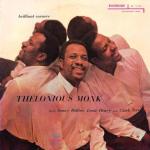
The 2013 OJC of Brilliant Corners Has a Problem Many of Them Do

Hot Stamper Pressings of Top Quality Jazz Recordings Available Now

Brilliant corners on the 2013 OJC pressing is not a bad record. At $20, roughly the price they sell for on Discogs, you are getting a decent LP for your money, which is not the case with a lot of what’s produced these days, the worst of which can be found here.

The sound is nice and meaty, which is all to the good, but where this pressing falls apart is in the area of transparency, as in, it doesn’t have much.

In simple language, it is opaque. (Other pressings with a opacity problem can be found here.)

This is a very common shortcoming of the new OJC pressings. When they manage to get the tonality right — which is about  half the time — they still come across as crude and underwhelming. They require too much effort from the listener to become involved and stay that way.

If you see this OJC pressing in your local record store, and you don’t have a good CD player (a dirty little secret: the standard CD is likely to be better sounding). buy it for cheap, but don’t pay much money for it. You may find that, after a spin or two, playing it is more trouble than it’s worth.

(more…)

How Do You Make a Vintage Jazz Recording Sound Wrong?

Hot Stamper Pressings of Jazz Albums Available Now

How do you make a vintage jazz recording sound wrong?

Easy. Just take out all the Tubey Magic that was captured on the master tape all those years ago by Howard Holzer and Roy DuNann.

You know the kind of Tubey Magic I’m talking about. It’s the trademark sound of every vintage Contemporary pressing ever made. It’s the defining sound of the best jazz recordings from the era. It’s the reason that jazz lovers and record collectors the world over pay big bucks for vintage pressings — because they have the sound of tubes.

When you take away that one quality — just the one, leaving everything else as it should be: the bass, the mids, the highs, the energy, the space, the size, you name it — what you are left with doesn’t sound right.

It no longer sounds the way a jazz record from 1958 would sound.

If you don’t know that sound, it’s possible that this cheap reissue pressing from 1984 might not be as bothersome for you as it was for us. But we’ve played vintage jazz records from the 50s by the hundreds. They never sound like this. The reissues might, but the best early pressings sure don’t.

Maybe This Is Your Sound?

However, if you happen to like the sound of CDs for some reason, something that is frankly hard to imagine but nevertheless seems to be true, this OJC might just be the ticket.

We’ve never liked that sound, and we sure don’t like this pressing.

Other records we’ve played that sounded like CDs to us can be found here.

We’ve only played three releases on the Music Matters label, but all three of them sounded like CDs to us — Green Street, The Magnificent Thad Jones, and Tina Brooks’ True Blue (review coming someday!).

Much of Kevin Gray‘s work has the kind of sound we associate with the compact disc. We don’t understand why everyone doesn’t hear how badly mastered his records are, but we have no trouble recognizing their many faults. They are, to one degree or another:

The OJC pressings of Harold in the Land of Jazz we played were thinner and brighter than even the worst of the 70s LPs we auditioned.

They did not make the cut for our shootout, a shootout we abandoned years ago because the early pressings we liked were just too rare, too noisy and too expensive to justify the cost and effort that would be required to make a shootout a reality.

(more…)

Skip the A3/B2 OJC on Some Like It Hot

Hot Stamper Pressings of the Music of Barney Kessel Available Now

Some Like It Hot badly needed to be made using tubes in the mastering chain, but that didn’t happen.

It’s another case of an OJC with zero Tubey Magic. You might as well be playing the CD. I would bet money it sounds just like this record. Maybe even better.

I suppose if you have a super-tubey phono stage, preamp or amp, you might be able to supply some of the Tubey Magic missing from this pressing, but then all your correctly mastered records wouldn’t sound right, now would they?

We had two copies of the OJC and one of them did better than this one. It earned a Super Hot grade for one side. If you see this OJC pressing in your local record store, avoid these stampers. The sound isn’t awful, but it’s not very good either, especially considering how amazing the tapes must be, based on the sound of our White Hot Stamper shootout winner.

The OJC pressing of this album is much better suited to the old school audio systems of the 60s and 70s than the modern systems of today. These kinds of reissues used to sound good on those older systems, and I should know, I had an old school stereo and some of the records I used to think sounded good back in the day don’t sound too good to me anymore (although this one never did).

The OJC pressings of Some Like It Hot are thinner and brighter than even the worst of the later pressings we’ve auditioned. That is decidedly not our sound. It’s not the sound Roy DuNann was famous for, and we don’t like it either, although we have to admit that we did find the sound of many of these OJC pressings more tolerable — even enjoyable — in the past.

Our old system from the 80s and 90s was tubier, tonally darker and dramatically less revealing, which strongly worked to the advantage of leaner, brighter, less Tubey Magical titles such as this one. Pretty much everybody I knew had a system that suffered from those same afflictions.

Like most audiophiles, I thought my stereo sounded great.

And the reality is that no matter how hard I worked or how much money I spent, I would never have been able to achieve top quality sound for one simple reason: most of the critically important revolutionary advances in audio had not yet come to pass.

It would take many technological improvements and decades of effort until I would have anything like the system I do now.

(more…)

Looking For a Top Quality Jazz Record? Skip the OJC of Screamin’ the Blues

Hot Stamper Pressings of Excellent Jazz Recordings Available Now

If you see this OJC pressing in your local record store, best to skip it.

The sound is dry and bright. It’s passable, but it’s certainly not very good, and even the CD might be better, assuming you are willing to go through a number of discs until you find one that is mastered properly, assuming that there ever was such a thing.

Finding good sounding pressings of classic albums has never been easy. Here are some tips that may help you make more progress.

Original Jazz Classics

Some OJC pressings are great — including even some of the new ones. Some are awful. And the only way to judge them fairly is to judge them individually, which requires actually playing a large enough sample.

Since virtually no record collectors or audiophiles like doing that, they make faulty judgments – OJC’s are cheap reissues sourced from digital tapes, run for the hills! – based on their lack of rigor, among other things, when comparing pressings.

(more…)

Skip the Original OJC of West Coast Sound (C3507)

Hot Stamper Pressings of Contemporary Jazz Albums Available Now

UPDATE 2025

A new shootout for this title gave us a better understanding of the OJC relative to the other pressings we were playing. We came across one fairly good sounding OJC pressing out of the three we played, one that earned grades of 2+/1.5+, so if you have an OJC, play it and see whether it is one of the good ones or, as is most likely the case, one of the bad ones.

Side two is the side to play to hear what we are on about. The grades ranged from decent, 1.5+, to just awful, NFG.


The sound of the early OJC pressings of West Coast Sound that we played recently were not to our liking.

They are brighter and thinner than even the worst of the real Contemporary pressings.

That is decidedly not our sound.

We have to admit that we used to find the sound of many of these OJC pressings much more tolerable in the past.

More than tolerable. Enjoyable. Recommendable. Saleable even.

Nothing to be ashamed of, that was many years ago. As you may already know, live and learn is our motto. Getting it wrong is a feature, not a bug, of collecting if your goal is to find the best sounding pressings of the music you love.

(If you have some other goal, this may not be the right blog for you. Definitely steer clear of this website. The prices there are ridiculous!)

It’s true: Our old system from the 80s and 90s was tubier, tonally darker and dramatically less revealing, which strongly worked to the advantage of leaner, brighter, less Tubey Magical titles such as this one.

That was thirty or more years ago. Pretty much every dynamic speaker system I ran into had that sound. And I was never a fan of screens or horns. Like most audiophiles, I thought my stereo sounded great. It sure sounded right to me at the time.

And the reality is that no matter how hard I worked or how much money I spent, I would never have been able to achieve substantially better sound for one simple reason: most of the critically important revolutions in audio had not yet come to pass. It would take many technological improvements and decades of effort until I would have anything like the system I do now.

Could This Be the Sound Audiophiles Complain About with RVG’s Mastering?

Hot Stamper Pressings of the Music of John Coltrane Available Now

A rare and expensive early mono pressing that we put into our most recent shootout was dreadful sounding.

Our main listening guy owns the record and made the note you see below, saying that his personal copy is every bit as bad.

The sound of the original was painfully midrangy and crude. It was not the worst of all the pressings we played, but it was nevertheless pretty bad, sounding nothing like our shootout winners.

We had a pressing on an early Prestige label in stereo, also mastered by Rudy Van Gelder, that was reasonably good sounding, earning grades of 1.5+ to 2+. It was sweet and relaxed, but relatively small and lacked the weight of the best.

For this music, we’ve found the best sound on the better Two-Fer pressings and the right OJC.

That Two-Fer budget reissue pressing, remastered by David Turner in 1972, can do very well in a shootout, but it can also fall far short of the mark on some sides, as you can see from the grades for these three other copies.

If you have the Two-Fer, how does yours sound compared to the four we auditioned (a shootout we were doing for the third or fourth time I might add), and how could you possibly know such a thing without a great many more copies at hand to clean and play?

(more…)