test-rock-pop

Some of our favorite rock and pop test discs.

Testing for Whomp Factor with Love Alive

heartlittl_1501_1187219026Hot Stamper Pressings of the Music of Heart Available Now

Heart’s Little Queen has long been a favorite Test Disc. It works especially well as a test for something we here at Better Records like to call whomp — the energy found at the low end of the frequency spectrum. Some call it slam, we prefer whomp.

The commentary is here to help guide you as you make changes to your system, insuring that you end up with more whomp without sacrificing equally important qualities found in the midrange and top end of your system.

Reality Check Parts One and Two

Take the song Love Alive.

The beginning section is chock full of lovely and quite subtle details (such as the autoharp and tabla) that seem to lose their magic on most systems. The autoharp is rich and chimey, and the tabla has some real low end extension. The recorders and flutes that join them are breathy and sweet, while the acoustic guitars heard throughout display all the tubey-magical harmonic richness found on our favorite Hot Stamper recordings, from the Eagles first album to Teaser and the Firecat. These qualities easily get lost in the sauce if you’re listening to the average copy, or the typical audiophile stereo.

That’s Part One of the test — the opening.

Part Two — For Those Who Are About to Rock

Now listen to the intensity of the toms as they break into the rock section. The sound is ENORMOUS and POWERFUL. I hope your woofers are in shape cause they’re about to get the workout of their lives. The Whomp Factor on the best copies is OUT OF THIS WORLD.

That’s what makes this such a great Test Disc. You can’t listen for just detail on a song like this.

For Part One, yes, detail is good. For Part Two, detail is almost (but not quite) irrelevant. You need weight, fullness, richness, freedom from distortion, dynamics, power, slam — all the stuff that comes under the heading of Whomp Factor.

(more…)

Vivid and Accurate Timbre for Reeds and Percussion – A Demo Disc Like No Other

Hot Stamper Pressings of Percussion Recordings Available Now

This is one of the most phenomenal sounding records I have ever heard in my life.

Take the best sound you’ve ever heard from the best authentic Mercury classical record you own (not that Heavy Vinyl BS) and translate it into pop arrangements for clarinets, flutes, saxes, oboes, bassoons, percussion and who-knows-what-else and what do you have?

Sound that leaps out of the speakers with absolutely dead on tonality.

But what is most shocking of all is how vivid and accurate the timbre of every instrument is.

Yes, it’s multi-miked, and sometimes the engineers play with the channels a bit much (especially at the start of the first track).

That said, if you have the system for it, it’s very possible you have never heard most of these instruments sound this real on any other recording. It’s as if you were standing right in the studio with them. Yes, it’s that crazy good.

For our last shootout, it took two copies to provide you with top sound on both sides. Clean stereo pressings are very hard to find. Most copies are mono, and most copies are beat, and that combination makes for some slim pickings indeed. This side two is not especially quiet but it’s the best we can find, and we hope that when you hear the glorious sound the surfaces will be easy to ignore. If not, send it back.

(more…)

Leaner and Cleaner Just Won’t Cut It on the Last Record Album

Hot Stamper Pressings of the Music of Little Feat Available Now

To our way of thinking, this is the kind of record one should bring to one’s favorite stereo store to properly judge their equipment.

They can play female vocals; they do it all day long.

But can they play The Last Record Album and have it sound musical and involving? Can they get it to ROCK?

Will they even turn it up loud enough to find out? My jaded money is on no, for all three. 

Rockin’ The Last Record Album is a much, much tougher test than what they are used to, one that their systems will struggle to pass. (That’s what makes it a good test, right?)

Leaner and cleaner — the kind of audiophile sound I used to hear everywhere I go — is simply not going to work on this album, or Zuma, or Houses of the Holy, or the hundreds of other Classic Rock records we put up on the site every year. There has to be meat on those bones. To switch metaphors in the middle of a stream, this album is all about the cake, not the frosting.

Bear that in mind when they tell you at your local salon that the record you brought with you is at fault, not their expensive and supposedly “correct” equipment. I’ve been in enough of these places to know better. If you’ve put your audio time in, their excuses should fall on deaf ears. 

Whose Fault Is It?

Most copies of this album are ridiculously dull and compressed. The band itself sounds bored, as if they lack faith in their own songs. But it’s not their fault. Whose fault it is is never easy to fathom; bad mastering, bad tapes, bad vinyl, bad something else — whatever it is, that thick, lifeless sound turns this powerfully emotional music into a major snooze-fest. It’s positively criminal but it happens all the time. It’s the reason we have to go through a dozen copies to find one that sounds like this. (more…)

Bellybutton – Maybe Not a Perfect Recording, a Good One for Testing Though

Reviews and Commentaries for the Music of Jellyfish

I spent quite a few hours tuning up the stereo with side two of the album, specifically the song Now She Knows She’s Wrong, with its glockenspiel, loudly clanging tubular bells and yelling chorus at the end. 

It’s exceedingly hard to get everything right at the same time: the energy, the deepest bass, the extension at the very top of the top end, the greatest transparency, just to mention a few of the main ones. There are always trade-offs, and being able to balance the trade-offs against the gains in these areas and others is a real test of your critical listening skills.

It’s not a perfect recording, and those are usually the ones that can teach you the most about your system’s strengths and weaknesses.

DMM

The problem with the typical copy of this record is gritty, grainy, grungy sound — not the kind that’s on the master tape, the kind that’s added during the mastering and pressing of the record. When that crap goes away, as it so clearly does on side one of the copy we played recently, it lets you see just how good sounding this record can be. And that means REALLY good sounding.

While during the shootout I had completely forgotten that all the domestic pressings of Bellybutton are direct metal mastered. (The import pressings are clearly made from copy tapes and are to be avoided.) It was only afterwards, when looking for stamper variations, that I noticed the DMM in the dead wax .

On most copies the CD-like opacity and grunge would naturally be attributed to the Direct Metal Mastering process; that’s the conventional wisdom, so those with a small data sample (in most cases the size of that data sample will be no more than one) could be forgiven for reaching such a conclusion. Based on our findings, it turns out to be completely erroneous.

The bad pressings do indeed sound more like CDs. The better pressings do not. All are DMM, so the conventional wisdom, a term of disparagement here at Better Records to start with, again shows how little probative value it actually brings to the discussion.

We would love to hear a version of the album that was not Direct Metal Mastered, just for comparisons sake. That unfortunately is an experiment that cannot be run. What we can do is play the CDs — I have several, the earliest ones being the best — and note that they are clearly grungier and grittier sounding than the better LP pressings. Some of that sound is on the Master Tape, how much we will probably never know.

(more…)

Listening in Depth to Songs for Beginners

Hot Stamper Pressings of the Music of Graham Nash Available Now

Presenting another entry in our extensive listening in depth series with advice on what to listen for as you critically evaluate your copy of Songs for Beginners. Here are some albums currently on our site with similar Track by Track breakdowns.

This is one helluva well recorded album. Most of the credit must go to the team of recording engineers, led here by the esteemed Bill Halverson, the man behind all of the Crosby Stills Nash and Young albums. Nash was clearly influenced by his work with his gifted bandmates, proving with this album that he can hold his own with the best of the best.

Some songs (We Can Change The World, Be Yourself) are grandly scaled productions with the kind of studio polish that would make Supertramp envious. For me, a big speaker guy with a penchant for giving the old volume knob an extra click or two, it just doesn’t get any better.

Others (Sleep Song, Wounded Bird) are quiet and intimate. Their subtlely is highlighted by the big productions surrounding them. This is that rare album in which every aspect of the production, from the arrangements to the final mix, serves to bring out the best qualities in the songs, regardless of scale.

The recording is of course superb throughout, in the best tradition of Crosby Stills and Nash’s classic early albums: transparent, smooth and sweet vocals, with loads of midrange magic ; deep punchy bass; lovely extension on the top to capture the shimmer of the cymbals and harmonic trails of the acoustic guitars; with the whole balanced superbly by one of our all-time heroes, Glyn Johns.

Side One

Better Days

This easily qualifies as the best test track for side one. It starts out with a soft, intimate vocal from Nash — the more intimate the sound here, the better. The hot stamper copies have an immediacy and a presence that is breathtaking.

Listen also for the sound of the piano. If the piano sounds full and rich, yet clear and not at all smeared, you are off to a very good start. On the best copies you can follow the chords behind the lead instruments throughout the song. The piano easily gets lost on most copies. On the truly transparent pressings you can always hear what the piano player is doing, how his contribution is aiding the material overall, even when its far in the background. That’s what a Hot Stamper gives you: the chance to appreciate every instrument as it works it way through the song.

Ah, but what really separates the men from the boys is the double-tracked vocal (one Nash clearly singing out of each speaker or course!), starting with “Now that you know it’s nowhere… What’s to stop you coming home?” On the killer copies he gets very loud but never for a moment does his voice cross the line into hardess or shrillness. To borrow a phrase from those days, his voice stays natural, even when he’s pushing hard. That’s the emotional peak of the song. The last thing you want is for the sound to be aggressive and call attention to itself.

Most copies will have you wincing by this point if you are at any sort of serious level on this track. Only one original stamper gets his voice right on side one. (No reissue or import or heavy vinyl version I’ve ever heard is even competitive with the best originals, so don’t waste your money.)

The bass clarinet solo (I always thought it was a tenor sax!) almost never sounds right unless you have an especially magical copy. It’s usually hard sounding. Leaner copies tend to make it sound thin. Thick and opaque or just plain rolled off copies make it sound dull.

And last but not least, you need well defined deep bass. There’s plenty of it on this album, stuff well under 30 cycles — it really rumbles the room. There’s an organ playing way down deep underneath this track from early on; a startling effect is created when it suddenly comes to a stop. The more startled you are the better. It’s one of the most powerful audio phenomena I’ve ever experienced, further proof that this album is truly an engineering 

Side Two

Chicago / We Can Change the World

The two last songs here are wedded together, the latter being the chorus of the former. Let me tell you folks: this is ANALOG MAGIC AT ITS BEST. You will never hear a CD sound like this if you live to be a hundred. The midrange is so rich and sweet it makes 99% of all the recordings you’ve ever heard pale in comparison.

The more the individual voices can be heard, free of even the slightest trace of grit or grain, the better the copy. The sound is nothing short of GLORIOUS. This song is Demo Disc material. It rivals Anything on Any Super Disc List compiled by Anybody, and that includes me!

The famous female backup singers here are on scores if not hundreds of albums from the era. Some of the very same girls’ voices can clearly be heard on Pretzel Logic and Aja, to name just a couple of albums we’ve played to death around here. See if you can pick them out of the throng.

One last thing: listen for the organ at the beginning of the song. It should be really punchy with tons of solid low end; it drives the beat like crazy. It’s so funky I’m surprised nobody’s sampled it yet. Maybe they have. How the hell would I know? I don’t listen to that shizzle.

N versus C, S, and Y

In fact, the sound of this album is so good in so many ways, it prompted me to ask the question: Are any of the other albums by Nash’s bandmates as well recorded? Albums by CSN and/or Y, not a chance. They’re well-recorded, don’t get me wrong, but this one is in another league altogether.

Surveying the complete output of all the members would be time consuming, so I’ll cut to the chase. The short answer is three: David Crosby’s If Only I Could Remember My Name, the clear winner of this comparison, followed by two of Neil Young’s: After the Gold Rush and Zuma. Each of them has its own “sound” which is detailed on the site in their respective Hot Stamper listings.

Add Graham Nash’s debut to the list and you have a quartet of recordings that put to shame practically anything from the era. Which is really saying something; the late ’60s to mid-’70s is when all the best modern pop recordings were made, in my audiophile opinion (IMAO).

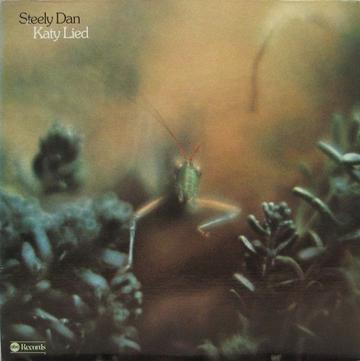
Listening in Depth to The Dan’s One True Rock Album

Hot Stamper Pressings of the Music of Steely Dan Available Now

This is the only Steely Dan album recorded with a working live band.

One of the most important qualities we look for in a Hot Stamper copy is the ability to convey the fun and energy of these seriously hard-rockin’ sessions.

Side One

Bodhisattva
Razor Boy

This is the track I use to judge side one. Almost every copy you come across has grainy vocals, if there are any highs at all. This is true for the entire album, but it’s especially noticeable on this track. When the vocals are clear, smooth and sweet, or at least as clear, smooth and sweet as one can hope for, you are playing a good copy. Consider yourself one of the lucky ones.

That’s if there’s bass. This is a rock record, and rock records, like all records, need bass. If the vocals on this track are right and the bass is good, you might actually have a winner.

Also listen to how clear and solid the piano and vibes are underneath the vocals. On the best copies their contributions are easy to follow and really provide support in the lower registers for the vocals above them. If on your copy they’re a murky mess don’t be surprised; that’s pretty much the way they sound on most copies. (They’re a good test for the quality of your reproduction from the mid-bass up through the lower midrange.)

(more…)