spacious-sound

Spacious sounding recordings.

Beethoven and Richter – Our Favorite Performance on Vinyl

More of the Music of Ludwig van Beethoven

  • A stunning copy of this wonderful concerto performance that boasts a Shootout Winning Triple Plus (A+++) side two mated to a solid Double Plus (A++) side one, and reasonably quiet vinyl for a Shaded Dog from 1961
  • This pressing has the real Living Stereo magic in spades, but unlike most of the RCA concerto recordings, Richter, the brilliant soloist featured here, is not overly spotlighted, hence the much more natural “concert hall” sound
  • The piano is part of the orchestra, and properly sized, allowing the contributions of the other musicians to be heard more clearly, laid out as they are so elegantly across a huge and deep Boston Symphony Hall stage

In orchestral music, when it comes to clarity there is nothing close to the sound of the live performance, but some records, this one especially, give you the sense that you are hearing it all. Audio may be an illusion but it can be a very convincing one.

The spaciousness and three-dimensionality of the recording are also exceptional. Through the efforts and skill of the RCA engineers, that striking openness in the recording is somehow combined with an electrifying immediacy in the sound of the piano, no mean feat. One rarely hears both, except of course live (and not always even then).

There may be other performances of merit, but I know of no recording of this music with better sound. If you are demonstrating naturalistic sound, not bombastic Hi-Fi spectacularity, this pressing more than qualifies as a Demo Disc.
(more…)

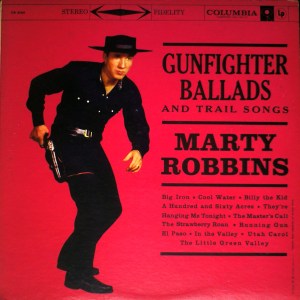
Marty Robbins – Gunfighter Ballads and Trail Songs on 360 Stereo

More Country and Country Rock

  • You’ll find excellent Double Plus (A++) sound on both sides of this 360 Stereo pressing – fairly quiet vinyl too
  • This copy is remarkably clear and open, superior to most others in that regard, with smooth and rich vocals to boot
  • Transparency and Tubey Magic are critical to the sound of the arrangements, and you will find both in abundance on these sides
  • Is the original 6-Eye stereo or early 360 stereo the only way to go on this record? Based upon what we learned in our recent shootout, the first one we’ve done since 2018, the answer is yes
  • UPDATE: In our latest shootout (2025) we could not find a single 360 label pressing that earned even 2+ on either side. Although it’s possible better 360s are out there to be found, our advice at this point would be to stick to the 6-Eye originals
  • We have two new lists for those who would like to know which Columbia labels win shootouts — one for 6-Eye winners and one for 360 Label winners.
  • 4 1/2 stars: “The single most influential album of Western songs in post-World War II American music. The longevity of the album’s appeal is a result of Marty Robbins’ love of the repertory at hand and the mix of his youthful dynamism and prodigious talent…”

Two excellent sides, with the kind of ’50’s Tubey Magical Analog Sound that’s been lost to the world of recorded music for decades — decades, I tell you! Nobody can manage to get a recording to sound like this anymore and it seems clear to us that no one can remaster a recording like this nowadays, if our direct experience with hundreds of such albums counts as evidence.

Albums such as this live and die by the quality of their vocal reproduction. On this record, Mr. Marty Robbins himself will appear to be standing right in your listening room, along with the other other musicians on the sessions of course.

Each of the huge studios the music was recorded in are captured faithfully here. The height, width and depth of the staging are extraordinary. We are not big soundstage guys here at Better Records, but we can’t deny the appeal of the three-dimensional space to be found on a recording as good as this.

(more…)

Dvorak / Symphony No. 9 – The Best on Record

More of the Music of Antonin Dvorak

  • This big, lively, and dynamic UK Decca pressing boasts superb Double Plus (A++) grades on both sides – fairly quiet vinyl too
  • The sound of the hall the Vienna Phil recorded in is huge, so wide and deep, spacious and open – the perspective is above all natural
  • Tons of energy, loads of rich detail and texture, superb transparency and excellent clarity – this pressing is the very definition of Orchestral Demo Disc Sound
  • “It is a great symphony and must take its place among the finest works in the form produced since the death of Beethoven.” – The New York Times
  •  When you hear how good this record sounds, you may have a hard time believing that it’s a budget reissue from 1970. Even more extraordinary, the right copies are the ones that win shootouts
  • There are about 150 orchestral recordings we’ve awarded the honor of offering the Best Performances with the Highest Quality Sound, and Kertesz’s with the Vienna Phil. certainly deserves a place on that list.

Presenting yet another remarkable Demo Disc from the Golden Age of Vacuum Tube Recording Technology, in this case 1961, with the added benefit of mastering courtesy of the more modern equipment of the ’70s, in this case 1970. (We are of course here referring to the good modern equipment of 50+ years ago, not the bad modern mastering equipment of today.)

(more…)

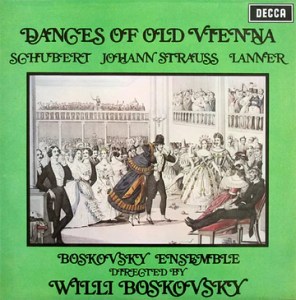
Strauss / Schubert – Dances of Old Vienna / Boskovsky

More Classical and Orchestral Recordings

  • An original UK Decca pressing of this wonderful sounding record boasting STUNNING Shootout Winning Triple Plus (A+++) grades from first note to last
  • Tonally correct from top to bottom and full of Tubey Magic, it’s unbelievably spacious and three-dimensional, with depth to rival any recording you may own
  • The violin (played by Boskovsky himself) is immediate, real and lively here – there is a transparency and ease to the sound that is not often heard in recordings from any era, making this a very special record indeed
  • Gordon Parry and James Lock handled the engineering duties for Decca and their work here is hard to fault

Wow, what a find! This is a WONDERFUL sounding record with vintage Decca/London sound. There is not a trace of hyped-up sound to be found on this record.

So spacious! This is a fairly small ensemble, not a huge orchestra, playing in a lively hall, exactly the kind of hall in which this music was meant to be heard. The reason everything on this disc sounds right is that the venue, the sound and the music are authentic to these works in practically every detail.

(more…)

60s 360 Vs. 70s Red Label on Je m’appelle Barbra

More Titles that (Potentially) Sound Their Best on the Right Reissue

For Barbra Streisand’s early albums, the original pressings on the 360 label just have to be better, right? 

Not in this case. It’s just another rule of thumb, one that will sometimes lead you astray if what you are trying to find are not just good sounding pressings of albums, but the best sounding pressings of albums.

Same with reissue versus original. Nice rule of thumb but only if you have enough copies of the title to know that you’re not just assuming the original is better. You actually have the data — gathered from the other LPs you have played — to back it up.

The best of the 360 pressings in our shootout did well, just not as well.

A classic case of compared to what? Who knew the recording would sound better on the Red Label Columbia reissue pressing from the ’70s? Certainly not us, not until we had done the shootout.

This is why we do shootouts, and why you must do them too, if owning the highest quality pressings is important to you.

Our good later label pressings had all the richness and Tubey Magic of the 360s — one really couldn’t tell which pressing was on the turntable by the sound — but had a bit more space, clarity and freedom from artificiality.

Watch your levels because she really gets loud on some of this material. The best copies, such as this side one, hold up. The lesser copies get congested, shrill and crude at their loudest, and of course get marked down dramatically when that happens.

Side two as very rich and smooth, yet clear and breathy – this is the right sound for ol’ Babs. The first track has tons of Tubey Magical reverb – check it out!

(more…)

Rachmaninoff / Favorite Classics for Piano / Pennario

More of the music of Franz Liszt (1811-1880)

More Classical ‘Sleeper” Records We’ve Discovered

We found White Hot Stamper sound on side two of this solo piano recording.

It’s big, rich and above all REAL sounding, with natural studio space. The legendary soloist Leonard Pennario is presented here at the height of his powers.

Superb choice of material, from Clair De Lune to Liebestraum to the Hungarian Rhapsody No . 2.

On the rare Stereo pressing of course — we want to hear all that studio space reproduced, just as your two ears would have heard it (more or less).

Side One

Graded Super Hot for the huge, solid-sounding piano, played with such verve and skill. The musical power on this side is stupendous. 

Side Two

Even better! No smear, with incredible clarity, and no sacrifice in weight or richness.

All of which adds up to a top quality piano recording in every way.

(more…)

Rozsa / Ben Hur

Hot Stamper Pressings on Decca & London Available Now

This TAS List Super Hot Stamper pressing of one of the greatest and most famous Orchestral Blockbuster Soundtracks ever recorded more than lives up to our expectations for Decca Phase 4. This is Phase 4 done RIGHT.

As with all the best Herrmann releases, the huge size and scope you hear is the sound of orchestral music recorded in glorious ANALOG!

The sound is so clear, spacious and three-dimensional that you will feel as if your speakers have disappeared before your very eyes.

The layering of depth is really something to hear on this copy, with choirs of brass instruments located precisely in space, some further back, some off to the side of the soundstage. And what a soundstage it is, so wide and deep. Transparency – a quality you find on both sides of this copy — is what makes this all sound so REAL.

Side One

So big and rich! This is why audiophiles love these records! A little more extension up top and you would have yourself a nearly flawless record. (The harps and bells aren’t quite as clear as they should be.)

Side Two

Again, a little more extension up top would have helped. Listen to how the trumpets just JUMP out of the soundfield! What a record!

Opacity Vs. Transparency

Note that we have been especially anti-heavy vinyl in our recent commentaries for their consistently opaque character, the opposite of what is necessary in order to hear into the music, deep into the soundstage, to see and hear ALL the instruments, even the ones at the back.

Try that with any Classic Record or Speakers Corner pressing. It’s records like this that show you precisely what you have been missing all these years if you have been collecting and playing releases from those labels and the others like them. (more…)

Shostakovitch / Piano Concerto Nos. 1 and 2 – Another Amazing Piano Concerto Discovery

More of the Music of Dmitri Shostakovich

  • This stunning classical release finally makes its Hot Stamper debut here with Shootout Winning Triple Plus (A+++) sound or very close to it throughout
  • Westminster is not a label that we typically associate with top quality sonics, but I knew from the moment I dropped the needle on an audition copy that the sound of this Hidden Gem could not be faulted
  • What made this the clear winner was not complicated – it’s solid and weighty like no other, with virtually no smear, situated in the biggest space, with the most energetic performances
  • Clear and transparent, with huge hall space extending wall to wall and floor to ceiling, this is a sound that the modern reissue, of any music, from any era, fails to reproduce utterly
  • A truly superb recording with huge, spacious, dynamic, lively sound – Tubey Magical richness is a big plus too
  • This to a top quality classical piano recording in every way

(more…)

An Extraordinary Recording of the Beethoven Septet – This Is Why You Must Do Shootouts

Hot Stamper Pressings of the Music ofBeethoven Available Now

My first note on side one is “HTF” — Hard To Fault, for the sound was both rich and sweet, with easily recognized, unerringly correct timbres for all seven of the instruments which are heard in the work. The legendary 1959 Decca Tree microphone setup had worked its magic once again.

And, as good as it was, we were surprised to discover that side two was actually even better! The sound was more spacious and more transparent; we asked ourselves, how is this even possible?

Hard to believe but side two had the sound that was TRULY Hard To Fault.

This is precisely what careful shootouts and critical listening are all about.

If you like Heavy Vinyl, what exactly is your frame of reference? How many good early pressings could you possibly own, and how were they cleaned?

Without the best pressings around to compare, Heavy Vinyl can sound fine. It’s only when you have something better that its faults come into focus. (We, of course, have something much, much better, and we like to call them Hot Stampers!)

Side One

A++, so good, yet in comparison to side two we realized that it was not as present, spacious and transparent as it SEEMED.

Side Two

A+++, White Hot!

Ah, here was the sound we didn’t know we were missing. So big and open, with space for every player, each clearly laid out across the stage. This is Hi-Fi at its best.

(more…)

Ballet Music From The Opera – Our Favorite Pressing Since 2013

Better than Super Hot Stamper sound on side one of this lovely Victrola reissue from 1960, one of the best in the entire series.

Pay attention to the brass — yes, it may have some tubey smear, but listen to how HUGE and POWERFUL it is! Drop the needle on the first side and watch (or listen) as the sound comes jumping out of your speakers.

Modern records can’t do that.

These Decca-derived recordings are highly sought after, and with good reason. It’s hard to imagine a more wonderful audiophile disc, both in terms of the program and the quality of the sound.

This is the precisely the kind of big, bold, lifelike sound Decca engineers were able to capture on tape, and RCA mastering engineers were able to master from that analog tape, fifty or so years ago. (more…)