good-audio-advice

Amazing Grace – A Bit of VTA Experimentation Can Really Pay Off

More Setup Advice for Turntables and Cartridges

UPDATE 2026

This title did not get much love from our customers.

Years ago we tagged it on the blog as a never again record, which simply means we no longer planned on doing shootouts for it. (It’s possible we could do it again, expecially if we were to get hold of an amazing sounding pressing, but at this point that does not seem to be in the cards as we have given up buying them altogether.)

We encourage you to find a nice copy for yourself. Stick with the early label. The rest is up to you.


Amazing Grace is a handy record for VTA setup, a subject we discuss below.

On the better copies Aretha’s vocals are as dynamic as any you will ever hear, and unlike all the records she did with Tom Dowd, her voice never breaks up on this record. If you have big speakers that can play at loud levels, with the right volume level you can really get Aretha to belt it out like nothing you have ever heard on record. 

Like most modern churches, the kind that have upholstered pews and lots of carpeting, the natural reverberation of the sound isn’t as pronounced as it would be were the recording taking place in a 16th century cathedral.

Note also that the recording is from 1972, not 1962, so the Tubey Magic that would have been on a recording such as this ten years earlier is not going to be as great either.

When we play a big stack of copies of a record like this, the limitations of the recording have to be taken into account.

The best copies will do what the best copies do; we can’t ask them to sound like something they were never designed to sound like.

The best copies of the album clearly sound quite a bit better than the average copy we played, but they still sound like the same recording, just bigger, richer, clearer and more alive.

To set your VTA right, don’t try to make Aretha too smooth — she should sound a bit “hot” when the spirit fills her and she shouts her loudest. If you get her to sound correct you lose a lot of space and ambience. What space and ambience there is on the tape need to be there for the recording to sound “real.”


(more…)

Imagine on Mobile Fidelity from 1984

Hot Stamper Pressings of the Music of John Lennon Available Now

This Jack Hunt-mastered Half Speed has the midrange suckout that Mobile Fidelity was notorious for.

Lennon and his piano on the first track sound like they are coming from another room.

And yet somehow there are still “audiophiles” in this day and age that defend the records put out by this ridiculous label.

Oy vey. What is wrong with these people?

I Have a Theory

Actually, I have a good idea why so many so-called audiophile records have a sucked-out midrange.

A midrange suckout creates depth in a system that has difficulty reproducing depth.

Imagine that instead of having your speakers pulled well out from the back wall as they should be, instead you have placed your speakers right up against the wall.

This arrangement, though preferable aesthetically and dramatically more family- and wife-friendly, has the unfortunate effect of seriously limiting your speakers’ ability to reproduce whatever three-dimensional space exists on your recordings.

I hinted back in 2022 that I was going to discuss this idea down the road, and like most things that I was supposed to write about down the road, we’re still waiting to see it.

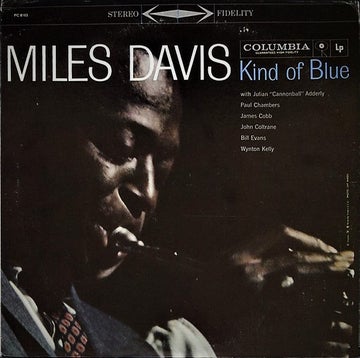
The album I was going to write more about was Kind of Blue.

(more…)

Getting the Electricity Right Made All the Difference in Our New Studio

Hot Stamper Pressings of the Music of Cat Stevens Available Now

In response to a customer’s letter, I wrote the following a few years back:

The vast majority of audiophiles never get to the higher levels of audio because of the compromises they make at every step in their rooms, speakers, wires and practically everything else.

For example:

  • Speakers too small,
  • Shoved up against a wall,
  • In an untreated room that
  • The family uses to watch TV in?

You can’t get very far that way.

Some of the worst off of these folks end up with a collection of crap Heavy Vinyl because their systems simply will not let them hear how much better their vintage pressings sound.

Better Electricity Made All the Difference

When we moved the business into an industrial park a few years ago, I took the opportunity to build the largest playback studio I could fit on the premises. It was 17 by 22 with a 12 foot high ceiling, with a concrete slab floor and six inch thick double drywall for walls, as well as a complicated system of dedicated electrical circuitry.

It took a surprising amount of work carried out over months to get it to sound right. Day after day we ran experiments. Most of the time it was just me. I actually like working alone. It’s not hard for me to stay focussed.

Oddly enough, what made the biggest difference was getting the electricity right: computers and cleaning machines on isolation transformers, stuff unplugged, stuff left plugged in that made the sound better, lights hooked up to batteries rather than plugged in to the main circuits, etc. 

Over the course of about two months, the sound became night and day better.

More on unplugging here.

Also, Robert Brook has done a great deal of work along these same lines, which he explains in detail here.

This kind of work is not hard for me. We’ve been doing it for decades, but we have a very big advantage over everyone else: we have good sounding records to test with.

We have Hot Stampers! The records are correct. If they sound wrong, it’s not their fault. They are almost never the problem.

I used But I Might Die Tonight from Tea for the Tillerman for weeks and weeks. It was very difficult to get all the parts right, but in the end it was more glorious than I had ever heard it. I wrote an extensive commentary on the experience I went through which you can read all about here.

(more…)

One Man’s Experimental Approach to Audio Reveals Some Inconvenient Truths

Here Are Some of Our Favorite Orchestral Test Discs

UPDATE 2025

The following was originally posted by Robert in 2020. We have added a link at the top to test discs that we’ve found to be good for tweaking and tuning your system, room, electricity and such like.

Robert has also reviewed a fair number of difficult to reproduce orchestral recordings, titles that are sure to challenge the playback quality of any system. They should make it easy to hear whether the changes you make are actually getting closer to sound that is more like live, unamplified music, which, from our point of view, should be the goal of any audiophile.

This is the one true test for any system.

Here’s an especially good test disc to get you started.

POWER CORDS: Is THIS the Difference You Want?


Robert Brook has a blog which he calls

A GUIDE FOR THE DEDICATED ANALOG AUDIOPHILE

Below is a link to a comparison Robert Brook carried out with a group of power cords he had on hand. I did the same thing about fifteen twenty years ago and it taught me a lot (although strangely in my case I’ve never taken the time to write about it, mostly because my notes are long gone).

The experience he went through is instructive and easily replicated by anyone for any system. The benefits are likely to be substantial, maybe even life-changing. (Robert has had many life-changing experiences with audio and music since this was written, and we couldn’t be happier that we played some small part in the evolution he underwent.)

(more…)

Room Treatments Bring Out The Big Speaker Whomp Factor

Hot Stamper Pressings of the Music of Sergio Mendes Available Now

UPDATE 2025

The first Sergio Mendes and Brasil ’66 album is one of those records that helped us dramatically improve the quality of our playback.


Only the best copies are sufficiently transparent to grant the listener the privilege of hearing all the elements laid out clearly, each occupying a real three-dimensional space within the soundfield. 

With recent changes to some of our room treatments, we now have even more transparency in the mids and highs, while improving the whomp factor (the formula goes like this: deep bass + mid bass + speed + dynamics + energy = whomp) at the listening position.

There’s always tons of bass being produced when you have three 12′ woofers firing away, but getting the bass out of the corners and into the center of the room is one of the toughest tricks in audio.

For a while we were quite enamored with some later pressings of this album — they were cut super clean, with extended highs and amazing transparency, with virtually none of the congestion in the loud parts you hear on practically every copy.

But that clarity comes at a price, and it’s a steep one. The best early pressings have whomp down below only hinted at by the “cleaner” reissues. It’s the same way super transparent half-speeds fool most audiophiles. For some reason audiophiles rarely seem to notice the lack of weight and solidity down below that they’ve sacrificed for this improved clarity. (Probably because it’s the rare audiophile speaker that can really move enough air to produce the whomp we are talking about here.)

But hey, look who’s talking! I was fooled too. You have to get huge amounts of garbage out of your system (and your room) before the trade-offs become obvious.

When you find that special early pressing, one with all the magic in the midrange and top without any loss of power down below, then my friend you have one of those “I Can’t Believe It’s A Record” records. We call them Hot Stampers here at Better Records, and they’re guaranteed to blow your mind. (more…)

There’s a Better Way to Do Analog – Part One

Robert Brook runs a blog called The Broken Record, with a subtitle explaining that his blog is:
A GUIDE FOR THE DEDICATED ANALOG AUDIOPHILE

We know of none better, outside of our own humble attempt to enlighten that portion of the audiophile community who love hearing music reproduced with the highest fidelity and are willing to go the extra mile to make that happen.

There’s a BETTER WAY to do ANALOG – Part One

Robert’s Approach

Robert has methodically and carefully — one might even say scientifically — approached the various problems he’s encountered in this hobby by doing the following:

(more…)

Better Front Ends Actually Reduce Surface Noise

Hot Stamper Pressings of the Music of Tchaikovsky Available Now

This record has no marks that play appreciably, but that RCA vinyl is up to its old tricks again.

Mint Minus Minus with constant light surface noise underneath the music in the quieter sections is the rule here. The first half inch of side two is where you will notice it the most.

We are of the opinion that good sound and good music allow you to pretty much ignore surfaces such as these, scratches being another thing entirely of course. If there is any problem, you are covered by our money back guarantee.

Better Front Ends

I would make the further point that the better your front end is, the less likely you are to have a problem with vinyl like this, which is the opposite of what many audiophiles perceive to be the case. In other words, some of the cheaper tables and carts seem to make the surface noise more objectionable, not less.

On the other hand, some pricey cartridges — the Benz line comes to mind — are consistently noisier than those by Dynavector, Lyra and others, in our experience anyway.

Vintage Vinyl

As long as vintage vinyl is the only vinyl with sound worth pursuing, as is surely the case these days and will be the case for the forseeable future, a quiet cartridge and a very high quality arm are essential to high quality playback.

Our Dynavector 17Dx gets down deep into the groove, where vintage used records have the least number of problems created by their previous owners.

(more…)

Speaker Placement — The Room Coupling Method

Robert Brook runs a blog called The Broken Record, with a subtitle explaining that the aim of his blog is

A GUIDE FOR THE DEDICATED ANALOG AUDIOPHILE

We know of none better, outside of our own humble efforts to enlighten that portion of the audiophile community who love the sound of music reproduced with the highest fidelity and, more importantly, are serious enough to be willing to spend a great deal of their money and their time in order to make that happen.

If you aspire to great things in audio, Robert’s blog is for you, as is the one you are now on.

SPEAKER PLACEMENT: The ROOM COUPLING METHOD

An excerpt:

[A] few months ago I came across an article on a Room Coupling Method for speaker placement. Encouraged by finding some common ground with author Richard Mak’s thinking, I started trying it out, and it has helped me make some meaningful progress.

One thing I particularly appreciated in Mak’s article was his assertion that “measurements” and “analysis” are not a substitute for “listening.”

“Charts, graphs, room nodes, reflection coefficients, or even a Ph.D. in room acoustics won’t get you there. Many who are armed with an arsenal of scientific knowledge do not even know how or what to listen for on a reference test track.”

To Mak’s point, as I attempted to apply his approach to my speaker and listening chair positions, I realized in the process that even though the placement of my speakers and listening chair have been suboptimal for some time, that time was far from wasted.

Because in that time I’ve done A LOT of listening, and that listening has led to a special kind of knowledge, which for a long time was without a clear application. Mak’s methodology has since given me an outlet for this knowledge, and all that listening is now paying off.

In his article, Mak walks us through a process that begins with how to determine the distance of the speakers from the back wall. From there he describes how to determine their width, then their toe-in angle, and finally how to dial in the position of the listening chair.

For those of you who would like to tune and tweak the location of their speakers, the article seems to have some good advice for doing that, with plenty of tests to challenge both your setup and your critical listening skills. (We have some great test records you might find useful as well. The more difficult ones to get to sound right can be found here.)

This subject is so complicated that to say much more might send me down a rabbit hole I’d have a hard time climbing out of, but here’s a thought or two.

I’ve had many different big speaker systems set up in a number of good-sized rooms over the years, starting in 1975. When I moved into the house I bought in Thousand Oaks in the early 2000s there was a “great room” with a piano on the far end (where the speakers are now) and a dining table at the opposite end. It measured 15×30 with about a nine foot ceiling.

I was hoping to use my Legacy Whisper speakers in this room so that I could audition records all day (my desk can be seen there on the right). I spent about two years trying to make the speakers sound good where you see them in the picture below.

(more…)

Is That a Good Record, Or Just One Your Cartridge Really Likes?

More Turntable Setup Advice

An anonymous person commented as follows about the 17dx he bought recently:

I think it’s worth mentioning here that when it comes to cartridges, not only are we rarely in a position to demo a cartridge that we don’t necessarily have to keep, but even if could remove a cartridge we’ve tried and return it, the installation process can be a significant deterrent to doing that.

Plus, as ab_ba points out, that cartridge is likely to like some of our records. So what do we do? We just end up playing those records more often and buying more records like them so we have more records that our catridge likes. IOW, we adapt to the circumstances.

When one day we put on a record that we used to love and discover we don’t love it so much, and we realize it’s the cartridge that doesn’t love it, some of us will do what I did and buy a Dynavector 17dx from Better Records because we can then rest assured that anything that’s on that record that’s lovable, or not so lovable, the 17dx is going to show it to us either way.

I repied:

Dear Sir (if I may assume your gender),

Well said. The reason we have an entire section devoted to test records is so that audiophiles can find out what the strengths and weaknesses of their equipment might be. Whether the relatively few audiophiles who choose to test themselves with these recordings will go on to fix the problems they find is something we can only speculate about.

Most of the audiophiles whose systems I critiqued didn’t seem to appreciate what I had to say and none as I recall acted on my ideas for improvement.

I am glad you like what your 17dx does for your system. Its output is ruler flat, and that is its biggest benefit for those of us who want to hear our records sounding they way they actually do sound, “lovable” or “unlovable,” as the case may be.

It has been my experience that many audiophiles are not in favor of removing mostly-euphonic colorations from their systems. This is especially true when it results in the imperfections and shortcomings they have failed to address, or even acknowledge, are exposed and become irritating.

The modern Heavy Vinyl pressing tends to be overly smooth. This, judging from the sales and overall customer satisfaction of such records, must be helping to solve some of the problems in the systems of those who have found these pressings and their artificially adjusted tonal balance to their liking.

Accurate playback is not the be-all and end-all for everyone in our hobby. Some people just want to play a record for enjoyment, and if the colorations or limitations of their system helps them to do that, I say more power to them.

It’s not what you want and it’s not what I want, but clearly the audiophile community has outvoted us and proceeded down that road.

For those who want to make progress in the quality of our playback and the specific pressings of the recordings we choose play, you and I both know that road leads to a dead end.

(more…)

Money Down the Drain

Basic Audio Advice — These Are the Fundamentals of Good Sound

Readers of this blog know that I’m a fan of big speakers, but in a room that’s as bad for sound reproduction as this one is, these monsters would qualify as a form of torture at anything above a whisper.

There is an ideal balance between absorption and reflection that must be found for every room. The balance this fellow has chosen is 98% reflection, which will lead to 100% awful sound.

I don’t even like the picture between the speakers. If you must have something there, in my experience rarely will it sound good unless it is five or more feet off the ground. (See picture below.)

Note that sidewall absorption in our listening room is never more than about five feet high. For some reason that seems to work the best. We tried lots of different heights over the course of years and we always came back to nothing over five feet.

The back wall has 4 inch thick 4×8 sheets of styrofoam across most of it, leaving the corners empty (which always seems to work the best, again, who knows why).

A small piece of absoptive material in the middle up high seemed to help, but more than that was too much and less did nothing.

These may be the most wonderful speakers in the world in the right room, but in this room there is no speaker that could possibly reproduce music properly, which means this guy spent a lot of money and got nothing for it. He’s not alone.

He could get some carpet and pull his speakers well out into the room for starters, but then the whole thing just won’t have the elegance it did, so what on earth would ever make him do such a thing? His favorite music? Hah, that’s a good one.

(more…)