cheap-tables

Better Front Ends Actually Reduce Surface Noise

Hot Stamper Pressings of the Music of Tchaikovsky Available Now

This record has no marks that play appreciably, but that RCA vinyl is up to its old tricks again.

Mint Minus Minus with constant light surface noise underneath the music in the quieter sections is the rule. The first half inch of side two is where you will notice it the most.

We are of the opinion that good sound and good music allow you to pretty much ignore surfaces such as these (scratches being another thing entirely of course). 

Better Front Ends

I would make the further point that the better your front end is, the less likely you are to have a problem with vinyl like this, which is the opposite of what many audiophiles perceive to be the case. In other words, some of the cheaper tables and carts seem to make the surface noise more objectionable, not less. (They also tend to collapse completely under the weight of a mighty recordings.)
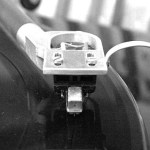
On the other hand, some pricey cartridges — the Benz line comes to mind — are consistently noisier than those by Dynavector, Lyra and others, in our experience anyway.

Vintage Vinyl

As long as vintage vinyl is the only vinyl with sound worth pursuing, as is surely the case these days and will be the case for the forseeable future — we have ample evidence to support this statement for this who are interested in that lamentable reality — a quiet cartridge and a very high quality arm are essential to your being able to recognize good records and reproduce them properly.

Our Dynavector 17Dx gets down deep into the groove, where vintage used records have the least number of problems created by their previous owners.

And we run it nude for even better sound. I discovered this possibility more than a decade ago — so long ago that I cannot remember where I came by the information — but the sound was immediately so much better that all questions were answered moments after dropping the needle.

Not a lot of things are obvious, but that sure was.

(more…)

Where Cheap Turntables Fall Flat – The Music of Franz Liszt

Hot Stamper Pressings of Classical Music Available Now

Classical music is unquestionably the ultimate test for proper turntable/arm/cartridge setup.

The Liszt Piano Concerto record you see pictured is a superb choice for making small adjustments to your setup in order to improve the playback of these very difficult to reproduce orchestral recordings.

Here are some other reviews and commentaries touching on these areas of turntable setup.

One of the reasons $10,000+ front ends exist is to play large scale, complex, difficult-to-reproduce music such as Liszt’s two piano concertos. You don’t need to spend that kind of money to play this record, but if you choose to, it would surely be the kind of record that could help you recognize the sound quality your tens of thousands of dollars has paid for.

It has been my experience that cheap tables more often than not collapse completely under the weight of a mighty record such as this.

(more…)

Turntable Tweaking Advice – Try This at Home, It Worked for Us

More Setup Advice for Turntables and Cartridges

UPDATE 2020

This commentary was written around 2010 or so. Mapleshade stopped sending me catalogs not long after this commentary, probably not because of anything I’d written. More likely it was because I never bought anything from them. And why would I? They give out some good advice, sure, but it’s mixed in with a lot of audiophile nonsense, the purest kind of nonsense that the audio world is currently drowning in.


The Mapleshade website has a piece of audio advice that caught the eye of one our customers, who sent me the excerpt below.  

Like most advice, especially audio advice, we find that some of it accords well with our own experience and some of it clearly does not. The relationship of good to bad is hard to determine without making a more careful study, but let’s just say that there is plenty of both and let that suffice.

That being the case, we thought it would be of service to our customers to break it down in more detail, separating the wheat from the chaff so to speak.

Here is the complete quote:

To get first rate sound and to get your money’s worth from any expensive cartridge, you MUST meticulously adjust VTA or tracking force every 3-4 months — that’s because stylus suspensions always sag with use. This lowers VTA and seriously kills dynamics and treble sparkle. Lots of people misinterpret this as a worn-out cartridge, an expensive error. Instead, raise VTA or lighten tracking force until your test record’s treble sounds too harsh, then drop VTA or lighten tracking force a hair. Your test record must not be thicker or thinner than the bulk of your record collection. Adjusting tracking force yields slightly better sonic results and longer cartridge life than adjusting VTA — and adjusting tracking force on most arms is WAY easier than adjusting VTA.

The basic idea here is that your cartridge sags over time, causing the VTA (Vertical Tracking Angle) to change, which results in less dynamics and “treble sparkle.”

(By the way, this is a term you will encounter on this blog as a criticism. Treble should never “sparkle,” but we get the point. We make fun of the sparkly sound Mobile Fidelity records are famous for, a sound which bugs the hell out of us, but which does not seem to bother some audiophiles. We assume their speakers or systems lack top end and could use a bit of a boost there. Our Townshend super tweeters allow us to hear all the top end there is on the records we play, unboosted, thank you very much.)

(more…)