boosted-bass

Waiting for the Sun – Don’t the DCC Pressings All Sound Different Too?

More of the Music of The Doors

I recently had a chance to listen again to this DCC pressing for the first time in many years. I was putting it up on ebay to sell and dropped the needle to check the sound. I can’t say I liked what I heard. Knowing the record as well as I do, I could her that the DCC was clearly to be brighter in the midrange.

When I went back to read what I had said about the DCC years ago, I saw that I had described that copy the same way. You can read it for yourself.

Our old review follows.

We rate the DCC LP a B Minus

We used to like the DCC pressing of this Doors album. Now… not so much. It’s a classic case of Live and Learn.

Keep in mind that the only way you can never be wrong about your records is simply to avoid playing them. If you have better equipment than you did, say, five or ten years ago, try playing some of your MoFi’s, 180 gram LPs, Japanese pressings, 45 RPM remasters and the like. You might be in for quite a shock.

Of course the question on everyone’s mind is, “How does this Hot Stamper copy stack up to the famous DCC pressing?” After all, the DCC was the one we were touting all through the ’90s as The One To Beat.

Well, to be honest, the DCC is a nice record, but a really special original copy throws a pretty strong light on its faults, which are numerous and frankly fairly bothersome.

The top end on the copy I played was a touch boosted, causing a number of problems.

For one, the cymbals sounded slightly tizzy compared to the real thing, which had a fairly natural, though not especially extended, top end.

But the real problem was in the midrange. Morrison sounded thinner and brighter, more like a tenor and less like a baritone, with a somewhat hi-fi-ish quality added to the top of his voice. Folks, I hate to say it, but if someone had told me that the record playing was half-speed mastered, I probably would have believed it. I detest that sound, and the DCC pressing bugged the hell out of me in that respect.

Morrison has one of the richest and most distinctive voices in the history of rock. When it doesn’t sound like the guy I’ve been listening to for close to forty years, something ain’t right.

The mid-bass was also a tad boosted — not in the deep bass, but more in that area around 100-200 cycles, causing the sound to be overly rich. None of the originals we played had anything like it, so I’m pretty sure that’s a bit of added EQ Hoffman introduced for reasons best known to him. (Did he like it that way, or was he pandering to some of the audiophile community’s preference for overly rich sound, the kind they confuse with “analog”? Nobody knows.)

Not So Fast There, O Hot Stamper Guru

But wait a minute — don’t all records sound different? Is it really fair to paint his version with such a broad brush on the basis of having played only one copy?

Of course not. Perhaps other copies sound better. It wouldn’t be the first time. (Maybe they sound worse. Think about that.)

So here’s our offer to you, dear customer: We absolutely guarantee our Hot Stamper copies will handily beat the DCC pressing or your money back. We’ll even pay the return domestic shipping if for some reason you are not 100% satisfied with the sound of our Hot Stamper. Now there’s an offer you can’t refuse, for any one of you who love the album and have a wad of money burning a hole in your pocket.

(more…)

Led Zeppelin II on MoFi — Back to the Stone Age!

Hot Stamper Pressings of the Music of Led Zeppelin Available Now

An audiophile hall of shame pressing and another MoFi LP reviewed.

Yes, it’s yet another record perfectly suited to the stereos of the 60s and 70s, often referred to on this blog as the “stone age” for reasons explained in detail here.

This version of Zep’s sophomore release from 1969 has to be one of the worst audiophile remastering jobs in the history of the world. There is NOT ONE aspect of the sound that isn’t wrong. Not one!

The highs are boosted, the upper midrange is boosted, the mid-bass is boosted, the low bass is missing — what part of the frequency spectrum is even close to correct on this pressing? The answer: none.

If you’re in the market for a Hot Stamper pressing of Led Zeppelin II, we can help you, but prices these days are steep and show no sign of coming down. We typically pay $1000+ or more for the used copies we buy if that tells you anything about what to expect a Hot Stamper pressing will cost you.

Records are getting awfully expensive these days, and it’s not just our Hot Stampers that seem priced for perfection.

If you are still buying these modern remastered pressings, making the same mistakes that I was making before I knew better, take the advice of some of our customers and stop throwing your money away on Heavy Vinyl and Half-Speed Mastered LPs.

At the very least let us send you a Hot Stamper pressing — of any album you choose — that can show you what is wrong with your copy. of the album.

And if for some reason you disagree with us that our record sounds better than yours, we will happily give you all your money back and wish you the best.
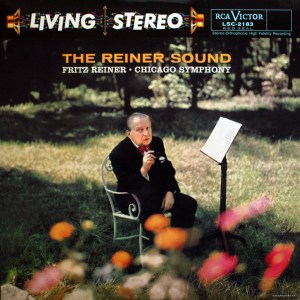
The Reiner Sound – Classic Records Reviewed

Hot Stamper Pressings of Living Stereo Recordings Available Now

There is simply an amazing amount of TOP END on the original pressing we played a while back (reviewed below). Rarely do I hear Golden Age recordings with this kind of ENERGY and extension up top.

This is of course one of the reasons the Classic reissue is such a disaster. With all that top end energy, Bernie’s gritty cutting system and penchant for boosted upper midrange frequencies positively guarantees that the Classic Reiner Sound will be all but unplayable on a good system.  

Boosting the bass and highs and adding transistory harshness is the last thing in the world that The Reiner Sound needs.

You may have read on the site that, unlike many soi-disant audiophiles who buy into HP’s classical choices, I am not the biggest Reiner fan. On these works, though, I would have to say the performances are Top Drawer, some of the best I have ever heard.

The amount of energy he manages to coax from the Chicago Symphony Orchestra is nothing less than BREATHTAKING.

(more…)

The Not-So-Magnificent Thad Jones – More Dreck on Heavy Vinyl

Hot Stamper Pressings of Blue Note Albums Available Now

After discovering Hot Stampers and the mind-blowing sound they deliver, a new customer generously sent me a few of his favorite Heavy Vinyl pressings to audition, records that he considered the best of the modern reissues that he owns.

He admitted that most of what he has on Heavy Vinyl is not very good, and now that he can clearly hear what he has been missing, having played some of our best Hot Stamper jazz pressings, he is going to be putting them up on Ebay and selling them to anyone foolish enough to throw their money away on this kind of junk vinyl.

We say more power to him.  That money can be used to buy records that actually are good sounding, not just the ones that are supposed to be good sounding, perhaps because they were custom manufactured with the utmost care and marketed at high prices to soi-disant audiophiles.

Audiophile records are a scam. They always have been and always will be.

The three of us who do the critical listening here at Better Records dropped the needle on the first disc in this set and, once the VTA was properly adjusted, gave it a chance to show us just what expert remastering from vintage mono tapes, at 45 RPM, on two slabs of luscious, thick vinyl, could do for the sound of Thad Jones’s trumpet, circa 1956.

The reissue we are playing is the one Music Matters released in 2010. There was a single disc version released by them in 2016, recut by Kevin Gray and Ron Rambach. At the time of this writing, there is one for sale on Discogs for $235.

None of us had ever heard the album on any media, vinyl or otherwise, but we know a good sounding jazz record when we hear one, and we knew pretty early on in the session that this was not a good sounding jazz record.

Two minutes was all it took, but we wasted another ten making sure it was as bad as we thought.

(more…)