audiophile-bs

Linked here are more than two dozen of the most shameful examples of audiophile BS vinyl we’ve auditioned in the 39 years we’ve been in the business of selling records.

Heavy Vinyl records, Half-Speed mastered records and regular records all have their own halls of shame. Each of them can be found by scrolling through the categories on the right side of every page.

An Insult to Aaron Copland on Reference Records

Hot Stamper Pressings of Orchestral Music Available Now

Yet another Reference Record we’ve reviewed and found wanting.

In all the years I was selling audiophile records, one of the labels whose appeal made no sense to me whatsoever (along with their long-forgotten TAS list brethren, American Gramaphone and Telarc) was Reference Records.

Back then, when I would hear one of their orchestral or classical recordings, I was always left thinking, “Why do audiophiles like these records?”

I was confused, because at that time, back in the 80s, I had simply not developed the listening skills that today make it so easy to recognize the faults of their recordings.

I made the mistake of thinking that other audiophiles with more advanced equipment and more refined listening skills must be hearing something I was not.

I had trouble putting my finger on what I didn’t like about them, but now, having worked full time (and then some!) for more than twenty years to develop better critical listening skills, the shortcomings of their records, or, to be more accurate, the shortcomings of this particular copy of this particular title, took no time at all to work out.

My transcribed notes for RR-22:

  • Lean tonality
  • No real weight
  • No Tubey Magic
  • Blurry imaging when loud
  • No real depth
  • Bright tonal balance

Is this the sound you are looking for in an audiophile record?

Shouldn’t you be looking for audiophile quality sound?

Well, you sure won’t find it here.

On our current playback system, this Reference Record is nothing but a joke, a joke played on a much-too-credulous audiophile public by the ridiculously inept and misguided engineers and producers who worked for Reference Records.

This is a reference for something? For what?

As I wrote about another one of their awful releases, if this is your idea of a reference record, you are in real trouble.

It would be hard to imagine that anyone who has ever heard a good vintage classical recording — here are some of our favorites — could ever confuse this piece of audiophile trash with actual hi-fidelity orchestral sound.

(more…)

The Power of the Orchestra – Remastered by the Brain Trust at Chesky

Hot Stamper Pressings of Pictures at an Exhibition Available Now

Sonic Grade: F

Lifeless, compressed and thin sounding, here you will find practically none of the weight and whomp that turn the best Living Stereo pressings into the powerful listening experiences we know them to be.

We know that because we’ve played them by the hundreds on big speakers at loud levels.

It’s clean and transparent, I’ll give it that, which is no doubt why so many audiophiles have been fooled into thinking it actually sounds better than the original.

But of course there is no original. There are thousands of them, and they all sound different. (A concept we embraced many years ago and have never found any reason to doubt.)

The commentary reproduced below, from way back when, discusses a pair of records that proves our case in the clearest possible way.

We sold a 2-pack of Hot Stamper pressings, one with a good side one and one with a good side two. Why? Because the other sides were terrible! If you have a bad original, perhaps the Chesky will be better.

Our advice is not to own a bad original, or this poorly-mastered Chesky reissue, but instead we advise that you make the effort to find a good original, or two or three, as many as it takes to get two good sides.

(more…)

The Four Seasons Direct to Disc at 45 RPM

Hot Stamper Pressings of the Music of Antonio Vivaldi Available Now

This RCA Direct-to-Disc 45 RPM Double LP has awful sound, with exceptionally hard and shrill string tone.

This is precisely why we dislike Japanese pressings as a rule — they sound like this audiophile trash.

If you own this album, it should make a good one for testing string tone and texture. The strings on this record are awful, and they should sound awful on your stereo too.

The Big Picture from a Lifelong Audiophile

You may have seen this text in another listing, but it bears repeating.

There is nothing new under the sun, and that is especially true when it comes to bad sounding audiophile records. The world is full of them.

There has been one big change from the days when I self-identified as a freshly minted audiophile in the ’70s.

Yes, the records being marketed to audiophiles these days may have second- and third-rate sound, but at least now they have good music. That’s progress, right?

The title reviewed above is a good example of the kind of crap we newbie audiophiles used to put up with back in the old days, long before we had anything resembling a clue.

This one clearly belongs on our list of bad audiophile records.

You might be asking: What kind of audio fool was I? to buy a dumbass record like this.

It’s a fair question. Yes, I admit I was foolish enough to buy records like this and expect it to have good music, or at least good sound. Of course it had neither. Practically none of these kinds of records ever did. Sheffield and a few others made some good ones, but most Direct to Disc recordings were crap.

As clueless as I was, even back in the day I could tell that I had just thrown my money away on this lipsticked-pig in a poke.

But I was an audiophile, and like a certain Mr. Mulder, I wanted to believe. These special super-hi-fidelity records were being made for me, for special people like me, because I had expensive equipment and regular records are never going to be good enough to play on my special equipment, right?

To say I was wrong to think about audio that way is obviously an understatement. Over the course of the last forty years, I (and to be fair, my friends and my staff) have been wrong about a lots of things in the worlds of records and audio.

You can read more about many of the things we got wrong under the heading: live and learn.

The good news? Audio progress is real and anyone who goes about doing audio the right way can achieve a great deal.

(more…)

Who in His Right Mind Thinks The Sheffield Track Record Is a Super Disc?

Subtitled: Rock Instrumental Tracks For Audio Component Testing and Evaluation.

Harry Pearson calls this absolutely the best sounding rock record ever made.

If you don’t know anything about rock music, this is the kind of rock music you like.

Harry seems to have known very little about rock. Just check out the TAS List while he was still in charge and see how many real rock albums could be found there back in the day. He mistook these lame instrumentals for actual music with good sound, yet they have neither good sound, nor are they good music.

We cannot agree with HP as to the recording quality of the album either. The sound is surprisingly compressed, and the music is every bit as lifeless as the sound.

Some of the audiophile records I’ve played since I started Better Records in 1987 pissed me off so badly, what with their crappy sound and sometimes even crappier music, as is the case here, I felt they deserved to have their very own special audiophile sh*t list.

Now that I have a blog with unlimited amounts of space to review and categorize the awful records some audiophiles like, that is exactly where this hopeless release can be found.

(more…)

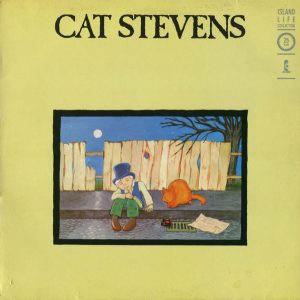
Acoustic Sounds Was Selling This Ridiculously Bad “TAS List” Record Back in the Day

Hot Stamper Pressings of the Music of Cat Stevens Available Now

This commentary was written circa 2001. 

I remember 15 years ago when Acoustic Sounds was selling the then in-print 25th Anniversary Island pressing (with 7U stampers as I recall) for $15, claiming that it was a TAS List record. If you’ve ever heard the pressing, you know it has no business going anywhere near a Super Disc List. It’s mediocre at best and has virtually none of the magic of the good originals.

NEWSFLASH: Just looked it up on Discogs, a site that did not exist when I wrote this commentary. My memory is apparently better than I thought it was. The 25th Anniversary Island Life Collection pressing came out in 1986.

    • Matrix / Runout (Runout side A, variant 1): ILPM 9154 A-1 ILPM•9154•A1
    • Matrix / Runout (Runout side B, variant 1): ILPM 9154 B-7U-1-1-3
    • Matrix / Runout (Runout side A, variant 2): ILPM 9154 A-8U-1- G10
    • Matrix / Runout (Runout side B, variant 2): ILPM 9154 B-7U-1-

By the way, I am not aware of any of these pressings from the 80s being especially good sounding. I remember playing some of them but I don’t remember liking any of them. They were cheap reissues that satisfied those looking for import vinyl, not audiophile quality sound.

I refused to sell it back in those days, for no other reason than the fact that it’s far from a Better Sounding Record. I don’t like misrepresenting records and I don’t like ripping off my customers. It’s bad for business.

That pressing was a fraud and I was having none of it.

Chad probably didn’t even know the difference.

When you don’t know much about records, you can say all sorts of things and not get called out for them. Audiophiles are a credulous bunch and always have been. They still believe the same nonsense that I foolishly fell for back in the 80s. (And I admit that even as late as 2006 I was still a fan of certain Heavy Vinyl pressings.)

(more…)

Sticky Fingers – Worst Version Ever!

Hot Stamper Pressing of the Music of The Rolling Stones Available Now

Mastered by Robert Ludwig. (Scroll down to find links to more of Robert Ludwig’s work.)

Digitally remastered using UV22 Super CD encoding by Apogee Electronics, Santa Monica, California.

This RTI 180g copy (with the zipper cover) is one of a series of five titles Bob Ludwig cut in the 90s. According to the man, after cutting the record he chanced upon a consumer copy and was shocked to hear how bad it sounded.   

It sounded, according to him, nothing like the record he had cut. Somehow they had botched the pressings and ruined the sound. How this could happen I can’t imagine.

Bob says that’s what they did and we’ll take him at his word, out of respect for one of the all-time great mastering engineers, RL himself. He promptly sold off all his analog mastering equipment and got out of the game.

Can you blame him? According to him they put his name all over a record the sound of which they had ruined. Guess I would stop making records too if that were the case.

By the way, the sound was dismal on every title from that series we played except for Heart’s, which was okay, certainly better than the average pressing out there, but no Hot Stamper by any stretch of the imagination. 

(more…)

Morph The Cat – Mastered by the Cats from DCC

More of the Music of Steely Dan

Yet another disastrous Heavy Vinyl release with godawful sound, and in this case, equally godawful music, a fitting entry for our audiophile hall of shame.

Hopelessly murky, muddy, opaque, ambience-free sound, and so artificial I honestly cannot make any sense of it.

This is someone’s idea of analog? It sure ain’t mine.

Is this music for robots? That would explain a lot. Audiophile robots, perhaps?

Why do audiophiles waste their money on crap like this?

(more…)

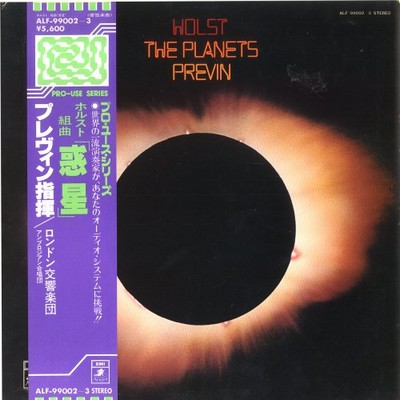
The Planets on Pro-Use Japanese Vinyl at 45 RPM Is Just Awful

More of the music of Gustav Holst (1874-1934)

This EMI 45 RPM Japanese Import 2 LP set is considered one of the great Planets by many audiophiles, but it’s not, based on our playing of a copy we had years ago, which means it belongs in our audiophile hall of shame.

The best copies on British or Dutch EMI vinyl are clearly better than this “audiophile” pressing.

What could be less surprising?

This is precisely why we dislike Japanese pressings as a rule — they sound like this audiophile trash.

Our favorite performance of The Planets can be found here.

The Big Picture from a Lifelong Audiophile

You may have seen the following text in another listing, but it bears repeating.

There is nothing new under the sun, and that is especially true when it comes to bad sounding audiophile records. The world is full of them.

There has been one big change from the days when I self-identified as a freshly minted audiophile in the 70s.

Yes, the records being marketed to audiophiles these days may have second- and third-rate sound, but at least now they have good music. That’s progress, right?

The title reviewed above is a good example of the kind of crap we newbie audiophiles used to put up with back in the old days, long before we had anything resembling a clue.

This one clearly belongs on our list of bad audiophile records.

You might be asking: What kind of audio fool was I? to buy a dumbass record like this.

It’s a fair question. Yes, I admit I was foolish enough to buy records like this and expect it to have good music, or at least good sound. Of course it had neither. Practically none of these kinds of records ever did. Sheffield and a few others made some good ones, but most Direct to Disc recordings were crap.

As clueless as I was, even back in the day I could tell that I had just thrown my money away on this lipsticked-pig in a poke.

But I was an audiophile, and like a certain Mr. Mulder, I wanted to believe. These special super-hi-fidelity records were being made for me, for special people like me, because I had expensive equipment and regular records are never going to be good enough to play on my special equipment, right?

To say I was wrong to think about audio that way is obviously an understatement. Over the course of the last forty years, I (and to be fair, my friends and my staff) have been wrong about a lots of things in the worlds of records and audio.

You can read more about many of the things we got wrong under the heading: live and learn.

The good news? Audio progress is real and anyone who goes about doing audio the right way can achieve the equivalent of miracles.

(more…)

Bad Direct to Disc Music and Sound from 1979

Hot Stamper Pressings of Direct-to-Disc Recordings Available Now

Sonic Grade: F

An awful Direct to Disc recording. This is the kind of crap we audiophiles used to put up with back in the ’70s before we had much of a clue. Clearly, a record like this belongs on our very long list — 279 as of 2023 and getting longer all the time — of Bad Audiophile Records.

The Big Picture from a Lifelong Audiophile

You may have seen this text in another listing, but it bears repeating.

There is nothing new under the sun, and that is especially true when it comes to bad sounding audiophile records. The world is full of them.

(more…)

If This Is Your Idea of a Reference Record, You Are in Real Trouble

Hot Stamper Pressings of TAS List Super Disc Albums Available Now

An astoundingly bad Sound Show!!

An audiophile hall of shame pressing and a Half-Speed mastered disaster if there ever was one. If this Reference LP isn’t the perfect example of a pass/not-yet record, I can’t imagine what would be. It is just awful.

Mastered by none other than Stan Ricker. RR-7 also appears to still be on Harry Pearson’s TAS List.

My recent notes can be seen below. (The 1 in the upper left hand corner is my abbreviation for side one, which seems to be the worst side of the two here.)

Track two, the Red Norvo selection, is a real mess, highlighting the problems typically caused by Half Speed Mastering, especially at the hands of one of the most notorious “Audiophile” Mastering Engineers of All Time, the late Stan Ricker. Who cut as many bad sounding records as SR/2 himself? No one I can think of comes close.

His records, with few exceptions, suffer from bad bass (probably bloated and poorly defined in this case, my notes don’t say but after playing these records for thirty years I doubt I’m very off with this guess) and phony, boosted highs, which cause the striking of the mallets to be emphasized in an especially unnatural and unpleasant way.

Arthur Lyman had dramatically better sound in the 50s.

How come none of the audiophiles at Reference Records bothered to figure out how he did it?

Can anybody take sound like this seriously?

(more…)