7-2019

On Black and Blue Listen to Billy Preston’s Piano

Hot Stamper Pressing of the Music of The Rolling Stones Available Now

Billy Preston is all over Black and Blue on piano and organ and his contribution is crucial to the musical vibe on practically every song. Listen for Billy’s full, solid, clear piano sound. When the piano is thin, the mix is thin and that’s not the sound you want on a Stones album.

If the piano gets lost, your copy either has a smear problem or a transparency problem. Those are certainly easier to live with — all the 70s systems I owned were smeary and opaque compared to my system today and I enjoyed the hell out of all of them — but far from ideal.

Lately we have been writing quite a bit about how pianos are good for testing your system, room, tweaks, electricity and all the rest, not to mention turntable setup and adjustment.

  • We like our pianos to sound natural (however one chooses to define the term).
  • We like them to be solidly weighted.
  • We like them to be free of smear, a quality that is rarely mentioned in the audiophile record reviews we read.

Other records that we have found to be good for testing in order to improve your playback, as well as your critical listening skills, can be found here.

(more…)

Blue – Rhino Records Reviewed

Sonic Grade: B-

In March of 2007 we remarked that we would not be carrying the new 180 gram Rhino pressing of Blue. We noted at the time: 

Since Kevin and Steve are [were] friends of mine I won’t belabor its shortcomings. Let’s just say I think you can do better.

The following is an excerpt from our first successful Hot Stamper shootout back in 2007. Blue has only gotten better — dramatically better, if I may be so bold — since then.

The copy of Blue we are offering today is one of the few that sounded good before. Now it sounds really good. It got much quieter after applying some of our new cleaning techniques, and the sound became even warmer, richer, sweeter and more transparent.

Both sides sound wonderful — rich, sweet, and delicate. The warmth, breath, and presence of Joni’s vocals take this copy to a place light years beyond the typical copy, not to mention any reissue. The guitars sound amazing, particularly on side two, and the piano has weight without hardness. There’s tons of energy and lots of ambience, plus real depth to the soundfield — you really hear INTO this copy. Try that with your Rhino LP.

(more…)

Letter of the Week – “Never heard the Doors sound like this before”

Letters and Commentaries for The Soft Parade

One of our good customers had this to say about some Hot Stampers he purchased recently:

Hey Tom,   

Tom, I have not listened to the other two yet, but I had to shoot you a quick email about the Doors Soft Parade. It is totally killer.

It’s for records like this that we pour money into high performance audio systems. Bravo! Never heard the Doors sound like this before.

It’s hard to describe that pressing. It has everything you could want in a vinyl LP. Huge wide and deep soundstage, Jim’s voice and each instrument in its own 3D place in the soundstage, phenomenal tonal balance over the entire range of the music, great texture of voice and instruments, real here-with-you presence and the decay of notes is for real. Yeah, you’re right, this one has the magic.

Ed M.

Ed, thanks very much for your letter. I think you did a great job describing the pressing we sent you.

Best, TP

(more…)

The Day the Music Burned

The Day the Music Burned

Jody Rosen

Please read the entire article. It is long but eminently worth your while if you care about music.

An excerpt:

But the case for masters extends beyond arguments about bit depth and frequency ranges audible only to dogs. It enters the realms of aesthetics and phenomenology. Simply put, the master of a recording is that recording; it is the thing itself. The master contains the record’s details in their purest form: the grain of a singer’s voice, the timbres of instruments, the ambience of the studio. It holds the ineffable essence that can only truly be apprehended when you encounter a work of art up-close and unmediated, or as up-close and unmediated as the peculiar medium of recorded sound permits. “You don’t have to be Walter Benjamin to understand that there’s a big difference between a painting and a photograph of that painting,” Zax said in his conference speech. “It’s exactly the same with sound recordings.”

The comparison to paintings is instructive. With a painting, our task as cultural stewards is to hang the thing properly, to keep it away from direct sunlight, to guard it from thieves. A painting must be maintained and preserved, but only in rare cases will a technological intervention improve our ability to see the artwork. If you were to stand before the Mona Lisa in an uncrowded gallery, you would be taking in the painting under more or less ideal circumstances. You will not get a better view.

In the case of a recording, a better view is possible. With recourse to the master, a recording’s “picture” can, potentially, be improved; the record can snap into sharper focus, its sound and meaning shining through with new clarity and brilliance. The reason is a technological time lag: For years, what people were able to record was of greater quality than what they were able to play back. “Most people don’t realize that recording technology was decades more sophisticated than playback technology,” Sapoznik says. “Today, we can decode information off original recordings that was impossible to hear at any time before.”

The process of revisiting and decoding can transfigure the most familiar music. In May 2017, a new box set of the Beatles’ “Sgt. Pepper’s Lonely Hearts Club Band” was released to mark the album’s 50th anniversary. “Sgt. Pepper’s” is one of the most famous recordings in history, but the version most listeners know is the stereo mix, which was of secondary importance to the Beatles, their producer George Martin and his engineer, Geoff Emerick. It was the mono mix that consumed the Beatles’ attention, and it is to those materials that the box set’s producer, Martin’s son Giles, returned, creating a fresh stereo mix from the mono masters. “The job was to strip back layers, to get back to that original sound and intent,” he says. “The detail we can garner from the mix compared to what they could have done 50 years ago is fantastic.”

The result is a vivid new “Sgt. Pepper’s.” In certain quarters, the album has been regarded as twee, but Giles Martin’s mix reveals a burlier rock ’n’ roll record. The box set opens new vistas on the album’s themes and adds force to its pathos. The opus “A Day in the Life” sounds more ominous than ever, a portent of late ’60s chaos, of the storm gathering on the other side of the Summer of Love. These epiphanies would not have been possible without masters. “Working without the master tapes,” Martin says, “would be like a chef having to use precooked food.”

The “Sgt. Pepper’s” masters are kept in a secure location in London. The tape boxes are marked with recording notes that helped guide Martin’s mixing decisions. The tapes themselves feature additional recordings — alternate versions, overdubs, studio chatter — that were included on the rerelease. Tens of millions of copies of “Sgt. Pepper’s” have been sold over the years; it may seem precious to place special value on the original of a record that is so well known and ubiquitous. But the masters in the London archive are unique. They have greater fidelity than any copy of “Sgt. Pepper’s” that is out in the world. They have more documentation than any version anywhere. And the masters contain more Beatles music too.

Jody Rosen is a contributing writer for the magazine. His book about the history of the bicycle will be published in 2020.

Letter of the Week -“The domestic copy you sent me of Houses of the Holy trashed my UK pressing.”

More of the Music of Led Zeppelin

One of our good customers had this to say about some Hot Stampers he purchased recently:

Hey Tom,   

The domestic copy you sent me of Houses of the Holy trashed my UK pressing.

Side 1 is so engaging. What a difference a good Stamper makes — to be engaged by the music, not just entertained.

Thanks again.

Mark H.

Mark,

You are more than welcome!

Blues Breakers – A Must Own John Mayall Album

More British Blues and Blues Rock
Hot Stamper Pressings of the Music of Eric Clapton Available Now

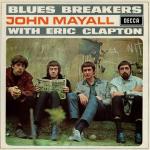
We’ve been searching for copies of Bluesbreakers for years — everyone wants a great copy of this Five Star Classic, the only album John Mayall ever made that we would consider a Must Own. After many, many years of experimentation and dozens of copies purchased we’ve finally discovered the British pressings that deliver the best sound we’ve ever heard for this music.

But they don’t come easy and they sure don’t come cheap, so don’t expect the floodgates to open with Hot Stamper after Hot Stamper hitting the site. We have a select few and it will be a year or two at the very least before we have a big enough stack of copies with which to do a shootout to find more.

A Landmark of British Blues from 1966

This is an Timeless Classic — Allmusic calls it “perhaps the best British blues album ever cut” — and it’s been a drag for years hearing it sound dull, lifeless, bland and small the way it does on so many copies. You may recognize these descriptors for what they are: signs that the pressing is made from a dubbed tape of the master .

Even worse are the versions that are bright, brittle and phony. When you’ve got a lineup like this you need the kind of space and soundstaging separation that lets you appreciate just what each of these guys is doing, instead of the muddled mess that many of us have all but given up trying to enjoy.

To qualify as a Hot Stamper, a must offer the transparency to let listener hear into the music and appreciate how the members of this group are playing as an ensemble to create this exceptionally powerful, moving and timeless music.

Credit engineer (and later producer) Gus Dudgeon with the full-bodied, rich, smooth, oh-so-analog sound of the best copies of Bluesbreakers. He’s recorded or produced many of our favorite albums here at Better Records, most notably the classic Elton Johns from the self-titled album onward. You can find many of them on our site and on our Top 100 list, including Elton’s Masterpiece, Tumbleweed Connection.

AMG Review

Bluesbreakers with Eric Clapton was Eric Clapton’s first fully realized album as a blues guitarist — more than that, it was a seminal blues album of the 1960s, perhaps the best British blues album ever cut, and the best LP ever recorded by John Mayall’s Bluesbreakers.

Standing midway between Clapton’s stint with the Yardbirds and the formation of Cream, this album featured the new guitar hero on a series of stripped-down blues standards, Mayall pieces, and one Mayall/Clapton composition, all of which had him stretching out in the idiom for the first time in the studio.

This album was the culmination of a very successful year of playing with John Mayall, a fully realized blues creation, featuring sounds very close to the group’s stage performances, and with no compromises.

Credit has to go to producer Mike Vernon for the purity and simplicity of the record; most British producers of that era wouldn’t have been able to get it recorded this way, much less released. One can hear the very direct influence of Buddy Guy and a handful of other American bluesmen in the playing.

Letter of the Week – “Great job on finding what for me is a new reference disk”

More of the Music of Elton John

More Reviews and Commentaries for Goodbye Yellow Brick Road

The entire letter can be found below, along with our general notes about the recording.

Hi, Tom:

Got a chance to try your Elton John Goodbye Yellow Brick Road hot stamper, and wow! EJ has never been one of my favorite artists, my liking his earlier output to some degree, but in my opinion GYBR is his magnum opus and his high water mark, down from which he slid rapidly into mediocrity.

I have tried a number of pressings of this record and always found it to be a good, but not great, recording, which is a shame considering it is one of the few double LP’s extant without anything approaching filler material. So I tried my Direct Disk Labs version, which was OK, but sounded veiled compared to the MFSL version, actually not bad for one of their efforts.

But the cinemascape evolved entirely with the hot stamper, bringing these great songs to life in my listening room like few others I have heard. If you want to hear a demo disk performance of this record you won’t find it outside a hot stamper in my experience. EJ’s voice is front and center, rich and full, allowing me to hear every vocal inflection. I swear I could tell what EJ had for breakfast–eggs and chutney, even! Pianos were arrayed in space with the correct surface loudness, guitars crunched on Funeral For a Friend/Love Lies Bleeding, the drums on Jamaica Jerkoff were massive and dynamic, and the bass drum whacks on I’ve Seen That Movie Too had that sock-in-the-gut punch.

This hot stamper shows off the difference between a recording and a performance. Great job on finding what for me is a new reference disk.

Roger

(more…)

Letter of the Week – “Even on my modest system it’s AWESOME!”

More of the Music of The Cars

Reviews and Commentaries for the Music of The Cars

One of our good customers had this to say about some Hot Stampers he purchased recently:

Hey Tom,   

Just got done listening to The Cars Hot Stamper. Even on my modest system it’s AWESOME! I never heard The Cars sound like that before.

I’d like to upgrade this copy when a better one comes along. I’m now convinced and the decision is made, I’m getting an audiophile turntable and moving into vinyl. Thanks for your help. 

Mike Z.

Dvorak / Symphony No. 9 – Pros and Cons

More of the music of Antonin Dvorak

Presenting yet another remarkable Demo Disc from the Golden Age of Vacuum Tube Recording Technology, in this case 1961, with the added benefit of mastering courtesy of the more modern equipment of the ’70s, in this case 1970. (We are of course here referring to the good modern equipment of 40 years ago, not the bad modern mastering equipment of today.) 

Dvorák draws the musical threads together in the last movement, weaving new material with moods and themes from previous movements into a grand finale that resulted in extended cheering from the New York audience at its December 1893 premiere.

The New York critic W. J. Henderson raved: “It is a great symphony and must take its place among the finest works in the form produced since the death of Beethoven.”

This combination of old and new works wonders on this title as you will surely hear for yourself on either of these Super Hot sides. And the 1970 British vinyl plays mostly Mint Minus!

Side One

A++ to A+++, just shy of the sound of White Hot shootout winning side. The hall is huge, so wide and deep, spacious and open. The perspective is above all natural. A little more extension up top and this side would have been impossible to beat.

Solid, powerful tympani whacks — listen for them. Sweet woodwinds too.

Side Two

A++, big and lively, with good weight down low for the lower strings and percussion. The sound is slightly blurry and veiled, but about an inch in or so the highs come in stronger, the sound opens up and there is less smear.

A little more weight in the climactic fourth movement would have put this side over the top.

(more…)

Deja Vu – Our Four Plus Side Two from 2016

Hot Stamper Pressings of the Music of Crosby, Stills, Nash and (Sometimes) Young

We award this copy’s side two our very special Four Plus A++++ grade, which is strictly limited to pressings (really, individual sides of pressings) that take a recording to a level never experienced by us before, a level we had no idea could even exist. We estimate that less than one per cent of the Hot Stamper pressings we come across in our shootouts earn this grade. You can’t get much more rare than that.

We no longer use this grade for a number of reasons we won’t go into here. Suffice to say, if you buy a White Hot Stamper pressing from us, you are getting the best sounding pressing we know to exist.

  • Our lengthy commentary entitled outliers and out-of-this-world sound talks about how rare these kinds of pressings are and how to go about finding them.
  • We no longer give Four Pluses out as a matter of policy, but that doesn’t mean we don’t come across records that deserve them from time to time.
  • Nowadays we most often place them under the general heading of breakthrough pressings. These are records that, out of the blue, revealed to us sound of such high quality that it dramatically changed our appreciation of the recording itself.
  • We found ourselves asking “Who knew?” Perhaps a better question would have been “How high is up?”

This FOUR PLUS (A++++) side two boasts insane energy, size and power. Deja Vu is one of our all time favorite albums at Better Records and one that almost never sounds THIS good.

If you play this copy good and loud, and have the kind of full-range system that plays loud and clean like live music, we guarantee you will be nothing less than gobsmacked at the size and power of the sound.

Just listen to the guitars during the solos — you can really hear the sound of the pick hitting the strings. The rhythm guitars sound meaty and chunky like the best sounding copies of Zuma and After The Gold Rush.

(more…)