1958-best

Thelonious Monk – Misterioso

  • Monk’s live 1958 release makes its Hot Stamper debut, with solid Double Plus (A++) sound from first note to last – exceptionally quiet vinyl too
  • Big, lively, open and clear with Tubey Magical richness – just the right sound for this masterful quartet
  • Recorded live at the Five Spot Cafe in New York City, the energy here is palpable – according to Orrin Keepnews, Monk “played more distinctly here than on his studio albums in response to the audience’s enthusiasm during the performance”
  • 5 stars: “[The quartet’s] overwhelming and instinctual capacities directly contribute to the powerful swingin’ and cohesive sound they could continually reinvent.”

(more…)

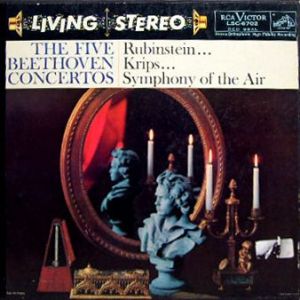
Beethoven / The Five Beethoven Concertos / Rubinstein – Reviewed in 2011

This original Shaded Dog Five Disc Box Set (LSC 6902) contains all five of Beethoven’s Piano Concertos, with sound that’s predictably all over the map, from White Hot to Not-So-Hot and every grade in between. Yes folks, we actually listened to every one of these sides in a shootout with other RCA, London and Mercury pressings of the same music.

The best sound in the set was clearly the Third Piano Concerto, which had sides that were Super Hot and White Hot. (more…)

Berlioz / Symphonie Fantastique / Fourestier – Reviewed in 2010

Hot Stamper Pressings of Well Recorded Classical Albums Available Now

More Classical “Sleeper” Records We’ve Discovered

This obscure French label stereo reissue of an original Omega recording from the 60s is SUPERB SOUNDING, without a doubt the best sound I have ever heard for the work. [The stereo is much better these days than it was years ago when we auditioned other pressings, so comparisons with those other, older records are practically pointless.]

And the performance is Top Notch as well; I know of none better.

This is a piece that is difficult to fit onto a single LP, clocking in at around 45 minutes, which means that the mastering engineer has three options when cutting the record: compress the dynamics, lower the level, or filter the deep bass. Fortunately it seems that none of those approaches were taken by the engineer who cut this record in the early ’80s — there’s plenty of punchy deep bass, as well as powerful dynamics, and the levels seem fine. How he do it? Beats me. Glad he did though!

Side One

A++ Super Hot Stamper sound from top to bottom. The strings are BIG, sweet, clear and textured — the kind of strings that one might hear on maybe one out of thirty or forty classical recordings.

We might prefer them a bit richer, and they can get a bit shrill when at their loudest, but considering how important the strings are to the success of this work, one must be thankful that they are as good as they are.

Side Two

Side two manages to convey more of that richness we were looking for in the strings on side one, but is a bit more recessed and not quite as wide in its soundstaging as we heard there. The sound is clear and open and wonderfully smooth.

And the bottom is BIG — the tympani and lower strings are powerful and dynamic. You will have a hard time finding better sound in the lower registers for this work, most of the pressings we’ve played were simply too anemic to take seriously. (Let’s face it: the average classical LP is hardly listenable.)

Super Hot Stampers again — a great Symphonie Fantastique played to perfection.

Symphonie Fantastique

Symphonie Fantastique: Épisode de la vie d’un Artiste…en cinq parties (Fantastic Symphony: An Episode in the Life of an Artist, in Five Parts), Op. 14, is a Program symphony written by the French composer Hector Berlioz in 1830. It is one of the most important and representative pieces of the early Romantic period, and is still very popular with concert audiences worldwide. The first performance took place at the Paris Conservatoire in December 1830. The work was repeatedly revised between 1831 and 1845 and subsequently became a favourite in Paris.

The symphony is a piece of program music which tells the story of “an artist gifted with a lively imagination” who has “poisoned himself with opium” in the “depths of despair” because of “hopeless love.” Berlioz provided his own program notes for each movement of the work (see below). He prefaces his notes with the following instructions:[1]

The composer’s intention has been to develop various episodes in the life of an artist, in so far as they lend themselves to musical treatment. As the work cannot rely on the assistance of speech, the plan of the instrumental drama needs to be set out in advance. The following programme must therefore be considered as the spoken text of an opera, which serves to introduce musical movements and to motivate their character and expression.

There are five movements, instead of the four movements which were conventional for symphonies at the time:

Rêveries – Passions (Daydreams – Passions)

Un bal (A ball)

Scène aux champs (Scene in the Country)

Marche au supplice (March to the Scaffold)

Songe d’une nuit de sabbat (Dream of a Witches’ Sabbath)

Wikipedia


This is an older classical/orchestral review

Most of the older reviews you see are for records that did not go through the shootout process, the revolutionary approach to finding better sounding pressings we started developing in the early 2000s and have since turned into a veritable science.

We found the records you see in these older listings by cleaning and playing a pressing or two of the album, which we then described and priced based on how good the sound and surfaces were. (For out Hot Stamper listings, the sonic grades and vinyl playgrades are listed separately.)

We were often wrong back in those days, something we have no reason to hide. Audio equipment and record cleaning technologies have come a long way since those darker days, a subject we discuss here.

Currently, 99% (or more!) of the records we sell are cleaned, then auditioned under rigorously controlled conditions, up against a number of other pressings. We award them sonic grades, and then condition check them for surface noise.

As you may imagine, this approach requires a great deal of time, effort and skill, which is why we currently have a highly trained staff of about ten. No individual or business without the aid of such a committed group could possibly dig as deep into the sound of records as we have, and it is unlikely that anyone besides us could ever come along to do the kind of work we do.

The term “Hot Stampers” gets thrown around a lot these days, but to us it means only one thing: a record that has been through the shootout process and found to be of exceptionally high quality.

The result of our labor is the hundreds of titles seen here, every one of which is unique and guaranteed to be the best sounding copy of the album you have ever heard or you get your money back.


Further Reading

Massenet / Le Cid Ballet Music – Excellent on Stereo Treasury

Reviews and Commentaries for the Music of Jules Massenet (1842—1912)

Hot Stamper Classical and Orchestral Imports on Decca & London

This is an older review, perhaps from before 2010. We did a shootout for Le Cid, but it wasn’t remotely as comprehensive as the kind of shootouts we do now.

Our current favorite for performance and sound of Le Cid is the one on EMI Studio 2 with Fremaux conducting.

Superb Hot Stamper sound for Les Patineurs, and the Le Cid is just a step behind at A+ to A++. We had a copy of the famous Greeensleeves pressing for our shootout, along with a number of Londons, and this Stereo Treasury had the highest overall sonic grades of all of them. The original Blueback pressing — true, we only had the one, so take it for what it’s worth — was a complete disaster: shrill, with no top or bottom to speak of.

Both these pieces are audiophile Must Own Demonstration pieces, full of depth, ambience, and wonderfully correct instrumental timbres, especially from the woodwinds. Add explosive dynamics and deep bass and you have yourself a genuine audiophile recording.   (more…)

Gilbert and Sullivan / Pirates of Penzance – Our Shootout Winner from 2009

EXCELLENT sound on EVERY side, which means it is truly a Demo Disc. On virtually every side it has the kind of rich, sweet Decca/London sound over which we audiophiles have been known to drool. It’s nothing short of AMAZING on the White Hot side — so lively, rich and HUGE. This is a Top London pressing in every way. 

And it just so happens that such superb sonics are found on a lowly budget reissue, the Jubilee London label, pressed in Holland no less! Thank goodness we don’t judge records either by their labels, their country of manufacture or their pressing era.

If we had — as virtually every record seller in the world does to this very day — we would never have discovered how good this music can sound.

Do the original pressings sound as good as this one? Not in our experience. We prefer the sound of vintage Golden Age All Tube recordings that have been mastered with the better transistor cutting equipment that became available in the late ’60s and early ’70s.

That’s what this is to a “T.” We found a batch of these box sets sealed, cracked them open, liked what we heard and decided to clean them up and give them a serious listen. We’re glad we did. Not only is the sound SUPERB in every respect, but the music is some of the best light opera ever written. Check out the rave reviews from back in the day, keeping in mind that this music has been performed without interruption for more than a hundred years.

The hall is HUGE: spacious and open as any you will hear, but not at the expense of richness or fullness. The orchestra is solid and full-bodied, yet the woodwinds and flutes soar above the other sections, so breathy and clear. How did the Decca engineers succeed so brilliantly where so many others have failed, failing right up until this very day?

Who knows? It’s still a mystery that has yet to be explained, to my satisfaction anyway.

(more…)

Ella Fitzgerald / Sings The Irving Berlin Song Book – Reviewed in 2005

This is a very nice looking Verve Strobe Label Double LP. The quality of the sound changes here not only from side to side but from track to track. We dropped the needle on various songs on each side and side three had the best sounding songs we heard. Every side had some great sounding songs, some with tubey magic and breathy vocals. How About Me and Cheek to Cheek on side two sound particularly good.  

AMG Review

These selections are perfectly suited for Fitzgerald’s voice and her romantic sensibility; they are happy, occasionally sad, and full of swinging rhythm. A few of these songs — “Cheek to Cheek,” “Puttin’ on the Ritz,” and “Blue Skies” — will be most familiar; others, “Top Hat, White Tie, and Tails,” “Russian Lullaby,” and “All By Myself” are as memorable but perhaps less known… For fans who have enjoyed other songbook recordings, this is a must-have; for those unfamiliar with Fitzgerald’s songbook work, this is an excellent place to start.

Grofe / Grand Canyon Suite / Bernstein

This Minty Columbia Grey label Stereo LP is one of the most amazing copies ever! You will be hard pressed to find a better sounding Grand Canyon suite. Bernstein’s Columbia recordings usually leave much to be desired. This is a notable exception. The normal Columbia shrillness is gone, replaced by sweet and liquid sound. I wish more of his records sounded like this one: I’d be picking them up left and right.

Falla / El Retablo de Maese Pedro / Argenta – Reviewed in 2007

Hot Stamper Classical and Orchestral Imports on Decca & London

Reviews and Commentaries for Recordings by Decca

DEMONSTRATION QUALITY SOUND!

The Falla work here is a true Demo Disc. It’s the reason people love this record.

They don’t love it enough to spend the kind of money we have to charge to make it worth our while though, so it will probably not be a title that we can do again, as much as we might want to.

This is an Older Classical/Orchestral Review

Most of the older reviews you see are for records that did not go through the shootout process, the revolutionary approach to finding better sounding pressings we started developing in the early 2000s and have since turned into a veritable science.

We found the records you see in these older listings by cleaning and playing a pressing or two of the album, which we then described and priced based on how good the sound and surfaces were. (For out Hot Stamper listings, the Sonic Grades and Vinyl Playgrades are listed separately.)

We were often wrong back in those days, something we have no reason to hide. Audio equipment and record cleaning technologies have come a long way since those darker days, a subject we discuss here.

Currently, 99% (or more!) of the records we sell are cleaned, then auditioned under rigorously controlled conditions, up against a number of other pressings. We award them sonic grades, and then condition check them for surface noise.

As you may imagine, this approach requires a great deal of time, effort and skill, which is why we currently have a highly trained staff of about ten. No individual or business without the aid of such a committed group could possibly dig as deep into the sound of records as we have, and it is unlikely that anyone besides us could ever come along to do the kind of work we do.

The term “Hot Stampers” gets thrown around a lot these days, but to us it means only one thing: a record that has been through the shootout process and found to be of exceptionally high quality.

The result of our labor is the hundreds of titles seen here, every one of which is unique and guaranteed to be the best sounding copy of the album you have ever heard or you get your money back.


Further Reading
Andre Previn & His Pals – Gigi

  • A KILLER sounding original Black Label Stereo pressing with Triple Plus (A+++) sound from the first note to the last    
  • If you have never heard an All Tube Analog piano trio recording by Roy DuNann from the Golden Age of Tape, you are really in for a treat with this phenomenal sounding LP
  • Exceptionally (I’m tempted to write impossibly) quiet vinyl throughout – Mint Minus to Mint Minus Minus
  • “André Previn’s ten records for Contemporary during 1957-1960 were among the finest jazz recordings of his career… Best known among the songs are “I Remember It Well” and “Thank Heaven for Little Girls,” but the trio also uplifts and swings the other lesser-known tunes.”

This vintage Contemporary Black Label pressing has the kind of Tubey Magical Midrange that modern records can barely BEGIN to reproduce. Folks, that sound is gone and it sure isn’t showing signs of coming back. If you love hearing INTO a recording, actually being able to “see” the performers, and feeling as if you are sitting in the studio with the band, this is the record for you. It’s what vintage all analog recordings are known for — this sound. (more…)

June Christy – June’s Got Rhythm (Stereo)

More June Christy

More Pop and Jazz Vocals

This Super Hot Stamper original stereo Capitol LP from 1958 has SUPERB SOUND on both sides and some of the best June Christy music we’ve ever had the pleasure to play. Just listen to the piano on Gypsy In My Soul; it’s rich, warm and full-bodied. You’ll never hear an RVG recording with a piano that sounds like that. On side two drop the needle on Easy Living to get a taste of some of Capitol’s luscious Tubey Magical midrange.

Musically this album is right up there with the best we know, the creme de la creme of female vocal recordings, albums on the level of Clap Hands and Something Cool and Lady in Satin.

Backed by an intimate combo of star jazzmen, June swings a set of fresh songs in an eventful album that sings out to the whole world that she has, indeed, got rhythm.

For an album of warm, breathy, intimate female vocals, it really doesn’t get much better than this.

What to Listen For

We had the best luck with copies that were warm and rich yet clear, and not too dry or harsh when June decides to really belt it out. Practically no copies did not have at least some grit, dryness or harshness on June’s vocals at some point. (more…)