11-2023

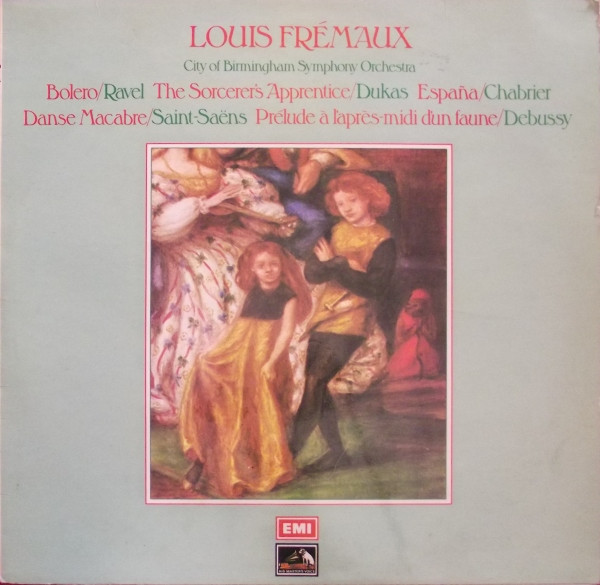
The Best Danse Macabre on Record

Hot Stamper Pressings of the Music of Saint-Saens Available Now

Saint-Saens’ symphonic poem, Danse Macabre, the second piece on the second side, is the heart of the album and its raison d’être for us. This is where the real fireworks can be found, although that’s not really fair as there are fireworks aplenty on both sides.

What we have here is the best Danse Macabre we have ever played.

We have always been fans of Gibson’s performance on the legendary Witches’ Brew. As good as that recording may be, this one is clearly superior in practically every way — it’s bigger, clearer, richer, more resolving, more spacious, more real and, to my surprise, more EXCITING and involving.

If you own a copy of LSC 2225, hopefully not the awful Classic Records Heavy Vinyl pressing, you need to hear what Fremaux and the City of Birmingham Symphony Orchestra have accomplished on this wonderful 70s EMI.

Audiophiles (especially those of us with large dynamic speakers) have always been drawn to the biggest and most exciting orchestral spectaculars, and we have plenty on the site at all times to satisfy the need to hear these kinds of records at their properly-mastered, properly-pressed best.

Why spend money on another underperforming modern reissue that you will end up rarely playing when much more powerful and involving sound can be found on our site, sound so good it has the potential to change your life.

Four Exceptional Orchestral Showpieces

The Sorcerer’s Apprentice (Dukas)

This piece opens the side. There is depth and richness to beat the band, as well as clarity and tonal correctness that let you forget the recording and just enjoy the music.

A superb performance as well, as good as any we know of. And the sound is the equal of the best recordings we’ve played.

Espana. Rhapsody For Orchestra (Chabrier)

As good as Fremaux is, I think the Ansermet (CS 6438) might still have the edge, but both are so good that it might just come down to a matter of taste. You cannot go wrong with either.


UPDATE 2023

And now we actually prefer the famous Argenta recording for Decca that’s on the TAS List, CS 6006.


(more…)

Letter of the Week – “I wouldn’t believe it if I weren’t hearing it!”

Hot Stamper Pressings of the Music of Cat Stevens Available Now

Our good customer Joel not only loved our slightly noisy but amazing sounding Mona Bone Hot Stamper pressing, but he found it to be pretty darn quiet to boot. He says it’s the best $180 he’s ever spent on an LP. Seems like a lot of money for one record, but when the music and sound are this good who wants to argue with a happy man?

Some records can change your life, and it seems that this just might be the one that did it for Joel.

Hi Tom

I just spun the bargain tics and pops A+++ Mona Bone Jakon. I listened to this record hundreds of times growing up, but never like this! Silky smooth voices and guitars, so lifelike! Nice bass extension also… I have to laugh, because I think that the condition of this record is excellent.

Now I know how the other half lives! Listening to this hot stamper reminds me of my image of the rich man, eating only the center of the watermelon.

These hot stampers are amazing, I wouldn’t believe it if I weren’t hearing it!

Best $180 I’ve ever spent on an LP…

Joel

Joel, like it says in our commentary, we love Cat too. Thanks so much for your letter.

Enjoy one of the greatest folk rock records records of all time, finally sounding the way it was meant to.

Best,
TP

Live and Learn

When we said this album was not the sonic equal of Teaser and the Firecat or Tea for the Tillerman, boy, we was wrong and then some. Read all about it in this White Hot Stamper copy review below. (more…)

Did We Get The Power of the Orchestra Wrong, or Are These Just Bad Stampers?

Hot Stamper Pressings of Living Stereo Recordings Available Now

In 2007, we wrote the following review for The Power of the Orchestra, VCS 2659:

DEMO DISC QUALITY ORCHESTRAL SOUND like you will not believe. We put two top copies together to bring you the ultimate-sounding Pictures At An Exhibition. Folks, it doesn’t get any better than this for huge orchestral dynamics and energy.

I confess I badly misjudged this record over the course of the last few years. I remember liking it in the early ’90s; at that time it was the only Golden Age recording of Pictures whose performance moved me. I never liked the famous Reiner, LSC 2201, and Ansermet’s performance on London also lacks drive and coherency in my opinion.

I then went on to extoll the many virtues of the recording, making special mention of the brass, dynamics and bass, which you can read about here.

More recently we played a copy of VCS 2659 in one of our regular Pictures at an Exhibition shootouts and were not the least bit impressed by it.

Side One:

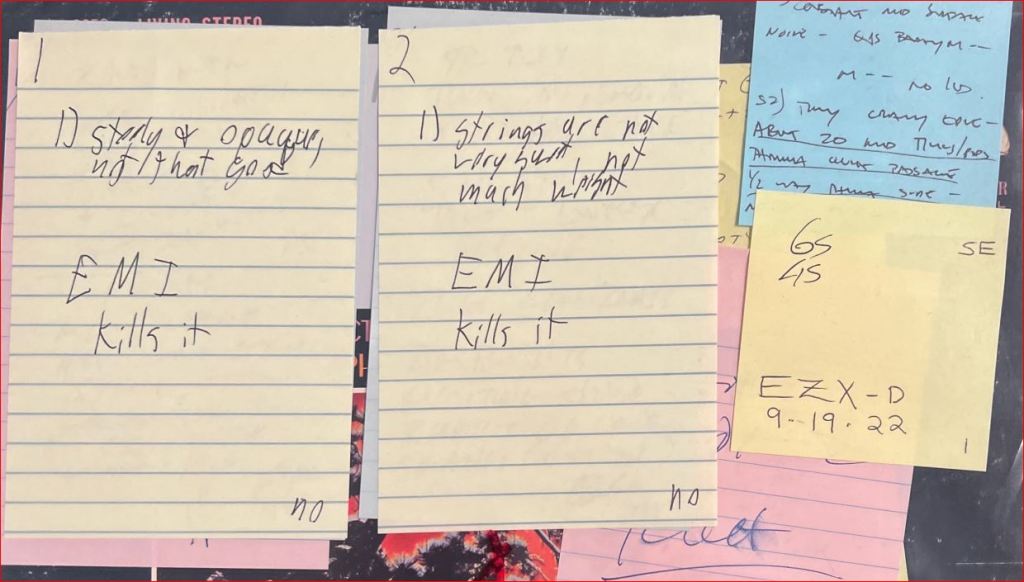
Steely and opaque, not that good.

Side Two:

Strings are not very [unintelligible, might be bright], not much weight.

In other words, it just sounded like an old record.

(more…)

Armed Forces Deserves to Be More Popular

Hot Stamper Pressings of Elvis’s Albums Available Now

Armed Forces is one of the best sounding rock records ever made.

I would put it in the first percentile of all the rock recordings I’ve ever played, ahead of 99% of the pack — but only if you have the right Brit pressing, the kind we describe at length in our reviews.

Armed Forces sets a standard few records can meet. It will make every audiophile Half-Speed and Heavy Vinyl pressing you own sound positively sick by comparison. The real thing just can’t be beat, and Armed Forces is as real as it gets, baby!  A true Demo Disc on big speakers at loud levels.

The hottest copies have unbelievably punchy, rock-solid bass and drums. I would say the sound of the rhythm section of this album ranks up there with the very best ever recorded. Beyond that, the musical chops of this band at this time rank with the very best in the history of rock. Steve, Bruce and Pete rarely get the credit they deserve for being one of the tightest, liveliest backing bands ever to walk into a studio or onto a stage.

There are about 100 records we think deserve to be more popular with audiophiles, and Armed Forces is one of them.

(more…)

Letter of the Week – “The real point for me is that I can keep enjoying these new listening experiences over and over again.”

Our new customer Michel wrote to tell us how much he likes his Hot Stamper pressing of So.

Hi Tom,

Many of the BR titles I bought I had stopped listening to due to lack of engagement with the music. It just didn’t do it for me anymore. But then I’d buy one of your LPs… it would then destroy my other copies… and now I listen to that LP on a regular basis, enjoying music I love but had stopped listening to.

When I put on a BR record, I am engaged with the music… and of course I keep hearing new nuances, etc. with every play.

Why pay so much for an album?  Well if music floats your boat, then no explanation needed. Just bring your ears to my living room…then you’ll get it!

The real point for me is that I can keep enjoying these new listening experiences over and over again. It is an immeasurable joy really to hear beautiful music reveal itself in all its splendor.

How the f*** does yours sound so much better? Virtually as soon as the music began the difference was obvious.

I remember liking some aspects of the UK… and the same goes for the US… I liked the warmth and rolled back highs in comparison the UK, but it seemed muddy/veiled/mishmashy which was bothersome, so then I stopped listening.

The BR copy somehow has it all. It is by far the most listenable copy of this I’ve ever heard. It can be turned up all the way from start to finish without any worries about what you might hear.

Plenty of shrill-free highs, lots of killer bass… deep low tones with analog warmth, boomy wide room filling sound, etc, etc.  No muddiness in the presentation… clarity with warmth, nothing veiled.

Thank You!!
Michel

Michel,

You make a point that I have been banging on for years. Better sounding pressings are the only way to rediscover music that you’ve lost interest in because the copies you own didn’t have the sound you needed.

If your old copies of So had sounded better, you would have played them, but they didn’t, and so they sat on the shelf.

Knowing the sound was off, you simply stopped playing them. You lost track of So.

Hot Stamper pressings get played. They have the life of the music in their grooves and demand to be heard!

We say music does the driving in this hobby, but that’s not really the whole story for us audiophiles, is it?

Music with good sound is what really does the driving.

Joy to Your World

When you get hold of the pressing that presents the music the way you want to hear it, that’s the record that gets played beause that’s the record that brings joy to the listener.

The other pressings of So sit on the shelf, reminders that badly-mastered, badly-pressed records are the norm, not the exception.

The exceptional pressing is the one that can bring the music you love back from the purgatory of the overcrowded record shelf.

Think of the audiophiles that have thousands and thousands of records on their shelves and never find time to play them. Why is that?

Maybe it’s because there is nothing special about those pressings. Some collectors are so proud of having so many records — look at them all! — but what good are they? To our way of thinking, the man with ten or twenty exceptionally good records is far better off than than the one with a thousand or five thousand mediocrities.

If you want a powerful, immersive, thrilling musical experience, you will need a record that is powerful, immersive, and thrilling.

The thousands of records sitting on your shelf, the ones you haven’t played in years, are the silent reminders that they aren’t nearly as good as you think they are. If they were better, they would call out to you from that graveyard you call a record collection and fight their way back to your turntable.

So Is Back

Now, after all these years, you finally have a pressing of So that demands to be played.

If others of you out there haven’t played your copy of So in a long time, maybe there’s a reason for that.

Thanks for your letter.

Best, TP

(more…)

Crosby Stills & Nash – Critical Listening Exercise

More of the Music of Crosby, Stills and Nash

This very old commentary from an early Hot Stamper listing (2005?) for CSN’s debut makes note of some specific qualities in the recording that are a good test for midrange transparency and naturalness.

Here are some other albums with specific advice on what you should be listening for.

What’s magical about Crosby, Stills, Nash (& Young)? 

Their voices of course. It’s not a trick question. They revolutionized rock music with their genius for harmony. Any good pressing must sound correct on their voices or it has no value whatsoever. A CSN record with bad midrange — like most of them — is a worthless record.

Suite: Judy Blue Eyes

Listen to the section of the song that starts with Stills’ line “Can I tell it like it is,” with Nash and Crosby behind him — it’s clearly a generation of tape down from what came before and what comes after. The voices and the acoustic guitars just seem to lose their immediacy and transient impact for no apparent reason. Wha’ happen?

It’s the mix, folks, and no mastering engineer can fix it. This album is full of parts and pieces of various songs that are occasionally problematical in that way. Recognize them for what they are, little bumps in the road, a road that led ultimately to one of the greatest pop albums ever made.

On the hot copies the best sounding material will sound amazing, and the lesser sounding material (i.e., the more poorly recorded or mixed bits and pieces) will sound as good as they can sound.

That’s the nature of the beast. It is what it is. The more intensely you listen to a record like this — a true Rock Classic from the 60s, and one we listen to very intensely when doing these shootouts — the more you will notice these kinds of recording artifacts. It’s what gives them “character.”

It’s also what allows you to play a record like this on a regular basis and still find something new in it after all these years.

We’ve made some recent improvements to the stereo and room here at Better Records and I can tell you I heard things in this recording I never knew were there.

What could be more fun than that? The music never gets old, and neither does the sound.

Hearing Is All It Should Take, Right?

Hot Stamper Classical and Orchestral Pressings Available Now

Some person on some audiophile forum might feel obligated at some point to explain to you, benighted soul that you are, that the old classical records you — and other audiophiles like you — revere so highly have to be recognized these days for what they are: drastically compromised by the limits of their old technology.

Simply put, there’s just no way they can sound good.

It’s just a fact. It’s science. Technology marches on and those old records belong on the ash heap of history collecting dust, not sitting on the platter of a modern turntable.

That’s why the audio world was crying out for Bernie Grundman to recut those Living Stereo recordings from the 50s and 60s on his modern transistorized cutting equipment and have RTI press them on quiet, flat, high-resolution 180 gram vinyl, following the best practices of an industry that everybody knows has been constantly improving for decades.

Right?

For those of us who actually play these records, there is little evidence to support this narrative.

It’s a story made up mostly of assertions, along with an unhealthy amount of faith in so-called experts. [1]

Note that Bernie had no experience cutting classical music. He was a rock, pop and jazz guy. Robert Ludwig was the classical guy, cutting hundreds of albums for labels like Nonesuch in the 60s. What a different world it would be if he was the guy who cut for Classic Records! This review gets to the heart of the matter.

However, the contrarian view outlined above only really holds true for a very small minority of audiophiles of the analog persuasion: those given to empirical testing of such propositions. [2]

For an audiophile to compare the new pressings to the old ones, proper testing requires that the following four conditions can are met:

  1. He or she has a revealing, accurate stereo,
  2. A good record cleaning system, and
  3. Knows how to do shootouts using his or her
  4. Well-developed critical listening skills

If you’ve spent much time on this blog, you’ve probably read by now that the first three on this list are what allow you to achieve the fourth.

Compromises?

The best classical recordings of the 50s, 60s and 70s were compromised in every imaginable way, yet still they sound amazing.

(more…)

Letter of the Week – “One begins to notice what is wrong with them — they sound tinkered with”

More of the Music of Elvis Presley

Reviews and Commentaries for the Music of Elvis Presley

One of our good customers had this to say about some Hot Stampers he purchased in 2017.

Hey Tom, 

Bless You Tom! Much appreciated! Funny thing is, I never had this album or properly heard it before now. Back in the late ’70s and early ’80s, I too was buying audiophile pressings and Half Speed Masters and at first, I thought they were great! But before too long, one begins to notice what is wrong with them– they sound tinkered with! I think that is exactly what MoFi did.

I tried these again when I came back to vinyl in 2009. That first year I began buying audiophile pressings but when I played them back I found they were not the holy grail nor the sound I was looking for at all! Certainly not even the claimed ‘Sourced from the Original Master Tape’ was true! More like, from the digital master/remasters or a third generation master. I spent a whole lot before I put the brakes on and went for original recordings/early pressings such as ED1 or ED2.

Now, when I want a record for serious listening of something special, I know the only place to get what I want first time and every time for the best sounding records– Better Records, of course!

Michael

Michael,

Thanks for your letter. “Tinkering” with the sound is what these audiophile labels do. They think they know how to “fix” the recordings that the original producers and engineers got wrong.

Like you, I was fooled.

It took me a while but eventually I started to see where I had gone wrong.

And don’t write off all reissues. You can stick to first and second editions, but by doing that you will miss out on the superior sound of these 150+ reissues. (If I had time to really go deeper into it, I could probably list three times that many.)

Even better, these superior sounding reissues can actually be bought.

Best, TP


This link will take you to our reviews and commentaries for the more than 140 Half-Speed Mastered pressings we’ve played over the years.

Some audiophile records — Half-Speed Mastered and otherwise — are so dreadful sounding that I got pissed off enough to create this special list for them.

Setting higher standards — no, being able to set higher standards — in our minds is clearly a mark of progress.

Judging by the hundreds of letters we’ve received, especially the ones comparing our records to their Heavy Vinyl and Half-Speed Mastered counterparts, we know that our customers see things the same way.


Further Reading

Listening In Depth to Catch Bull At Four

More of the Music of Cat Stevens

If you’re familiar with what the best Hot Stamper pressings of Tea for the Tillerman, Teaser and the Firecat or Mona Bone Jakon can sound like — amazing is the word that comes to mind — then you should easily be able to imagine how good a killer copy of Catch Bull at Four sounds.

All the ingredients for a Classic Cat Stevens album were in place for this release which came out in 1972, about a year after Teaser and the Firecat. His amazing guitar player Alun Davies is still in the band, and Paul Samwell-Smith is still producing as brilliantly as ever.

Side One

Sitting

This track often sounds a bit flat and midrangy, and it sounds that way on most domestic pressings and the “wrong” imports.

The best imports and domestic pressings are the only ones with the sweeter, tubier Midrange Magic that we’ve come to associate with the best Cat Stevens recordings.

Boy With a Moon & Star on His Head

Another very difficult track to get to sound right. The better copies have such amazingly transparent sound you can’t help feeling as though you really are in the presence of live human beings. You get the sense of actual fingers — in this case the fingers of Cat’s stalwart accompanist Alun Davies — plucking the strings of his Spanish guitar.

Angelsea

This is one of the best sounding tracks on the album, right up there with Cat’s most well recorded big productions such as Tuesday’s Dead, Changes IV, Where Do The Children Play and Hard Headed Woman. On Hot Stamper copies this is a Demo Track that’s hard to beat.

The midrange magic of the acoustic guitars is off the scale. Some of Catch Bull At Four has the magic and some of it does not, unlike Tea and Teaser, which are magical all the way through.

Silent Sunlight
Can’t Keep It In

On the best copies this track is as Huge and Powerful as anything the man ever recorded. It’s another one of the best sounding tracks on the album. On our top copies this is a Demo Track that’s hard to beat.

The midrange magic of the acoustic guitars is off the scale. Some of Catch Bull At Four has the magic and some of it does not, unlike Tea and Teaser, which are magical all the way through.

Side Two

(more…)

If You’re Looking for the Best Sound on Standard Coltrane, Look No Further

Hot Stamper Pressings of the Music of John Coltrane Available Now

As you may have guessed by now, remastered is a bit of a dirty word around these parts.

Most remastered records we play, from The Beatles to John Coltrane to ZZ Top, sound to us like pale imitations of the real thing, whether the real thing is an original or a vintage reissue from back in the day.

But only a fool could fail to appreciate how correct and lively the best copies of this remastered record sound, and we’re no fools here at Better Records. We judge records by one and only one criterion: the quality of their sound.

We pay no mind to labels, record thicknesses, playback speeds, mastering speeds or anything else you can read about on audiophile websites.

We’re looking for the best sound. We don’t care where it comes from.

On that basis we’re awarding side two of this recent shootout winning copy the award for the best sound on Standard Coltrane.

No other pressing of the album could do what this side two was doing. And the good news is that side one was nearly as good, making this the best copy to ever hit the site.

Side One

So dynamic, present and lively, with a rich sax and clear, solid piano. Great energy.

Side Two

Even better, with tighter, bigger bass.

Let’s give RVG a hand, the tonality on this side is HTF: Hard To Fault.

Only a small percentage of the many remastered records we’ve played over the years can make that claim in our experience.

(more…)