01-hit

Listening in Depth to Crosby Stills & Nash

Hot Stamper Pressings of the Music of Crosby, Stills and Nash Available Now

Now with bonus CD Advice.

Although millions of copies of CSN’s first album were sold, so few were mastered and pressed well, and so many mastered and pressed poorly, that only a ridiculously small number of Hot Stamper copies have ever actually made it to the site. A couple dozen would be my guess, compared to, for example, the Beatles albums, many of which have sold by the hundreds. To this day they are difficult to keep in stock, I assume because our customers seem to really like them.)

We wish that were not the case — we love the album — but the copies we know to have the potential for Hot Stamper sound are just not sitting around in the record bins waiting for us to scoop them up.

But of course that was never the really the case even back in the good old days, as the reissue we like was simply not produced in significantly large numbers the way the originals were. Finding the right reissues was always a matter of luck, with the odds stacked very much against us. I don’t remember ever finding more than one copy with the killer stampers in a single year.

Warning

Whatever you do, don’t waste your money on the Joe Gastwirt-mastered CD.

It couldn’t be any more awful. (His Deja Vu is just as bad.)

In-Depth Track Commentary

Side One

Suite: Judy Blue Eyes

What’s magical about Crosby, Stills, Nash & Young?

Their voices of course. It’s not a trick question. They revolutionized rock music with their genius for harmony. Any good pressing must sound correct on their voices or it has no value whatsoever. A CSN record with substandard midrange reproduction — like most of them — is a worthless record.

(more…)

“I now know how the Beatles ACTUALLY sound, and cannot bear to listen to any substandard versions.”

One of our good customers had this to say about a Hot Stamper pressing he purchased recently:

I just received the Super Hot Stamper copy of the Beatles Oldies and would like to thank you for selecting a very nice copy that is in the surprisingly good condition. On the first listen, the outstanding tracks are “She Loves You” (super sweet, crystal clear vocals), “Day Tripper” (incredibly soft, yet energetic sound), “Eleanor Rigby” (powerful voice and strings), “I Feel Fine” (crisp, powerful drums), and “A Hard Day’s Night” (oooh, those vocals and those chiming guitars bursting out of the speakers!)

The only somewhat disappointing track is “Help.” Hard sounding, even harsh, with boosted highs and insufficient bass.

Alex followed up in more depth with this:

Just wanted to send you compliments on picking a very good pressing of the The Beatles “A Collection of Beatles Oldies” (Super Hot Stamper). I am a massive Beatles fan and have a number of various copies of their LPs in my collection. I received your hot stamper yesterday, and spent some time doing side-by-side shootouts comparing the tracks on your hot stamper to the same tracks on my other LPs.

I’ll just quickly comment on “Ticket To Ride” (one of my all time favourite Beatles songs): I compared the hot stamper pressing with my original UK pressing of the LP “Help.” After playing “Ticket To Ride” (last track on side one of “Help”, I said to myself “hey, no way this track could ever sound better than it already does. The sound is big as a house, loads of energy, the guitars are cutting, shimmering. and leaping out the right speaker, Lennon’s voice is searing, Ringo’s drums are rocking!”

Then I played the hot stamper version. Wow! What a stunning difference. It’s as if someone pulled cotton wool out of my ears. Such presence, such clarity, such musicality. The sweetness, the razor sharp imaging and precision in the soundstage. I mean, I’m speechless.

I then dutifully went on to play “Ticket To Ride”, comparing the hot stamper with my Japanese pressing of “Help”, my Capitol pressing, etc. Of course, all those other pressings fared much worse than my original UK pressing.

I am kind of in disbelief now. How’s such a stunning difference even possible, given that they’re pretty much coming from the same (or similar) master tape. My 1965 UK pressing [1] was obviously cut from the fresh master tape, and yet it sounds muddled and blaring compared to the 1966 [2] pressing of the hot stamper.

Another interesting thing to note is that, prior to hearing the hot stamper, I honestly thought that the UK version on the “Help” LP sounded fantastic.

This experience sounds and feels like witchcraft. It took me a while to follow Robert’s advice [Robert Brook the man behind The Broken Record] and get to listen to a hot stamper, but here we are.

(more…)

Answers to Some of Your Hot Stamper Questions

More Straight Answers to Your Hot Stamper Questions

We discuss a number of subjects with our letter writer below, including what we think of The Beatles’ records in mono, our grading system, how we clean our records and various and sundry other aspects of the business we run. These are the kinds of questions we get regularly and are more than happy to answer.

Hey Tom, 

First off, I got to say, congratulations on a great concept. Also, congrats on having the balls to charge what these albums are worth.

Thanks. You hit the nail right on the head — we charge what the pressings are worth. They are often incredible sounding records of some of the greatest music ever recorded. We should know; we played them, something that no other record dealers on the face of the earth can say. To those of us who do the listening, as well as our Better Records customers, they are priceless.

Like any business, we charge what the market will bear, and it seems people are willing to pay a lot for these records, although less for some than they used to — some of our records now sell for half or even less than what we were getting two or three or five years ago.

That said, the top copies have held their prices pretty well over the years and have often gone up substantially. It’s the second tier and third tier titles and the Super Hots that have tended to fall in price. That’s where the real “bargains” are these days.

Like all of our Hot Stamper pressings, even the cheapest of them (starting at $25!) are guaranteed to be better sounding than any pressing you own or have ever heard, or your money back.

OK – I spent a fortune on my system. Including acoustic design, the best of everything – speakers, turntable, preamp, amps – you get it. The whole set up probably cost me over $600k.

Wow. I don’t have $600k in my system, but I do have about $600k worth of labor in it (!) You can read all about our stereo here.

I am a crazy fanatic – audio perfection is something that really moves me.

Me too. I wrote about it in a commentary that describes how I fell in love with a record that gave me the reason I needed to get deep into audio.

(more…)

Letter of the Week – “I have to tell you that I was floored at the sound of the Hot Stamper Aqualung I just bought.”

This testimonial letter comes from our good customer Roger, who was blown away by the Hot Stamper pressing of Aqualung we sent him [many, many years ago].

Roger, as expected, did a thorough shootout of his own, comparing of our Hot Stamper against the audiophile usual suspects. The result? Another knockout for our Hot Stamper pressing.

Note that a well known audiophile reviewer did his own shootout for the album years ago, failing miserably, unlike our good customer Roger, who succeeded admirably.

Hi Tom,

I have to tell you that I was floored at the sound of the hot stamper Jethro Tull Aqualung I just bought. Darn you again and your hot stampers.

To give you some idea of how many times I have heard this album, backtrack to 1971 when it came out. On a Boy Scout trip a friend of mine had a portable 8-track tape player and this one tape, Aqualung. I remember sleeping on one of the seats in a car with the Aqualung tape on infinite repeat all night. In high school I had the 8-track and listened to this record hundreds of times.

Through the years after becoming an audiophile I bought many different copies looking for the ultimate-sounding LP, finally settling on the MFSL version, which I bought when it came out.

So I had a good time comparing 4 copies:

    1. the MFSL half-speed,
    2. the DCC version,
    3. the 25th anniversary digitally remastered copy,
    4. and the Hot Stamper.

First I tried the 25th anniversary and it was just as I remembered it — it sounds digital, like a CD. Lots of detail, but hard, hyped, edgy, flat soundstage, compressed dynamics. As digital usually sounds, guitars were harsh and jumped unnaturally out of the mix.

(more…)

This Pressing of Carmen Had Dry Strings on One Side, Rich Strings on the Other

Hot Stamper Pressings on Decca and London Available Now

My notes for side two on a copy we recently auditioned read:

Could use more tubes.

Strings could be a bit smoother.

Needs a bit more weight down low.

My notes for side one:

Side one had all of this and more!

Some Common Issues with Londons and Deccas

Many London and Decca pressings lack weight down low, which thins out the sound, easily heard in the lower strings, which sound washed out.

On some sides of some copies the strings are dry, lacking Tubey Magic. This is decidedly not our sound, although it can easily be heard on many London pressings, the kind we’ve played by the hundreds over the years.

If you have a rich sounding cartridge, perhaps with that little dip in the upper midrange that so many moving coils have these days, you will not notice this tonality issue nearly as much as we do.

Our 17Dx is ruler flat and quite unforgiving in this regard. It makes our shootouts much easier, but brings out the flaws in all but the best pressings, exactly the job we require it to do.

Here are some other records that are good for testing string tone and texture.

(more…)

Are Hot Stampers a Better Mousetrap? A Case of Added Value? A Scam?

Basic Concepts and Realities Explained

This hobby is supposed to be fun. If you’ve been in it for any length of time you know that sometimes it is and sometimes it isn’t.

But if you enjoy doing it at least some of the time, and you devote the proper resources to it — the three big ones are time, effort and money — you will no doubt derive much more pleasure from it than you ever dreamed would be possible.

Especially if you use our approach. It works for us and there’s no reason it can’t work for you.

Finding Hot Stampers is all about doing shootouts for as many different pressings of the same title as you can get your hands on.

There are four basic steps you must take, and you have to do right by each of the four if you are going to be successful at discovering and evaluating your own Hot Stampers. 

We discuss every one of them in scores of commentaries and listings on this blog. Although none of it will come as news to anyone who has spent much time reading our stuff, we cobbled together this commentary to help formalize the process and hopefully make it easier to understand and follow.

If you want to make judgments about recordings — not the pressing you have in your collection, but the actual recording it was made from — you have to do some work, and you have to do it much more thoroughly and carefully and above all scientifically than most audiophiles and record collectors apparently think is necessary.

Don’t be one of those guys. Do it right and get the results that are out of reach with any other approach.

(more…)

Living Stereo Vs. Classic Records

Hot Stamper Pressings of Living Stereo Recordings Available Now

We described a Hot Stamper pressing of Symphonie Fantastique (LSC 2362) we put up not long ago this way:

The size and power of a large orchestra in Living Stereo sound.  The hall is huge, the brass solid and powerful, the top and bottom extends properly, the stage is wide and clear — what more can you ask for? 

So open and spacious, with gorgeous, richly textured strings — this is the VIVID sound we love from the Golden Age!

Classic Records and Their Abysmal String Tone

Of course, this was always the most obvious shortcoming of the Classic Records RCA remasterings — just not obvious to the audiophile press or the audiophiles who bought the records. None of them seemed to notice how the strings of the new pressings never sounded remotely the way they had on the originals and early reissues (reissues which were, unsurprisingly, sometimes better).

Classic’s pressings had bass and dynamics, no one could deny it, but the strings were unusually shrill and smeary, and the hall practically non-existent. (We chalked it up to the bad transistor cutting equipment Bernie was using back then, but how could anyone know for sure what was really going on? All we knew was that most of the classical titles they released did not sound good, so there was simply no need to investigate further.)

We found out some years ago that there was a new series of recuts coming from Acoustic Sounds. Based on their dismal track record, I will be very surprised if they are much better than mediocre.


UPDATE 2024

We finally got one in and put it in a shootout. The results: a passable-at-best side one and a bad sounding side two.

In other words, really not worth the vinyl it’s pressed on. Almost any White Dog or Shaded Dog will beat it (although it should be noted that there are plenty of vintage pressings of the album that don’t sound much better than mediocre. Still, on side two it should be no contest.)


(more…)

MoFi Sure Added Plenty of Sparkle to These Acoustic Guitars

Hot Stamper Pressing of the Music of Ry Cooder Available Now

UPDATE 2026

This review is from many years ago, the last time we had a copy of the album in stock to play. Hard to imagine I would not still agree with it though.


As you probably know, the MoFi of Jazz goes for big bucks nowadays — $500 and up. Is it worth it? 

You’ve got to be kidding. It’s a nice record as far as it goes, but it suffers from the same shortcomings as just about every Mobile Fidelity pressing we bother to play these days (with some obvious exceptions of course).

We have a test pressing, and knowing that the MoFi is the standard against which many audiophiles prefer to judge our Hot Stampers, we listened to it first before going about our comparison test.

Our MoFi copy is actually tonally correct, which was a bit of a surprise. (Yours of course could very well be otherwise.)

Right away we could hear exactly what people like about it, the same thing that has always impressed audiophiles about half-speed mastered records: their often outstanding transparency.

Jazz on MoFi has zero-distortion, utterly clear, spacious, see-through sound.

But listen past that and what do you hear?

Don’t those guitars seem to have that MoFi Tea-for-the-Tillerman “sparkly” quality you hate: all pluck and no body, all detail and no solidity?

Nothing has any weight.

Nothing sounds natural.

Nothing sounds real.

It’s pretty, maybe, but it sure ain’t right.

It’s the kind of sound that shouts out to the world “Hey, look at me, I’m an audiophile record! See how I sound? So clear! So clean!”

Which isn’t bad for about two minutes, and then it’s positively insufferable.

(more…)

Letter of the Week – “…never heard the details in the guitars and cymbals and keyboards like this.”

Pink Floyd Hot Stamper Pressings Available Now

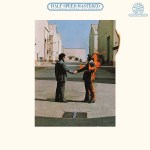
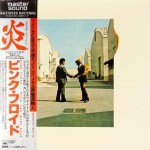
One of our best customers, Roger, received his $150 Hot Stamper [those were the days!] ’Wish You Were Here’ and went straight to work comparing it with the various other pressings he owned: two different CBS Half Speeds. The not-so-shocking results are presented in detail below.

Hi Tom,

I received your Pink Floyd ‘Wish You Were Here’ Hot Stamper and compared it to my CBS Half-Speed (I found a bunch of these Half-Speeds in a bargain bin years ago and did a shootout to select the best one) and the pressing that I considered the best, the Japanese Mastersound Half-Speed, for which I paid dearly.

Drum roll, please while Vanna hands me the sealed envelope………… and the winner is: Surprise — the Hot Stamper!

And it wasn’t even close.

Once I heard the center-of-the-earth bass on the Hot Stamper ‘Shine On You Crazy Diamond’, it was all over. I was amazed at how bright the CBS was, transparent yes, but bright and no bass and no body to the saxophones and voices. The Mastersound was better-balanced in that the highs were tamed, but no real dynamics and the bass was flabby.

I have heard this record hundreds of times, but never heard the details in the guitars and cymbals and keyboards like this.

And did I mention the huge, huge soundstage with a wall of sound like that of other Pink Floyd records? Nice job as usual.

Roger,

Thanks for verifying the accuracy of our Hot Stamper claims once again. The decent sounding Half Speed Mastered records, CBS and otherwise, can be counted pretty easily on one’s fingers. We could debunk them all day long if we wanted to (and had ten times the staff). It doesn’t take long to hear how anemic the sound is compared to The Real Thing, the real thing being, of course, a vintage pressing.

The copy you bought was rated A Plus on both sides, two full sonic grades below the best, so you can imagine how good those copies sound. But since neither you nor I are made out of money, for $150 you now own a copy that will trounce anything you throw at it, especially if what you throw at it is an audiophile pressing.

Those moribund LPs belong on Ebay where all the Technics turntable owners of the world can find them in order to complete their — let’s be honest — silly and ultimately pointless audiophile collections.

Modern equipment shows half-speed foolishness for what it is. You heard it, we heard it, and slowly but surely we are spreading the word to the rest of the audiophile community.

Thanks again. It’s a big job and we need all the help we can get.

(more…)

Finding Good Companies to Invest In Is a Lot Like Finding Good Sounding Records to Play

Important Lessons We Learned from Record Experiments

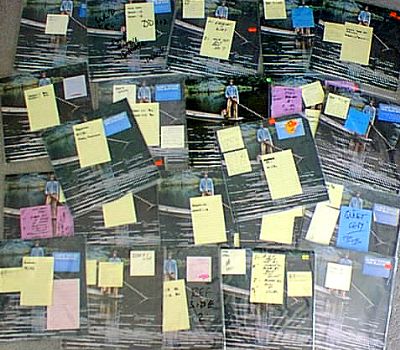
Which of the copies pictured below sound good and which ones don’t?

If you turn over enough of these “rocks,” you — and you alone — will know.

There are some amazing sounding winners in this pile. If you conduct your shootouts following the  tried and true methods we describe on the blog, you will be able to hear One Man Dog and every other album you love sound better than you ever dreamed possible.

Pictured below are just a small fraction of the rocks we’ve turned over in the 20 years since we began doing shootouts.

(more…)