Bernie Grundman, Engineer (Vintage) – Reviews and Commentaries

Ladies of the Canyon and its Growly Cellos and Solid Pianos

More of the Music of Joni Mitchell

The growl of the cello on Rainy Night House can clearly be heard behind Joni, with the wood of the instrument sounding real and correct. The kind of You Are There immediacy and transparency of the best copies has to be heard to be believed. 

Listen to the piano Joni plays throughout the album. This is not the thin and hard-sounding instrument that accompanies her on practically every LP you have ever had the misfortune to audition, hoping against hope that someday you would find that “elusive disc,” the one with sound worthy of such extraordinary music.

No, this piano has real weight; it has body; and it’s surrounded by real, three-dimensional studio space.

This side two is warm, rich, and sweet in a way that we’ve only heard on a handful of other copies in the past. Joni’s vocals just couldn’t sound any better; they’re full-bodied, breathy, textured, and shockingly present. This is the copy to play if you want Joni Mitchell singing to you right there in your listening room. What could be better than that?

With the transparency of the better copies comes the sound of Joni’s right foot on the pedal. It’s clearly audible through most of the takes, something the engineers we doubt could hear. And if they did, you can be sure they didn’t think you could.

(more…)

An Experiment Apparently Not Worth the Trouble

Hot Stamper Pressings of the Music of Steely Dan Available Now

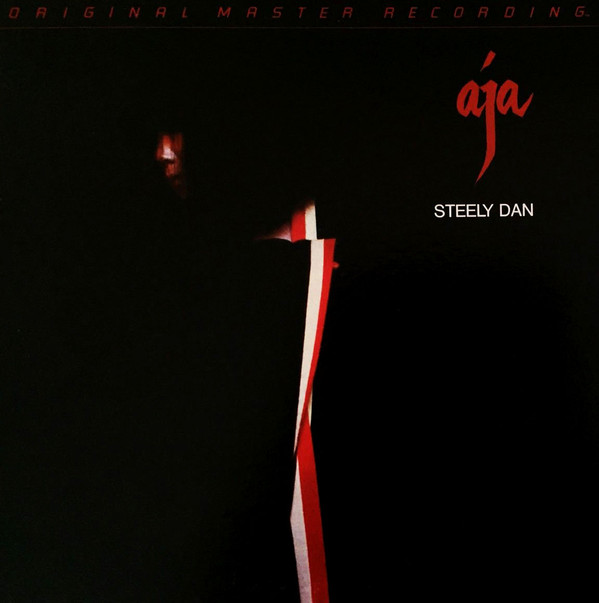
A couple of years ago, an interested party inquired about a Hot Stamper pressing of Aja he had seen on our site, specifically whether we were selling the AB first pressing or the AA reissue. You can find the discussion that ensued here.

As a kind of a postscript, we added:

By the way, [Joe] ended up not buying our Hot Stamper pressing. When you have to have an original, you have to have an original and that’s all there is to it.

If Joe was of a more scientific or skeptical bent — in other words, if he were more like me — he would have acquired an original, and then ordered our Hot Stamper in order to compare the two.

This is the subject I want to talk about today.

Audiophiles tend to subscribe to widely-held, conventional theories about what kinds of records are most likely to have the best sound. Outside of those of us who write for this blog, you will find very few audiophiles who believe that a substantial percentage of vintage reissues — not the modern ones, we’re talking about the ones from the 60s, 70s and even the 80s — are superior to their more original brethren.

Assuming Joe wanted the best sound — nobody who pays our prices could possibly be interested in anything else, right? — then he was simply making the point that since he wanted the best, and an original pressing absolutely had to be the best, nothing else would do, and that was that.

Joe could have done the experiment for himself easily enough. Had he asked us to send him our best AA pressing, we could have done that, and he could have compared that pressing to the original he no doubt owns, or, in the case that he had no original, acquiring one or more could have easily been arranged. They made them by the millions.

And that experiment might have resulted in an interesting learning experience, or not — who can say what the best pressing would have been on Joe’s stereo, with Joe’s ears doing the listening? It could have gone any which way, but something would have been gained in the act of sitting down to find out, for a fact, what pressing sounded better.

With all this in the back of my mind. just recently we did a shootout for Aja, and I checked the stampers for the two top copies.

Sure enough, the stampers found on the AB pressings won.

But those same stampers are found on the AA pressings for one of the titles, and one of the sides for the other title.

I could not even tell you for sure which pressings — AB or AA — actually won, because we rarely keep track of that information.

We only buy early pressings on the original labels because those are the only ones that sound good to us.

We don’t pay attention to the catalog number on the label because that doesn’t tell us anything of value. Playing the records is how we know what they sound like, and unless all the AB pressings beat all the AA pressings, or vice-versa, then that information is none of our concern.

Even if all the AB copies beat all the AA copies, we still have to buy, clean and play the AA copies in our shootouts because some of them are going to do well and can be offered to the customers who don’t want to spend the big bucks the top copies command.

We are generally opposed to having one-size-fits-all theories about the messy world of records, and you can find some of the commentaries we written about that subject here.

(more…)

Dopey Record Theories – Putting Bad Ideas to the Test

Hot Stamper Pressing of the Music of Joni Mitchell Available Now

The discussion below was prompted by a stunning White Hot Stamper 2-pack that had just gone up on the site..

I implored the eventual purchaser to note that side two of record one has Joni sounding thin, hard and veiled. If you look at the stampers you can see it’s obviously cut by the same guy (no names please!), and we’re pretty sure both sides were stamped out at the same time of the day since it’s impossible to do it any other way.

What accounts for the amazing sound of one side and the mediocre sound of its reverse?

If your theory cannot account for these huge differences in sound, your theory is fatally flawed. 

Can anything be more ridiculous than the ad hoc, evidence-free theories of some audiophile record collectors desperately searching for a reason to explain why records — even the two sides of the same record — sound so different from one another?

The old adage “the proof of the pudding is in the eating” couldn’t be more apt. If you want to know if a pudding tastes good, a list of its ingredients, the temperature it was cooked at, and the name of the person stirring it on the stove is surely of limited value. To know the taste one need only take a bite.

If you want to know the sound of a record, playing it is the best way to find out, preferably against other pressings, under carefully controlled conditions, on good equipment, while listening critically and taking notes.

The alternative is to… Scratch that. There is no alternative. Nothing else will ever work. In the world of records there are no explanatory theories of any value, just as there are no record gurus with all the answers. There are only methods that will help you find the best pressings, and other methods that will not.

The good news is that these methods are explained in detail on this blog, free of charge.

We’ve made it clear to everyone how to go about finding better sounding LPs. Once you see the positive results our methods produce, we suspect you will no longer be wasting time theorizing about records.

You will have learned something about them, at least about some of them, and that hard-won knowledge is the only kind that counts for much in the world of records.

Scientific Thinking – A Short Primer

Some approaches to this audio hobby tend to produce better results than others. When your thinking about audio and records does not comport with reality, you are much less likely to achieve the improvements you seek.

Without a good stereo, it is hard to find better records. Without better records, it is hard to improve your stereo.

You need both, and thinking about them the right way, using the results of carefully run experiments — not feelings, opinions, theories, received wisdom or dogma — is surely the best way to acquire better sound.

(more…)

The Piano Stylings of Carole King

More of the Music of Carole King

Reviews and Commentaries for Tapestry

One quality that we had no trouble recognizing on the better copies was transparency.

The more transparent copies made it possible to hear through the mix to focus on Carole’s piano, which is usually placed behind the other instruments and, of course, her voice. There it serves to underpin the music, playing more of a supporting role than a leading one, very unlike the piano on a Joni Mitchell album for example. 

The best copies let you easily follow Carole’s playing all the way through every song, from start to finish, no matter how quiet her part or how far back in the mix the piano may be placed.

If the pressing has a thinner sound, obviously it becomes easier to pick up on the percussive nature of the instrument and “see” it more clearly. However, a thin piano tone on this album is the kiss of death. The best copies allow you to hear the full range of notes — including those played with the left hand — and for that you need both richness and transparency.

This is a tricky balancing act; rarely in our experience do any two copies find precisely the same balance throughout an entire side.

Pianos are very good for testing your system, room, tweaks, electricity and all the rest, not to mention turntable setup and adjustment. More records that are good for testing and improving your playback can be found here.

We used to say this in our listings:

Tough Sledding with Tapestry

There’s a reason you don’t see Tapestry Hot Stampers on the site very often. Folks, take it from us, even in Mint Minus Minus condition it ain’t that easy to find them. People loved Tapestry — it was Number One on the Billboard 200 for fifteen straight weeks, which is still the record for a female solo artist, and charted for more than 300 (!).

It’s a classic and it got played to death. Furthermore, the Ode vinyl the originals were pressed on was not all that quiet to begin with. We probably look at twenty or thirty for every one we find that’s not scratched or worn out. So Mint Minus Minus with no scratches that play and no groove damage to speak of is about the best that we are going to be able to do surface-wise. Sound-wise our copies will trounce any copy you’ve ever heard, or your money back.

Tapestry may not be the quietest title we sell, but we have plenty of perfectly playable copies regularly hitting the site, mostly because we can clean and play them better these days than we could ten or fifteen years ago.


Further Reading

Letter of the Week – “I was swept up, and able to relax and enjoy a stupendous album again.”

Hot Stamper Pressings of the Music of Michael Jackson Available Now

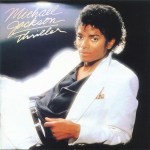
One of our good customers wrote to us about his experience with a Hot Stamper pressing of Thriller.

Dear Tom and Fred,

I surprised myself by buying a White Hot Stamper of Thriller. It’s an album that struck me as a particular challenge to your business model. This is probably the most-pressed record in existence. A hot stamper has to be a needle in a really big haystack. And besides, how much better can they be, really? Isn’t any old copy of Thriller a pretty awesome-sounding record?

And, what’s more, why do I need an expensive copy of an album that I could happily live my entire life without ever hearing again?

But hey, I’ve returned records to you before, and you’ve never once tried to convince me to keep it, or given me any headaches about a return, so why not explore the limits of what your business can provide?

The first time I put it on, I could already tell it was special. It’s not like I was “hearing new details” or something like that. It’s that I was swept up, and able to relax and enjoy a stupendous album again. Listening to this copy of Thriller brought me as much joy as this music used to.

ab_ba

Dear ab_ba,

We’ve written about this experience before. If your current copy or some new audiophile pressing doesn’t bring you the joy of the music you remember feeling back in the day, it’s not the music’s fault. It’s the record’s. Or the stereo’s.

Aaron, you have taken your system to new heights. Your ears don’t work the way they used to. While you weren’t looking, the bar mysteriously reset itself. Now it’s much, much higher.

You’re simply a lot harder to please than you used to be. You have a much better understanding of how high is up, and up is a lot higher than it used to be, whether you like it or not. Good just isn’t good enough anymore.

And you will never be able to go back, even if you wanted to.

You could no more go back to those days than you could become a child again.

Welcome to my world, post 2007.

That’s why we tout Beatles albums as being critically important for testing and tweaking your system. We know they have the life of The Beatles’ music in their grooves, giving you the sound you remember falling in love with all those years ago.

If you’re not getting a thrill from your Beatles records, something is very, very wrong — precisely the reason their recorded oeuvre is a true audiophile wake up call.

(more…)

Listening in Depth to Heart Like a Wheel

More of the Music of Linda Ronstadt

Presenting another entry in our extensive Listening in Depth series with advice on precisely what to listen for as you critically evaluate your copy of Heart Like a Wheel.

A key test on either side was to listen to all the multi-tracked guitars and see how easy it was to separate each of them out in the mix. Most of the time they are just one big jangly blur. The best copies let you hear how many guitars there are and what each of them is doing.

Pay special attention to Andrew Gold’s Abbey Road-ish guitars heard throughout the album. He is all over this record, playing piano, guitar, drums and singing in the background.

If anybody deserves credit besides Linda for the success of HLAW, it’s Andrew Gold.

Our In-Depth Track Commentary

Side One

You’re No Good

Right from the git-go, if the opening drum and bass intro on this one doesn’t get your foot tapping, something definitely ain’t right. Check to make sure your stereo is working up to par with a record you know well. If it is, your copy of HLAW belongs on the reject pile along with the other 90% of the copies ever pressed.

It Doesn’t Matter Anymore

Amazing acoustic guitars! Lots of tubey magic for a mid-’70s pop album. And just listen to the breathy quality of Linda’s voice. She’s swimming in echo, but it’s a good kind of echo. Being able to hear so much of it tells you that your pressing is one of the few with tremendous transparency and high resolution.

Faithless Love

Another superb arrangement with excellent sound. The banjo that opens this track is key — the picking should have a very strong plucky quality, with lovely trailing harmonics, even some fret buzz.

So many copies are veiled or blunted sounding; this clearly demonstrates a lack of transient information.

The copies without the trailing harmonics lack resolution.

Once you hear either of these problems on the banjo, you can be sure to find them on the voices and guitars throughout the side.

That the Cisco pressing doesn’t do a very good job reproducing the banjo should be clear for all to hear. If you want the sound of the real thing, only the best Capitol pressings are going to be able to give it to you.

(more…)

Rob Wasserman – Duets

Hot Stamper Pressings of the Music of Rob Wasserman Available Now

This rare and wonderful album from 1988 on the original MCA label offers outstanding sound throughout.

In-the-room vocal presence (Jennifer Warnes is stunning on Leonard Cohen’s Ballad Of The Runaway Horse) and tight, note-like bass are key to the best pressings.

4 1/2 stars: “Some amazing duets and a great lineup that includes Aaron Neville (v), Stephane Grappelli (violin), Dan Hicks (v, g), and so on. The jazz community missed this one.” [But the audiophile community loved it.]

Our old friend Bernie Grundman handled the mastering for Duets, back when he was still making good sounding records. Everything changed when he started working for Classic Records in the ’90s. Based on the scores we’ve played, the vast majority of his remastered pressings leave a lot to be desired. You can read more about them here.

(more…)

Years Ago the Piano on a Copy of Blue Really Took Us Aback

More of the Music of Joni Mitchell

About ten years ago we played a copy of Blue that showed us a piano we had never heard on the album before. We found it on the track The Last Time I Saw Richard.

This is not the thin and hard-sounding instrument that accompanies Joni on every pressing you have ever had the misfortune to audition, hoping against hope that someday you would find that “elusive disc” with sound worthy of such extraordinary music.

No, this piano had real weight; it has body; and it was surrounded by real, three-dimensional studio space. No vinyl pressing we had ever played up to then has managed to capture the sound of the piano on this record any better. Exactly no copies.

For those of you with a certain Heavy Vinyl pressing in your collection, we can only say that the piano on this copy will show you everything that is wrong with the piano on that one.

The piano had no smear, allowing both the percussive aspects of the instrument and the extended harmonics of the notes to be heard clearly and appreciated fully.

Pianos are very good for testing your system, room, tweaks, electricity and all the rest, not to mention turntable setup and adjustment.

A great many more records that are good for testing and improving your playback can be found here.

(more…)

Letter of the Week – “…if you want to pay $700 for Aja, go right ahead.” I took his advice, and I’m glad I did!

Hot Stamper Pressings of the Music of Steely Dan Available Now

One of our good customers recently watched a video on Steve Westman’s youtube channel of an interview Steve conducted with Michael Fremer. (I appeared with Steve back in October of 2022. You can find the interview here.)

This video upset my customer so much that he felt he needed to get a few things off his chest, which he did in the letter you can find right after my commentary below. He does not pull many punches.

I would like to comment on some of the points he makes, points which I hope will be of interest to our readers. That is what you see here at the top.

At the end of my comments I have reproduced the letter, so if you don’t care to see Fremer raked over the coals, please feel free to stop reading at the end of my comments. Mike Esposito, the guy who exposed MoFi’s duplicity, comes in for some criticism as well. (Justified in my opinion, because Mr. Esposito sure likes some bad sounding records. But why pick on him? Modern audiophile reviewers seem to like nothing but bad sounding records, the same way I did in 1982. Except it’s not 1982 anymore, and there is simply no excuse for having equipment that cannot help you tell a good sounding record from a bad one.)

Our customer, let’s call him Mr. A, had this to say in Point No. 2:

[Fremer] says old records in good shape still sound the best. [Which is true.] He says the playback gear back in the day could not even reveal how great those albums actually are. [Also true.] He says that there are significant variations from one stamper to another and you need to get the right stamper. [True again.] (In his view of the world, there’s no variations in pressings within the same stamper. Apart from this detail, he supports every point you make. He even says, “if you want to pay $700 for Aja, go right ahead.” I took his advice, and I’m glad I did!)

I don’t think he says any of these things nearly as often as they need to be said, or with any real conviction. They are footnotes, a kind of anodyne lip service. They’re the fine print that nobody reads. They’re boxes that get checked off so that we don’t have to talk about them anymore.

I don’t think his readers think any of the statements above are relevant to their ongoing pursuit of high-quality vinyl. They want to know how amazing the new pressings are so that they can be assured that buying the record they were going to buy anyway is clearly the right choice. There’s a name for this kind of biased thinking. [1]

Making generalizations about records is rarely of much use. The devil is in the details. Let’s take a look at what Fremer has written recently about originals.

In his review for the new Stand Up on Heavy Vinyl from Chad, he notes that it has great “transient clarity on top and bottom,” and the original has hyped-up mids and upper mids. This is because he is making the most obvious mistake any record collector could possibly make.

He thinks the original pressing is the standard against which the new pressing should be judged.

But this is out and out poppycock, the kind of conventional wisdom that new collectors might fall for, but only the most benighted veterans would still believe nowadays. We discuss this myth here and in hundreds of reviews on the blog.

There are currently about 150 listings for reissues that beat the originals, compared to 700 or so listings for records in which the early pressings — not necessarily first pressings, but the right early pressings — can be expected to win shootouts.

Stand Up is one of the titles we have found to be clearly superior on the right reissue. After playing dozens of copies over the course of about twenty years, something that no individual audiophile could be expected to have the wherewithal to pull off, we’ve heard our share of great Stand Ups and awful ones.

Fremer makes the common mistake of stopping with his one original. Thinking inside the box, he naturally gets it wrong. It’s a mistake that few record collectors don’t make. I should know, I was one of them.

A big part of the fun of record collecting is learning about them, a subject I have devoted all of my adult life to. There is precious little learning going on when you buy an original and simply assume you now know what the album really sounds like. This blog is practically dedicated to the proposition that nothing could be further from the truth.

(more…)

Blue – Play The Game, Not the Album

Hot Stamper Pressing of the Music of Joni Mitchell Available Now

Another in our series of Home Audio Exercises, one we created all the way back in 2007. If you want to learn more about doing your own shootouts, this listing has lots of good advice on how to go about it.

In 2007, a milestone year for us here at Better Records, we mentioned to our customers that we would not be carrying the new 180 gram Rhino pressing of Blue. We noted:

Since Kevin and Steve are friends of mine I won’t belabor its shortcomings. Let’s just say I think you can do better.

Down the road when we’ve had a chance to do a shootout amongst all our best copies, we will be offering something more to our liking. I recommend instead — and this is coming from a die-hard LP guy, someone who disconnected his home CD player over two years ago and only plays the damn things in the car — that you pick yourself up a nice used copy of the gold CD Hoffman mastered for DCC. It’s wonderful.

Some people are already upset with us over this decision, actually going so far as to question our motives, if not our sanity. Without a doubt we feel this will end up being the single most controversial stance we’ve ever taken. I predict that a great number of audiophiles are going to get really upset over our criticism of this new pressing. We are going to get emails like crazy asking us to explain what on earth could possibly be wrong with such a wonderful sounding LP. The writers of these emails will no doubt extoll its virtues relative to the other pressings they may have heard, and, finding no other reasonable explanation, these writers will feel impelled to question both the quality of our playback equipment and — yes, it’s true — even our ability to recognize a good record when it’s spinning right on our very own turntable.

(more…)