Alan Parsons, Engineer – Reviews and Commentaries

Wild Life – “I treasure this album, and was delighted to learn a shootout had been done for it.”

Hot Stamper Pressings of the Music of Paul McCartney Available Now

Our good customer Austin had this to say about his most recent purchase:

Hi Tom,

It bears remembering that McCartney was reviled by the music press of the day, who were stridently left-wing and far more sympathetic to Lennon and Harrison for their social activism than whether their latest music releases were any good.

Harrison regrettably piled on in an interview with Record Mirror, saying of Wild Life, “the songs are pretty poor–and the sounds! The recording was very bad. It’s as if he’s forgotten everything, I was really disappointed.”

Which is to say I agree with your general point that the album is underestimated and underappreciated. It’s not his best work and perhaps not a great album, but certainly a good one containing a lot of worthwhile experiments if also a few that don’t quite come off. I treasure this album, and was delighted to learn a shootout had been done for it.

I’m mildly surprised you didn’t take the opportunity to point out Alan Parsons as one of the two engineers credited on the sessions, the other being Tony Clark. Parsons is also an uncredited backing singer on the chorus of ‘Tomorrow’.

To quote Paul himself on the eve of the Wings 1972 European tour, “I’m not trying to anything staggering, it’ll be a good band that can play good music, that’s good enough for me.” Wild Life easily holds its own against these ambitions.

Best regards,

Austin

Austin,

I have to admit that I have not played the album in decades, and the last time I did play it, I’m sure it would have been the domestic pressing. Even those were hard to find back in the 70s. It didn’t sell well and disappeared from the bins shortly after release. All I really have are old memories of the album to go by, and you can imagine how reliable those are.

The staff did the shooout. They found the killer copies that made it to the site as Hot Stampers, including the one you bought.

The important thing is that you like the album and now you can hear it in all its glory. What could be better?

There are plenty of records I love dearly — many of them qualifying as Desert Island Discs even — for which buyers are hard to find.

Most of them we still do shootouts for, although there are plenty that we were forced to give up on. If there are no buyers, we have no business doing a shootout for the sake of doing a shootout, especially when there are so many deserving titles waiting in the queue, often for months.
(more…)

The Alan Parsons Project – A MoFi Disaster

Hot Stamper Pressings of Albums Engineered by Alan Parsons Available Now

MoFi Regular LP: F / UHQR:

Two — count ’em, two — hall of shame pressings and two more MoFi Half-Speed Mastered Audiophile LPs reviewed and found wanting.

The MoFi is a textbook example of their ridiculous affinity for boosting the top end, not to mention the extra kick they like to put in the kick drum, great for mid-fi (sometimes known around these parts as stone age audio systems) but a serious distraction on a high end stereo with good low end reproduction.

If you like the album –and that’s a big if, I myself have never been able to take it seriously — try the Simply Vinyl or the Classic LP.

Even the UHQR sucks. Don’t kid yourself. They’re still mastered by Stan Ricker, and he likes plenty of top end.

Like the old saying goes, if it’s worth doing it’s worth overdoing.

(more…)

Are All MoFis Created Equal? A Pair of Pink Floyd LPs Proved They Aren’t

Hot Stamper Pressings of the Music of Pink Floyd Available Now

[This commentary was written about twenty years ago.]

Many audiophiles are operating under the misapprehension that Mobile Fidelity managed to eliminate pressing variations of the kind we discuss endlessly on the site.

That is simply not the case, and it’s child’s play to demonstrate how misguided this way of thinking is, assuming you have the following four things: good cleaning fluids and a machine, multiple copies of the same record, a reasonably revealing stereo, and two working ears.

With all four the reality of pressing variations for ALL pressings is both obvious and incontrovertible.

The discussion below of a Hot Stamper pair of Dark Sides from long ago may shed light on some of the issues involved.

Remember Classic Records Comparison Packages?

This is our first Hot Stamper Comparison Package.

For those who remember the 45 RPM/ 33 RPM Classic Records comparison packages, this is somewhat in the same vein. Of course, we don’t know that they kept the EQ the same for the 45 versions compared to the 33s of the albums included in the package, so the comparison is suspect at best.

You’re not really comparing apples to apples unless you keep the EQ exactly the same. I rather doubt they did, because on Simon and Garfunkel the sound was noticeably worse at 45 than it was at 33. This is the main reason we don’t carry the 45 versions of Classic’s records: they are a lot more money, and who knows if they’re even any better?

[This one sure wasn’t better. This guy liked it, but he is rarely right about any of this record and equipment stuff, as I hope everyone knows by now.]

(more…)

Letter of the Week – “Your hot stampers forced me to work on my stereo and on my room.”

Hot Stamper Pressings of the Music of Pink Floyd Available Now

One of our good customers had this to say about some Hot Stampers he purchased recently (italics added):

Hey Tom, 

Many thanks for your efforts.

Things can sometimes really be easy. I [purchased] medical water from the drugstore, hopefully the best available here in Austria.

Now I know the difference between a Super Hot and a White Hot. After half a minute it was clear.

The Super Hot of Dark side is really, really excellent but the White hot makes (at least) a step up on every aspect. Will send the Super Hot back shortly.

What I like to mention is:

Your Hot Stampers forced me to work on my stereo and on my room.

Tom is totally right when he says, only work, work and even harder work gives you benefit in HI-FI. I think it´s the Dopamine in our heads that drives us for better and better, it´s a great feeling.

I will never be an expert in HI-FI or Hot Stampers, that’s your business. But I can become mediocre or even good, can become a listener who has developed listening skills and has a stereo which is reasonably OK.

The first benefit (beside the sound of your Hot Stampers) I already got: improving my stereo and my listening skills just a bit gives me a lot more listening pleasure on my existing records, and there are a lot, especially in Metal and extreme Metal.

Kind regards from Austria,
Hans

Hans,

Thanks so much for your letter. We are glad to have encouraged you to work on your system and listen more closely to your vinyl, the same areas of effort that changed everything for us and appear to have done so for you. Congrats on that!

I have written the following or something very much like it to a number of customers over the years. I mostly talk about the amazing Hallographs we use, but solving room problems is at the heart of what we are trying to convince audiophiles to do. Please to enjoy.

Thanks so much for your letter. When your system is cookin’ and you’re hearing all your records sound better than ever, that’s when audio is FUN. You had to do a lot of work to get there and the good sound you are able to enjoy now is your reward.

It’s amazing to me how little audiophiles are interested in actually making their stereos sound better. You reap what you sew in this hobby. Mediocre sound is easy; good sound is very very hard — that’s why I so rarely hear anything outside of my own system that strikes me as any good. Most audiophiles haven’t worked very hard on their stereos and they have the sound to prove it.

We write a lot about the ENERGY and POWER found on the best pressings of some recordings; the BS&T record we sent you is a perfect example. It’s the kind of recording with so much going on that it is guaranteed to bring practically any stereo system to its knees. When a record such as this gets loud, all the problems of your stereo become impossible to ignore. (One reason the turn up your volume test is such a great test; the louder the problem, the harder it is to ignore.)

(more…)

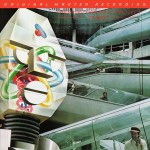
I Robot Is a Tough Nut to Crack, Even If You Have Plenty of Early British Pressings to Play

Hot Stamper Pressings of Prog Rock Albums Available Now

Here is how we described a Hot Stamper pressing of I Robot that went up recently, our first in five years:

An early UK pressing (and the first copy to hit the site in years) with seriously good sound throughout.

Many copies tend to be overly smooth, but this one has the kind of clarity that allows the natural textures of the instruments to come through.

Transparency is key to the sound of the better copies, and that is precisely where the dubby domestic pressings fall apart.

Even many of the early British pressings fell short. Good luck finding top quality sound on this one. At the very least you are going to need a big budget — these early UK pressings are not cheap to find in audiophile playing condition.

As you can see, we weren’t kidding about those UK pressings falling short. Here’s two that did, with their stamper numbers posted for all to see.

Side two of the first copy is being held back by sound that is smeary, dry and hard.

Side one of the second copy is murky and hot (bright).

Note that these are early UK stampers, which some in-the-know audiophile collectors will tell you are clearly the best.

(more…)

Letter of the Week – “I feel I own and can listen to something that a king or a millionaire would own…”

Hot Stamper Pressings of Pink Floyd Available Now

One of our good customers had this to say about some Hot Stampers he purchased recently: 

Hey Tom,  

Thank you so much for the Dark Side of the Moon White Hot Stamper. It is everything you said. I feel I own and can listen to something that a king or a millionaire would own, not an old codger like me!

Regards,
Peter D.

Peter,

You are very welcome. We like to say that a White Hot stamper pressing — of any album — is the one that takes the music to another level, typically beyond where the listener thought it could go, and it seems like that was the experience you had playing the record.

A king or a millionaire would have been very unlikely to get hold of the pressing of Dark Side that you played. It’s a pressing that is not well known in audiophile circles. Neither is it especially expensive.

It just happens to have the best sound for the album we’ve ever heard, and we’ve heard most of the expensive audiophile pressings, the ones that reviewers and posters will tell you will handily beat any and all comers, especially our humble import, and of course they never do.

If these audiophile pressings actually were better, why would anyone keep our Hot Stamper LP for ten times the money?

No, those who say these things about audiophile pressings are usually operating as a One Man Band, using a very small pool of data. It is very hard to do it that way.

I should know. I was a one man band for many years, and I was wrong a lot.

(more…)

Ambrosia Is Right at the Top of Our Difficulty of Reproduction Scale

Hot Stamper Pressings of the Music of Ambrosia Available Now

You can play hard-to-reproduce records all day long if your system is tuned up and working fine.

Ours has to be, all day, every day. Our shootouts require that everything is working properly or we wouldn’t be able to trust the results.

But you can’t play this record on such a system without testing everything, because this is the Single Most Difficult to Reproduce Recording I know of.

This is what makes it such a great test disc; to call it a challenge doesn’t begin to convey the difficulty of playing a record that places such heavy demands on a system.

Which means I had to retweak a lot of my table setup to make sure it was 100% right, by ear. Getting the VTA right on this record was fundamentally critical to hearing it sound its best.

(None of those silly setup tools for us here at Better Records. You can hear when it’s right and if you can’t then you need to keep at it until you can.)

Detail Freaks Beware

This is the kind of record that will eat the detail freaks alive. If your system has any extra presence, or boost in the top end — the kind that some audiophiles mistake for “detail” — this record with beat you over the head with it until blood runs out of your ears.

You need balance to get the most out of this album.

The more your system is out of whack, the more this album will make those shortcomings evident.

Once you have balance, then you can unleash the energy in a way that’s enjoyable, not painful.

When this record is sounding right, you want to play it as loud as you can. It’s pedal to the metal time. This music wants to overwhelm your senses. When the system is up to it, it can, and will.

This is what a Test Disc is all about. It shows you what’s wrong, and once you’ve fixed it, it shows you that now it’s right. We audiophiles need records like this. They make us better listeners, and they force us to become better tweakers. You cannot buy equipment that will give you this kind of sound. You can only tweak the right equipment to get it. At most 20% of the sound of your stereo is what you bought. At least 80% is what you’ve done with it.

(more…)

Which One’s Pink? And What Do All Those Numbers Mean?

This commentary was written at the dawn of the Hot Stamper revolution, circa 2006 I believe. We felt it necessary to explain why we did not give out the stamper information for the pressings we were offering.


UPDATE 2024

We’re so fascinated by the unpredictable nature of the stamper information we often discover in our daily Hot Stamper shootouts that we thought it would be a good idea to create a section on the blog just to draw attention to it. You can find it under the heading of Record Mysteries. Please to enjoy.


Our Letter from 2006

An erstwhile customer wrote to us a while back asking a question about Dark Side of the Moon: “What is the FULL stamper matrix for this record… all the way around the dead wax?”

I replied that we never give out stamper numbers for the records we sell. The only way to find out the stampers for our records is to buy them.

He then countered with this bit of information:

Well, ok. I don’t understand the logic, but it’s your show.

Floyd stampers are probably the most uniquely well documented stampers on [a site that no longer exists] that they’re pretty much common knowledge. If I understand your logic, a first pressing may not be a “Hot Stamper” while a 3rd, 4th or 5th might be. Just a function of the stars aligning when that record is pressed. So what’s the diff?

I would think this would be pretty obvious. If we say pressing X is the best, this is information that you cannot get anywhere else, certainly not on the site you linked to. The day that such a site tells you which stampers sound the best is the day that such a site can have any value to those who are not collecting for the sake of collecting, but actually want to find pressings with the best sound to play

The information on that site has absolutely no value to me, or to any of my Hot Stamper customers, of that I can assure you. [It no longer exists by the way. Why should it?]

If you told me what the stampers were and it was a first pressing and /or issue, it would enhance the marketability of that particular record and I would be more inclined to buy it…not that I would sell it, but just knowing it was a first press would have more value to me.

Why would you want a first pressing if it didn’t sound as good? Or, if a later pressing sounded better, why would that make any difference in your desire to buy it? Isn’t the idea to get good sound?

If you buy records principally to collect original pressings, you will end up with some awful sounding records, that I can tell you without fear of contradiction.

On the other hand, if you want the best sounding pressings, we are the only record sellers on the planet who can consistently find them for you. This is precisely the service we are able to offer, unique in the world as far as we know. 

Anyone can sell originals. Only we can sell the best sound.

Others could of course, but none of them have ever bothered to try, so the result is the same. Finding the best sound is far more difficult and far more rewarding to both the seller and the buyer, as any of our customers will tell you.

I guess the only problem for the “collector” who cares about sound as well as rarity is that your “Hot Stampers” aren’t “certified” in any way. That is, if I went to re-sell a Hot Stamper I bought from you, no one else would know it to be different from any other pressing of the same record. Ever thought about coding your records so that individual record had some kind of verifiable marking that it was a certain level of “hot stamper”???

We do have a customer who makes us fill out hot stamper certificates, but they are really of little value for resell in the real world.

Records aren’t to sell, they are to play and enjoy.

Btw, I collect for sound first, but “collectability / rarity” is up there too. My stone mint MFSL Muddy Waters Folk Singer #0005 / 5000 might fetch a couple more bucks on ebay than number 4999 say, right? I know, 4999 might sound better, but hey, a lot of people don’t have the equipment to tell the difference.

[This is where I got a little fed up and a little testy, or maybe I should say testier than usual.]

Since that is an AWFUL sounding pressing, I hope your equipment is able to tell you what is wrong with its sound. Mobile Fidelity is one of the worst labels in the history of the world; surely you don’t buy their lousy sounding records to play them? Collect them all you want, it’s your money, but who in his right mind thinks they sound any good? There are tons of commentaries on the site detailing their deficiencies. Please take the time to read them.

The fastest way to improve your record collection is to get rid of all your audiophile pressings, since only one out of every ten or twenty is even passable. If your stereo isn’t showing you how wrong the sound of those records is, it’s time to make some serious changes.

Best, 
TP

(more…)

Paul McCartney / Wild Life – Our Last Shootout Was in 2010

Hot Stamper Pressings of the Music of Paul McCartney Available Now

This Apple UK Import LP has TWO outstanding sides! We were not all that familiar with the album going into this shootout, but after spending the day listening to copies like these we found ourselves LOVING IT!

Let’s face it: finding good sounding McCartney records with the exception of the first album is practically impossible. From Ram on it’s slim pickings, even on import. Most of those later albums sound like cassettes; they’re as dead as the proverbial doornail. They bore us to tears.

Wild Life stood up and showed us that there’s more good sound to be found after McCartney’s debut. Band On The Run on the right imports can sound quite good, but I would say without hesitation that the best copies of Wild Life kill it in the sonics department.

If you want the ultimate nexus of music and sound for McCartney, a Hot Stamper of the first album is the way to go. Expect to pay (us anyway) at least $500 for such a record, which is neither here nor there. This album is MUCH BETTER sounding than we ever suspected, and it’s much better music than we were led to believe by the critics. If you aren’t happy with it we will give you your money back.