Top Engineers – Bob Simpson

Stan Getz / Luiz Bonfa – Jazz Samba Encore!

More Stan Getz

More Antonio Carlos Jobim

More Bossa Nova

  • This superb collaboration debuts with STUNNING Shootout Winning Triple Plus (A+++) sound from start to finish and ’60s vinyl that’s about as quiet as any we can find
  • Smooth, full-bodied and Tubey Magical, the brilliant Ray Hall engineered this Demo Disc using an All Tube chain back in 1963, and it’s glorious to hear that sound reproduced on modern hi-rez equipment
  • 4 stars: ” Getz relies mostly upon native Brazilians for his backing. Thus, the soft-focused grooves are considerably more attuned to what was actually coming out of Brazil at the time… Two bona fide giants, Antonio Carlos Jobim and Luiz Bonfá (who gets co-billing), provide the guitars and all of the material, and Maria Toledo contributes an occasional throaty vocal.”

(more…)

Harry Belafonte – Jump Up Calypso

More Harry Belafonte

More Titles on Living Stereo

  • This is a difficult album to find with good sound – for all practical purposes, this copy is worlds better than most of what you can find in the bins
  • You have to love the sound of those steel drums recorded through an All Tube Chain with mastering to match
  • Night and day better than the DCC (which was truly awful) and surely anything else on Heavy Vinyl being made these days
  • 4 1/2 stars: “Belafonte was an established all-around entertainer and actor by the time of this album, so it could be seen in a sense as a return to “roots” styles. In any case, it’s all-out calypso, with backing by the Trinidad Steel Band, and qualifies as one of his most energetic albums, even getting rambunctious at times.”

Outstanding sound for this Living Stereo pressing that is guaranteed to trounce your DCC, assuming you have one. We played a big stack of these recently and are happy to report that the best copies are full of old-school RCA Tubey Magic, magic that DCC struggled and more often than not failed to achieve with their mostly mediocre remasters. Tubes are essential to bringing out the natural, relaxed FUN in Belafonte’s music, and DCC had no tubes in their cutting chain.

Unfortunately, the big hit “Jump In The Line” is not one of the better-sounding tracks on this album. It has a bit of radio EQ, meaning it’s a little brighter and leaner in a way that’s designed to jump out of your AM radio, but not the best effect on a high-resolution audiophile system. Still, on a copy like this, it’s still musical and enjoyable; on many copies we played it was absolutely painful. (more…)

A Very Good Sounding Record from Perry Como on Living Stereo

Living Stereo Titles Available Now

A very good sounding Living Stereo record from 1961, engineered by Bob Simpson. One problem. Where are you going to find enough clean copies with which to do the shootout and, more importantly, who’s going to buy them?

If you see one locally in clean condition and you like Perry Como, pick it up and give it a listen. We liked the copy of LSP 2390 we played.

(more…)

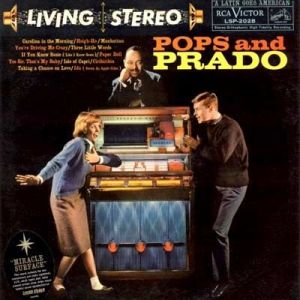
Perez Prado – Pops and Prado

  • Outstanding sound for this Living Stereo pressing with each side earning solid Double Plus (A++) grades and playing about as quietly as any RCA from 1959 ever does
  • These sides are unbelievably Tubey Magical, dynamic and spacious – this is vintage Analog Exotica at its best
  • Credit for the Demo Disc sound of this one must go to one of our favorite engineers, Bob Simpson, here working with the glorious acoustics of Webster Hall
  • “… the use of two organs, or double the signature sound of the next phase of Prado, is significant and very effective. This is more fun than any of his previous attempts at safe commercialism.”

Bob Simpson won the Grammy for engineering Belafonte at Carnegie Hall you may recall. (more…)

Astrud Gilberto – The Shadow Of Your Smile

The space is HUGE and the sound so rich. The vocals have dramatically less hardness and the orchestra sounds right for once. Prodigious amounts of Tubey Magic as well, which is key to the best sounding copies. The sound needs weight, warmth and tubes or you might as well be playing a CD.

If you don’t like at least some reverb on your vocals, this album is probably not for you. The standard recording approach for Male and Female Vocals in the ’50s and ’60s was to add reverb to them. Sometimes it sounds right and sometimes it’s too much. For “too much” play some of Nat King Cole’s records from the era to hear what I mean. (Try “Those Lazy-Hazy-Crazy Days of Summer” from 1963 if you want a good place to start.)

Like any processing of the sound in the studio — compression, limiting, reverb, EQ, etc. — it can be used with taste and discretion and make the recording better, or it can be overdone and ruin everything. For our part we think Astrud Gilberto’s recordings use reverb more or less tastefully. And of course there sure aren’t going to be any versions of this music coming along any time soon without the added echo. Getting the reverb to sound right is one of the things a good Hot Stamper has to do on a record like this. (more…)

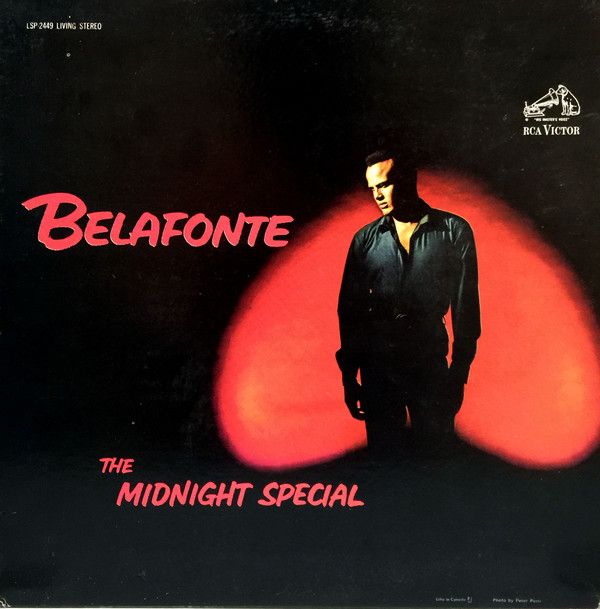
Harry Belafonte – The Midnight Special

  • Belafonte’s 1962 release finally arrives on the site, with a Shootout Winning Triple Plus (A+++) side two and an outstanding Double Plus (A++) side one
  • Lively, balanced and vibrant, with a healthy dose of the Tubey Magical richness these recordings need to sound right (and which is rarely evident on the modern reissues made from these kinds of recordings)
  • 4 1/2 stars: “Known to rock collectors as being the first album to feature Bob Dylan (he plays harmonica on the title track), The Midnight Special is also a record that best exemplifies Harry Belafonte’s uniqueness as a recording artist… Combining blues, big band, gospel, and soul, Belafonte utilizes mainly traditional material on one of his best programmed albums of the sixties.”
  • If you’re a fan of Harry’s, this vintage record from 1962 belongs in your collection.

The album that introduced Bob Dylan to the world, highlighting his harmonic skills on “Midnight Special.”

This vintage RCA Living Stereo pressing has the kind of Tubey Magical Midrange that modern records rarely begin to reproduce. Folks, that sound is gone and it sure isn’t showing any sign of coming back. (more…)

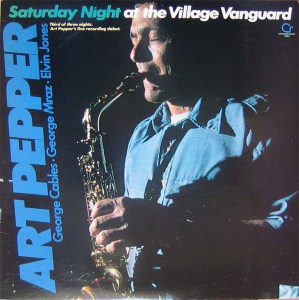
Art Pepper – Saturday Night At The Village Vanguard

  • KILLER sound throughout with both sides earning Shootout Winning Triple Plus (A+++) grades – exceptionally quiet vinyl too  
  • This is Art Pepper at its best, and if anyone can capture the realism of a live jazz club, it’s the engineers and producers at Contemporary, in this case Bob Simpson and Lester Koenig
  • One of the man’s most enjoyable albums – the sound here was bigger and livelier than any other – above all it’s balanced, avoiding many of the problems we heard on other pressings
  • 4 1/2 stars: “The great altoist was clearly excited to be playing at the famous New York club, and his rhythm section — pianist George Cables, bassist George Mraz and drummer Elvin Jones — consistently stimulates his imagination.”

This album features the great Elvin Jones on drums, plus Geoge Cables on piano and George Mraz on bass.

We played all four volumes of Art Pepper’s Village Vanguard series recently, and this copy was one of the best of the bunch. It features an intense live version of Pepper’s tune The Trip, from the wonderful album of the same title, as well as extended versions of the tunes You Go To My Head and Cherokee. (more…)

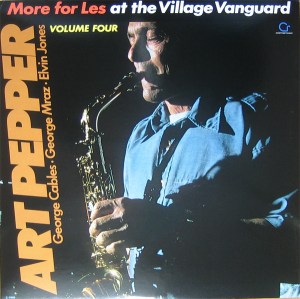
Art Pepper – At The Village Vanguard Vol. 4

This Minty Contemporary Demo LP has WONDERFUL SOUND AND MUSIC! The highlight of this pressing is the well-defined DEEP bass — all the intricacies really come to life. The sound is rich and sweet! And holy crap, that piano sounds really nice. On More for Les, Pepper switches from sax to clarinet and the result is a wonderful, bluesy track that is completely original. The clarinet sounds like it is in the room with you. 

If I had to find a fault with this album, the sax can be a bit honky. The top end has its problems, but there are elements, like that piano, that REALLY COOK!

Overall, I’d say this is one of the better sounding live jazz albums you could hope to find from the late ’70s.

This album features the great Elvin Jones on drums, plus George Cables on piano and George Mraz on bass.

(more…)

Art Pepper / Friday Night At The Village Vanguard

More Art Pepper

This Original Contemporary LP has EXCELLENT MUSIC AND SOUND! The real highligh of this volume is the version of Caravan — just listen to Art playing both alto AND tenor! There’s also a great version of Pepper’s bossa-influenced track Labyrinth. The sound is rich and full-bodied. Listen to the cymbal crashes to hear how extended the top end is. The piano has real weight to it, but the sax sounds a little bit compressed and the bass could be a bit tighter.

This is an Older Jazz Review.

Most of the older reviews you see are for records that did not go through the shootout process, the revolutionary approach to finding better sounding pressings we developed in the early 2000s and have since turned into a fine art.

We found the records you see in these older listings by cleaning and playing a pressing or two of the album, which we then described and priced based on how good the sound and surfaces were. (For out Hot Stamper listings, the Sonic Grades and Vinyl Playgrades are listed separately.)

We were often wrong back in those days, something we have no reason to hide. Audio equipment and record cleaning technologies have come a long way since those darker days, a subject we discuss here.

Currently, 99% (or more!) of the records we sell are cleaned, then auditioned under rigorously controlled conditions, up against a number of other pressings. We award them sonic grades, and then condition check them for surface noise.

(more…)

Oscar Peterson – We Get Requests

This is the way it must have sounded inside the RCA Studios in New York way back in 1964, not the club shown on the cover. The legendary RCA engineer Bob Simpson was behind the board. 

If you have full-range speakers one of the qualities you may recognize in the sound of the piano is WARMTH. The piano is not hard, brittle or tinkly. It’s more like a real piano and less like a recorded one. This is what good “live” recordings tend to do well. There isn’t time to mess with the sound. Often the mix is live, so messing around after the fact is just not an option.

Bad mastering can ruin the sound, and often does, along with worn out stampers and bad vinyl and five gram needles that scrape off the high frequencies. But a few — far too few — copies survive all such hazards. They manage to capture these wonderful musical performances on their molecules of vinyl, showing us a sound we never expected. 

Both Sides

Right away you hear a solid, full-bodied piano and snare drum, a sure sign of great sound to come. These sides were simply richer and fuller than the other copies we played. That rich tonality is key to getting the music to work, to allow all the instrumental elements to balance. The natural top doesn’t hurt either.

Great space and immediacy, powerful driving energy — these sides were up there with the best Peterson albums we played.

The sound was jumpin’ out of the speakers. There was not a trace of smear on the piano, which is unusual in our experience, although no one ever seems to talk about smeary pianos in the audiophile world (except for us of course).

Ray Brown’s bass is huge. With an extended top end the space of the studio and harmonics of the instruments are reproduced correctly.

(more…)