Top Artists – Duke Ellington

Duke Ellington / Newport Jazz Festival 1958

Hot Stamper Pressings of the Music of Duke Ellington Available Now

If you are a fan, this record on the original 6-Eye label will be a thrill. If you’re unfamiliar with the Duke’s music, I can’t imagine a better introduction than this.

This LP also includes Gerry Mulligan’s only performance with the Ellington band.

Paul Gonsalves’s saxophone performance is superb and worth the price of the album alone.

The clarinet parts on Princess Blue are out of this world — Ellington at his best!


This is an older jazz review.

Most of the older reviews you see are for records that did not go through the shootout process, the revolutionary approach to finding better sounding pressings we developed in the early 2000s and have since turned into a full-time practice for our staff of ten.

We found the records you see in these older listings by cleaning and playing a pressing or two of the album, which we then described and priced based on how good the sound and surfaces were. (For Hot Stamper listings, the sonic grades and vinyl playgrades are listed separately.)

We were often wrong back in those days, something we freely admit.

There is no reason to hide the fact that we know a great deal more now than we used to. Audio equipment and record cleaning technologies have come a long way since those darker days, a subject we discuss here.

(more…)

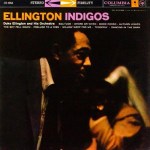
The Amazingly Spacious Sound of Ellington Indigos

Hot Stamper Pressings of the Music of Duke Ellington Available Now

This original 6-Eye Stereo pressing blew us away with its superbly well-recorded romantic big band jazz, of which Ellington was a true master.

A near-perfect demonstration of just how good 1958 All Tube Analog sound can be – no modern record can hold a candle to a pressing as good as this one.

If you like the sound of relaxed, tube-mastered jazz, you can’t do much better than Ellington Indigos. Many of the other Six Eye copies we played suffered from blubbery bass and transient smearing, but the clarity and bass definition here are surprisingly good. The warmth and immediacy of this sound may just blow your mind.

We played a handful of later pressings that didn’t really do it for us. They offer improved clarity, but can’t deliver the tubey goodness that you’ll hear on the best early pressings. We won’t be bothering with them anymore. It’s tubes or nothing on this album, and that means the best 6 Eye Stereo original pressings will always win our shootouts.

The key for vintage super-tubey recordings is balancing clarity with richness. The easiest way to test for those two qualities on this album is to find a track with clear, lively, loud trumpets that also includes rich trombones and other low brass.

On side one that track is Where or When. If your copy has clear, lively trumpets and rich, full-bodied, Tubey Magical low brass, it is definitely doing an awful lot of what it needs to do right.

Some of you may recognize that this is precisely why Bob and Ray Throw a Stereo Spectacular is our all time favorite test disc. (Was might be more accurate. It was for me, but I retired. The younger generation now running the show has their own favorite test discs, as is only fitting. They didn’t spend ten or fifteen years working on the stereo and room with the record the way I did.)

(more…)

Duke Ellington / Ellington Indigos on Six Eye from 1958

More Duke Ellington

More Records with Exceptionally Tubey Magical Sound

  • With solid Double Plus (A++) grades or BETTER throughout, this wonderful late-50s pressing (the first copy to hit the site in close to four years) has the magic of analog in its grooves
  • Side one was sonically very close to our Shootout Winner – you will be amazed at how big and rich and tubey the sound is
  • Our 6-Eye Stereo Columbia here impressed us with its superbly well-recorded large group jazz, in the romantic style Ellington refined to an art form – never more sublime than on this very album
  • A near-perfect demonstration of just how good 1958 All Tube Analog sound can be – no modern record can hold a candle to a pressing as good as this one
  • If you like your jazz ballads performed with deep feeling, by a road-tested group of virtuoso players, this record is going to be hard to beat

If you like the sound of relaxed, tube-mastered jazz, you can’t do much better than Ellington Indigos. Many of the other 6-Eye copies we played suffered from blubbery bass and transient smearing, but the clarity and bass definition here are surprisingly good. The warmth and immediacy of this sound may just blow your mind.

We played a handful of later pressings that didn’t really do it for us. They offer improved clarity, but can’t deliver the tubey goodness that you’ll hear on the best early pressings. We won’t be bothering with them anymore. It’s tubes or nothing on this album.

The key for vintage super-tubey recordings is balancing clarity with richness. The easiest way to test for those two qualities on this album is to find a track with clear, lively, loud trumpets that also includes rich trombones and other low brass. On side one that track is “Where or When.” If your copy has clear, lively trumpets and rich, full-bodied, Tubey Magical low brass, it is definitely doing something right.

(more…)

Letter of the Week – “They may be cheap but they are 100% a waste of money.”

Hot Stamper Pressings of the Music of Duke Ellington Available Now

Our good customer Conrad had written us quite a while ago asking what we thought about the sound of Analogue Productions’ records. Obviously we had nothing nice to say about them, which you can read here if so inclined.

He thought they were not great but good enough at the price:

I guess we can’t really compare experiences without knowing exactly the records we’ve each heard, and the AP pressings never hold a candle to any of the hot stampers I have received from you. It’s not close; my system and ears clearly know the difference. However, I don’t expect them to, and part of my relatively positive feeling about them is biased by knowing they’re dirt cheap at around $30 a pop.

An excerpt from my reply:

I believe you are trying to find reasons to justify the purchase of these modern remastered records, despite the shortcomings of their sound. My stereo is not forgiving enough of their faults to play them for enjoyment, and my ears are not forgiving enough of their sonic irregularities to find even the best of them much more than passable.

I took off my rose-colored glasses a long time ago, and I certainly have no intention of putting them back on.

Our stereo is designed to reveal the strengths and weaknesses of every record we play. Bad records sound awful on it, and mediocre records are a waste of time.

Years ago we started to notice that most of the new Heavy Vinyl pressings were sounding worse and worse, and by 2007, when Blue came out, that was the straw that broke the camel’s back. We decided to take a stand and we have never questioned for a moment that decision.

Conrad followed up with this after I had asked him about some titles he might have been impressed with.

I disagree with most of the benefit of the doubt I was giving them then, and haven’t listened to any really since then aside from here and there and always with utter disappointment. System and standards have improved. They may be cheap but they are 100% a waste of money, whereas your records cost the moon but repay in kind and are easy to amortize.

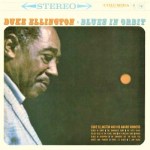
That said, one that did sound decent enough was Blues In Orbit.

Unfortunately, I was never able to get around to discussing that one title Conrad thought sounded decent enough, Blues in Orbit.

When it comes to the records audiophiles think sound good on Heavy Vinyl — especially the ones I’ve never played (or played decades ago and can’t remember their sound all that well) — we have a short question, all of three words, that we like to ask:

“Compared to what?”

Without playing other pressings, doing a proper shootout for the album with some nice Six-Eye stereo originals and maybe some 360s and even a red label 70s pressing or two, you simply have no way of knowing how good the album can sound.

What you have with the Classic Records remaster (or any other Heavy Vinyl reissue for that matter) is what seems like a good sounding pressing, no more, no less.

And how good is it really?

Is it in danger of getting worn out from being played too often?

Has it become a personal favorite?

Are you falling in love with the music and knocked out by the sound?

(more…)

Joe Pass – Portraits of Duke Ellington

More Jazz Recordings Featuring the Guitar

More Pablo Label Jazz Recordings

  • Portraits of Duke Ellington is back on the site for only the second time in years, here with excellent Double Plus (A++) sound or BETTER throughout this original Pablo pressing
  • Remarkably spacious and three-dimensional, as well as relaxed and full-bodied – this pressing was a solid step up over most of what we played
  • Some of the tubiest, biggest and richest guitar sound you could ask for from a mid-70s jazz record – this is the sound of analog done right
  • 4 1/2 stars: “The interplay between the three musicians [Pass, Ray Brown, and Bobby Durham] is quite impressive, and Pass’s mastery of the guitar is obvious… Recommended.”
  • Yet another record we’ve discovered with excellent sound on the best pressings

Maybe it’s the fact that there are only three instruments playing, live in the studio, that accounts for the amazing recording quality. Nobody knows, certainly not us, but the one thing we can say for sure is that you will have a very hard time finding a guitar trio album that sounds remotely as good as this one does.

And the music is by The Duke himself. How great is that? Can’t fault the song choices in any way; they’re all classics: “Satin Doll,” “Sophisticated Lady,” “I Got It Bad (And That Ain’t Good),” “In A Mellowtone,” “Don’t Get Around Much Anymore,” “Do Nothin’ ‘Till You Hear From Me” and more.

(more…)

Ella Fitzgerald – The Duke Ellington Songbook, Volume Two

More Ella Fitzgerald

Ella Fitzgerald Albums We’ve Reviewed

  • An excellent Verve Mono reissue with wonderful sound on all FOUR sides
  • Forget the originals – like so many of the early songbook pressings, they suffer from painfully hard and honky mastering EQ (and gritty sounding vinyl)
  • We know whereof we speak when it comes to early Ella records – we’ve played plenty of them and found that most just don’t sound very good
  • Exceptionally quiet vinyl throughout* — Mint Minus to Mint Minus Minus
  • “Duke’s spectacular catalog dazzles, and his sprightly, lush textures are transfigured under Fitzgerald’s warm-timbred voice and elegant, precise delivery… each tune as familiar as it is delightful to hear in this new context.”
  • If you’re a fan of Ella’s, this Top Title from 1957 belongs in your collection
  • The complete list of titles from 1957 that we’ve reviewed to date can be found here.

This mono reissue is the only way to find the MIDRANGE MAGIC that’s missing from modern records. As good as the best of those pressings may be, this record is going to be dramatically more REAL sounding.

(more…)

The Recordings of Duke Ellington – Two More that Didn’t Make the Grade

More of the Music of Duke Ellington

Reviews and Commentaries for the Music of Duke Ellington

Pictured to the left are a couple of the Ellington albums we’ve auditioned over the years.

Without going into specifics, we’ll just say these albums suffer from weak music, weak sound, or both. They may have some appeal to fans of the man, but audiophiles looking for top quality sound and music — our stock in trade — are best advised to look elsewhere.

We play mediocre-to-bad sounding pressings so that you don’t have to, a public service from your record-loving friends at Better Records.

You can find these two in our Hall of Shame, along with others that — in our opinion — are best avoided by audiophiles looking for hi-fidelity sound. Some of these records may have passable sonics, but we found the music less than compelling.  These are also records you can safely avoid.

We also have an Audiophile Record Hall of Shame for records that were marketed to audiophiles for their putatively superior sound. If you’ve spent any time on this blog at all, you know that these records are some of the worst sounding pressings we have ever had the displeasure to play.

We routinely play them in our Hot Stamper Shootouts against the vintage records that we offer, and are often surprised at just how bad an “audiophile record” can sound and still be considered an “audiophile record.”

(more…)

Duke Ellington / Masterpieces By Ellington Circa 1951

More of the Music of Duke Ellington

More Large Group Jazz Recordings

  • You’ll find superb Double Plus (A++) sound throughout this vintage 6-Eye mono pressing – remarkably quiet vinyl for such an early Columbia too
  • The 1951 mono sound is shockingly real, not for the era, but for any era – it’s remarkably big, rich and Tubey Magical
  • A mid-’50s pressing that is almost impossible to find in clean condition – this is one of the nicer copies we’ve seen lately
  • For his first LP, Ellington is freed from prior 3-minute constraints and the results are nothing short of breathtaking on a record this good
  • If you could have only one Ellington LP, Indigos or Masterpieces would have to be one of them
  • 4 1/2 stars: “…he and the band rose to the occasion with extended (11-minute-plus) “uncut concert arrangements” of “Mood Indigo,” “Sophisticated Lady,” and “Solitude,””

We haven’t done this title in close to two years, mostly because there are so few clean copies around to buy. This was, in fact, one of the only copies in our shootout without audible scratches or groove wear. Let us hope we have more to offer in the months ahead.

We’ve known about this wonderful album for decades, since first got hold of a red label copy from the ’70s. Although not in the league with the best 6-Eye pressings, even that late reissue had enough Columbia magic in its grooves to impress the hell out of me.

And the fact that a jazz album recorded in 1950 was still in print more than twenty years later is testament to the lasting power of Ellington’s music. As Kenny Burrell would say, “Ellington Is Forever.”

(more…)

Bill Berry and His Ellington All-Stars – For Duke

  • An original M&K Real Time pressing with stunning Nearly Triple Plus (A++ to A+++) sound from first note to last – just shy of our Shootout Winner
  • Tubier, more present, and more alive than practically all other copies, with more of that “jumpin’ right out of the speakers” quality that only The Real Thing (The Real Thing being An Old Record) ever has
  • “. . . this album features a true all-star lineup. Each artist solos in this heartfelt tribute session. . . one of those rare albums that you can enjoy over and over without losing your smile.”

(more…)

Frank Sinatra & Duke Ellington – Booth? What Booth?

More of the Music of Frank Sinatra

More of the Music of Duke Ellington

Notice that, at least for most of the material, and perhaps all of it, Sinatra does not seem to be stuck in a vocal booth. He sounds like he is actually standing on the same stage as Ellington’s band.

Whether this is a recording trick — he’s in a booth but the engineer did a great job creating a sound for the booth that matched the ambience and space of the studio — or whether he is standing front and center with the band, the illusion is convincing and adds greatly to the “reality” of the performance..

Recorded one year after the remarkable Sinatra-Jobim record that we treasure here at Better Records, Sinatra takes the opportunity to work with one of the greatest bandleaders in the history of jazz, the Duke himself. We had good luck with the stereo originals on the lovely Blue and Green Reprise labels — they can be as big, rich and warm as Sinatra’s legendary Capitol recordings when you find the right pressing, and that’s really saying something.

Transparency

What typically separates the killer copies from the merely good ones are two qualities that we often look for in the records we play: transparency and lack of smear. Transparency allows you to hear into the recording, reproducing the ambience and subtle musical cues and details that high-resolution analog is known for.

(Note that most Heavy Vinyl pressings being produced these days seem to be quite Transparency Challenged. Lots of important musical information — the kind we hear on even second-rate regular pressings — is simply not to be found. That audiophiles as a whole — including those passing themselves off as the champions of analog in the audio press — fail to notice these failings does not speak well for either their equipment or their critical listening skills.)

Richness and Lack of Smear

Lack of smear is also important, especially on a recording with this many horns, where the reproduction of leading-edge transients is critical to their sound. If the sharply different characters of the various horns (trumpet, trombone, and various saxes) smear together into an amorphous blob, as if the sound were being fed through ’50s vintage tube amps (for those of you who know that sound), half the fun goes right out of the music.

Richness is important — horns need to be full-bodied if they are to sound like the real thing — but so are speed and clarity, two qualities that ensure that all the horns have the proper bite and timbre.

(more…)