Top Artists – Art Blakey

Art Blakey and the Jazz Messengers – Self-Titled

More Jazz Recordings Engineered by Rudy Van Gelder

  • A 70s reissue pressing with seriously good Double Plus (A++) sound or BETTER from first note to last
  • This LP was bigger, richer and clearer, with less smear and distortion, and more Tubey Magic, than many of the other copies we played
  • Credit goes to RVG once again for the huge space that the superbly well recorded combo occupies
  • 4 stars: “An absolutely wonderful 1961 set from Blakey and company, who demonstrate here how to be note-perfect without leeching away the emotion of a performance.”

(more…)

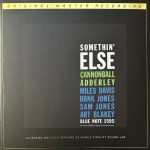
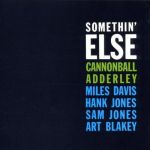
Somethin’ Else on MoFi – How Is This Company Still in Business?

Hot Stamper Pressings of Recordings by Rudy Van Gelder Available Now

For our 2023 White Hot Stamper shootout winning pressing we wrote:

A triumph for Rudy Van Gelder, a top Blue Note title, and as much a showcase for Miles Davis as it is for Cannonball Adderley.

The best sides of this album have as much energy, presence, dynamics and three-dimensional studio space as any jazz recording we’ve ever played.

When you hear it on a copy like this, it’s hard to imagine it could get much better.

We’ve heard more than our fair share of tubby, groove-damaged originals and smeary, lifeless reissues over the years, but this White Hot Stamper blew them all away.

This is a record we could play every week and never tire of. 


But this expensive ($125) MoFi pressing had us wondering what the hell we were on about, because almost nothing about it is right except for something we were not expecting: it’s actually tonally correct.

What are the chances?

With Mobile Fidelity, slim and none, but in this case they managed to pull off slim. So let’s give credit where credit is due.

But the sound is still a mess no matter how tonally correct it is.

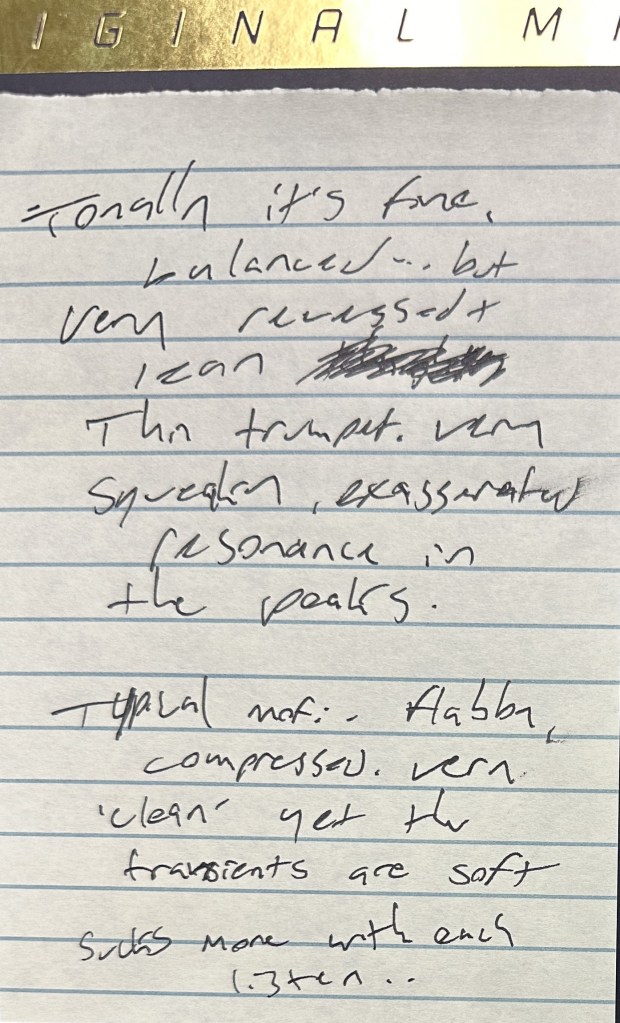
Allow me to list its faults based on the notes we took as the record was playing. The last line sums up the experience nicely.

1) It’s very recessed and lean.

2) The trumpet is thin and very squawky.

3) There is an exaggerated resonance in the peaks.

We summed it up this way:

Typical MoFi.

Flabby and compressed.

“Clean” yet the transients are soft.

Our final judgment:

Sucks more with each listen…

Man, that’s gotta hurt.

We made some other notes about how the MoFi compared to the originals and reissues we had on hand, but I did not reproduce them here for the simple reason that they gave away too much information about the pressings that tend to win shootouts.

Those pressings are hard enough to find as it is — we don’t want anybody finding them on his own and robbing our good customers of the chance to hear this amazing album sound the way it should: amazing.

Two to Four Questions

Is this the worst version of the album ever made?

Hard to imagine it would have much competition.

Are any of these Mofi One-Step pressings any good?

I seriously doubt it. Until one comes along that doesn’t sound awful, the jury is out. Those of you looking for miracles are likely to be disappointed.

Having said that, I’m sure there are audiophiles and audiophile reviewers who like the sound of this pressing and have said so online.

Based on what we heard, how on earth are these people qualified to judge the sound of records? I guess that’s three questions.

How bad does a record have to sound before they notice? Make that four, sorry.

(more…)

Somethin’ Else Sets the Record for Straight Ahead Jazz

Hot Stamper Pressings of Blue Note Albums Available Now

In 2010 or thereabouts we had this to say about a copy of Somethin’ Else we had just played:

The music here is amazing — as I’m sure most of you know, this is as much a showcase for Miles Davis as it is for Cannonball himself — but the good news for audiophiles is that it’s also one of the BEST SOUNDING BLUE NOTE ALBUMS we know of!

When you hear it on a copy like this, it’s about As Good As It Gets.

Setting the Record for Straight Ahead Jazz

After doing this shootout in 2015, I would like to amend the above remarks for being much too conservative. The current consensus here at Better Records is that this album deserves to hold three — count ’em, three — somewhat related titles:

  • One, The Best Sounding Blue Note record we have ever played.
  • Two, The Best Sounding Jazz Record we have ever played.
  • Three, Rudy Van Gelder’s Best Engineering (based on the copies we played).

Our shootout winners had more energy, presence, dynamics and three-dimensional studio space than any jazz recording we have ever heard. The sound was as BIG and BOLD as anything in our audio experience.

Add to that a perfectly balanced mix, with tonality that’s correct from top to bottom for every instrument in the soundfield and you may begin to see why we feel that the best copies of this album set a standard that no other jazz record we’re aware of can meet.

Have we played every Blue Note, every RVG recording, every jazz record? We would never say such a thing (nor should anyone else).

However, in our defense, who could possibly claim to have critically evaluated the sound of more jazz records than we have?

Our Advantage

There are multitudes of music experts in the world of jazz.

For jazz sound quality the numbers must surely be orders of magnitude smaller, and here is where we’re sure we have more than a few critically valuable advantages: better playback equipment, better record cleaning, stacks of copies of the same title, a scientifically-minded approach and, most importantly of all, a single-minded purpose.

All our efforts are in service to only one end, to find the ultimate in analog sound. (Naturally we leave the sound of CDs and other digital formats to others.)

Somethin’ Else Indeed

There’s not much we can say about this music that hasn’t been said (please check out the reviews and liner notes in this very listing). It’s obviously one of the most beloved Blue Notes of all time, and with good reason. The wonderful reading of Autumn Leaves is a major highlight for us, but you could really pick any track here and make a case for it.

We consider this a Miles Davis album as much as a Cannonball Adderley album; Miles picked out most of the material and is a featured soloist throughout. The next album Miles recorded was a little number called Kind Of Blue which we admit to being obsessed with

We had a grand ol’ time shooting out various pressings of this top Blue Note title and are pleased to report amazing sound for this album is not out of reach. We’ve heard more than our fair share of tubby, groove-damaged originals and smeary, lifeless reissues over the years, but this White Hot Stamper blew them all away.

This is a record we could play every week and never tire of. I just don’t think jazz music gets much better than this.


Further Reading

The Best Jazz Record Ever Made, or the Best Jazz Record We’ve Ever Played?

Masterpieces of Jazz – The List So Far

I ran across this listing for Cannonball Adderley’s Somethin’ Else today, a record we raved about after doing a shootout for it years ago. Notice the careful hedging in the phrases with newly added italics:

The music here is amazing — as I’m sure most of you know, this is as much a showcase for Miles Davis as it is for Cannonball himself — but the good news for audiophiles is that it’s also one of the BEST SOUNDING BLUE NOTE ALBUMS we know of. When you hear it on a copy like this, it’s just about As Good As It Gets.

After doing this shootout in 2015 I would like to amend the above remarks for being much too conservative. The current consensus here at Better Records is that this album deserves to hold three — count ’em, three — somewhat related titles:

One, The Best Sounding Blue Note record we have ever played.

Two, The Best Sounding Jazz Record we have ever played.

Three, Rudy Van Gelder’s Best Engineering (based on the copies we played).

Our shootout winners had more energy, presence, dynamics and three-dimensional studio space than any jazz recording we have ever heard. The sound was as BIG and BOLD as anything in our audio experience.

Add to that a perfectly balanced mix, with tonality that’s correct from top to bottom for every instrument in the soundfield and you may begin to see why we feel that the best copies of this album set a standard that no other jazz record we’re aware of can meet.

Have we played every Blue Note, every RVG recording, every jazz record?

Of course not. We would never make such a claim. It’s preposterous on its face.

All Well and Good, But Bear This in Mind

In our defense, who could possibly claim to have critically evaluated the sound of more jazz records than we have?

There are multitudes of music experts in the world of jazz. For jazz sound quality the numbers must surely be orders of magnitude smaller, and here is where we’re [pretty sure we have more than a few critically valuable advantages, to wit:

  • better playback equipment,
  • better record cleaning technologies,
  • stacks of pressings of the same title,
  • a scientifically blinded approach and, most importantly of all,
  • a single-minded purpose. 

All our efforts are in service to only one end, to find the pressing with the ultimate in analog sound.

(Naturally we leave the sound of CDs and other digital formats to others. Although CDs often outperform their modern Heavy Vinyl pressing equivalent — here is a case in point — we know our lane and and are happy to stay within it.) (more…)

Cannonball Adderley / Somethin’ Else

More Cannonball Adderley

More Miles Davis

  • A triumph for Rudy Van Gelder, a Top Blue Note title, and as much a showcase for Miles Davis as it is for Cannonball Adderley
  • The best sides of this album had as much energy, presence, dynamics and three-dimensional studio space as any jazz recording we have ever played
  • 5 stars: “Both horn players are at their peak of lyrical invention, crafting gorgeous, flowing blues lines.”
  • “…signs of Milesian influence are the calm, conversational delivery of the title track and the newfound lyricism in Adderley’s playing that followed from his nightly experience at the trumpeter’s side.”
  • Reviews and Commentaries for Somethin’ Else

The music here is simply amazing, but the good news for us audiophiles is that it’s also one of the BEST SOUNDING BLUE NOTE ALBUMS we know of, if not The Best. (more…)

Letter of the Week – “The sound just LEAPS out of the system.”

More of the Music of Cannonball Adderley

More of the Music of Frank Sinatra

One of our good customers had this to say about some Hot Stampers he purchased recently:

Holy Moly Fellows!

I’m playing through my most recent Better Records Short Stack ™. First up, Somethin’ Else by Cannonball and Bill, followed by Sinatra’s Strangers in the Night.

Man. The sound just LEAPS out of the system. I’m not kidding, it literally JUMPS from the speakers, smooth, clean, big, bold and beautiful. Did someone play with the volume? Did I change the gain? No man! These records just sound FANTASTIC!

Thank you gentlemen. Happy New Year!

Doug

Doug,

Thanks for writing. There is a reason that on every listing we put this boilerplate in the body of the text:

What We’re Listening For on Record X

    • Energy for starters. What could be more important than the life of the music?
    • Then: presence and immediacy. The musicians aren’t “back there” somewhere, lost in the mix. They’re front and center where any recording engineer worth his salt would put them
    • The Big Sound comes next — wall to wall, lots of depth, huge space, three-dimensionality, all that sort of thing.
    • Then transient information — fast, clear, sharp attacks, not the smear and thickness so common to these LPs.
    • Tight punchy bass — which ties in with good transient information, also the issue of frequency extension further down.
    • Next: transparency — the quality that allows you to hear deep into the soundfield, showing you the space and air around all the instruments.
    • Extend the top and bottom and voila, you have The Real Thing — an honest to goodness Hot Stamper.

Exactly right: We want our records to have presence and energy, to be big and bold and jump out of the speakers.

This is the opposite of what everyone whose stuck in the world of Heavy Vinyl is hearing.

Most of those records are veiled, recessed and compressed.

Who on earth wants that sound?  It’s beyond our understanding how it is that so many audiophiles cannot tell the difference between a good record and the mediocre-at-best product being offered today.

Thanks for your letter. Glad you liked our Hot Stamper pressings as much as we did.

TP

(more…)

Art Blakey – Moanin’

More Art Blakey

  • With two seriously good Double Plus (A++) sides, this vintage Blue Note stereo reissue will be very hard to beat
  • Remarkably spacious and three-dimensional, as well as relaxed and full-bodied – this pressing was a noticeable step up over most of the copies we played
  • If you want to hear the Tubey Magic, size and energy of this wonderful session from 1958 – recorded by none other than Rudy Van Gelder – this pressing will bring that sound into your listening room like no other copy you’ve heard
  • 5 stars: “Moanin’ includes some of the greatest music Blakey produced in the studio with arguably his very best band. Certainly a complete and wholly satisfying album, [it] ranks with the very best of Blakey and what modern jazz offered in the late ’50s and beyond.”

(more…)

Somethin’ Else on Classic Records – More of the Same Old Same Old

More of the Music of Cannonball Adderley

Sonic Grade: C

Another Classic Records LP that’s hard to get excited about.

There are certainly some incredible sounding pressings of this album out there, but who has the resources it takes to find them? Most of the original Blue Notes we come across these days turn out to have mediocre sound, and many of them have severely damaged inner grooves. Even the mintiest looking copies often turn out to be too noisy for most audiophiles, Blue Note vinyl being what it is.

This is of course why the hacks at Classic Records did so well for themselves [until they went under] hawking remastered versions of classic albums pressed on new, quieter vinyl.

The problem is that most of their stuff just doesn’t sound all that hot, this album included. We’ve played it; it’s decent, but any Hot Stamper will show you just how much music you are missing.

If you want to hear this album with amazing fidelity but don’t want to spend the time, money and energy collecting, cleaning, and playing mostly mediocre copies until you luck into a good quiet one, a Hot Stamper pressing is the only way to go.

(more…)

Art Blakey – Meet You At The Jazz Corner of the World – Volume 1

More Art Blakey

More Albums on Blue Note

  • The first in this superb 2-volume live set makes its Hot Stamper debut here with outstanding Double Plus (A++) sound from first note to last
  • Tubier, more present, more alive, with more of that “jumpin’ out of the speakers” quality that only The Real Thing (an old record) ever has
  • Credit goes to RVG once again for the huge space that the superbly well recorded combo occupies
  • “Here all ears are tuned to the proverbial “jazz corner of the world,” better known as Birdland, where the quintet serves up a healthy sampling of its concurrent catalog… a welcome addition to the library of most any jazz lover.”

(more…)

Sonny Rollins – Vol. 2 – Our Shootout Winner from 2011

  • Side two of this stereo pressing is at least Super Hot – it’s huge, rich and tubey
  • Side one is Super Hot, musical, lively, clear and real sounding
  • Another classic late ’50s RVG recording of some of the greatest Jazz Giants who ever lived
  • “…a timeless session and a milestone in jazz history that gathered together some of the founding fathers of the post-bop era.”

Even though this session was supposedly recorded in one day on April 14, 1957 we heard an anomaly that took us somewhat by surprise. The first and third track on side two sound amazing, better than anything on side one. However, the second track, You Stepped Out Of A Dream, has sound that is clearly a step down from anything else on the album. It’s smaller and more congested. Why that is we have no idea, but we felt it was worth pointing out.

Sonny’s horn on side two is especially big and rich, with huge amounts of Tubey Magic as befits an all-tube 1957 Blue Note recording. This is clearly the right sound for this music.

Note that side one is not quite as tubey but makes up for it with energy and clarity that we found conveys the music beautifully. (more…)