Top Arrangers

We Was Wrong about Sketches Of Spain on Six Eye

Hot Stamper Pressings of the Music of Miles Davis Available Now

Many, many years ago (15?) we had this to say about a killer Red Label pressing we had played at the time.


When you get a Hot Stamper like this one the sound is truly MAGICAL. (AMG has that dead right in their review.)

Tons of ambience, Tubey Magic all over the place; let’s face it, this is one of those famous Columbia recordings that shows just how good the Columbia engineers were back then. The sound is lively but never strained. Davis’s horn has breath and bite just like the real thing. What more can you ask for?

We Was Wrong in the Past About HP and Six-Eye Labels

In previous commentary we had written:

Harry Pearson added this record to his TAS List of Super Discs a few years back, not exactly a tough call it seems to us. Who can’t hear that this is an amazing sounding recording?

Of course you can be quite sure that he would have been listening exclusively to the earliest pressings on the Six Eye label. Which simply means that he probably never heard a copy with the clarity, transparency and freedom from distortion that these later label pressings offer.

The Six Eyes are full of Tubey Magic, don’t get me wrong; Davis’s trumpet can be and usually is wonderful sounding. It’s everything else that tends to suffer, especially the strings, which are shrill and smeary on most copies, Six Eyes, 360s and Red Labels included.


UPDATE

Over the course of the last fifteen or more years we’ve come to appreciate just how good the right Six Eye stereo pressing can sound.

Nowadays, all the copies earning the highest grades will be original stereo pressings. Other pressings can do well, earning grades of 2+ or so, but none will do as well as the originals.

This has never been our experience with Kind of Blue by the way. The later pressings have always done the best job of communicating the music on that album.


UPDATE #2

Our comments for Kind Of Blue are no longer true either. The Six-Eye pressings of the album win all the shootouts now.


The above shows just how wrong we were about the sound of some later label Columbia pressings we used to like.  The commentary below concerning early versus later RCA pressings is part and parcel of the same dynamic.

Back in 2010 we liked reissue pressings of Living Stereo recordings a lot more than we do now. Only the advent of top quality cleaning equipment and fluids and much improved playback made it possible for us to reproduce the early Shaded Dogs in all their glory.

When my system was darker and less revealing, a lot of records that were mastered to be cleaner and brighter sounded great to me. Records like RCA Red Seal pressings, some OJC jazz titles, and lots of other bad records that I used to like were a good complement to my system back in those days. Now, not so much.

When we encourage our readers to get good sound so they can recognize and acquire good records, it’s because we learned that lesson the hard way, by getting lots of great recordings wrong.

Live and learn is our motto, and progress in audio is a feature, not a bug, of record collecting at the most advanced levels.

“Advanced” is a code word for having little to no interest in any remastered pressing marketed to the audiophile community. If you want to avoid the worst of them, we are happy to help you do that. The more progress in audio you make, the more you will  regret having wasted your money on them, and we hate the thought of seeing your hard-earned money go down the drain.

(more…)

Frank Sinatra and Count Basie – Sinatra At The Sands

More Frank Sinatra

  • These original Blue and Green Reprise Stereo pressings were doing just about everything right, with all FOUR sides earning solid Double Plus (A++) grades or close to them
  • Truly one of the greatest live albums of all time, recorded late at night in the big room at the Sands Hotel in Vegas
  • This is Basie and Sinatra in their natural habitat and in their prime, putting on the show of a lifetime
  • On the right system, this is about as close as you get to hearing Sinatra singing live in your listening room, with the added realism of a live Vegas show (particularly on sides one, two, and four)
  • 4 1/2 stars: “Basie and the orchestra are swinging and dynamic, inspiring a textured, dramatic, and thoroughly enjoyable performance from Sinatra … the definitive portrait of Frank Sinatra in the 60s.”

This double album presents Sinatra and Basie at the height of their powers, in a setting especially conducive to both men’s music, the big room at the Sands Hotel in Vegas. If you missed it — and I’m sure most all of us did — here’s your chance to go back in time and be seated with the beautiful people front row center. This two-disc all tube-mastered analog set is practically the only way you’ll ever be able to hear the greatest vocalist of his generation — in his prime, no less — fronting one of the swingingest big bands of the time.

The presence and immediacy here are staggering. Turn it up and Frank is right in front of you, putting on the performance of a lifetime.

The sound is big, open, rich, and full. The highs are extended and silky sweet. The bass is tight and punchy. And this copy gives you more life and energy than most, by a long shot. Very few records out there offer the kind of realistic, lifelike sound you get from this pressing.

(more…)

Stick with the Tri-Tone Stereo Originals on Swing Along with Me

Hot Stamper Pressings of the Music of Frank Sinatra Available Now

When advising our fellow audiophiles about how to find the best sounding pressings, we tend to favor discussions about records in which the original is not the best over records in which the right reissue is not the best. (And there are practically discussions for when the modern reissue is the best. Just one so far!)

The same would be true for English bands whose records sound better when they are made in any country other than England, bands whose recordings you may think you know well, such as Led Zeppelin or Black Sabbath.

You might say our record collecting philosophy revolves aroung the contrarian idea that rules were made to be broken.

But let’s face it, most record collecting rules hold up most of the time. That’s how they got to be rules.

In the case of Sinatra’s Swing Along with Me album from 1961, the second label reissues which came along later in the 60s are not merely a shadow of the originals. They’re nothing like the originals.

Side one was so gritty and hot (bright) that we couldn’t even be bothered to play side two. Trust me, you do not want to play a vintage Sinatra record that is gritty and hot.

(more…)

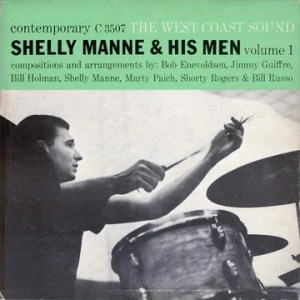
Shelly Manne & His Men – The West Coast Sound, Vol. 1

More Shelly Manne

  • This early MONO pressing was doing practically everything right, with both sides earning INCREDIBLE Shootout Winning Triple Plus (A+++) grades or close to them
  • The first track here is by far the best sounding — it’s amazing and the perfect illustration of just how good 1956 mono sound can be if you know what you are doing
  • The sound may be a bit dated but the horns are enchantingly sweet and Tubey Magical, with solos that show off the jazz chops of “His Men” about as well as any Manne and His Men album ever has
  • Tube mastering is essential for this recording – without vintage tubes in the chain, you end up with the kind of modern sound that the average OJC pressing suffers from (this is especially noticeable on side two of the OJC pressings we played, which were mostly awful)
  • Contemporary in 1956 was making some awfully good jazz records, with room-filling, natural and realistic mono sound, the kind of sound that still holds up today and doesn’t need a lot of “mastering help” to do it
  • Good luck finding quieter early copies of this title — we sure couldn’t do it, not with top quality sound anyway
  • 5 stars: “The music has plenty of variety yet defines the era… Highly recommended and proof (if any is really needed) that West Coast jazz was far from bloodless.”
  • If you’re a fan of West Coast Jazz, this is a Top Title from 1956, and one that certainly belongs in any right-thinking audiophile’s collection.

(more…)

Another Great Conga Tester Title

Hot Stamper Pressings of Recordings by Rudy Van Gelder Available Now

The best pressings of Prelude are especially full-bodied and rich.

The congas are well up in the mix, which allows them to drive the powerful rhythmic energy of the music.

We know this because the copies with congas that were veiled or thin never seemed to have any get up go. 

There is wonderful transparency and openness to the soundstage, as well as less congestion in the loudest parts. Also Sprach (2001) is on side one of the album and it is KILLER on the best pressings.

Both sides can also be surprisingly sweet and Tubey Magical, nice qualities for a CTI record to have since so many of them are aggressive and edgy to the point of distraction.

Full, lively horns; rich, punchy, smear-free congas; fuzzy fuzzed-out guitars; as well as correct tonality and Tubey Magic in every area of the spectrum, what’s not to love?

The best pressings are so much bigger than most copies too. There is no doubt that you will hear the difference immediately. If you do a shootout with your best copy and ours plan on it being over almost before it starts.

(more…)

Freddie Hubbard – Polar AC

More Freddie Hubbard

  • A Polar AC like you’ve never heard, with KILLER Shootout Winning Triple Plus (A+++) sound or close to it throughout this original CTI pressing (only the second copy to hit the site in years)
  • Here are just a few of the things we had to say about this incredible copy in our notes: “rich horns and bass”…”3D and breathy”…”big and weighty”…”full and present trumpet”…”huge and tubey”…”great energy”
  • Both of these sides are clean and clear, punchy and lively, with excellent presence and a strong bottom end
  • All the usual faces are here — Ron Carter, Billy Cobham, George Benson, Airto — and the one and only RVG does his usual brilliant job capturing their performances
  • Marks in the vinyl are sometimes the nature of the beast with these vintage LPs – there simply is no way around them if the superior sound of vintage analog is important to you

We’ve been really digging this CTI jazz stuff lately. On the better albums such as this one, the players tend to sound carefree and loose — you can tell they are having a heck of a time with the material. Don’t get me wrong — we still love the Blue Note and Contemporary label stuff for our more “serious” jazz needs, but it’s a kick to hear top jazz musicians laying down the grooves and not taking themselves so seriously…especially when it sounds this good!

(more…)

Prelude Is a Phenomenally Good Van Gelder Recording from 1973

Hot Stamper Pressings of Recordings by Rudy Van Gelder

On Deodato’s magnificent Prelude, listen to the trumpet on the second track on side one — it’s so immediate, it’s practically JUMPING out of the soundfield, just bursting with energy. Rudy can really pull off these big productions on occasion, and this session was clearly one of them.

If you have the kind of stereo that’s right for this music (the bigger the better) you could easily find yourself using this record as a demonstration disc. It’s very unlikely that many of your audiophile friends have ever heard anything like it.

The congas are present in the mix and very full-bodied — this allows them to really drive the rhythmic energy of the music. We know this because the copies with congas that were veiled or thin never seemed to want to get up and go. 

The top is most often the problem with these CTI pressings. The best sides seem to give you all the top end that was on the tape.

There is wonderful transparency and openness to the soundstage, as well as less congestion in the loudest parts. Also Sprach (2001) is on side one of the album and it is KILLER on the best pressings.

The best sides are also surprisingly sweet and Tubey Magical, nice qualities for a CTI record to have since so many of them are aggressive and edgy.

Full, lively horns; rich, punchy, smear-free congas; fuzzy fuzzed-out guitars; as well as correct tonality and Tubey Magic in every area of the spectrum, what’s not to love?

The best are so much bigger than most copies too. There is no doubt that you will hear the difference immediately. If you do a shootout with your best copy and ours plan on it being over practically before it starts.

(more…)

Thelonious Monk / Monk’s Blues

More Thelonious Monk

  • Seriously good Double Plus (A++) sound or BETTER brings Monk’s 1969 release to life on this vintage Stereo 360 pressing – exceptionally quiet vinyl too
  • Both of these sides are rich, full and open throughout, with excellent transparency and real weight to the piano
  • This is not your typical Monk album – here he joins a big band, conducted by the great Oliver Nelson
  • It’s an interesting collaboration that may not succeed in every way, but it’s certainly a fun listen and even more so when you have an outstanding copy like this one
  • Marks in the vinyl are sometimes the nature of the beast with these vintage LPs – there simply is no way around them if the superior sound of vintage analog is important to you

I wish more Blue Note records had this kind of sound — natural, full-bodied, and sweet up top. The bass here is well-defined with real weight and lots of punch. Monk’s piano sounds correct from the highest notes all the way down to the lower register, and Charlie Rouse‘s sax sounds just right — totally free of the “RVG squawk” we often hear on some Blue Notes. The clarity and transparency are superb throughout.

(more…)

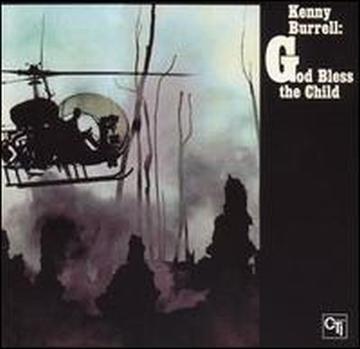
Kenny Burrell – God Bless The Child

More Kenny Burrell

  • Incredible sound throughout this original copy (only the second to hit the site in years), with both sides earning Shootout Winning Triple Plus (A+++) grades or close to them
  • Here are just a few of the things we had to say about this stunning copy in our notes: “spacious and rich guitar and strings”…”big and open and clear”…”jumping out of the speakers”
  • One of our favorite CTI albums, and surely one of the best sounding, especially on this pressing
  • If you’re looking for the best sounding jazz from the 70s and 80s, you might want to check out these titles
  • Credit goes to Rudy Van Gelder once again for the huge space that the superbly well-recorded orchestra occupies
  • 4 stars: “This is Burrell at his level best as a player to be sure, but also as a composer and as a bandleader. Magnificent.”

God Bless The Child is one of our favorite orchestra-backed jazz records here at Better Records. A few others at the top of my list would be Wes Montgomery’s California Dreaming (1966, and also Sebesky-arranged), Grover Washington’s All the King’s Horses (1973) and Deodato’s Prelude (also 1973, with brilliant arrangements by the man himself).

What’s especially notable is how well-recorded the strings are. They have just the right amount of texture and immediacy without being forced or shrill. They’re also very well integrated into the mix. I wouldn’t have expected RVG to pull it off so well — I’ve heard other CTI records where the orchestration was abominable — but here it works as well as on any album I know of.

The bass is deep and defined; the tonality of the guitar and its overall harmonic richness are beautifully rendered. The piano has the weight and heft of the real thing.

This kind of warm, rich, Tubey Magical analog sound is gone forever. You have to go back to 1971 to find it.

The Music

The high point for side one is clearly the first track. It’s got a Midnight Blue relaxed groove going on, the kind that Kenny Burrell seems to be able to bring to any session he plays on. Or maybe it’s the rhythms Ray Barretto works out in the songs that make them so relaxed and swinging at the same time.

Side two is magical from start to finish. The two extended songs, both more than eight minutes in length, leave plenty of room for the band and the orchestra to stretch out.

(more…)

The Mono Pressings of Come Dance With Me Are Just Awful

Hot Stamper Pressings of the Music of Frank Sinatra Available Now

We had two mono pressings, one on the first label, one on the second, and both were unacceptable, especially the reissue.

Side one of the early label pressing was big and tubey but the vocals were gritty. Side two was hot, crude and midrangy.

Which raises the question: what is the general sound of the mono pressing on the early label?

Answer: it has no sound, or more accurately, it has two very different sounds, and if we had ten of them we could probably say it has a lot more sounds than the ones we described. Our advice:Beware of small sample sizes, especially sample sizes of two.

The stereo pressings we listed recently had superb sound. The monos, however, just sounded like old records, and not very good ones at that. The typical record collection is full of them.

Only an old school audio system can hide the faults of a pressing such as this one. The world is full of those too, even though they might comprise all the latest and most expensive components.

The mono pressings are hopeless on today’s modern stereos, and for that reason we say stick with stereo. For other albums that don’t sound good in mono, click here.

(more…)