Top Arrangers

Rollins and Nelson Are Hard to Beat in 66

Hot Stamper Pressings of the Music of Sonny Rollins Available Now

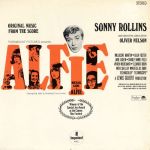
A triumph for Rudy Van Gelder, a Top Impulse title, and as much a showcase for Oliver Nelson as it is for Sonny Rollins. 

This album is on the TAS Super Disc list, which is probably what first alerted me to it. I know I was listening to this album 25 years ago, just from the memory of hearing it in the condo I used to live in. It sounded great back then and it sounds even better now. You will have a hard time finding a better Sonny Rollins record, sonically or musically. 

Great players of course. Kenny Burrell is wonderful as always. Interestingly I never realized that Roger Kellaway is the pianist on these sessions. I saw him live years ago with Benny Carter (who was 90 at the time) and he put on one of the most amazing performances at the piano I have ever seen. For some reason he was never able to make it as a recording artist, but the guy is a genius at the keyboard.

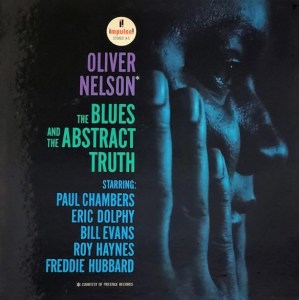
Of course any orchestration by Oliver Nelson is going to be top flight and this is no exception. Two of his records are Must Owns in my book: Jimmy Smith’s Bashin’ and his own The Blues and the Abstract Truth. No jazz collection without them can be taken seriously.

For audiophiles who are looking for one of the best sounding jazz recordings ever made, this is it.

Heavy Vinyl

There was a 180 gram reissue on Impulse a number of years back. I seem to recall it was awful. Most of the Heavy Vinyl reissues that Blue Note and Impulse did under their own names were garbage. They were probably a step up from the CDs those labels were making at the time, but none of those pressings have the magic that’s found on originals like this one.

(more…)

Frank Sinatra – Come Fly With Me

More Frank Sinatra

  • Come Fly With Me touches down on the site for the first time ever, here with KILLER Shootout Winning Triple Plus (A+++) grades on both sides of this 60s Stereo Capitol pressing
  • This copy was doing everything we wanted it to — and on both sides — with an abundance of energy and the kind of immediacy that can put Frank Sinatra front and center right in your very own listening room
  • We all owe a debt of gratitude to the recording and mastering engineers from the era (50s and 60s) for the glorious sound they managed to achieve, a sound unequalled to this day
  • Marks in the vinyl are sometimes the nature of the beast with these early pressings – there simply is no way around them if the superior sound of vintage analog is important to you
  • 5 stars: “There may be greater albums in Sinatra’s catalog, but few are quite as fun as Come Fly With Me.”

(more…)

Deodato – Prelude

More Deodato (Music and Arrangements)

  • A vintage CTI pressing that is doing everything right, with INSANELY GOOD Shootout Winning Triple Plus (A+++) sound from first note to last
  • Here are just a few of the things we had to say about this amazing copy in our notes: “great size and space and energy”…”very rich brass”…”dynamic and weighty and accurate low end”…”top detail and space” (side one)…”jumping out of the speakers”…”3D midrange”
  • The brass and percussion are amazing on “2001” (and every other track) thanks to RVG, a man who knew how to do these kinds of big jazz productions better than practically anyone alive in 1973
  • We had no idea there was space this huge in the recording until we heard the better copies
  • 4 stars: “Though overshadowed by ‘2001,’ the other tracks also hold up well today, being mostly medium-tempo, sometimes lushly orchestrated, conga-accented affairs that provide velvety showcases for Deodato’s lyrical electric piano solos… it still makes enjoyable listening.”
  • This title from 1973 is clearly Deodato’s best album, his best sounding recording, and the only album of his (as a leader) than anyone will ever need to play

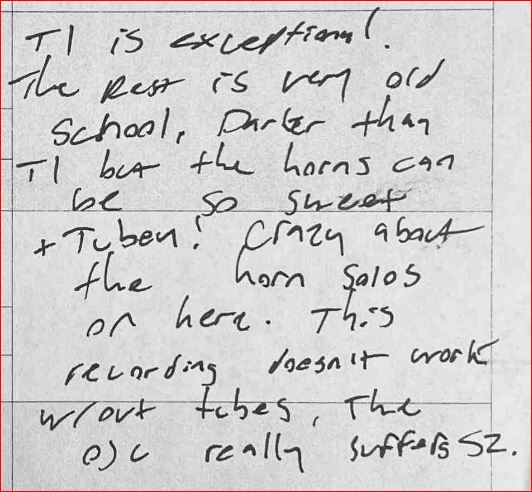
Both sides are surprisingly sweet and Tubey Magical, nice qualities for a CTI record to have since so many of them are aggressive and edgy to the point of distraction.

Listen to the trumpet on the second track on side one — it’s so immediate, it’s practically JUMPING out of the soundfield, just bursting with energy. Rudy can really pull off these big productions on occasion, and this session was clearly one of them. If you have the kind of stereo that’s right for this music (the bigger the better) you could easily find yourself using this record as a demonstration disc. It’s very unlikely your audiophile friends have ever heard anything like it.

(more…)

On Discovered Again, Does It Sound Like the Snare Is Wrapped in a Towel on Your Copy?

Hot Stamper Pressings of Direct-to-Disc Recordings Available Now

The bulk of this commentary was written in 2008 and is based on the shootout we had just done, our first for the album. It has been amended a number of times since.

I bought my first copy of Discovered Again in 1976 upon its release. I was a big fan of the label at the time. The Missing Linc had been a revelation to me years before in terms of how good music could sound in the home (or apartment as the case may be). I wrote a bit about it here.

I credit that amazing record as well as Discovered Again as fundamentally important in helping me advance in this devilishly difficult hobby of ours. Back in those dark days of the 70s, although I was completely clueless at the time about pretty much everything having to do with vinyl and equipment, I can take some solace in the fact that everybody else was every bit as clueless as I was too.

This blog is dedicated to sharing some of what I’ve learned — with the unflagging help of my staff of course — about records and audio over the last fifty years.


The sound quality of the typical pressing of Discovered Again leaves much to be desired.

Two areas are especially lacking as a rule: the top end tends to be rolled off, and there is a noticeable lack of presence, which can easily be heard in the drum sound.

The snare sounds like it’s covered with a towel on most copies of this album.

How does that even happen?

Who knows? Even though the mastering is fixed at the live event, there are many other variables which no doubt affect the sound. The album is cut on two different lathes — M (Master) and S (Slave), and pressed in two different countries: Japan and Germany. Many mothers were pulled from the acetates and many, many stampers made from those mothers. (I saw one stamper marked number 15!)

Bottom line? You got to play ’em to know how they sound, just like any other pressing. If no two records sound the same, it follows that no two audiophile records sound the same, a fact that became clear early on in the listening.

Of course not many audiophiles are in a position to shootout six copies of Discovered Again, and I’m not sure most people would have the patience to do it. Here at Better Records we have a whole system set up to do that, so we waited until we had a pile of them, got them all cleaned up, and off to the races we went.

What Else to Listen For

Listen to the harmonics around the cymbals and bells on Git Along Little Dogies — on the best copies you can really hear the transients of the cymbals and percussion, so important to the actual sound of those instruments. (More records that are good for testing percussion can be found here.)

The stand-up acoustic bass is amazingly well recorded on this album; it’s so rich and full-bodied. You will have a hard time finding a string bass that sounds better.

Track after track, the sound is surprisingly open and airy. Dave’s keyboards throughout have wonderful presence; on the best copies they really jump out of the speakers. (A good test for midrange presence.)

(more…)

Spirit’s Psych Rock Masterpiece (The First of Two)

More Psychedelic Rock

  • Wall to wall, with layered studio depth like you will not believe, the kind of space you hear on an engineering classic like Dark Side of the Moon
  • 4 1/2 stars on Allmusic, but in our estimation it deserves five – it’s simply one of the All Time Greats from the era
  • We’ve recently compiled a list of records we think every audiophile should get to know better, along the lines of “the 1001 records you need to hear before you die,” with an accent on the joy these amazing audiophile-quality recordings can bring to your life. Spirit’s First Album is a good example of a record many audiophiles may not know well but would be well advised to get to know better.
  • If I were to make a list of my favorite Rock and Pop albums from 1968, this album would definitely be on it, close to the top I should think.

Need a refresher course in Tubey Magic after playing too many modern recordings or remasterings? These Ode pressings are overflowing with it. Rich, smooth, sweet, full of ambience, dead-on correct tonality — everything that we listen for in a great record is here.

No recordings will ever be made that sound like this again, and no CD will ever capture what is in the grooves of this record. There is of course a CD of this album, quite a few I would guess, but those of us with a good turntable could care less. (more…)

Kenny Burrell with Gil Evans – Guitar Forms

More of the Music of Kenny Burrell

  • This original Stereo Verve pressings (the first copy to hit the site in three and a half years) boasts INCREDIBLE Shootout Winning Triple Plus (A+++) sound from start to finish
  • Gil Evans wrote the orchestral arrangements and Rudy captured them on lovely analog tape – what’s not to like?
  • We agree with the AllMusic reviewer: this album is every bit as the groundbreaking work Evans did with Miles, and for our money, makes for an even more enjoyable album length listen
  • 4 stars: “His landmark 1965 collaboration with Gil Evans, Guitar Forms rivals anything the arranger did with Miles Davis. Indeed, the track ‘Lotus Land’ has a bolero form reminiscent of Sketches of Spain. Burrell takes thoughtful, concise, and utterly musical solos, and even switches to acoustic classical guitar on [two tracks].”

(more…)

Frank Sinatra – September of My Years

More Frank Sinatra

  • This superb pressing boasts Double Plus (A++) sound on both sides
  • An especially Tubey Magical Male Vocal recording, but that sound can only found on the best properly cleaned pressings, like this one
  • Exceptionally spacious and three-dimensional, as well as relaxed and full-bodied – Frank is right in the room with you on this one
  • 5 stars: (“One of Frank Sinatra’s triumphs of the ’60s”) and Grammy Album of the Year for 1966
  • If you’re a fan of the man, widely considered the greatest vocalist of the second half of the 20th century, this title from 1965 is clearly one of his best, and one of his best sounding
  • The complete list of titles from 1965 that we’ve reviewed to date can be found here.
  • We’ve recently compiled a list of records we think every audiophile should get to know better, along the lines of “the 1001 records you need to hear before you die,” but with less of an accent on morbidity and more on the joy these amazing audiophile-quality recordings can bring to your life. This album is on that list.

This vintage Reprise pressing has the kind of Tubey Magical Midrange that modern pressings cannot BEGIN to reproduce. Folks, that sound is gone and it sure isn’t showing any sign of coming back.

Having done this for so long, we understand and appreciate that rich, full, solid, Tubey Magical sound is key to the presentation of this primarily vocal music. We rate these qualities higher than others we might be listening for (e.g., bass definition, soundstage, depth, etc.). The music is not so much about the details in the recording, but rather in trying to recreate a solid, palpable, real Frank Sinatra singing live in your listening room. The best copies have an uncanny way of doing just that.

(more…)

We Was Wrong about Sketches Of Spain on Six Eye

Hot Stamper Pressings of the Music of Miles Davis Available Now

Many, many years ago (15?) we had this to say about a killer Red Label pressing we had played at the time.


When you get a Hot Stamper like this one the sound is truly MAGICAL. (AMG has that dead right in their review.)

Tons of ambience, Tubey Magic all over the place; let’s face it, this is one of those famous Columbia recordings that shows just how good the Columbia engineers were back then. The sound is lively but never strained. Davis’s horn has breath and bite just like the real thing. What more can you ask for?

We Was Wrong in the Past About HP and Six-Eye Labels

In previous commentary we had written:

Harry Pearson added this record to his TAS List of Super Discs a few years back, not exactly a tough call it seems to us. Who can’t hear that this is an amazing sounding recording?

Of course you can be quite sure that he would have been listening exclusively to the earliest pressings on the Six Eye label. Which simply means that he probably never heard a copy with the clarity, transparency and freedom from distortion that these later label pressings offer.

The Six Eyes are full of Tubey Magic, don’t get me wrong; Davis’s trumpet can be and usually is wonderful sounding. It’s everything else that tends to suffer, especially the strings, which are shrill and smeary on most copies, Six Eyes, 360s and Red Labels included.


UPDATE

Over the course of the last fifteen or more years we’ve come to appreciate just how good the right Six Eye stereo pressing can sound.

Nowadays, all the copies earning the highest grades will be original stereo pressings. Other pressings can do well, earning grades of 2+ or so, but none will do as well as the originals.

This has never been our experience with Kind of Blue by the way. The later pressings have always done the best job of communicating the music on that album.


UPDATE #2

Our comments for Kind Of Blue are no longer true either. The Six-Eye pressings of the album win all the shootouts now.


The above shows just how wrong we were about the sound of some later label Columbia pressings we used to like.  The commentary below concerning early versus later RCA pressings is part and parcel of the same dynamic.

Back in 2010 we liked reissue pressings of Living Stereo recordings a lot more than we do now. Only the advent of top quality cleaning equipment and fluids and much improved playback made it possible for us to reproduce the early Shaded Dogs in all their glory.

When my system was darker and less revealing, a lot of records that were mastered to be cleaner and brighter sounded great to me. Records like RCA Red Seal pressings, some OJC jazz titles, and lots of other bad records that I used to like were a good complement to my system back in those days. Now, not so much.

When we encourage our readers to get good sound so they can recognize and acquire good records, it’s because we learned that lesson the hard way, by getting lots of great recordings wrong.

Live and learn is our motto, and progress in audio is a feature, not a bug, of record collecting at the most advanced levels.

“Advanced” is a code word for having little to no interest in any remastered pressing marketed to the audiophile community. If you want to avoid the worst of them, we are happy to help you do that. The more progress in audio you make, the more you will  regret having wasted your money on them, and we hate the thought of seeing your hard-earned money go down the drain.

(more…)

Frank Sinatra and Count Basie – Sinatra At The Sands

More Frank Sinatra

  • These original Blue and Green Reprise Stereo pressings were doing just about everything right, with all FOUR sides earning solid Double Plus (A++) grades or close to them
  • Truly one of the greatest live albums of all time, recorded late at night in the big room at the Sands Hotel in Vegas
  • This is Basie and Sinatra in their natural habitat and in their prime, putting on the show of a lifetime
  • On the right system, this is about as close as you get to hearing Sinatra singing live in your listening room, with the added realism of a live Vegas show (particularly on sides one, two, and four)
  • 4 1/2 stars: “Basie and the orchestra are swinging and dynamic, inspiring a textured, dramatic, and thoroughly enjoyable performance from Sinatra … the definitive portrait of Frank Sinatra in the 60s.”

This double album presents Sinatra and Basie at the height of their powers, in a setting especially conducive to both men’s music, the big room at the Sands Hotel in Vegas. If you missed it — and I’m sure most all of us did — here’s your chance to go back in time and be seated with the beautiful people front row center. This two-disc all tube-mastered analog set is practically the only way you’ll ever be able to hear the greatest vocalist of his generation — in his prime, no less — fronting one of the swingingest big bands of the time.

The presence and immediacy here are staggering. Turn it up and Frank is right in front of you, putting on the performance of a lifetime.

The sound is big, open, rich, and full. The highs are extended and silky sweet. The bass is tight and punchy. And this copy gives you more life and energy than most, by a long shot. Very few records out there offer the kind of realistic, lifelike sound you get from this pressing.

(more…)

Stick with the Tri-Tone Stereo Originals on Swing Along with Me

Hot Stamper Pressings of the Music of Frank Sinatra Available Now

When advising our fellow audiophiles about how to find the best sounding pressings, we tend to favor discussions about records in which the original is not the best over records in which the right reissue is not the best. (And there are practically discussions for when the modern reissue is the best. Just one so far!)

The same would be true for English bands whose records sound better when they are made in any country other than England, bands whose recordings you may think you know well, such as Led Zeppelin or Black Sabbath.

You might say our record collecting philosophy revolves aroung the contrarian idea that rules were made to be broken.

But let’s face it, most record collecting rules hold up most of the time. That’s how they got to be rules.

In the case of Sinatra’s Swing Along with Me album from 1961, the second label reissues which came along later in the 60s are not merely a shadow of the originals. They’re nothing like the originals.

Side one was so gritty and hot (bright) that we couldn’t even be bothered to play side two. Trust me, you do not want to play a vintage Sinatra record that is gritty and hot.

(more…)